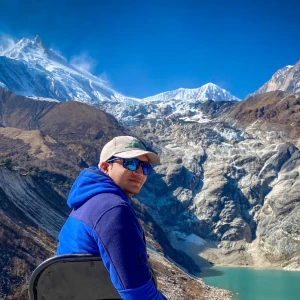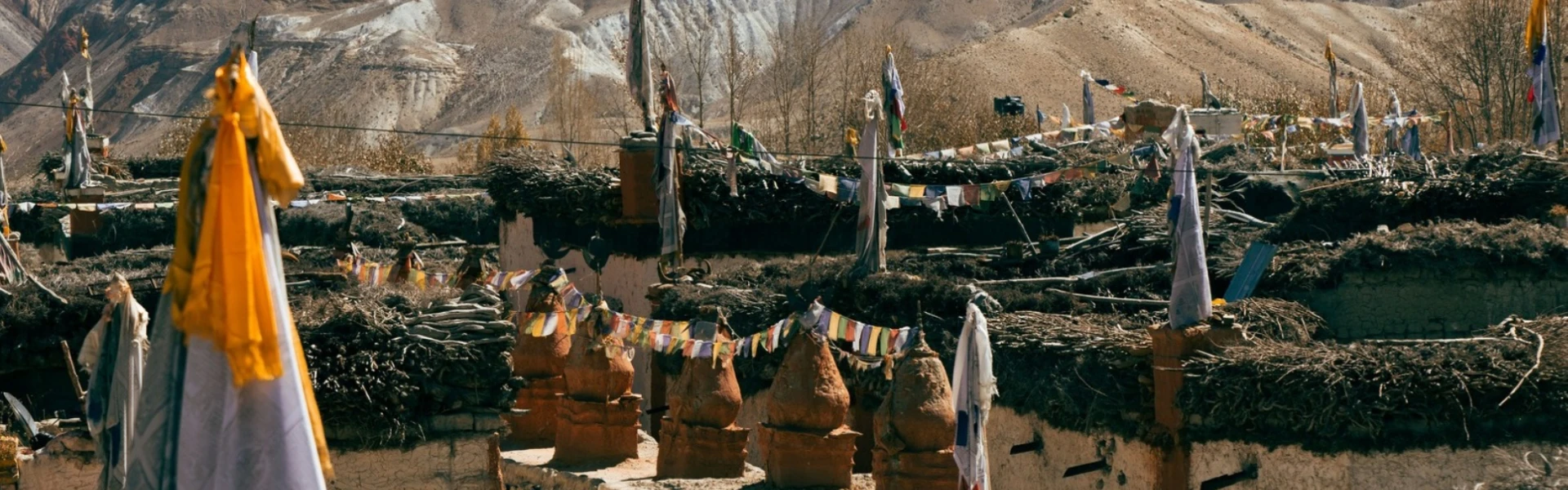
Upper Mustang was closed to the outside world until 1992. In some ways, it still feels like it is.
Walk into Lo Manthang — the walled city that served as the capital of the ancient Kingdom of Lo, and you are looking at mud-brick walls, monastery courtyards, and a way of life that has not changed much in five centuries. The Tibetan plateau stretches in every direction. The sky is enormous. The wind comes off the mountains with nothing to slow it down.
Most of Nepal is green, layered, subtropical in its lower reaches. Upper Mustang is none of those things. It sits in the rain shadow of the Annapurna and Dhaulagiri ranges. The monsoon does not reach it. The landscape is ochre and rust and grey — eroded cliffs, ancient caves carved into canyon walls, a river valley that cuts so deep it feels like the earth opened up to let you through.
If you have trekked in Nepal before and want something genuinely different, this is it.
If you are still deciding between Upper and Lower Mustang, or working out how to reach the region in the first place, read our complete guide on how to travel to Mustang first — it covers routes, access, and how the two regions compare. This guide picks up from there and goes deep on the Upper Mustang trek specifically.
What Makes Upper Mustang Different From Others?
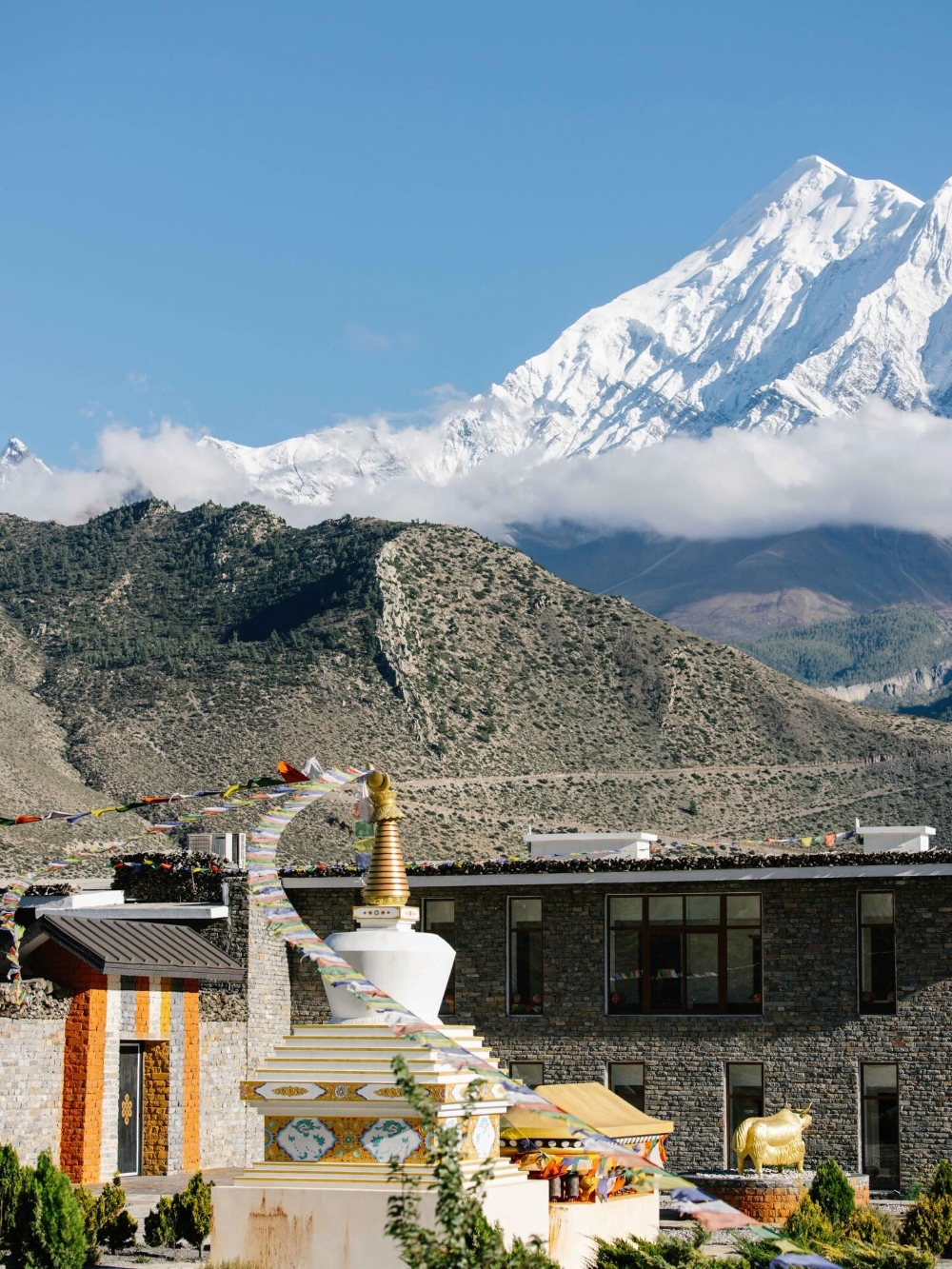
The first thing most people notice is the silence. There are no crowds here. The permit system limits numbers, and the terrain keeps away anyone who is not serious about coming.
The culture is Tibetan Buddhist, not the hill culture you find elsewhere in Nepal. Monks in Lo Manthang follow traditions that were interrupted in Tibet itself. The monasteries here, some over 600 years old, hold thangkas, murals, and ritual objects that survived because this place was remote enough to be left alone. The language spoken in the villages is Tibetan, not Nepali.
The landscape is unlike anywhere else in the Himalayas. Wind has carved the cliffs into columns and alcoves. The Kali Gandaki is one of the deepest gorges on earth. You walk through villages that look like they grew from the rock rather than being built on it. There are no trees at altitude. The horizon is wide and flat in a way that feels more Central Asian than South Asian.
The restricted area status is not bureaucracy for its own sake. It limits visitor numbers, keeps the infrastructure from being overwhelmed, and has — so far — helped preserve what makes this place worth coming to. That combination of genuine remoteness and living culture is what separates Upper Mustang from every other trek in Nepal.
Two Ways to Experience the Ancient Kingdom
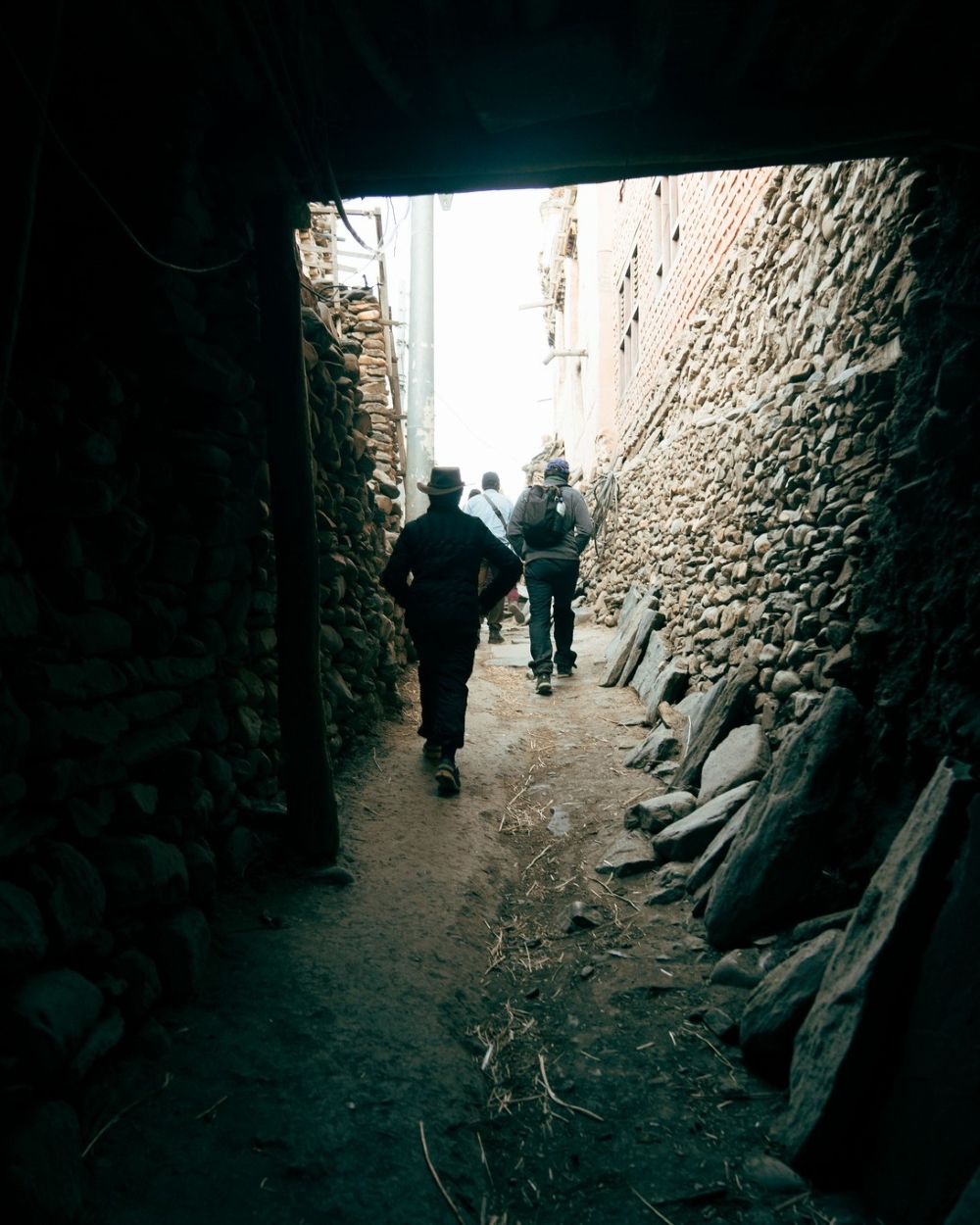
The Upper Mustang Trek: 17 Days on Foot
The classic approach is on foot. You fly from Pokhara to Jomsom, pass through Kagbeni — where the Upper Mustang restricted zone begins — and walk north through Chele, Syangboche, Ghami, and Charang before reaching Lo Manthang.
The full Upper Mustang Trek takes around 17 days, including the return journey and the flight connections. You gain elevation slowly. You pass through villages where local life is fully visible — farmers working small fields, monks in courtyards, children walking to school on paths worn smooth by centuries of feet. You arrive in Lo Manthang having earned it.
The trek is not technically difficult. There are no glaciers, no ropes, no scrambling. The trails are old trade routes, walked for centuries. But the altitude is real — Lo Manthang sits at 3,840m, and Lo Pass reaches nearly 4,000m — and the daily walking is long. Most days are five to seven hours. Some days cross high, exposed ridges with significant wind. You need good fitness, broken-in boots, and a willingness to be slow.
What changes when you walk rather than drive is not the destination. It is what you notice along the way. A shrine tucked into a cliff face. A farmer irrigating terraces using a system unchanged for a thousand years. The way the light shifts on the canyon walls in the late afternoon. These are not things you can see from a jeep window.
This version is for people who want the full experience — who want to understand the landscape, not just see it.
The Trek Day by Day
The route north from Kagbeni changes quickly. By the time you reach Chele, the valley has narrowed, the cliffs have turned ochre and red, and the vegetation has thinned to almost nothing. You are in the rain shadow now. The landscape feels more Central Asian than Himalayan.
Ghami, higher on the plateau, has a 200-metre whitewashed wall painting outside the village — religious art painted onto stone centuries ago, still clearly visible. Most trekkers walk past it without stopping. Do not.
Charang comes next. The ruined dzong above the village looks down over a valley that feels completely cut off from the rest of Nepal. The gompa here is quieter and less visited than anything in Lo Manthang. It is more honest for it.
Lo Manthang is reached after crossing Lo La pass at around 3,950m — the highest point of the trek. The wind on the pass is real. On clear days you can see into Tibet. The first view of the walled city from the trail above stays with you.
The return follows a different route through Namgyal village and the Chhoser sky caves. You see different canyons, different villages, and arrive back in Kagbeni with a fuller picture of the region.
Most days are five to six hours of walking on clear, well-worn trails. Altitude is the only serious challenge.
The Jeep Tour to Upper Mustang: 7 Days
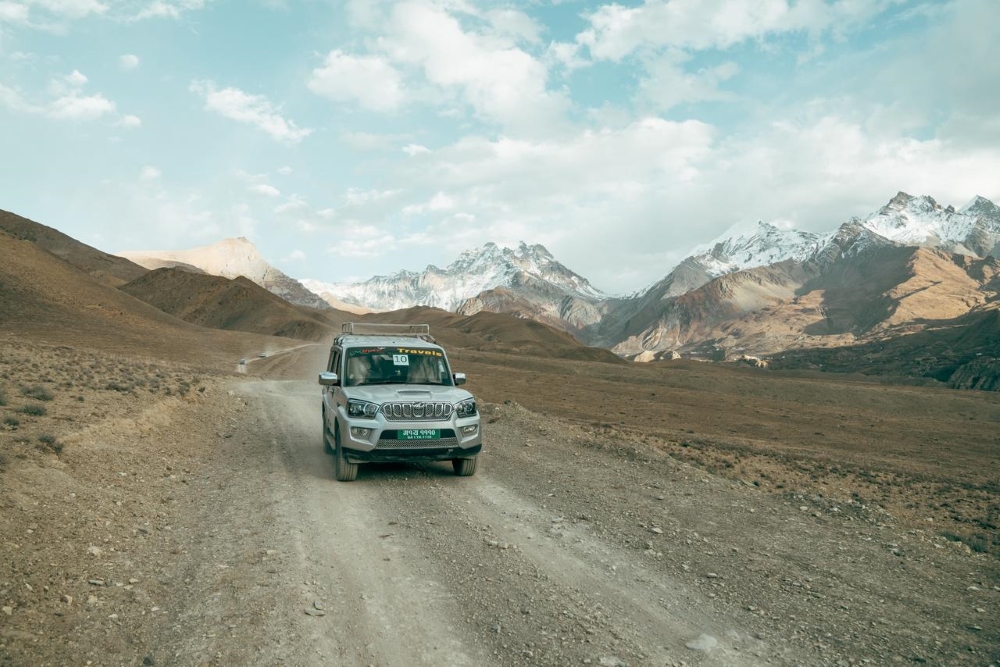
The same route can be driven. Roads now connect Jomsom to Lo Manthang, and the Short Upper Mustang Jeep Tour covers the key stops — Kagbeni, Chele, Ghami, Lo Manthang, Chhoser — in seven days without the daily walking. For travellers starting from Kathmandu, learn more about the Kathmandu to Mustang.
The road follows ancient trade highways. The views are not diminished by being seen from a vehicle. Lo Manthang looks exactly the same whether you walk three weeks to reach it or drive three hours.
This is the right choice for older travellers, families with children, or anyone with limited time or mobility who still wants to stand inside the walled city and visit the sky caves. You miss the gradual pace of the walk and some of the smaller details in between villages. But you reach the same places, see the same landscape, and have the same guide explaining the same history.
Also worth considering: the Luxury Upper Mustang Tour for those who want the jeep route with a higher level of logistical comfort throughout.
Be honest with yourself about what you can do and what you actually want. Both versions are real. Neither is a compromise.
Best Time to Go to Upper Mustang
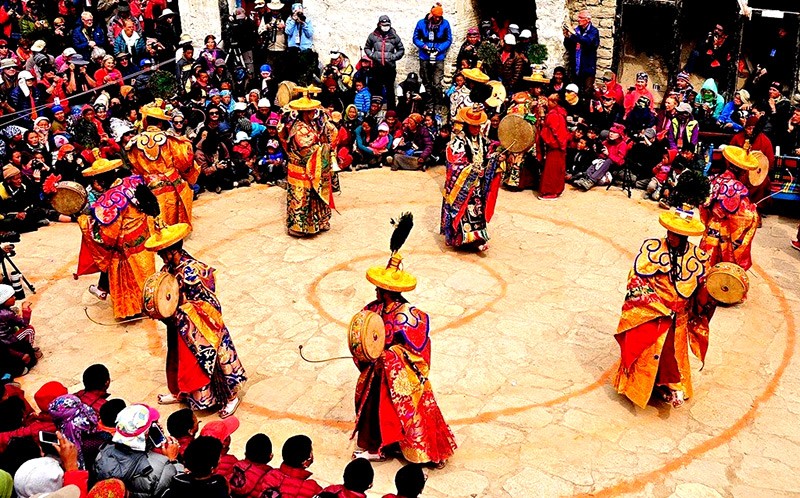
March to May is spring. The air is clear, the rhododendrons are flowering in the lower sections of the valley, and the light in Lo Manthang at this time is sharp and golden. Evenings are cold but manageable. May brings the Tiji Festival — a three-day Buddhist ceremony in Lo Manthang where monks perform rituals that have been held annually for centuries. If your dates can align with Tiji, they should. You can book specifically for it through the Tiji Festival and Upper Mustang Trek.
September to November is autumn. Post-monsoon clarity, stable skies, and the landscape at its most defined. The dust has settled. The views are long. This is when most serious trekkers come, and for good reason.
June to August is worth considering if these are your only available months. Because Mustang sits in the rain shadow of Annapurna and Dhaulagiri, the heavy monsoon rain does not reach it. The rest of Nepal is wet; Mustang stays largely dry. The landscape looks greener than at any other time of year, and you will have the trails almost entirely to yourself. Some lodges have reduced hours, but the route remains open. Most operators do not tell clients this. It is a real option.
December to February: Cold, windy, and several lodges close for the season. Roads can become impassable after heavy snow. We do not recommend this window unless you are an experienced high-altitude traveller with specific reasons for coming in winter.
The Permit Reality in Mustang
Upper Mustang is a restricted area. You cannot enter without a permit, and you cannot get that permit without a licensed guide. This is a hard rule enforced at the checkpoint in Kagbeni. If you arrive without permits, you will be turned back — no exceptions.
Here is what you need:
Restricted Area Permit (RAP): $50 per person per day. This replaced the old $500 flat-fee structure in late 2025. For a 10-day itinerary, that is $500 — the same cost, but now calculated daily, which gives more flexibility on trip length.
ACAP (Annapurna Conservation Area Permit): $30 for foreign nationals. NPR 1,000 for Indian and SAARC citizens.
Both permits are issued through a licensed trekking agency in Kathmandu or Pokhara before you travel. You cannot buy them at the checkpoint. Processing takes one to two days and requires a copy of your passport.
Solo travellers: The rule changed in 2026. Solo travellers can now enter Upper Mustang — but only accompanied by a licensed guide. The guide requirement is not optional, regardless of group size. If you are travelling alone and previous sources told you that was not permitted, that information is now outdated. The Upper Mustang Trek is fully available to solo travellers with a guide.
For solo travellers to Upper Mustang, read here for more details.
When you book with HST, we handle all permit paperwork before you leave Pokhara. You arrive at Kagbeni with everything in order. No paperwork to chase, no surprises at the checkpoint.
Learn more about the Permit Guide to Mustang.
Lo Manthang: What You Actually Find
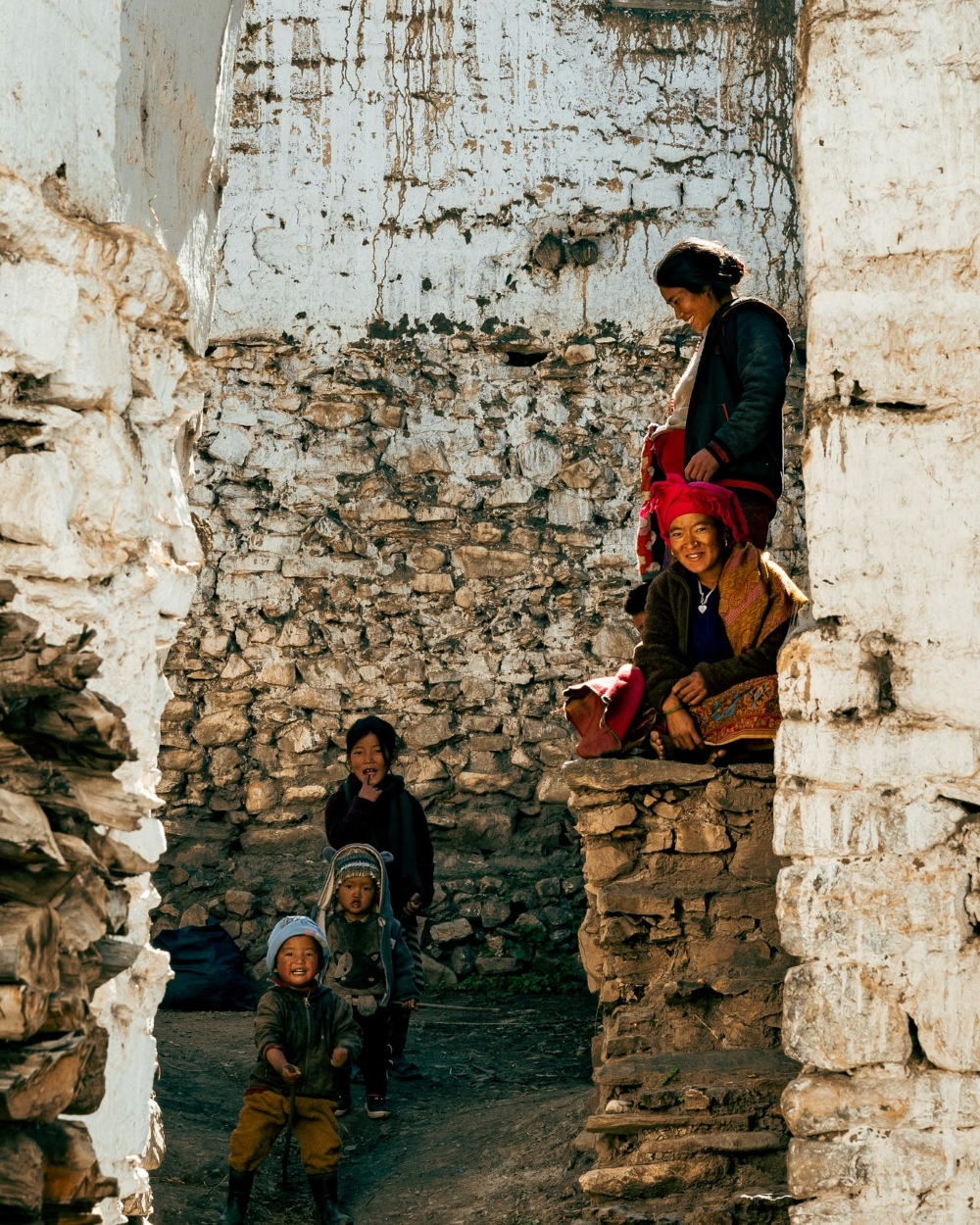
Lo Manthang is the reason people come. Walled, windswept, and sitting at 3,840m, it looks like a fortress from the trail above. Inside, it is a working town — narrow lanes, whitewashed houses, monks moving between buildings as they have for five centuries.
The walls were built for survival, not aesthetics. Lo Manthang was a defended city — protection against Mongol raids in the 14th and 15th centuries. The Kingdom of Lo remained semi-autonomous within Nepal until 2008. The royal palace still stands at the centre of the city. Members of the royal family still return in certain seasons. This was a kingdom within living memory.
Jampa Gompa, built in the early 15th century, holds original murals painted directly onto the walls. Not restored. Not replicated. Still in use by monks who chant here at dawn. Thubchen Gompa nearby is larger — a vast single hall with timber columns and murals that were nearly lost before restoration work began two decades ago. Both are active monasteries, not heritage sites.
Namgyal Gompa sits on the hill above town. Fifteen minutes up, one of the best views in Mustang from the top.
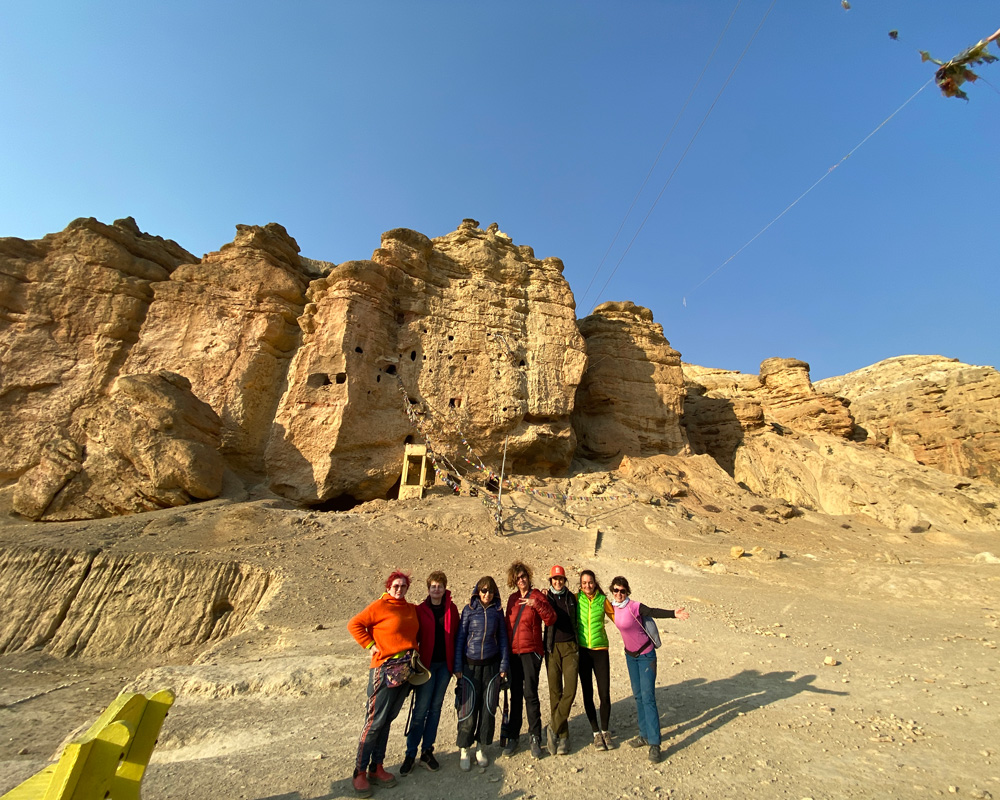
A short drive from Lo Manthang brings you to the sky caves of Chhoser — chambers cut into a vertical cliff face over 3,000 years ago. Burial sites, meditation chambers, manuscript repositories. Hundreds of hand-cut openings stacked row upon row in a canyon wall. There is nothing else like it in Nepal.
Plan two full days here. One is not enough.
Marpha: The Stop Most People Rush Past
Marpha sits between Jomsom and Kagbeni, at the southern edge of the Mustang valley. Most trekkers walk through it in under an hour, treating it as a waypoint. That is a mistake.
Marpha has the best apple orchards in Nepal. The village has been producing apple products for decades — dried fruit, apple brandy, and apple wine. The local distilleries are small, family-run, and unpretentious. The brandy is rough and honest. The wine is better than you expect.
The village itself is one of the most well-kept in the region. Stone-paved lanes, whitewashed houses, a small gompa above the roofline. The scale is right — large enough to explore for an hour, small enough to feel like a discovery.
We build a proper stop into every Mustang itinerary here. Sit down. Try the apple brandy. Walk the lane once without a pack on your back. Marpha is one of those places that rewards slowing down, and almost everyone who rushes through regrets it on the way back.
Not sure which version of Mustang is right for you?
We get this question every week. The answer depends on your fitness, how much time you have, and what you are actually looking for from the trip. We are happy to talk it through before you decide anything.
Send us an enquiry, and we will give you a straight answer.
Frequently Asked Questions
How much does the Upper Mustang Trek cost?
The main permit cost is $50 per person per day for the Restricted Area Permit, plus $30 for ACAP. For a standard 10-day trek, permit costs alone are $530. Total trip cost with flights, guide, accommodation, and meals typically ranges from $1,800 to $2,500, depending on group size and duration. We provide a full cost breakdown when you enquire.
Do I need a guide for Upper Mustang?
Yes. A licensed guide is mandatory to enter Upper Mustang. This is a government regulation enforced at the Kagbeni checkpoint. You cannot enter the restricted area without one, regardless of experience level. Learn more about the guide and permits to the Mustang region.
Can I do the Upper Mustang Trek as a solo traveller?
Yes, as of 2026, solo travellers can enter Upper Mustang. The previous rule requiring a minimum of two travellers has been removed. You still need a licensed guide and all standard permits. Solo trekking with a guide is now a legitimate and fully supported option.
Is Upper Mustang good during the monsoon?
Yes, unlike most of Nepal. Mustang sits in the rain shadow of the Annapurna and Dhaulagiri ranges, so heavy monsoon rain does not reach it. June to August is a valid travel window — quieter, greener, and with the same open trails. Some lodges operate on reduced schedules, so confirm ahead.
How hard is the Upper Mustang Trek physically?
Moderate. There is no technical climbing, no glaciers, and no fixed ropes. The challenge is altitude — Lo Manthang sits at 3,840m — and sustained daily walking of five to seven hours. If you are reasonably fit and have trekked at altitude before, you will manage it well. If altitude is a concern, the jeep tour reaches the same destination.
What is the best time for the Upper Mustang Trek?
March to May and September to November are the two main windows. May is particularly strong if you can align with the Tiji Festival in Lo Manthang. Autumn offers the clearest skies. Monsoon months are an underrated option for experienced travellers who want the trail to themselves.
Plan Your Upper Mustang Journey
Depending on your time, fitness, and what you want from the experience, we design the right version of Mustang for you.
Upper Mustang Trek → — the full 17-day route on foot, from Kagbeni to Lo Manthang and back.
Short Upper Mustang Jeep Tour → — the 7-day drive route covering the same key sites with more comfort and less daily exertion.
Luxury Upper Mustang Tour → — for those who want the full Mustang experience at a higher level of comfort throughout.
Send us an enquiry, and we'll talk it through.