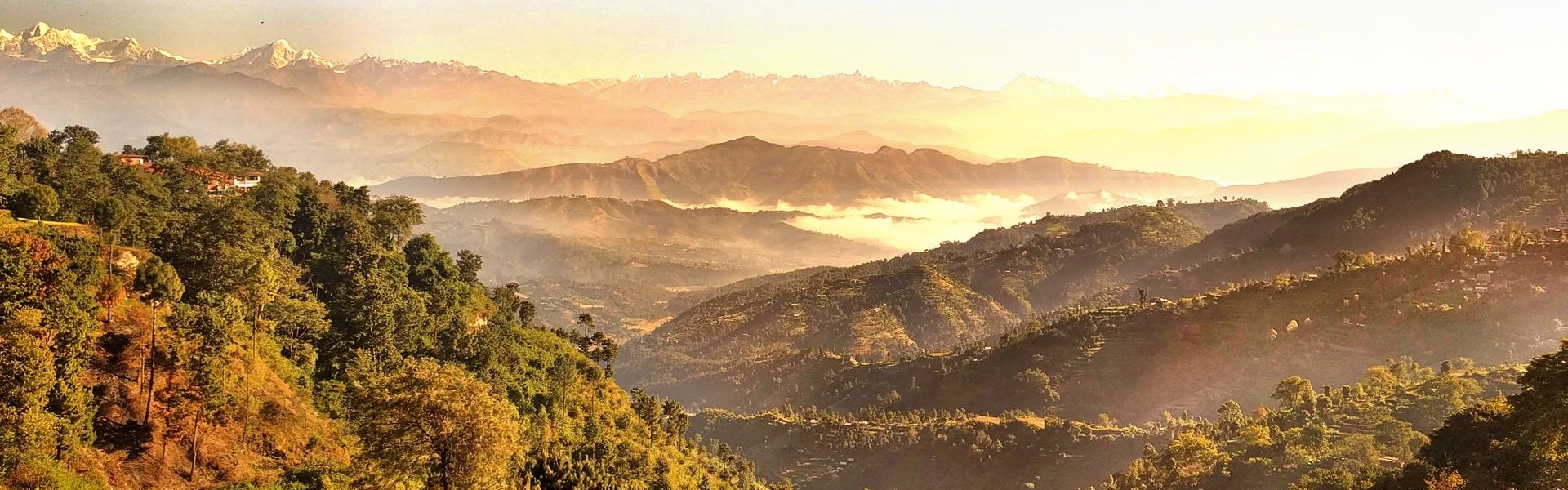
The Nagarkot Day Hike takes 4 to 5 hours and ends at a viewpoint where eight Himalayan peaks sit in front of you on a clear morning. Chisapani-Nagarkot spreads the same ridge across three days through forest and altitude. Dhulikhel is mostly downhill and ends in an old Newari town instead of a parking lot.
Each one works for different people and different days. None is objectively better. The question isn't which hike is best — it's which one fits how you actually have time to move through this place.
If you only have half a day, start with Nagarkot; if you have three days and want real trail time, Chisapani-Nagarkot. If you want downhill and a real destination, Dhulikhel.
Still deciding? Read on.
If you'd rather skip the reading, message me directly on WhatsApp with how many hours or days you've got, and I'll tell you which one to book.
Nagarkot Day Hike — the easy panoramic option
What this route actually is
The morning's still cool at Ranijhula. The suspension bridge there — longest in the valley — catches you before anything else. Stand on it for a minute. The drop below is real. By the time your feet hit the trail, you're already inside something instead of watching it from a window.
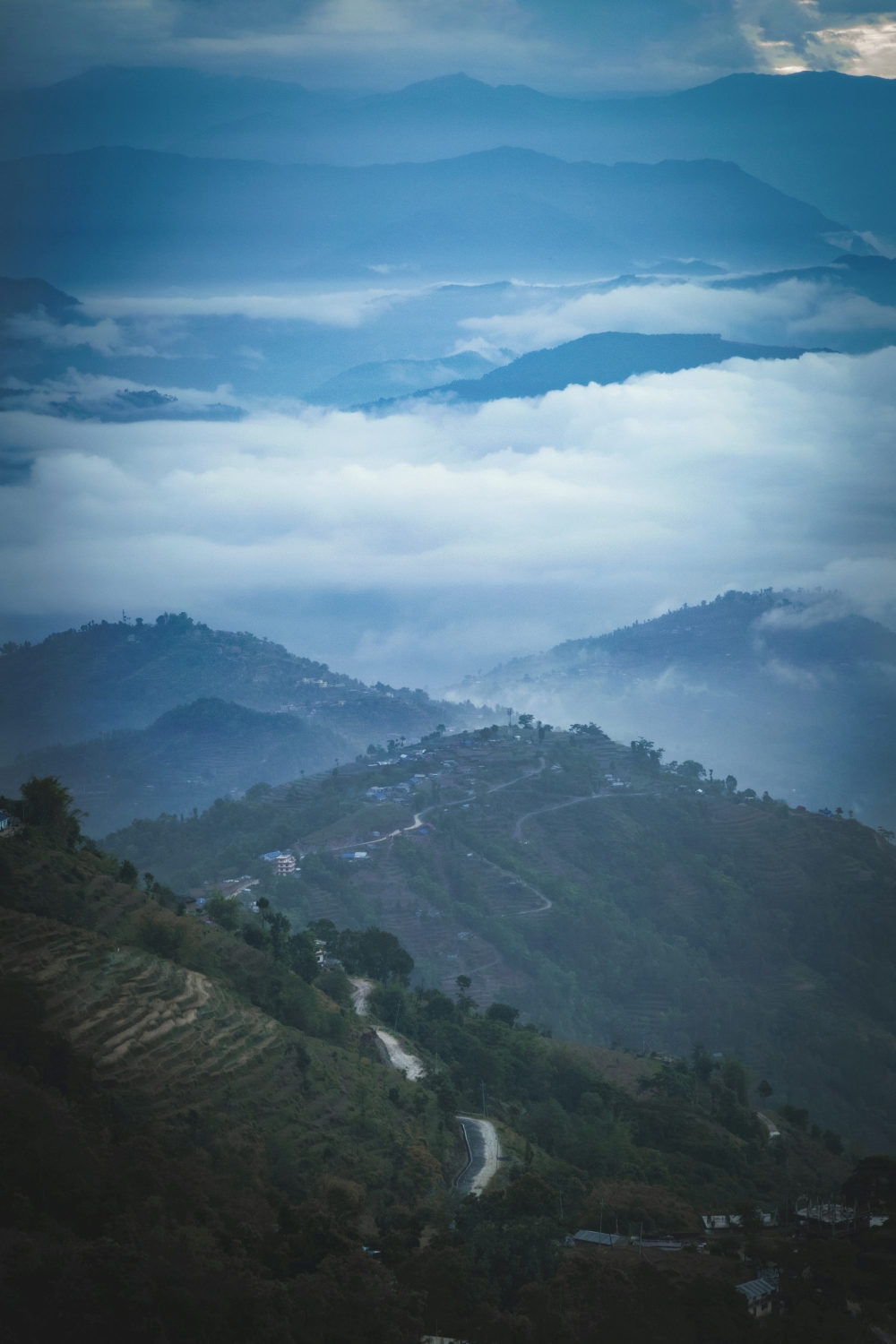
The path rises through pine forest. Soft underfoot. Thick canopy keeps it cool even at midday. You pass through Tamang villages where daily life just carries on. Someone's chopping wood for the stove. Someone's doing laundry at the water source. A kid's playing in the dirt between houses. Nobody's performing anything. Life just continues around you.
The last stretch opens up. Tree cover thins gradually. Views begin — first the closer ridges, then the distant peaks emerge. Then you're at the Nagarkot Viewtower, 2,175 meters. Eight peaks on a clear morning — Langtang Ri sharp and close, Jugal behind it, then Ganesh Himal, Gaurishankar, and Everest sitting back in the haze where you almost miss it at first.
The return doesn't repeat the same trail. You loop through Mahamanjushree and old Bhaktapur instead. Different country on the way down. Medieval Newar temples appear. The valley architecture shifts. You see how the place actually connects rather than just ascending and descending the same ridge.
The walk itself
Four to five hours, gentle the entire way. The incline never punishes you. I've run this with families where kids are as young as seven — they complain about boredom before they complain about their legs. I've run it with travellers in their seventies who move slowly but steadily and arrive fine. The trail suits both because the pace is built that way, not because anyone's pushing or holding back.
The forest is quiet. You hear water somewhere far off. Birds. The sound of your own breathing changes as elevation increases, but it's not dramatic. Most of the walk you could have a conversation if you wanted to, or you could be silent. The trail doesn't demand anything.
What you'll actually see
At the Viewtower on a clear morning, the range opens up properly. Langtang Ri, Jugal, Ganesh Himal, Gaurishankar, and Everest sit further back in the haze. I never promise Everest on this one because weather in the valley is its own thing. Some mornings cloud cover blocks everything. Some mornings you get the full sweep. When it clears, the eight-peak range is there, and people stand silent for longer than they expect to.
The Viewtower itself has benches. You can sit. There's usually tea available from someone who lives nearby. The view doesn't rush you. You can stay as long as the weather holds.
The drive back loops through Mahamanjushree, Sudal, and down into old Bhaktapur — you get Newar architecture and valley history on the return rather than just retracing your steps. It means the day has shape: ascent, view, descent through different country.
Who I actually send here
The route is roughly 40% walking, 60% vehicle time. That's the structure — not a flaw, just how it's engineered. It works for families because kids can handle the walk without exhaustion. It works for older travellers because the pace is manageable and there's rest time built in. It works for anyone with only half a day because you get the mountain view without requiring an entire day commitment.
If the goal is to feel the walking in your legs afterwards, to feel like you've actually hiked somewhere, the other two routes give you that differently. This one is built for the view, for access, for the experience of standing at altitude without the physical demand.
→ See the full Nagarkot Day Hiking itinerary and book your date — from $99/person, private vehicle, licensed guide, hiking pole and hat included.
Chisapani to Nagarkot — why I run this as a 3-day trek, not a rushed single day
Why I stopped selling this as a one-day hike
Most operators still sell Chisapani-Nagarkot as a single-day push. Drive to the trailhead, walk 6 to 7 hours, be back in Kathmandu before dark. On paper it sounds efficient. In practice, it's 90 minutes in valley traffic just to reach Sundarijal before anyone's walked a single step. Then 6 to 7 hours through Shivapuri National Park. Then 90 minutes back. You're at a 9-plus hour day, most of it spent either sitting in traffic or hiking through midday heat when the forest is thick and warm and you're tired.
By the time you're back in Kathmandu, there's no energy left to actually process what happened. You've been moving the entire day. You haven't sat with any of it.
The one-day version exists if it's genuinely your only window. But the three-day approach changes everything about the experience.
Day 1: Kathmandu to Sundarijal to Chisapani
Drive to Sundarijal, the gateway into Shivapuri National Park. The trailhead sits at a water intake where the park's main river emerges. Start walking up toward Chisapani at 2,300m, with a lunch stop in Mulkharka along the way. The first day is deliberately moderate — enough climbing to get your legs and lungs adjusting to elevation, but nothing punishing. You're not trying to make distance. You're letting your body acclimate.
By afternoon you're in Chisapani, a small village perched on a ridgeline. The lodge is basic. Clean, but basic. That's the point. You're here to sit with the elevation, to eat simple food, to watch the light change across the valley below. You're settled well before dark, which means time to sit on the porch and let your body adjust. Maybe you nap. Maybe you sit with tea. Either way, you're not collapsing into bed immediately — you have actual evening.
Day 2: Chisapani to Nagarkot
This is the day the whole route is built around. Seven to eight hours through the park, past Jhule and Chauki Bhanjyang, with real elevation change the entire way rather than one long steady climb. The trail moves up and down along the ridgeline instead of grinding upward constantly. That rhythm is different on your body.
Because you're starting this day fresh from Chisapani — not fresh off a long drive from Kathmandu — your legs are ready. Your body's already adjusted to the elevation. The walk has texture. Deer move through the forest here. Birdlife appears that you won't see on the busier Nagarkot approaches — 390 bird species in Shivapuri, and on quieter trails you notice them. The rhododendron forests are dense. The forest floor is soft with generations of needles and leaves.
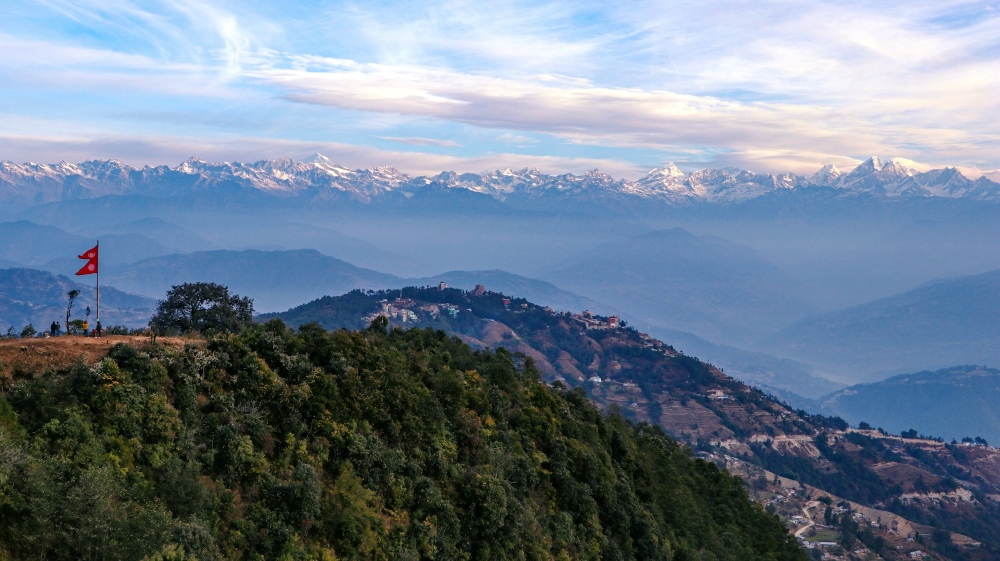
The ridge views stretch to Langtang Ri, Gaurishankar, and Dorje Lakpa — not just the closer peaks but the full spine of the range. And because you're walking through it over a full day instead of racing, you feel the geography. You understand how the valleys sit. You see where water runs.
We time the arrival into Nagarkot so you're standing at the Viewtower as the sun begins that long descent — sunset instead of just a stagger-in-and-dinner moment. The light hits the peaks differently. You watch the shadows lengthen. You sit there while it happens.
Day 3: Nagarkot to Changunarayan to Kathmandu
After sunrise — after you've had time to sit with what you saw, after you've slept at altitude — the last day is light on purpose. A walk down to Changunarayan Temple, one of Nepal's oldest temples (built in the 4th century AD), passing through old Newar villages on the way down. The kind of detail that turns this from "a hike we survived" into a trip with an actual arc.
Why I recommend this version over the one-day option
Same trail, same forest. Walking across three days instead of one rushed push means the pace works with your body instead of against it. You're not racing. You're moving deliberately. The extra nights in lodges mean you have mornings to sit with tea before walking. You have evenings to process. The elevation gain spreads across days so your body adapts as you climb rather than fighting the altitude.
Most importantly, you actually experience the route instead of just completing it. You see wildlife. You notice the forest change as you gain elevation. You arrive at summits fresh enough to actually stand there and look instead of just catching your breath.
→ Check dates for the 3-Day Sundarijal-Chisapani-Nagarkot Hike — from $269/person, includes 2 nights' lodging, meals, national park permit, Changunarayan entry, and a licensed guide.
If the one-day Chisapani-Nagarkot is your only option: → See the 1-Day Chisapani-Nagarkot option
Nagarkot to Dhulikhel — the downhill route
What makes this different
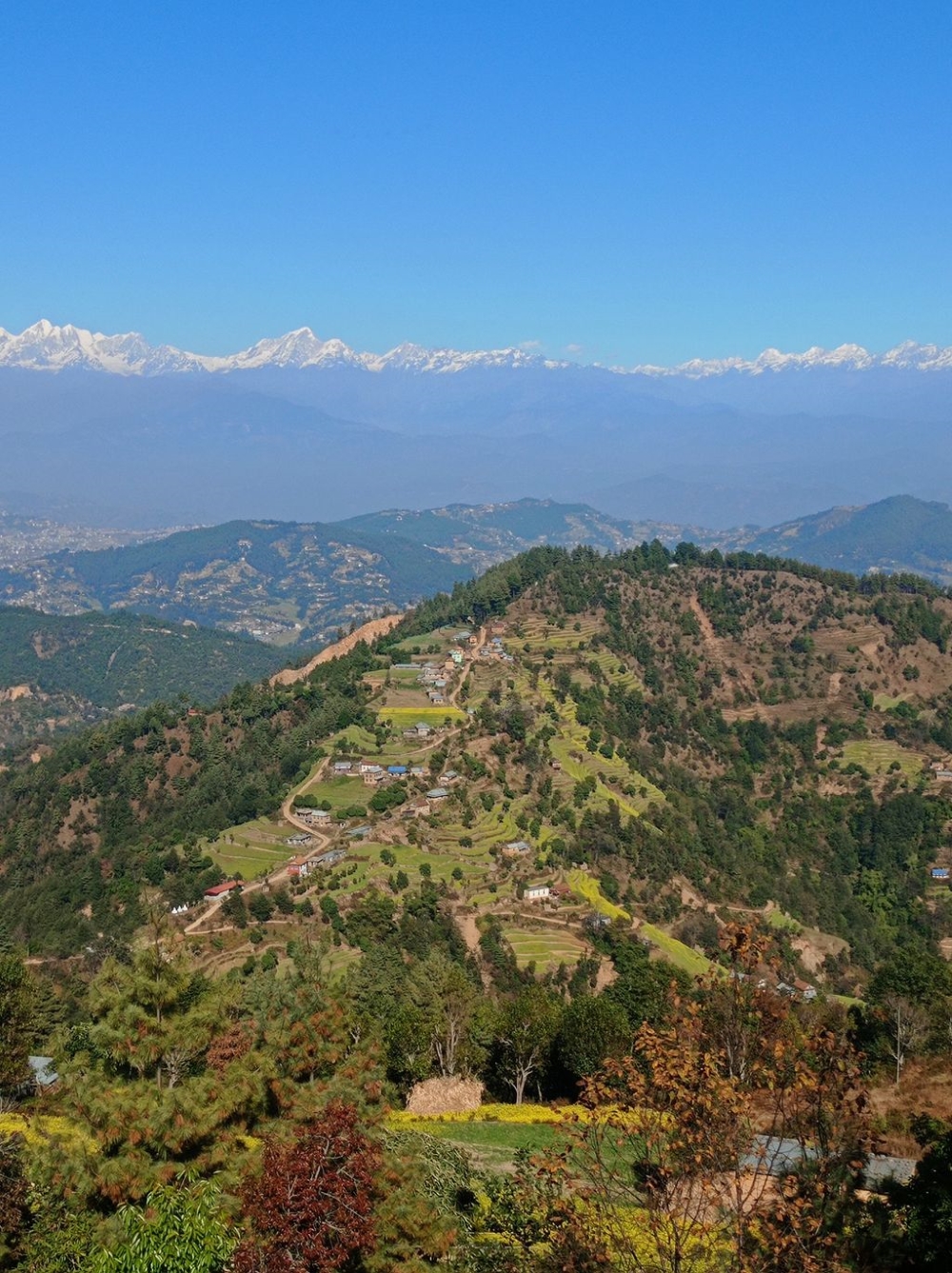
Start at Nagarkot. Descend along the ridge for 5 to 6 hours through pine forest, farmland, and small villages. Mostly downhill means the pace moves fast without forcing your lungs. The route rewards good knees over lung capacity — your legs do the work, not your cardiovascular system.
Dhulikhel isn't just an endpoint. It's an old Newari trading town with a market square that's been there for centuries, temples that are still lived-in, and mountain-facing terraces where locals sit in the afternoon. Walking toward somewhere with actual character feels completely different than walking back to a parking lot.
The trail and the terrain
The descent follows the ridgeline the entire way. You're not cutting through valleys or switchbacking down. You're on the spine of the range, moving down gradually, passing through real country instead of trekking infrastructure. Pine forest gives way to mixed forest. Villages appear naturally along the ridge where people actually live, not as designated "stops" for trekkers.
The terrain underfoot changes as you descend. Higher sections are soft with pine needles. Lower sections are stone steps worn by centuries of use. You pass through agricultural terraces where crops are growing. You see farmers working. You pass through homes where people are actually living — not homestays performing hospitality, but homes where someone's grandmother is sitting in the doorway and nods as you pass.
Where you end up, and why it matters
Dhulikhel has texture. The market vendors are local — they're selling to locals at lunch, not just to trekkers at the end of the day. The restaurants have menus in Nepali, with English added as an afterthought. The temples are active — people come here to pray, not just to be photographed. The town square has its own rhythm that has nothing to do with tourism.
The arrival means something because the place has its own life independent of whether trekkers show up. You walk into a town that exists for itself, not for you. That changes how the whole day feels. It's not just "we completed a route." It's "we walked to somewhere real."
Who chooses this
People who've already done Nagarkot and want to see the same range from a different angle. Hikers who want distance — 20.9 km is real walking — without the climbing. Anyone who values the actual destination as much as the walking, who wants to arrive somewhere that has character, not just a viewpoint and a parking lot.
It's also the route for people who want to understand how the valley connects. You start at altitude looking down at Kathmandu. You walk through the elevation changes. You end in a real town on the valley floor. The geography makes sense by the time you arrive.
→ See the full Dhulikhel Day Hike itinerary and book your date — mostly downhill, 5 to 6 hours, private vehicle, licensed guide.
On the "other ways" to do Nagarkot hike
If you search around, you'll find variations described — alternate trailheads, different forest tracks, combinations that skip sections or add detours. Some of that is current and real. A lot of it is trail information that's years out of date, or was written by people who haven't actually walked it recently and are reconstructing from old guidebooks or other blogs.
The three routes here are the ones that work with current conditions, real timing based on actual pace rather than optimistic guidebook math, and current trail access. If you've read about a different approach to linking these places and want to know if it's still valid, send it over. Trail conditions change. Routes shift. Lodges close and new ones open.
Comparison at a glance
| Nagarkot Day Hike | Chisapani-Nagarkot (3-Day) | Nagarkot–Dhulikhel | |
|---|---|---|---|
| Duration | 1 day, 4–5 hrs hiking | 3 days, 7–8 hrs of trail time on Day 2 | 1 day, 5–6 hrs hiking |
| Drive to start | ~1 hr | ~1 hr to Sundarijal | ~1 hr |
| Direction | Uphill to viewpoint, drive back | Uphill through Shivapuri NP, spread over 2 days | Mostly downhill |
| Terrain | Pine forest, villages | Shivapuri National Park, forest | Ridgeline, farmland |
| Best for | Families, first-timers, half-day | Real trail time, no rush, forest immersion | Distance-lovers, repeat visitors |
| Price | From $99/person | From $269/person | From $99/person |
Which one should you actually pick?
Short on time, or travelling with people who don't want a long day: I'd send you on the Nagarkot Day Hike — least demanding, still delivers the payoff. Have three days and want to actually feel like you hiked somewhere: the 3-Day Chisapani-Nagarkot Hike is worth the extra time. After distance, a downhill trail, and a fresh finish point — or you've already done Nagarkot: Nagarkot to Dhulikhel is where I'd point you.
Still not sure? Tell me your available days and how your knees feel about downhill, and I'll point you the right way myself. → Send me your dates or message me directly on WhatsApp.
FAQs
Is the Nagarkot Day Hike or the Chisapani-Nagarkot Hike harder?
Completely different propositions. The Nagarkot Day Hike is 4 to 5 hours on a gentle, well-shaded trail — easy across the board. No serious climbing. No sustained exertion. Your body is fine afterwards.
The Chisapani-Nagarkot route is spread over three days: real elevation gain and 7 to 8 hours of trail time on Day 2, with real mountain climbing. But because it's spread across days instead of crammed into one, your body handles it differently. You're not starting fresh off a long drive. You've had a night at altitude. Your acclimatisation has already started. Day 2 is demanding, but achievable because you're not exhausted from the drive.
Run Chisapani in a single day? That version is genuinely tiring. Run it across three days? Most people are surprised how well we manage it.
Can beginners do these Kathmandu hikes?
Yes. All three are non-technical — no scrambling, no exposure, no prior trekking experience required.
The Nagarkot Day Hike is gentlest. Families with young kids can do it. Older travellers can do it. The physical demand is minimal.
Nagarkot-Dhulikhel needs decent knees because of the sustained downhill, but it's achievable for any fit beginner. The downhill is relentless but not steep — it's manageable.
The 3-day Chisapani-Nagarkot trek is most demanding on Day 2, simply because of the hours and the elevation gain. But because it's not rushed into a single day, plenty of first-time hikers do it comfortably. The slower pace makes the difference.
Which hike has the best mountain views?
All three deliver, just differently.
The Nagarkot Day Hike gets the most direct, reliable sightline to eight peaks on a clear morning — Everest included, along with Langtang, Jugal, Ganesh Himal, Gaurishankar. It's concentrated. One viewpoint. High visibility.
The 3-day Chisapani-Nagarkot trek gives you those same peaks plus Dorje Lakpa and Manaslu on clear days. But more importantly, because you're walking through the range over two full days instead of one rushed afternoon, you catch more clear windows if weather shifts. You see the peaks from different angles as you move through the forest and along ridges. The geography becomes three-dimensional.
Nagarkot-Dhulikhel gives you the range from a different angle on the way down — you're looking at the same peaks but from the opposite direction. Plus Dhulikhel's own hilltop views once you arrive. It's a different read on the same mountains.
Do I need a permit for any of these hikes?
Only the Chisapani route requires one. It passes through Shivapuri Nagarjun National Park, which is a protected area. A park entry permit is mandatory — roughly 600 NPR per person. We include this in the trip cost for the 3-day version, along with the Changunarayan Temple entrance fee on Day 3 (roughly 300 NPR), so you don't need to arrange anything yourself.
The Nagarkot Day Hike and Nagarkot-Dhulikhel don't cross protected park land, so there's no permit required for either.
How much do these hikes cost, and why is the pricing so different?
Nagarkot Day Hike and Nagarkot-Dhulikhel both start from $99 per person. This covers a licensed guide, private transport to and from the trailhead, walking poles, and a hat. You're paying for the guiding and the logistics. Food and accommodation you arrange separately.
3-Day Chisapani-Nagarkot starts from $269 per person — the jump reflects what's actually included. Two nights of lodging in Chisapani and Nagarkot. All meals across the three days (breakfast, lunch, dinner, plus tea/snacks). The national park permit and Changunarayan temple entry. And a licensed guide for the full three days. It's not a pricier version of the same product — it's genuinely a different trip. A full short trek rather than a single guided day out.
Can I still do Chisapani-Nagarkot in one day if that's all the time I have?
Yes — we'll book it if that's genuinely your only option. But understand what the day looks like: 1.5 hours drive to reach the Chisapani trailhead before you even start walking. Then 6 to 7 hours through Shivapuri. Then 1.5 hours back to Kathmandu. Nearly 9 hours door-to-door, most of it in motion.
It's not a bad hike. It's just not the best way to experience that particular trail because you're rushing through it instead of living in it. Given the choice, either go for the 3-day version if time allows, or consider Dhulikhel instead — you get comparable walking time without losing 90 minutes just getting to and from the trailhead.
Which of these is best if I only have one full day in Kathmandu?
Between Nagarkot Day Hike and Nagarkot-Dhulikhel, it comes down to what you want to feel at the end of the day.
Nagarkot gives you more time at a single iconic viewpoint with less physical demand. You get the mountain view, the experience of altitude, the Himalayan presence. If you want the postcard moment without much physical effort, this works.
Dhulikhel gives you more sustained walking and a completely different place to arrive in. More engagement with the landscape. A real town with character waiting at the end. If you've got the legs for a downhill day and you want the journey to feel like something more than just a viewpoint trip, this feels more satisfying.
Don't try fitting the 3-day Chisapani trek into one day. That one genuinely needs the extra time. It's built around the spread, not the compression.
What's the best season to do any of these hikes?
Autumn (September to November): clearest skies, most stable weather. The air is clean. Visibility is reliable. This is when most people book.
Spring (March to May): stable weather, slightly warmer than autumn. Rhododendrons bloom in April and early May — the forests are full of flowers. Nearly as clear as autumn.
Winter (December to February): often even clearer air than autumn, but mornings are cold. Chisapani gets cold at night — you'll need warm sleeping gear. Some lower-altitude lodges stay open. It's beautiful but more demanding.
Monsoon (June to August): high humidity near Kathmandu, cloud cover frequent. But higher elevations like Chisapani and Nagarkot sit above the clouds. The landscape is incredibly green. Rain happens, but it's often in late afternoon. The Nagarkot Day Hike is more manageable during monsoon since much of it is drive-heavy.
Conclusion
None of these three is objectively "best." Each is built for different circumstances and different kinds of days.
The Nagarkot Day Hike delivers the mountain view efficiently. If you have half a day, if you're travelling with people who don't want to exhaust themselves, if you want to stand at altitude and see the Himalayas without the physical demand, this works. It does exactly what it's built to do.
The 3-day Chisapani-Nagarkot trek gives the route space to unfold. If you have three days and you want to actually move through the landscape instead of just across it, if you want to feel the elevation change and see wildlife and experience the forest, this is where the real change happens. The three days aren't a luxury — they're essential to how the route actually works.
Nagarkot-Dhulikhel offers downhill walking and a real destination. If you want distance without climbing, if you've already seen Nagarkot from the top, if you value arriving somewhere with actual character and life, this one makes sense. It's often overlooked, but it's a complete route with a real ending.
What you're actually looking for — how much time you have, what kind of physical engagement you want, whether you're seeking a view or a journey — determines which one fits.
→ Send your dates, or message WhatsApp.