Quick Answer: Yes. Everest, Annapurna, Manaslu, Upper Mustang, and Kanchenjunga are open and running their normal autumn schedules. The one region genuinely affected is Langtang and Gosainkunda, where the access road through Syabrubesi remains closed while it's being rebuilt. If you have a Langtang trek booked, talk to us directly. Everything else, including Kathmandu, Pokhara, and Chitwan, was never touched.
Is It Safe to Trek in Nepal After the August 2026 Floods?
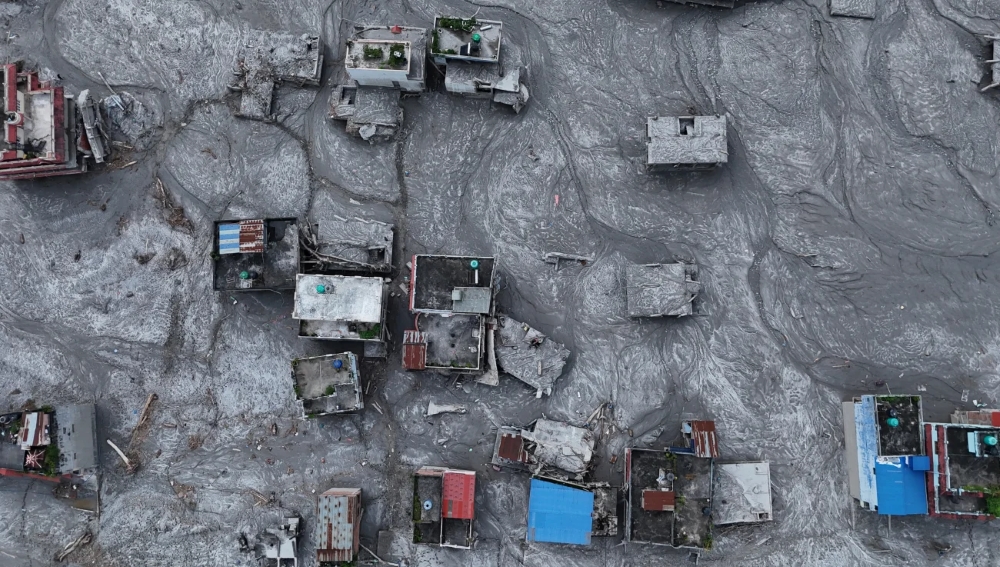
I've had the same conversation more than a dozen times since late August. A client writes in, sometimes half-apologetically, asking whether their October trek is still happening, because they saw footage of a village being swept away and now they're picturing that happening to their trail. I understand the instinct completely. What I want to give you here isn't reassurance for its own sake. It's the actual picture, region by region, so you can make your own call with real information instead of a headline.
What Caused the Nepal Floods in August 2026?
On the morning of 26 August, a section of the Langtang Lirung glacier collapsed near the Nepal-Tibet border. What followed was a chain reaction, a landslide and debris flow that tore down through the Bhote Koshi and into the Trishuli River, destroying the Gyirong Port border crossing and striking settlements along a roughly 72-kilometre stretch of the Trishuli. The damage concentrated in Rasuwa district and moved downstream through Nuwakot, Dhading, Gorkha, and into Chitwan.
The loss of life was severe, and it fell hardest on the communities along that river corridor, some of whom I know personally, some of whom work in this industry. I won't reduce that to a line item in a trekking update. What I will say plainly is this: it was one river system, in one part of the country, and Nepal's trekking geography doesn't work the way the international headlines implied.
Region-by-Region Trekking Status After the Floods
Nepal is nearly 800 kilometres wide, and its major trekking valleys drain into entirely separate river systems, most of them divided by some of the tallest mountains on earth. That geography is the whole story here.
The Khumbu, which carries you up to Everest Base Camp, sits in the Dudh Koshi watershed. It was never near the flood. Our Everest Base Camp Trek itinerary is running exactly as scheduled this autumn, Lukla flights included.
The Annapurna region, whether you're on the Annapurna Circuit, heading to Annapurna Base Camp, or doing Poon Hill and Mardi Himal, drains through the Marsyangdi and Kali Gandaki valleys, on the far side of the range from Rasuwa. If you're weighing which Annapurna route fits you, our guide to trekking in the Annapurna region breaks that down honestly, flood or no flood.
Manaslu sits in the Budhi Gandaki valley, also untouched. Our Manaslu Circuit is intact and running, and if you're deciding whether it's the right trek for you at this point in your trekking life, I wrote about that directly in how hard the Manaslu Circuit actually is.
Upper Mustang, deep in the rain shadow on the Tibetan plateau side of the Annapurnas, was never remotely close to the flood corridor. Our Upper Mustang Trek is unaffected, and if you're still working out how to get there in the first place, start with how to travel to Mustang.
Kanchenjunga, in the far east, is a different mountain range entirely.
If you're choosing between any of these regions for reasons that have nothing to do with the floods, that's a conversation I'm always glad to have. Talk to us on WhatsApp, and we'll walk through what actually fits your dates and your fitness, not just what's technically open.
Langtang and Gosainkunda: The One Real Closure
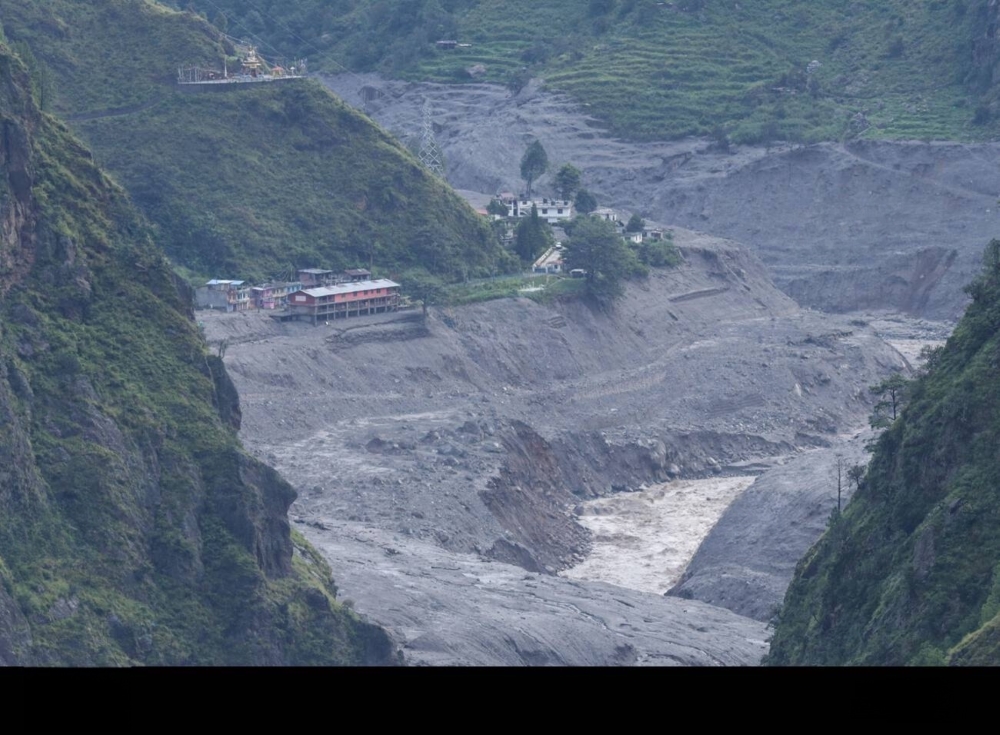
This is the region where I won't pretend everything is fine, because it isn't, and pretending would be a disservice to the people actually rebuilding it.
The access road runs through Dhunche to Syabrubesi, which took the worst of the damage. That corridor is currently closed to trekkers, and while the trail itself, up toward Langtang Village and Kyanjin Gompa, hasn't been reported as directly damaged, there's no safe way to reach it right now. Local estimates put reopening around late September, though I'd treat that as a working estimate rather than a date to book flights against. You can read more about what the region normally offers, and what we're watching for, on our Langtang region page, which we're updating as conditions change.
If you have a Langtang itinerary with us this season, you'll hear from me directly rather than finding this out on your own once you land in Kathmandu. That's a promise, not a policy line.
Is It Still Monsoon Season? Will There Be More Flooding?
Nepal's monsoon typically tapers off through late September, and this year's disaster wasn't a monsoon flood in the conventional sense. It was triggered by a glacial collapse, a genuinely rare event, rather than the seasonal rainfall pattern that normally shapes trekking risk here. That distinction matters. The autumn window, October through early December, is the same stable, clear-sky season it has always been. If seasonal timing is part of your planning, our guide to the best time to trek Annapurna walks through how the calendar actually behaves region by region, which is more useful than a single "best season" answer for a country this varied.
Are Flights to Kathmandu, Lukla, and Pokhara Running Normally?
Yes, with one road caveat worth knowing. The Prithvi Highway, the main overland route between Kathmandu and Pokhara, sustained damage at Krishna Bhir in Dhading district. If you were planning to drive to Pokhara, that route needs checking day by day. In practice, this changes almost nothing for our clients, since the 25-minute flight between Kathmandu and Pokhara is running as normal, and it's the option we default to regardless. Lukla flights for Everest region treks are unaffected, since that route never touched the flood corridor at any point.
The Data That Debunks the "Nepal Is Flooded" Headlines
Here's what the numbers actually show. Nepal recorded 85,444 international arrivals in August 2026, against 88,680 in the same month the year before, a 3.6% dip in the exact month the disaster happened, not a collapse. India remained the largest source market by a wide margin, and several markets, including Russia, Ukraine, and Bhutan, actually grew year over year that same month.
That's not the picture painted by "Nepal devastated by floods." It's a country that absorbed a genuine tragedy in one district while the rest of its tourism economy kept moving. Tourism officials have acknowledged that September bookings dipped in the weeks right after the news broke, which tells you the damage right now is more reputational than physical for the overwhelming majority of the country.
Is It Ethical to Still Visit Nepal Right Now?
I'd argue it's more ethical to come than to stay away.
Trekking tourism isn't incidental to the districts affected by this disaster; it's central to their recovery. Guides, porters, teahouse owners, and transport operators in Rasuwa and the surrounding region depend on trekking income that flows through the same economy now working to rebuild. Cancelling a trek to Manaslu or the Annapurna Circuit, regions that were never touched by the flood, doesn't help anyone in Rasuwa. It just removes income from guides and porters who had nothing to do with what happened and everything to gain from a normal season. If you're curious how that income actually reaches the people doing the work, I've written honestly about what guides and porters get paid in Nepal, tips included, and it's not routed through us. It goes to them directly.
This is the same principle we operate on everywhere: your presence, done thoughtfully, supports the place rather than extracting from it. Right now, that principle has a very literal, very immediate meaning.
How Is Nepal Recovering? Rebuilding Timeline
The scale of the physical damage is worth being specific about, because vague reassurance is what makes people distrust an update like this one. The flood destroyed 41 of the 63 motorable bridges along the corridor between Rasuwa and Chitwan, leaving only 18 intact, and washed out roughly 55 kilometres of the strategic highway toward the Chinese border, along with 68 trail-bridge spans used by local communities on foot.
The government's Rapid Damage and Needs Assessment put transport recovery costs at Rs 73.34 billion, with Rs 18.16 billion of that earmarked specifically for bridges, including Rs 1.55 billion set aside for the fastest fix: temporary modular crossings rather than permanent rebuilds. Nepal isn't waiting to rebuild everything properly before reopening access. It's triaging.
On the ground, that means the Nepali Army is constructing a temporary bridge over the Tadi River to restore the Galchhi-Trishuli road, and two cable pulley systems, known locally as tuin, installed at Trishuli Indrenighat and Devighat to keep people and essential goods moving while permanent bridges go up. Between Rasuwagadhi and Syafrubesi specifically, authorities have identified a need for seven Bailey bridges ranging from 30 to 70 meters, and both China and India have committed modular bridge sections, with the first shipments already moving toward the border region. The Syaphrubesi-Rasuwagadhi road itself, a 16-kilometre stretch China had been upgrading before the flood erased the work entirely, is now the subject of a fresh rebuilding request to Beijing, with a temporary track planned in the meantime.
None of this touches Everest, Annapurna, or Manaslu. It's the specific, unglamorous work of reconnecting Rasuwa, and it's the reason Langtang has a real timeline rather than a guess: the road has to exist before trekkers can use it, and right now that road is being rebuilt one temporary bridge at a time. The Nepal Tourism Board has been running its #NepalCalling message through all of this, and for once a tourism board slogan and the facts on the ground actually line up.
Where This Leaves You
If you're trying to decide something practical, here it is. Book Everest, Annapurna, Manaslu, or Mustang with confidence; they're running exactly as they always have. Hold off on committing to hard dates for Langtang until the road work catches up, and let us track that for you rather than piecing it together from news coverage yourself. And if you're weighing whether Nepal deserves your trip at all this season, remember that the guides, porters, and lodge owners in the regions that were never touched by this flood are counting on a normal autumn the same as any other year.
We've been walking these valleys long before this happened, and we'll be walking them long after the last bridge in Rasuwa is rebuilt. Get in touch or message us directly on WhatsApp, and we'll give you the same honest, up-to-date picture we've given you here, region by region, for as long as it takes.
FAQ
Is Everest Base Camp affected by the Nepal floods?
No. The August 2026 flood was concentrated along the Bhote Koshi–Trishuli river corridor in northern Rasuwa. The Everest region lies much farther east and drains through the Dudh Koshi River system, so the flood did not reach the Khumbu trekking area or the Everest Base Camp trail.
The usual Everest Base Camp route from Lukla to Namche, Tengboche, Dingboche, Lobuche and Everest Base Camp has not been reported as damaged by the floods. Lukla flights have also continued operating.
So, if you are booked on our Everest Base Camp Trek, there is no flood-related change to the trekking route or itinerary at this time. Normal high-altitude considerations such as weather, flight delays and altitude remain separate from the flood situation.
Is the Annapurna Circuit safe after the Nepal floods?
Yes. The Annapurna Circuit was outside the directly flood-affected area. The major August flood occurred in the Rasuwa–Trishuli corridor, while the Annapurna region lies in a separate part of central Nepal with different river systems.
There was temporary disruption on the Kathmandu–Pokhara road after flood-related damage, but the highway has since reopened to traffic. This means the Annapurna trekking route itself is not affected by the Rasuwa flood, although road conditions can still change during Nepal's monsoon transition period.
For the latest route information, transport arrangements and trekking conditions, see our Annapurna Circuit Trek page.
When will Langtang reopen after the floods?
Langtang is the main trekking region directly affected by the August 26 flood.
The biggest problem is currently access, rather than the entire Langtang trekking route being washed away. Syabrubesi, the traditional roadhead for the Langtang Valley Trek, suffered major damage, with roads and bridges along the approach from Dhunche affected by the flood.
There have been local estimates for reopening the road in late September, while other recovery plans have pointed toward October. These are working estimates rather than a guaranteed reopening date, so we would not advise travellers to book around a specific date until access has been officially confirmed.
If you are planning a Langtang trek, check our Langtang region page shortly before departure or contact us directly. We can confirm the latest road, trail and accommodation situation before your trek.
Is Manaslu open for trekking this autumn?
Yes, but there is an important detail travellers should know.
Manaslu was not affected by the August Rasuwa flood, because it lies in a different watershed and access corridor. However, a separate flash flood later affected the Manaslu area near Namrung in Gorkha, damaging bridges on the trekking route.
A temporary crossing was subsequently established, and trekking access has been reported as restored. Because the replacement infrastructure is temporary, current bridge and trail conditions should still be checked before departure rather than assuming the route is identical to previous seasons.
For the latest itinerary and route information, see our Manaslu Circuit Trek page.
Should I cancel my Nepal trek because of the floods?
Not simply because there were floods in Nepal.
The important question is which trekking region your itinerary uses. The August disaster was concentrated around Rasuwa and the Bhote Koshi–Trishuli corridor. Langtang, Gosaikunda and routes that depend on the Syabrubesi/Dhunche access corridor have been the most directly affected. Everest and Annapurna have not been directly affected by that flood.
If your itinerary goes through Langtang or Gosaikunda, do not rely on an old itinerary or a generic “Nepal is open” statement. Ask your trekking operator to confirm the current road and trail conditions before travelling.
If your trek is elsewhere, there may be no reason to cancel solely because of the flood. We can check your specific route and advise whether any part of your itinerary needs to be changed.
If you're unsure, contact us or message us on WhatsApp before making a decision.