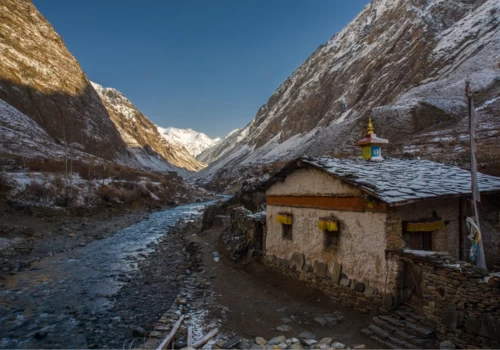
The Manaslu region sees roughly 10,000 trekkers per year. Everest Base Camp sees three to four times that number every season. Everything that makes Manaslu extraordinary flows from that single fact.
What makes the Manaslu region different
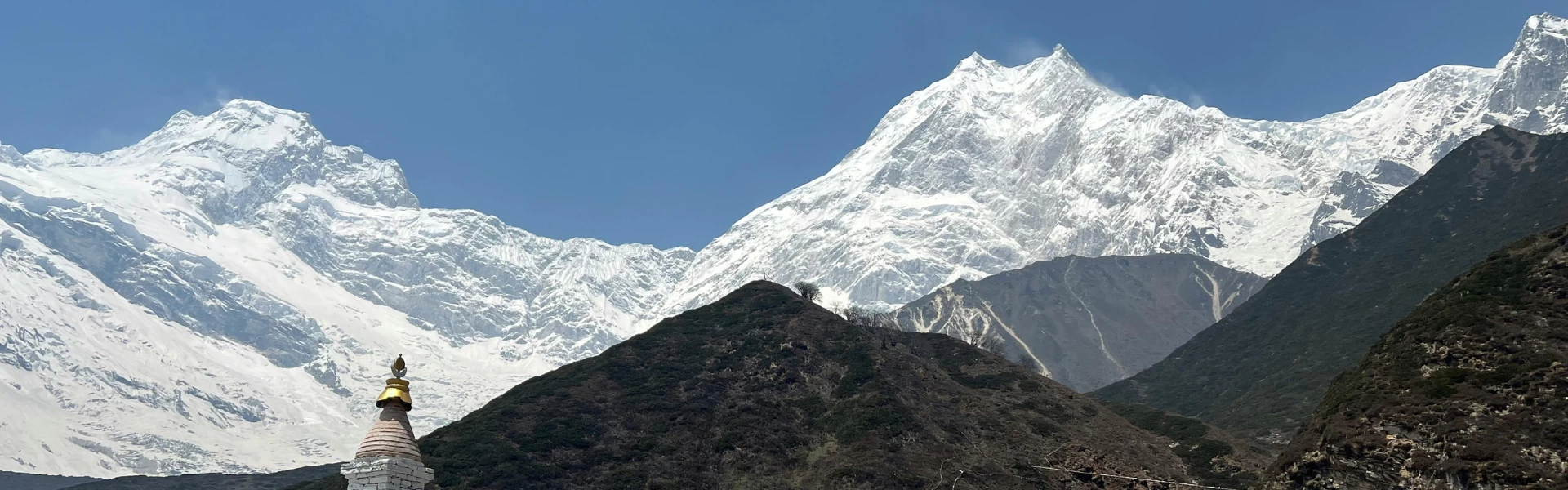
The Manaslu Circuit circumnavigates Mount Manaslu — the world's eighth highest peak at 8,163 metres — through one of the most culturally preserved landscapes in Nepal. The Gorkha District has been connected to Tibet through ancient trade routes for centuries. Tibetan traders, families, and monks moved through the high passes and settled in the Budhi Gandaki river valley, bringing their architecture, their beliefs, their agricultural practices, and their language with them.
What exists today in the upper circuit villages — particularly Samagaon and Samdo, which sit four kilometres from the Tibetan border — is the result of that centuries-long exchange, completely intact and completely alive. Houses built from mud and slate stone. Yaks ploughing fields, a Tibetan agricultural practice that does not exist anywhere in Nepal's lowlands. Monasteries that have not been adjusted for tourism — Ribung Gompa in Lho, Pungyen Gompa above Samagaon, where the butter lamps burn in the same light they have burned in for hundreds of years.
We have been running treks in this region for over twenty years. Our 20-year career began in the Everest region but our understanding of what makes Nepal genuinely special deepened significantly once we started guiding Manaslu.
The permit situation of Manaslu— updated March 2026
The Manaslu Circuit is a restricted area. As of March 22, 2026, the two-person permit requirement has been removed. Solo trekkers can now obtain a restricted area permit individually. A licensed guide through a registered agency is still mandatory — solo does not mean independent.
Three permits are required: the Manaslu Restricted Area Permit (MRAP), the Manaslu Conservation Area Permit (MCAP), and the Annapurna Conservation Area Permit (ACAP). We handle all three on your behalf. Processing takes one to three business days.
The trails in Manaslu
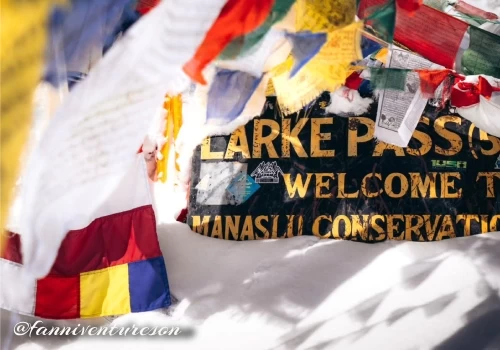
Manaslu Circuit 14 days — the flagship. Circumnavigates Manaslu, crossing the Larkya La Pass at 5,106 metres. The most complete cultural and mountain experience in Nepal's restricted area network. Our recommended starting point for anyone considering the region.
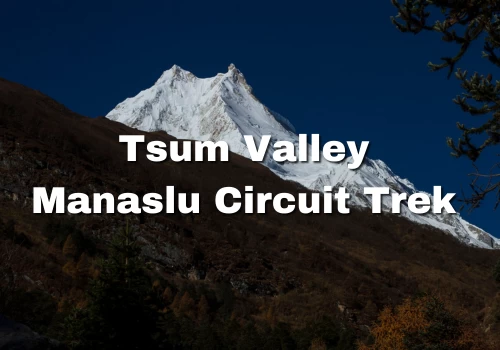
Manaslu and Tsum Valley 22 days — combines the circuit with the hidden Tsum Valley, a sacred Buddhist valley near the Tibetan border that was closed to outsiders until 2008. For trekkers who want the deepest possible immersion in this region.
Tsum Valley 12 days — the Tsum Valley alone. Sacred, remote, and culturally unlike anything else in Nepal. Monasteries, nunneries, prayer walls, and a community that has maintained its Tibetan Buddhist way of life in near-complete isolation.
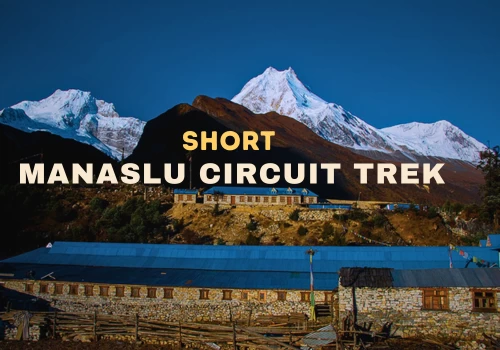
Short Manaslu Circuit 10 days — the most efficient route around the mountain. Less acclimatisation margin, faster pace, same Larkya La crossing. For fit trekkers with limited time who have prior high-altitude experience.
Who Manaslu is right for
Manaslu is for the trekker who has done Everest Base Camp or the Annapurna Circuit and wants to understand what Nepal's mountains feel like off the main tourist circuit. It is for the trekker who values culture as much as scenery. It is specifically for the trekker who wants an itinerary that can be genuinely flexible — rest days added, pace adjusted, side trips incorporated — rather than managed by peak-season teahouse availability.
It requires prior trekking experience. The Larkya La crossing is demanding by any standard. But for any fit, experienced trekker, the Manaslu Circuit is the most rewarding trail in Nepal.
Manaslu vs Everest Base Camp — the key differences
Everest Base Camp has better infrastructure, more services, and the world's most famous mountain as its destination. Manaslu has living culture, genuine remoteness, and a trail that has not been reshaped by mass tourism. Both are extraordinary. They attract different kinds of trekkers. Read our full comparison guide to decide which is right for you.
Best time for Manaslu
Spring (March to May) and autumn (September to November) are optimal. Autumn is generally preferred — stable weather, exceptional visibility, full lodge availability. Spring brings rhododendrons at lower altitudes and the cultural energy of festivals. Winter is possible for experienced trekkers accepting cold conditions on the Larkya La.
See all our Manaslu region packages, or contact us to build your custom circuit.