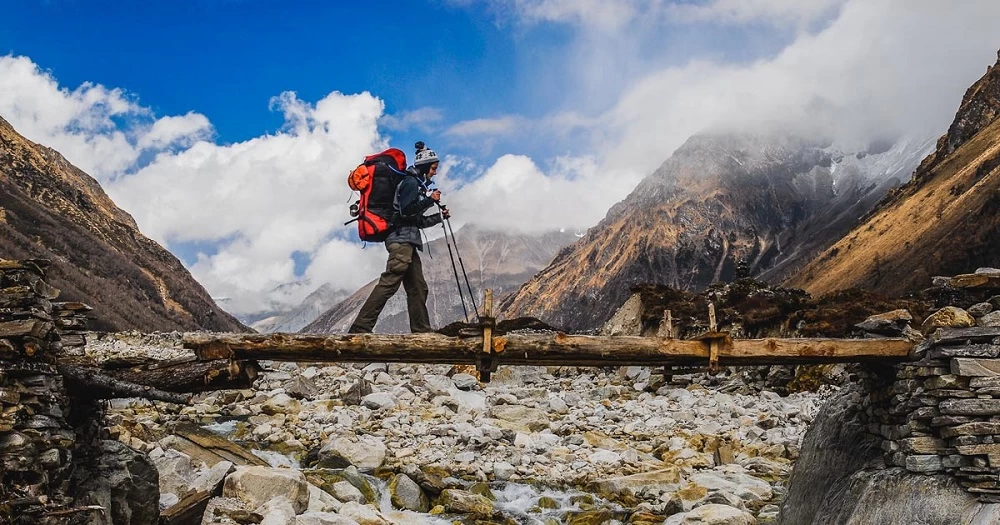
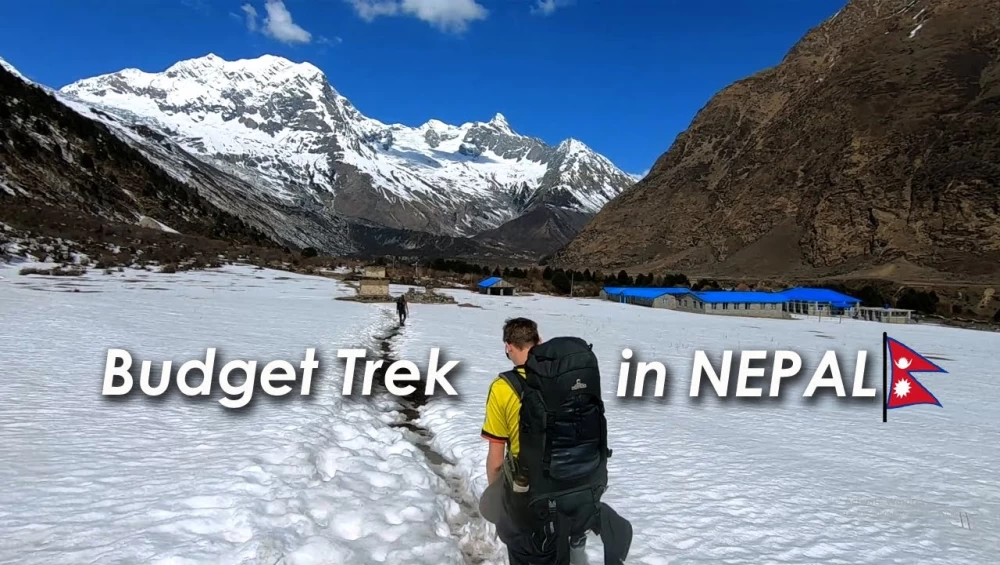
There is a version of the Manaslu Circuit that most people don't know exists.
It doesn't require three weeks. It doesn't require you to have trekked the Himalayas before. What it does require is that you arrive ready — physically prepared, genuinely curious, and willing to walk into a part of Nepal where the 21st century has not yet rewritten the landscape.
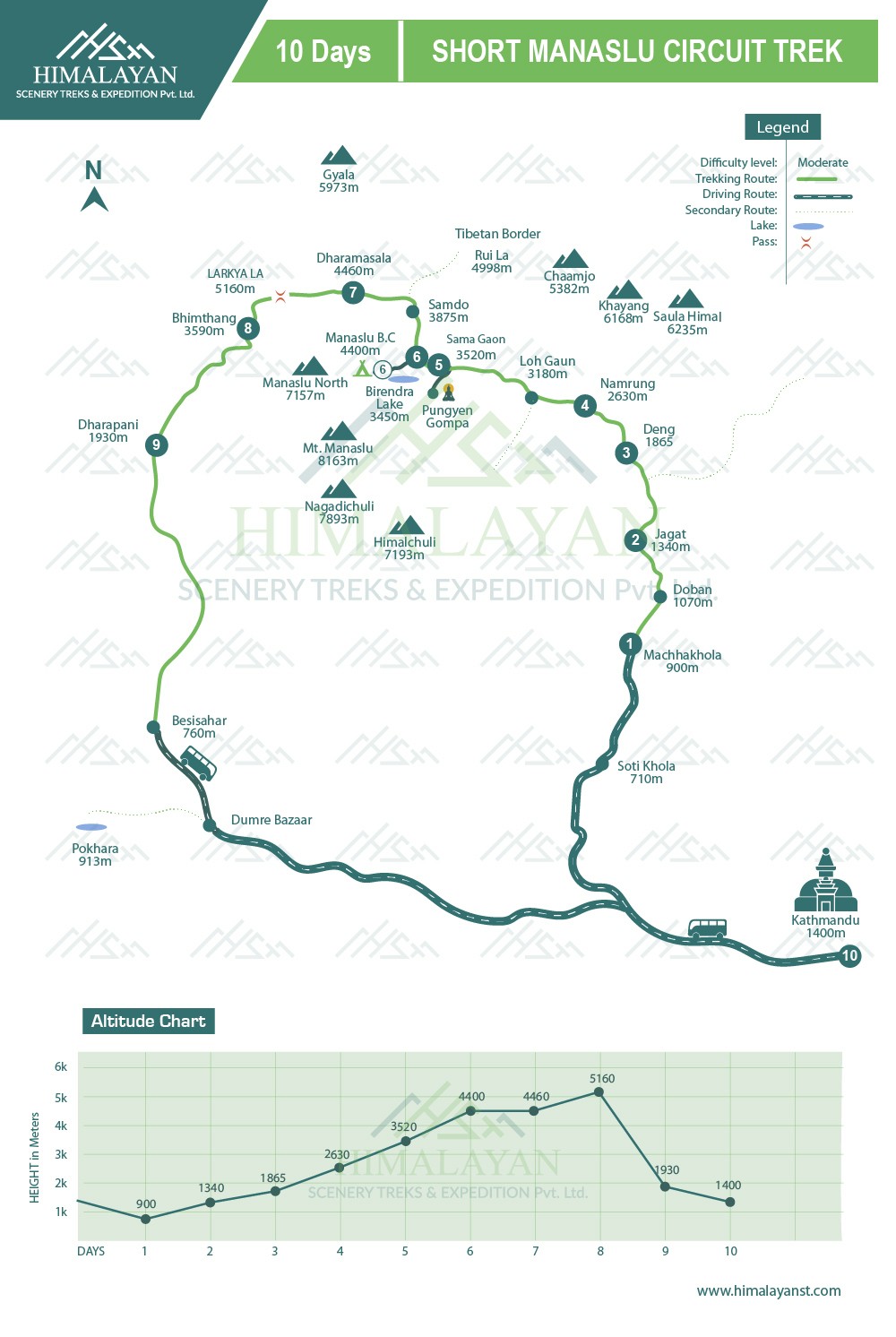
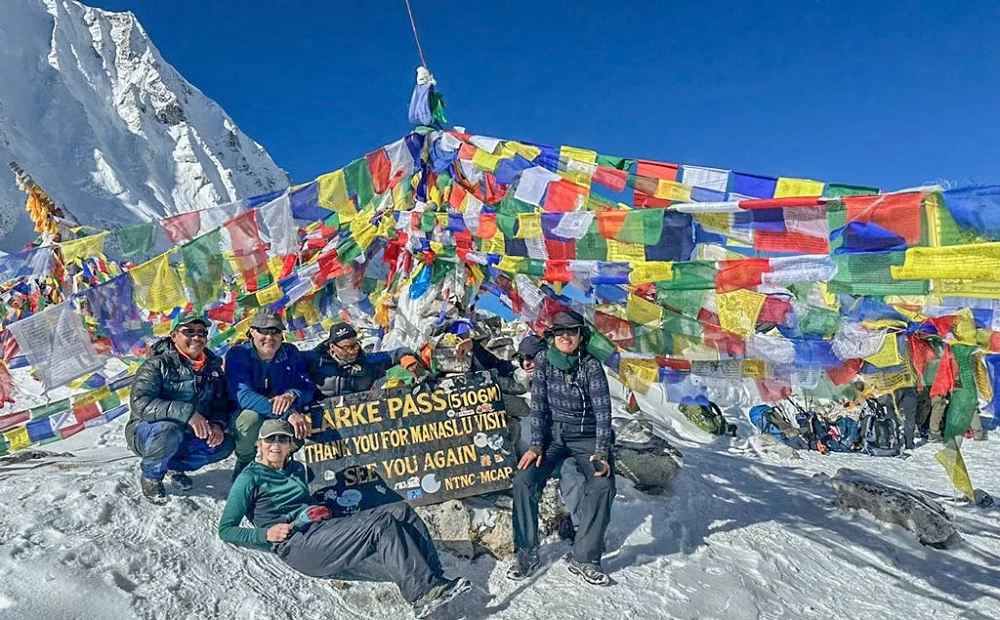
The Short Manaslu Circuit Trek completes the essential arc of one of the Himalayas' most compelling restricted-area routes in 10 days. You begin where the paved road ends, follow the Budhi Gandaki River north through gorges that squeeze to near-darkness, climb through Tibetan villages that have practiced the same form of Buddhism for centuries, cross Larke La Pass at 5,106m with Manaslu filling the sky to the north, and descend into the Annapurna valley on the other side.
Ten days. One complete crossing. An experience that rewards you not with spectacle, but with something quieter — the feeling of having moved through a place that is still itself.
What Makes This Trek Different from Every Other Himalayan Route
Most well-known treks in Nepal have become destination corridors. Namche Bazaar has coffee shops and bakeries. The EBC trail in October looks like a queue. That's not a criticism — those treks are extraordinary — but it means something specific about the experience you'll have.
Manaslu is different in kind, not just in degree.
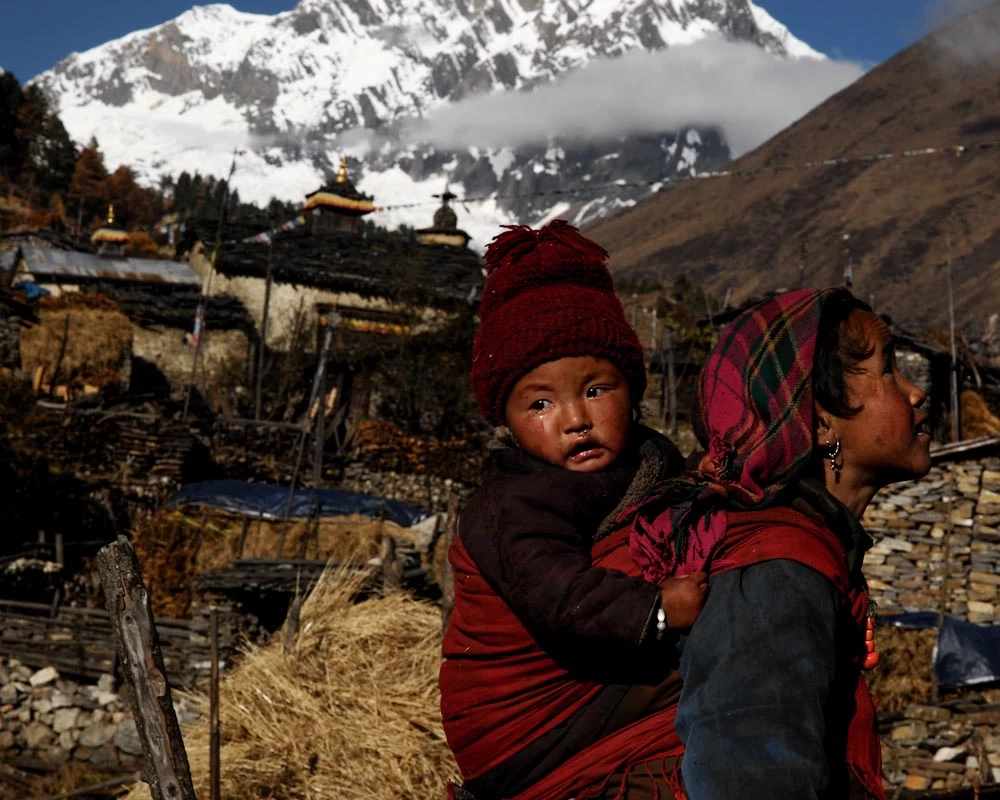
The route is a restricted area. Permits are limited. Independent trekking is not permitted — you must be accompanied by a licensed guide from a registered agency. The result is that the trail retains a quality that is increasingly rare in Himalayan trekking: it feels like you found it. Villages like Namrung, Lho, and Samagaon haven't adjusted their identity for passing trekkers. The monasteries are active, not curated. The farmers in the fields at dusk are farming, not performing.
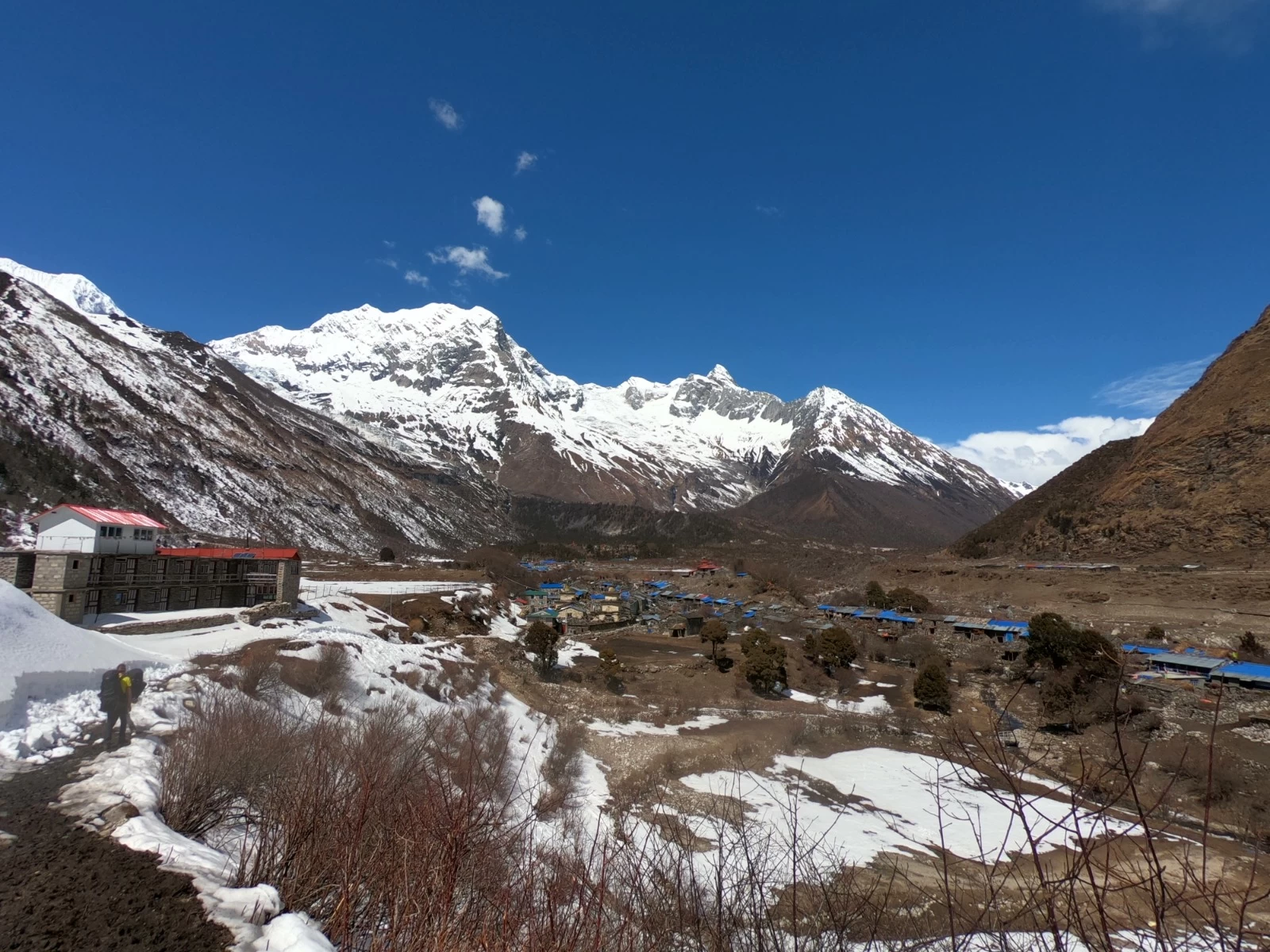
When you sit at a teahouse in Samagaon with a view of the Manaslu Glacier and the village's yaks moving slowly across the hillside, you are not watching Nepal. You are inside it.
Short Manaslu Circuit vs Full Manaslu Circuit — Which Is Right for You?
The full Manaslu Circuit typically runs 14–17 days from Soti Khola. The short version begins further along the trail at Machha Khola, cutting the lower valley approach and focusing the itinerary on the middle and upper circuit — the culturally richest and most dramatically Himalayan section.
Choose the short version if:
- You have 10–12 days available
- You've trekked at altitude before and understand acclimatisation
- You want the essential Manaslu experience — Tibetan highlands, Larke La crossing, Manaslu views — without the lower gorge approach
- You are an experienced hiker who prefers depth of experience over maximum distance
Choose the full 14-day circuit if:
- This is your first Himalayan restricted-area trek
- You prefer a slower altitude gain profile
- You want the complete gorge-to-pass narrative
→ Read our full comparison:Manaslu Circuit Trek — 14 Days Around the World's 8th Highest Peak
The Manaslu Circuit vs Everest Base Camp — An Honest Comparison
People who have done EBC often ask whether Manaslu is worth doing next. People who haven't done EBC often ask which to choose first.
Here is the honest answer: they are not the same type of experience.
EBC is about arrival at an icon. The trail is well-established, well-serviced, and delivers the world's most recognisable mountain view as its climax. The infrastructure is excellent. The crowds in peak season are real.
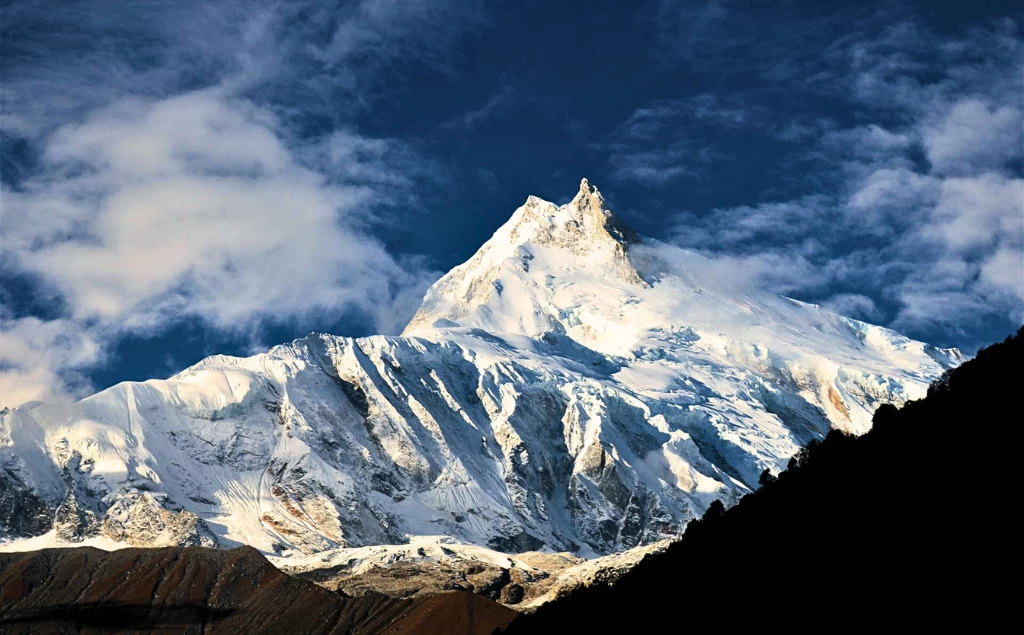
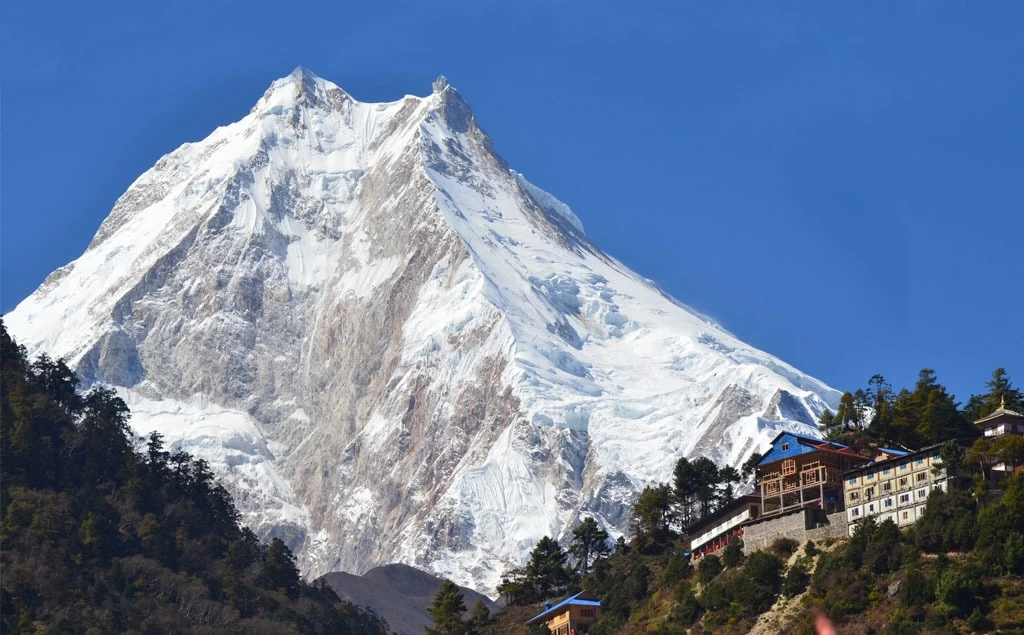
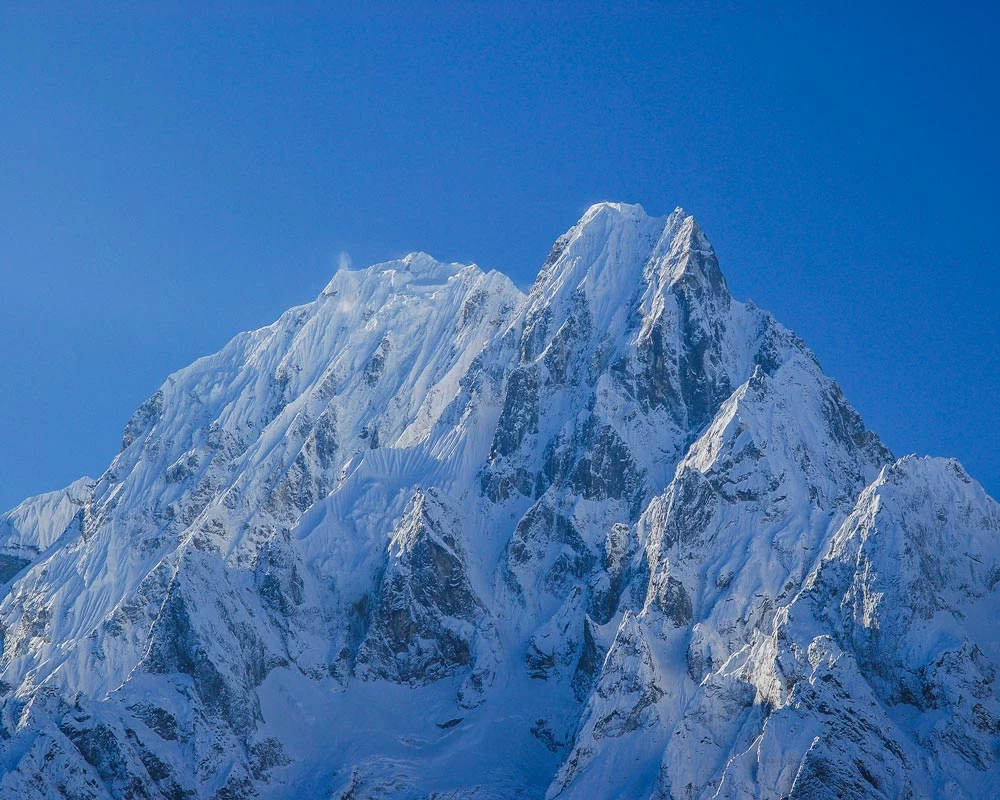
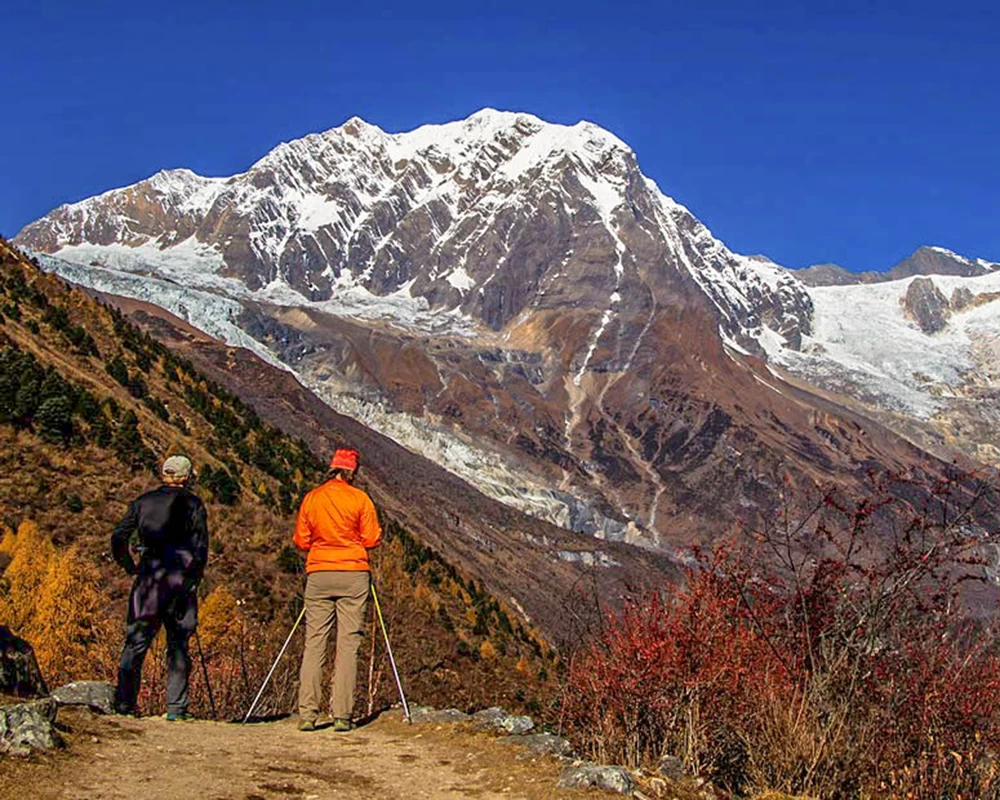
Manaslu is about immersion in a living landscape. The mountain (8,163m, the world's 8th highest) is no less impressive — and in fact, because you are walking through the restricted area that surrounds it rather than approaching a base camp, you carry Manaslu with you for days. It appears from different angles, in different light, at different distances. It is never a destination you are walking toward. It is a presence you are walking alongside.
For trekkers who have already done EBC and are wondering what's next — Manaslu is the answer most people who've done it give. Not because it's harder. Because it's realer.
→ Read the full comparison:Manaslu vs Everest Base Camp Trek — Which Is Right for You?
The Tibetan Cultural Landscape of the Manaslu Circuit
The Manaslu region sits on the historical trade and cultural corridor between Nepal and Tibet. The villages in the upper circuit — Lho, Samagaon, Samdo — practice a form of Tibetan Buddhism that predates the political division of the plateau. This is not a cultural experience designed for trekkers. It is a culture that exists whether trekkers are there or not.
What you will encounter:
Ribung Gompa, Lho — One of the oldest and most significant monasteries in the Manaslu region, overlooking a meadow with direct views of the mountain. Monks here conduct regular ceremonies. If your timing allows, sitting quietly at the edge of a morning ritual here is worth the entire trek.
Pungyen Gompa, near Samagaon — A smaller, higher monastery above the main village, reached on the acclimatisation day. The walk itself is the experience: yak pastures, glacial moraine, complete silence except for prayer flags moving in wind that carries the smell of high altitude.
Mani walls and chortens throughout — The correct approach is to pass to the left, keeping the sacred structure on your right. Your guide will ensure this. It matters to the communities you pass through.
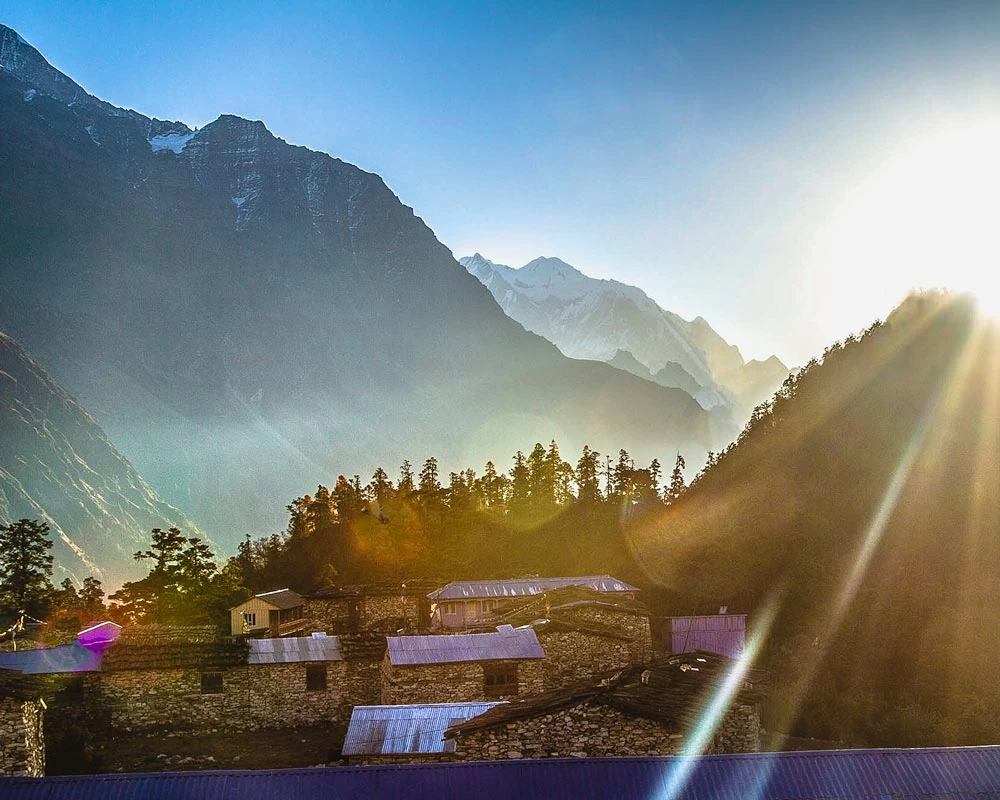
Samagaon village — The cultural heart of the short circuit. A village of stone houses and barley fields, largely unchanged in its layout and daily rhythm. The acclimatisation day here is not a rest day — it is the most culturally concentrated day of the trek.
→ Read more:Tibetan Culture Along the Manaslu Circuit
Crossing Larke La Pass — What to Expect
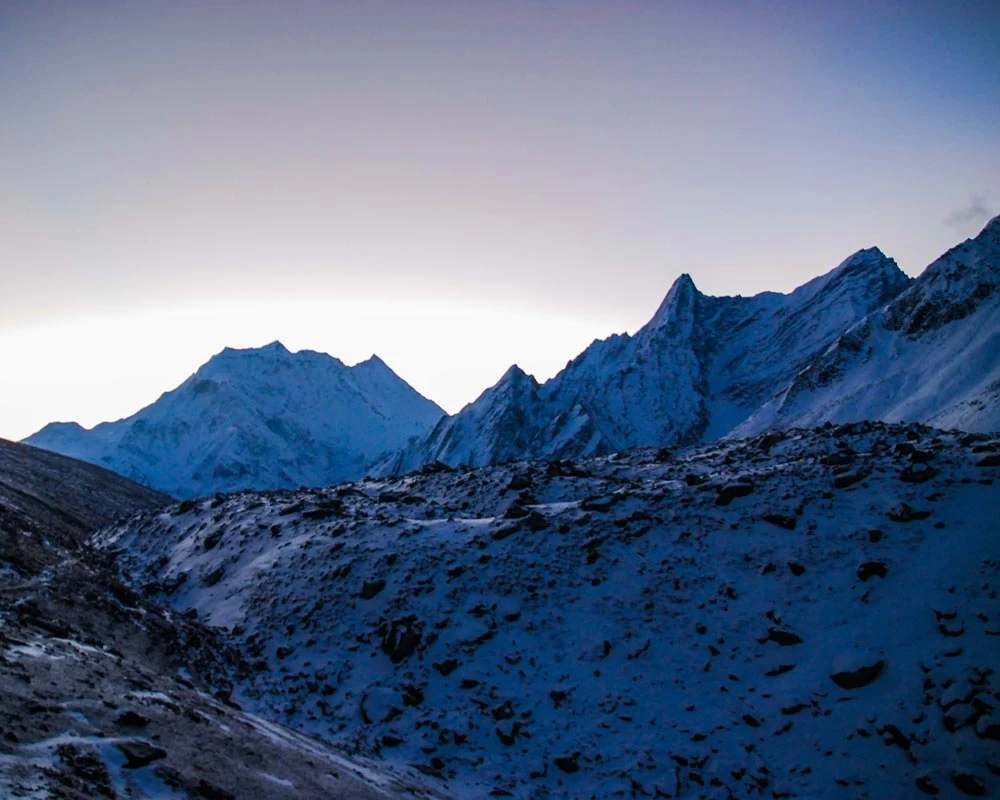
Larke La Pass at 5,106m is the high point of the trek in every sense. Most groups leave Dharamshala (also called Larke Phedi) before 4:00am, moving by headlamp across frozen ground and moraine. The first two hours are cold, dark, and steep enough that your breathing is your primary awareness.
Then the sun rises over the ridgeline.
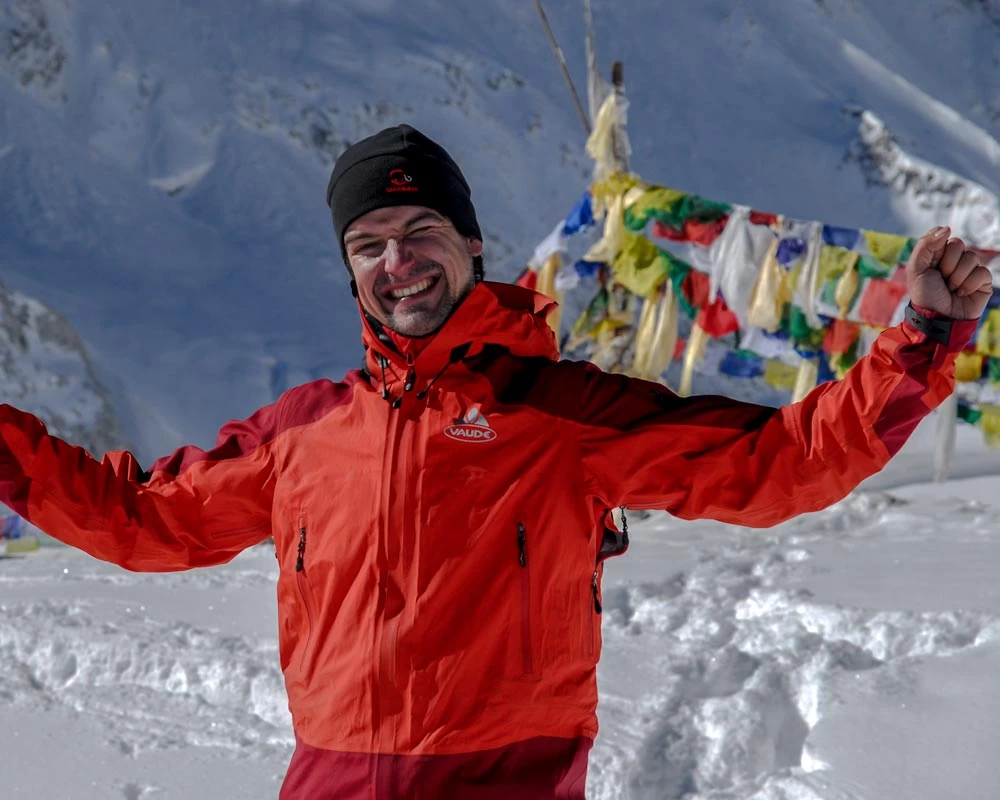
The final approach to the pass is across a wide snowfield with Manaslu growing larger to the north and Himlung, Cheo Himal, and Annapurna II appearing progressively to the south and west. The pass itself is marked with prayer flags and, on clear days in autumn, delivers one of the most complete panoramas of Nepal's central Himalayan range available on any non-technical trek.
The descent to Bhimthang is long (4–5 hours from the pass) and steep in sections, with glacial lakes below and the western face of Manaslu's massif towering above. It is, by consistent report from our trekkers, one of the most visually overwhelming descents in the Himalayas.
Practical notes for Larke La:
- The pass is typically accessible April–May and September–November
- Early December and March crossings require careful weather monitoring
- Your guide carries an oximeter and monitors your saturation twice daily throughout the trek
- If weather or a trekker's condition makes the crossing unsafe, we hold at Dharamshala rather than push — no summit is worth a medical emergency
Permits Required for the Short Manaslu Circuit Trek
The Manaslu Circuit is a restricted area. This means permit requirements are specific, non-negotiable, and only obtainable through a licensed, government-registered trekking agency. You cannot obtain these permits independently.
Manaslu Restricted Area Permit (MRAP) — The core permit. Cost varies by season: USD 100 per week (September, October, November, March, April, May) and USD 75 per week (all other months). A minimum group size of two trekkers accompanied by a licensed guide is required.
Manaslu Conservation Area Permit (MCAP) — NPR 3,000 (~USD 30) per person.
Annapurna Conservation Area Permit (ACAP) — Required because the route exits through the Annapurna conservation area at Dharapani. NPR 3,000 (~USD 30) per person.
All three permits are included in HST's package price. They are arranged in advance before your trek begins — you do not queue for permits on the trail.
Note: A TIMS card is not required for the Manaslu circuit, despite what some older sources state. MRAP supersedes it in this zone.
There is a version of the Manaslu Circuit that most people don't know exists.
It doesn't require three weeks. It doesn't require you to have trekked the Himalayas before. What it does require is that you arrive ready — physically prepared, genuinely curious, and willing to walk into a part of Nepal where the 21st century has not yet rewritten the landscape.
The Short Manaslu Circuit Trek completes the essential arc of one of the Himalayas' most compelling restricted-area routes in 10 days. You begin where the paved road ends, follow the Budhi Gandaki River north through gorges that squeeze to near-darkness, climb through Tibetan villages that have practiced the same form of Buddhism for centuries, cross Larke La Pass at 5,106m with Manaslu filling the sky to the north, and descend into the Annapurna valley on the other side.
Ten days. One complete crossing. An experience that rewards you not with spectacle, but with something quieter — the feeling of having moved through a place that is still itself.
How We Run This Trek — What's Different With HST
This is the section that matters most to us, and it's the one you'll find on no other website.
Guide briefing before you arrive. Your guide is provided with your trekking experience level, physical history, any relevant health information, and — if you've shared it with us — what you're hoping to feel on this trek. Not just what you want to see. What you're looking for. That information shapes how the trek is run on a daily basis.
Acclimatisation is designed, not default. The rest day at Samagaon is not just a schedule buffer. We have a specific approach to that day — the morning at Pungyen Gompa, the afternoon in the village — that we've refined across multiple seasons. It is the most important day for altitude adjustment and, consistently, one of the most remembered days of the trek.
Larke La decision-making is ours, not the weather's. If conditions on the morning of Day 8 are unsafe — sustained wind, low visibility, a trekker showing concerning saturation levels — we do not push. We hold at Dharamshala. No group pressure, no "let's see how far we get." The pass has been crossed safely by thousands of trekkers. It should stay that way.
Small groups. We do not operate this trek as a mass departure. Our typical group size is 2–8 trekkers. If you are a solo traveller, we match you with a private guide rather than adding you to a large group.
The guide is the experience. We are selective about who leads this route. Not just technical competence — though that is required. The guides who lead our Manaslu treks are people who find the same things interesting about this route that our clients do: the monastery at Lho, the light at Samagaon, the feeling of Bhimthang after the pass. That orientation is not something you can train. It is something you recognise when you see it.