.webp)
Most people who contact us about Nepal start with Everest or Annapurna. They've seen the photos, read the forums, and made up their mind. Then I ask them one question: do you want a famous trek, or do you want a real one?
The ones who pause at that question usually end up on Manaslu.
The Manaslu Circuit Trek circles the world's eighth-highest mountain through a restricted area that borders Tibet. There are no crowds. No Starbucks at base camp. No Instagram queues at the pass. What there is — the Nubri culture, the narrow gorges of the Budhi Gandaki, the feeling at Samagaon that you have genuinely left the modern world behind — is exactly what most trekkers in Nepal are searching for and not finding on the busier routes.
I've been leading groups through this region for years. This guide covers everything you need to know to do it properly.
What Is the Manaslu Circuit Trek?
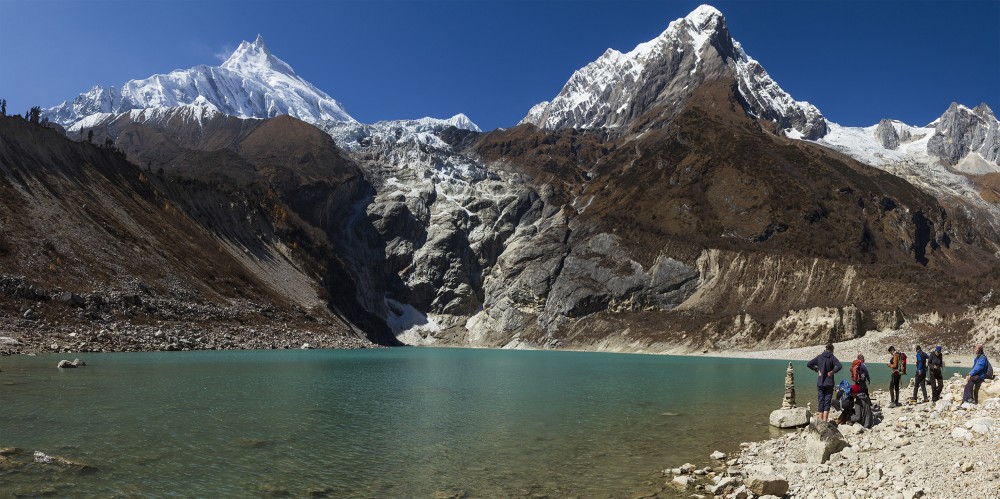
The Manaslu Circuit Trek is a 14-day loop through the Manaslu Conservation Area in the Gorkha district of Nepal. The route follows the Budhi Gandaki river valley from Machha Khola, climbs through a series of increasingly remote villages, reaches its highest point at Larkya La Pass (5,106m), and descends into the Annapurna region at Dharapani.
The defining feature of this trek isn't the mountain, though Manaslu at 8,163m is extraordinary. It's the cultural corridor. From roughly Day 6 onward, you are walking through settlements that look and feel Tibetan — prayer flags on every rooftop, mani walls running the length of the trail, monks who have lived their entire lives in valleys most Nepalis have never visited. This is the Nubri and Tsum community, and they are the reason this trek is different.
Quick facts on Manaslu:
| Detail | Information |
|---|---|
| Duration | 14 days (standard) / 10 days (short) |
| Max elevation | Larkya La Pass — 5,106m / 16,752ft |
| Difficulty | Moderate to challenging |
| Restricted area | Yes — licensed guide + special permit required |
| Best seasons | March–May and September–November |
| Start point | Machha Khola (drive from Kathmandu) |
| End point | Dharapani (drive back to Kathmandu) |
Why Manaslu Instead of Everest or Annapurna?
This is the question I'm asked most often, and it deserves a direct answer.
Everest Base Camp is extraordinary. So is the Annapurna Circuit. But both routes have changed significantly over the past two decades. Teahouses are dense, trails are signed like motorways, and during peak season, you are walking in a column. That isn't a criticism — it's just the reality of what happens when a route becomes world-famous.
Manaslu has not gone that way. It sits in a restricted area, which means every trekker must be accompanied by a licensed guide and carry a special permit. That single requirement has kept the route self-limiting. The infrastructure is simpler, the trail is quieter, and the villages you walk through haven't rearranged themselves around tourism.
The other thing Manaslu offers is cultural depth that is genuinely hard to find elsewhere in Nepal. The Nubri people have lived in this valley for centuries. Their practices, their monasteries, their relationship with the mountain above them — none of it is staged for visitors. You walk through it as a guest, not an audience.
If you've already done Everest Base Camp and want to understand why you came to Nepal in the first place, Manaslu is where you go next.
Manaslu vs Everest Base Camp vs Annapurna Circuit
This comparison comes up in almost every conversation I have with returning trekkers. Here's the honest version — not the marketing version.
| Manaslu Circuit | Everest Base Camp | Annapurna Circuit | |
|---|---|---|---|
| Duration | 14 days | 12–14 days | 12–21 days |
| Max elevation | 5,106m (Larkya La) | 5,364m (EBC) | 5,416m (Thorong La) |
| Crowd level | Low — ~10,000 trekkers/year | High — 40,000+ trekkers/year | High — 100,000+ trekkers/year |
| Permit requirement | Restricted area — guide mandatory | TIMS + ACAP only | TIMS + ACAP only |
| Cultural depth | Very high — Nubri/Tibetan communities | Moderate — heavily tourism-oriented | Moderate — variable by section |
| Trail condition | Rougher, less maintained | Well maintained | Very well maintained |
| Teahouse quality | Simple to moderate | Good to very good | Good to very good |
| Best for | Depth, rawness, cultural immersion | Mountain drama, iconic achievement | Scenery variety, accessibility |
| Difficulty | Moderate–challenging | Moderate–challenging | Moderate–challenging |
The table tells you the facts. Here's what the table can't tell you.
Everest Base Camp is one of the great trekking experiences in the world. I say that without hesitation. The Khumbu is extraordinary — the scale of the peaks, the Sherpa culture, the approach to the icefall. But the route has been absorbed by its own fame. In October, you are walking in a moving column. The teahouses at Namche and Dingboche are restaurants. The trail is signed and paved in sections. None of that diminishes the mountain — but it does change the experience of walking toward it.
The Annapurna Circuit at its best — the high sections above Manang, the crossing of Thorong La, the descent into Mustang's rain shadow — is spectacular. But the lower sections of the circuit have been progressively bypassed by road construction, and the jeep track now runs parallel to much of the trail. The circuit is not what it was twenty years ago. Parts of it still are. But you need to know which parts.
Manaslu has not changed in the same way. The restricted area permit has been a quiet guardian. The trail from Soti Khola to the pass still feels earned. The villages in the upper circuit — Lho, Samagaon, Samdo — are not organised around your visit. The teahouses serve what they serve. The monks are doing what they were doing before you arrived and will continue doing after you leave.
This is not a criticism of Everest or Annapurna. It's an observation about what Manaslu still has that the others have partially lost: the feeling that you are a guest in a place, not a customer in an experience.
If you are choosing between the three and depth matters more to you than infrastructure or iconic brand recognition, Manaslu is the answer.
Manaslu Circuit Trek Permits (2026)
Because the Manaslu Conservation Area is a restricted zone, you need two permits before you can enter. This is non-negotiable, and it's also the mechanism that keeps the trail what it is.
1. Manaslu Restricted Area Permit (RAP)
This permit is issued on a week-by-week basis and varies by season:
- September–November: USD 100 per week
- December–August: USD 75 per week
You must be accompanied by a licensed guide. Solo trekking is not permitted. As of 2026, solo travellers can enter with a licensed guide, and the $50/day RAP — the old rule preventing solo entry has changed.
2. Manaslu Conservation Area Permit (MCAP)
This is a flat fee of USD 30$. It covers entry into the conservation area regardless of duration.
Both permits are arranged through a registered trekking agency — you cannot obtain them independently. If you're booking with us, we handle all permit logistics as part of your package.
For a full breakdown of what permits cost across the circuit, see our detailed guide on Manaslu Circuit Trek cost.
Best Season for the Manaslu Circuit Trek
Spring (March–May) — Recommended
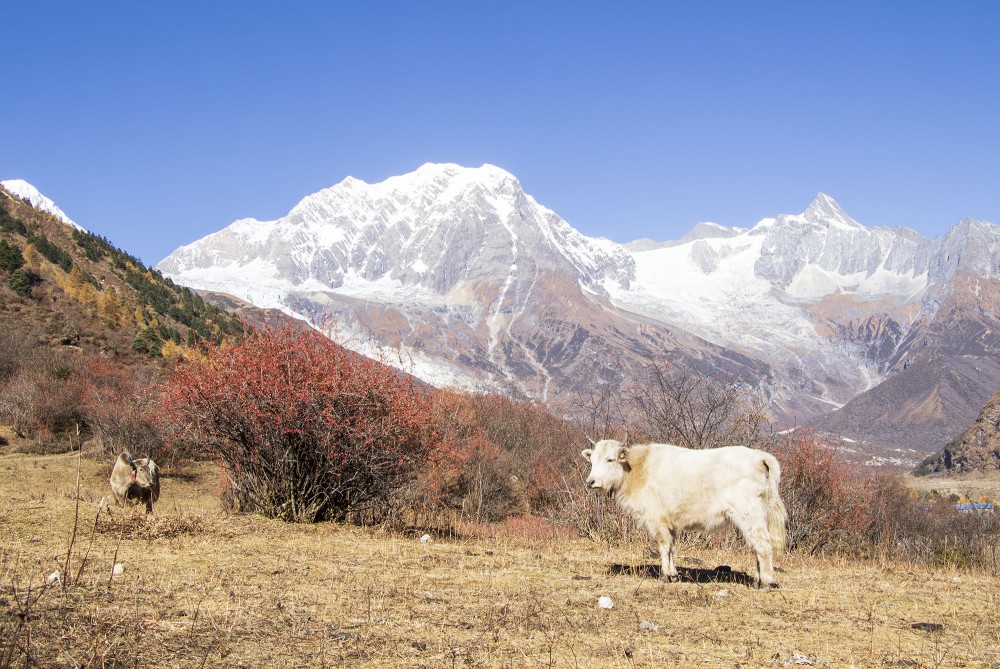
This is my preferred window for Manaslu. The rhododendrons are in bloom from the lower valleys up through the treeline, the skies are largely clear, and the trail has far fewer trekkers than in autumn. Days are warm enough to walk comfortably; nights at elevation are cold but manageable with the right gear. Larkya La is open and passable.
Autumn (September–November) — Most Popular
The post-monsoon window delivers crisp air and excellent visibility. Mountain views are at their clearest, particularly of Manaslu and the surrounding peaks from Samagaon. This is peak season, which means teahouses fill quickly — book ahead. October is the busiest month.
Winter (December–February) — Not Recommended
Larkya La receives heavy snowfall and can be closed entirely. Temperatures at Samagaon and Samdo drop severely at night. Some teahouses along the upper circuit close for the season. I don't recommend this window unless you have significant high-altitude cold-weather experience and are prepared for the possibility of an alternative descent.
Monsoon (June–August) — Not Recommended
The Budhi Gandaki valley receives substantial rainfall during the monsoon. Trails become slippery and unstable, landslides close sections regularly, and leeches are prevalent in the lower forest zones. The views you came for are largely obscured.
For a detailed month-by-month breakdown, read our guide on the best season for the Manaslu Circuit Trek.
Day-by-Day Itinerary: Manaslu Circuit Trek (14 Days)
Day 1: Arrive Kathmandu (1,400m)
Your guide meets you at Tribhuvan International Airport. After a 7–8 hour flight from most European or American cities, today is for rest. We arrange your hotel in Thamel and run through your permit paperwork and kit check in the evening. If you've arrived from a dramatically different time zone, do nothing more than a short walk around the neighbourhood.
Day 2: Kathmandu — Preparation and Cultural Orientation
Your guide takes you through the key UNESCO heritage sites: Boudhanath, Pashupatinath, and one of the Durbar Squares. But more importantly, this day is about conversation. We talk about what you'll encounter — the culture of the Nubri people, what to expect at the monasteries, and how to behave at a Tibetan Buddhist site. Trekkers who understand what they're walking into have a fundamentally different experience than those who arrive cold.
Day 3: Drive Kathmandu to Soti Khola (700m) — approximately 8–9 hours
The drive out of Kathmandu through Arughat and down to the Budhi Gandaki valley takes most of a day. The road deteriorates after Arughat — this is not a coach transfer, it's the beginning of leaving the ordinary world behind. By the time you reach Soti Khola, the river is loud, the air is different, and the city is genuinely gone.
Day 4: Soti Khola to Machha Khola (890m) — 5–6 hours, ~12km
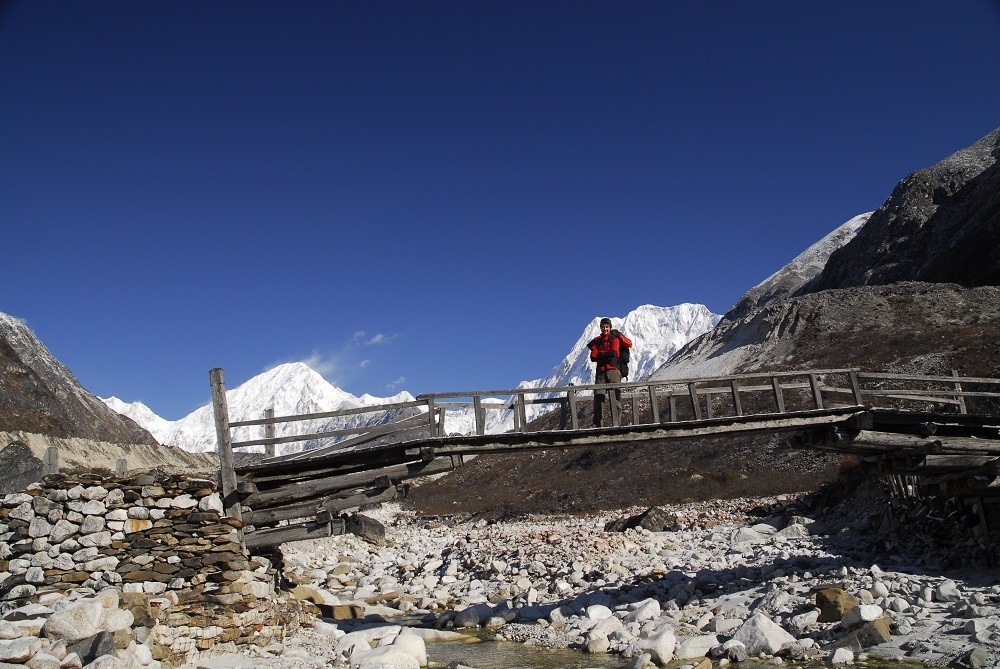
The first walking day. The trail follows the Budhi Gandaki through sal forest and terraced farmland, crossing suspension bridges above river gorges. It's a relatively gentle introduction — the terrain is warm and green, the gradient is forgiving, and the scale of what's ahead hasn't revealed itself yet. Machha Khola is a small bazaar village with solid teahouses and the first hint of the upper valley's character.
Day 5: Jagat to Deng (1,865m) — 6 hours, ~20km
A longer day through increasingly dramatic gorge country. The trail climbs to Sirdibas before descending to Phillim, a Gurung village with a small monastery. Further north, the valley narrows, and the sound of the river fills everything. By Deng, the Tibetan cultural influence begins to show — the architecture changes, mani walls appear, the prayer flags become more frequent.
Day 6: Deng to Namrung (2,630m) — 6 hours, ~19km
The trail passes through Ghap, where you'll see your first significant mani walls — long stone structures carved with Buddhist scripture. The transition from Gurung to Tibetan Buddhist cultural territory happens gradually over these two days, and Namrung is the first village where it feels complete. Stay here rather than pushing further; the views of Siring Himal from the village are worth the evening.
Day 7: Namrung to Samagaon (3,530m) — 6 hours, ~17km
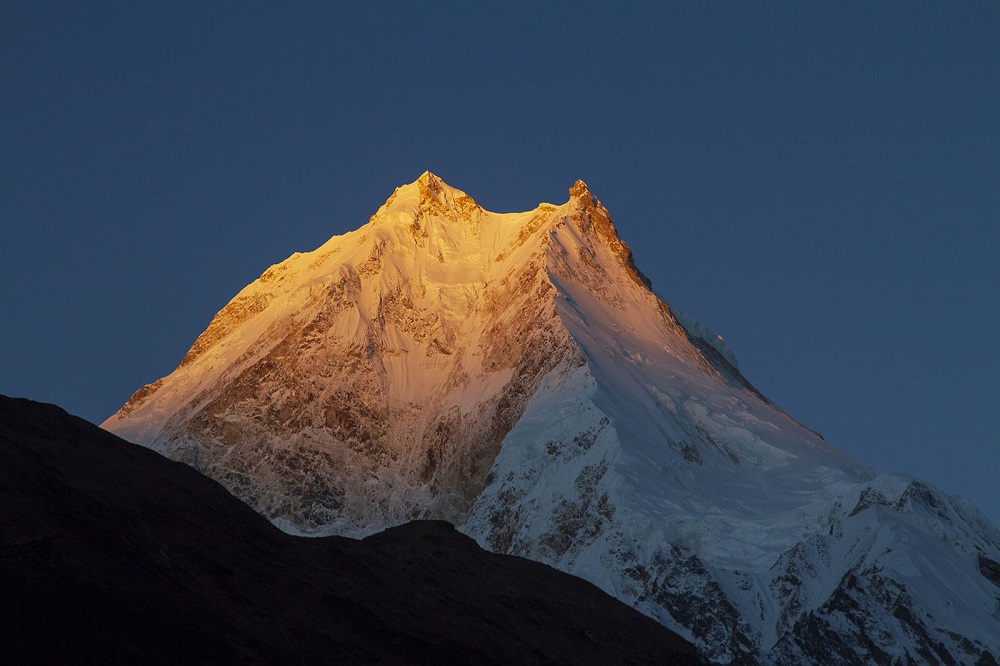
This is one of the most culturally dense walking days on the entire circuit. The trail passes through Lho — a village with an ancient monastery and a rooftop view of Manaslu that stops people in their tracks — then continues through Shyala before arriving at Samagaon. The village sits in a wide glacial valley directly below the south face of Manaslu. On a clear evening, the mountain fills the entire northern sky.
Day 8: Acclimatisation Day at Samagaon (3,530m)
This is the day that separates a good Manaslu trek from a great one, and it's the day most agencies under-describe.
You have three options depending on fitness and interest:
Birendra Lake (3,691m): A 45-minute walk from the village. The lake sits in the glacial moraine below Pungyen Glacier — turquoise, still, flanked by moraines and with Manaslu's summit pyramid above. Most trekkers spend an hour here and wish they'd stayed longer.
Pungyen Gompa: A working monastery built into the hillside above Samagaon. The monks here are Nubri, a Tibetan nomadic community who have lived in this valley for roughly 400 years. If you approach respectfully and your guide has a relationship with the monastery (ours do), you may be invited inside for butter tea and conversation. No staged cultural interaction — just a monastery doing what monasteries do.
Manaslu Base Camp (4,800m): A full-day hike for the fit and acclimatisation-focused. The views of the south face are dramatic, and the landscape is raw glacial wilderness. This option is for trekkers who are actively preparing for the pass and want the altitude exposure.
Don't spend this day in the teahouse. Whatever you choose, get outside.
Day 9: Samagaon to Samdo (3,875m) — 4 hours, ~16km
A shorter day intentionally. Samdo is a small Tibetan refugee village close to the Chinese border — on a clear day, you can see the ridge that marks the boundary. The village has a handful of teahouses and a quiet, end-of-the-road atmosphere. The peaks above — Ngadi Chuli, Sirmang Himal — are extraordinary. This is a good afternoon for nothing more than sitting outside and looking at the mountains.
Day 10: Samdo to Larkya Phedi / Dharmasala (4,480m) — 4 hours, ~12km
A short climb to the high camp below Larkya La. The "teahouse" here is basic by any standard — bring your sleeping bag liner, and don't expect much beyond a bed and hot noodles. Sleep early. Tomorrow starts before dawn.
Day 11: Larkya La Pass (5,106m) to Bhimthang (3,590m) — 8 hours, ~24km
The hardest day of the trek, and also the most memorable. You leave in the dark, typically around 4–5 am, with headlamps. The climb to the pass is steady and cold — the high camp sits at 4,480m, and the pass is 5,106m, so you're covering 626m of vertical in the dark and thin air. Take it slow. Let your guide set the pace.
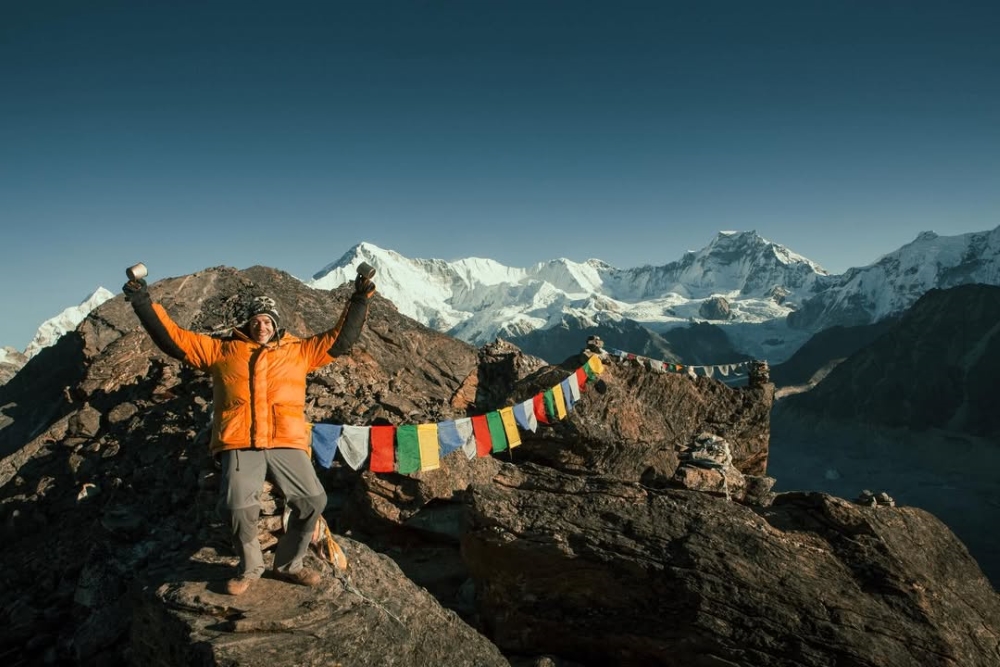
The pass itself, on a clear morning, is one of the finest viewpoints in Nepal. Annapurna II to the south, Himlung and Cheo Himal in the west, and — if you turn back — Manaslu's bulk filling the horizon. There is usually wind. Sometimes snow. Often tears.
The descent to Bhimthang is long, and the legs know it. But Bhimthang is beautiful — a wide meadow ringed by peaks, with yaks grazing below the ridgeline. You've crossed from the Manaslu watershed into the Annapurna.
Day 12: Bhimthang to Dharapani (1,910m) — 8 hours, ~22km
A long descent back to a lower world. The trail passes through pine forest and rhododendron, through small villages with well-stocked teahouses that feel almost luxurious after the upper circuit. Dharapani sits at the junction of the Manaslu and Annapurna trekking regions — you've arrived where the crowds are.
Day 13: Drive to Kathmandu — 8–9 hours
The drive back is long. The road through Besisahar and down to Kathmandu gives you hours to decompress. Most trekkers are quiet in the vehicle — not from exhaustion alone, but because there's a lot to process.
Day 14: Departure or Onward Travel
Your Kathmandu day. Use it to extend into the Tsum Valley debrief or depart home.
Side Trip: Tsum Valley
If you have the time — and the Tsum Valley deserves it — you can extend the Manaslu Circuit into one of the most isolated inhabited valleys in Nepal. The trail separates at Jagat and rejoins at Deng, adding roughly 6–8 days to the itinerary.
The Tsumba people who live here have had almost no contact with the outside world until relatively recently. Their practices, their architecture, their relationship with the monasteries of Mu Gompa and Rachen Gompa — it is a different Nepal entirely. The Manaslu and Tsum Valley combined trek is among the most culturally significant journeys you can make in this country.
Accommodation on the Manaslu Circuit
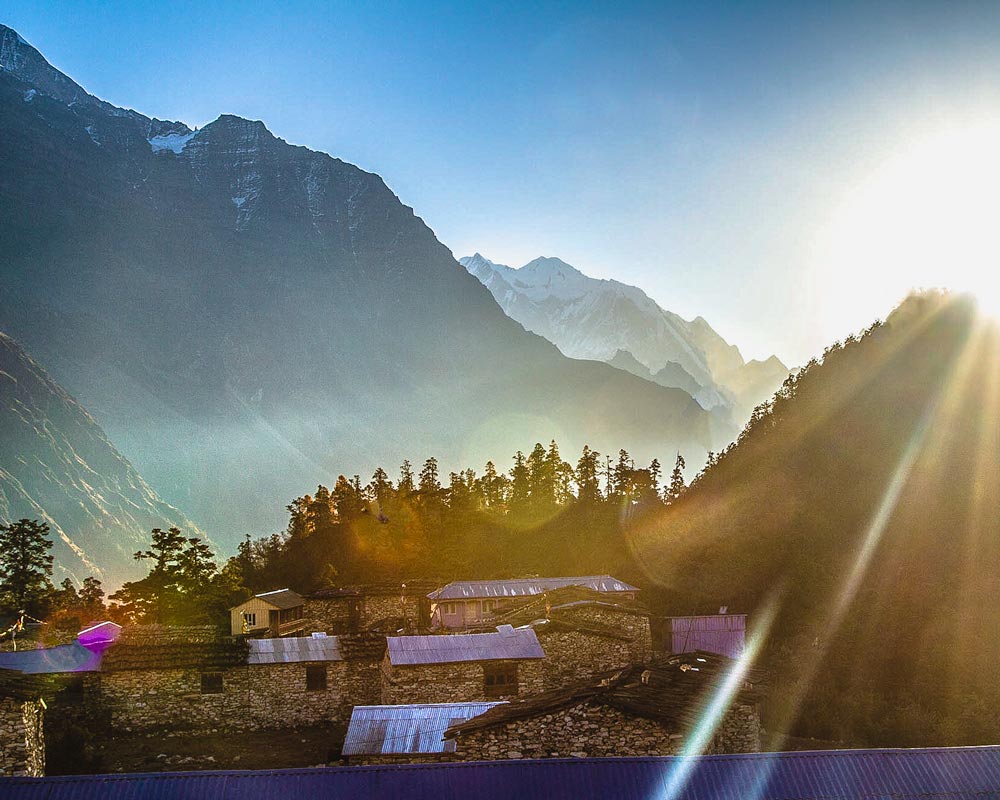
Teahouses along the Manaslu Circuit are simpler than those on the Everest or Annapurna routes, and that's appropriate. Below Samagaon, rooms are basic but adequate — twin beds, a shared bathroom, a dining room with a wood stove at the centre. Hot showers exist at most stops below 3,000m.
Above Samagaon, at Samdo and Larkya Phedi, accommodation is more basic. Bring a sleeping bag rated to at least -10°C. Electricity for charging is available but intermittent — solar panels are common but unreliable in overcast conditions. Bring a power bank.
For a full overview of what to expect lodge-by-lodge, see our guide to Manaslu Circuit teahouses.
How Difficult Is the Manaslu Circuit Trek?
Honest answer: it's harder than Annapurna Base Camp and comparable to the Everest Base Camp approach, with the added challenge of Larkya La, which is a genuine high pass requiring an early alpine start.
What makes it demanding isn't any single day, but the accumulation: the daily mileage is substantial, the trail is less maintained than major routes, and the upper section offers little to no rescue access.
You should arrive fit. Not mountaineer-fit, but capable of 6–8 hours of walking across uneven terrain, day after day, at altitude. If you've done Everest Base Camp or the Annapurna Circuit, you have the right baseline.
We do not recommend this trek for first-time trekkers in Nepal.
Frequently Asked Questions
Do I need a guide for the Manaslu Circuit Trek?
Yes. The Manaslu Conservation Area is a restricted zone, and a licensed guide is mandatory by government regulation. You cannot obtain the Restricted Area Permit without one.
Can I do the Manaslu Circuit as a solo traveller?
As of 2026, solo travellers can enter with a licensed guide and the standard Restricted Area Permit. You no longer need to be part of a group of two or more.
What is the best duration for the Manaslu Circuit?
14 days is the standard itinerary and the one I recommend. The 10-day short version is possible, but it compresses acclimatisation dangerously. If you have 14 days, use them.
How do I combine Manaslu with Tsum Valley?
The Tsum Valley loop branches off from the main circuit at Jagat and rejoins at Deng. A combined trek runs approximately 22 days. See the Manaslu and Tsum Valley Trek for the full itinerary.
What altitude is Larkya La Pass?
5,106m / 16,752ft. It is the highest point of the circuit and the crux of the entire trek.
Is the Manaslu Circuit safe?
Yes, when trekked with proper acclimatisation, appropriate gear, and an experienced guide. Altitude sickness is the primary risk at elevation — your guide will monitor symptoms and adjust pace accordingly. Medical facilities are limited above Arughat; evacuation in an emergency is by helicopter.
Ready to plan your Manaslu Circuit Trek? Contact our team — we've been guiding this route since 2005, and we know it in every season.
Why the Manaslu Circuit Is Worth It
I've guided trekkers on Everest, Annapurna, Langtang, and routes most people have never heard of. When people ask me which trek changed them, Manaslu comes up more than any other.
Not because of the pass, though, crossing Larkya La at dawn with Annapurna on the southern horizon is the kind of moment that doesn't fade. Not because of the mountain — though watching Manaslu's south face catch the last light from Samagaon is something you carry home without meaning to.
It's because of what happens in between.
The old man repairing a mani wall outside Namrung, who doesn't stop when you walk past — because you aren't an event to him, you're just someone passing through his morning. The monastery at Pungyen, where the monks pour butter tea without ceremony, because hospitality here is not a gesture, it's a reflex. The silence at Samdo that isn't emptiness but a different kind of fullness — the kind that most people haven't felt since childhood, if they've felt it at all.
Manaslu works on trekkers slowly. By the time you reach Larkya La, something has already shifted. The pass is almost the least of it.
This is what we mean when we say Manaslu is different. Not harder, not more remote — though both are true. Different in the way it asks something of you and then gives something back that you didn't know you needed.
If you're ready to do it properly — the right season, the right guide, the right pace — we're here.