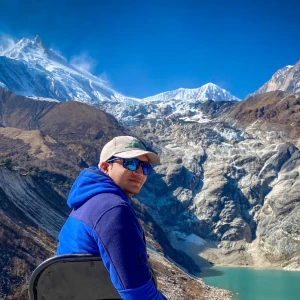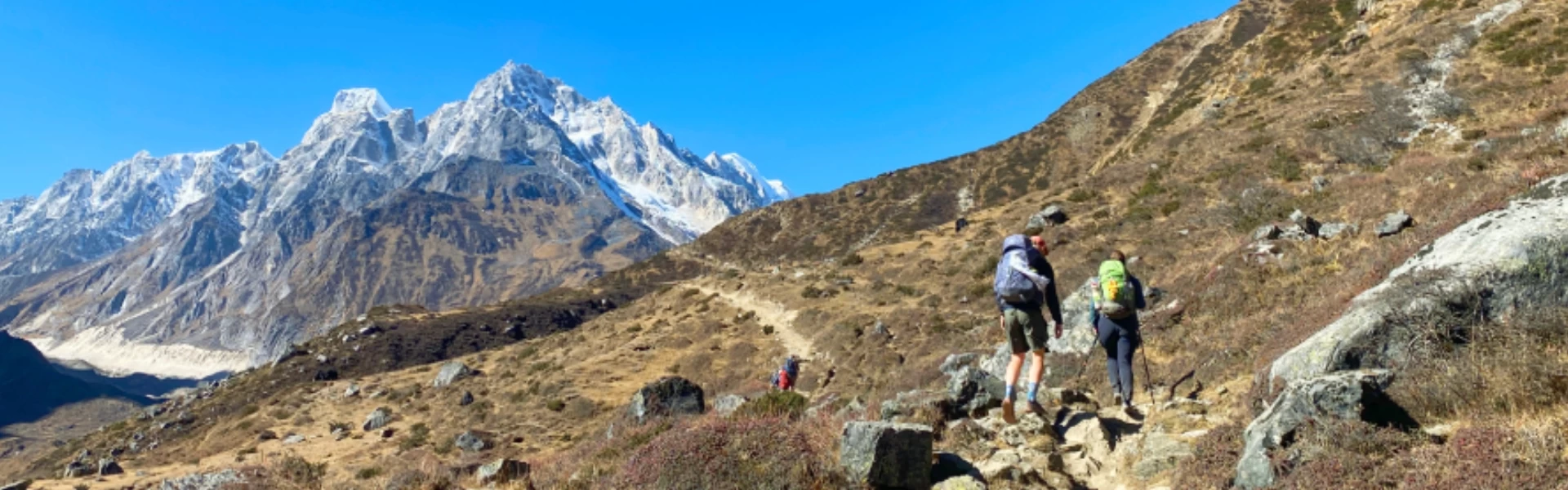
The Manaslu Circuit isn't famous. That's the point.
For 3+ years, I've watched the trekking world move in waves. Everest became a queue. Annapurna became a photo spot. Guides learned to manage crowds, not conversations. And somewhere in that shift, something essential left those trails.
Then came Manaslu—still off the beaten path, still demanding, still genuinely remote. At 8,163 meters, it's Nepal's fourth-highest peak and the world's eighth. But altitude isn't why this trek matters. What matters is that you can still walk here and feel like the first person to arrive.
I've guided, managed, and personally trekked the full Manaslu Circuit 8 times since 2012. I've stayed in Samagaon tea houses long enough to become a regular. I've watched the same families make the same tea for 3+ years, asking genuine questions instead of performing hospitality.
This guide covers everything: permits, itineraries, the teahouses you'll actually sleep in, how to prepare your body, what the weather really does, and why guides matter here more than anywhere else. But more importantly, it covers what you need to know to experience Manaslu the way it deserves to be experienced—not as a checkbox, but as a place where you belong for two weeks.
Why Manaslu, Not Everest or Annapurna?
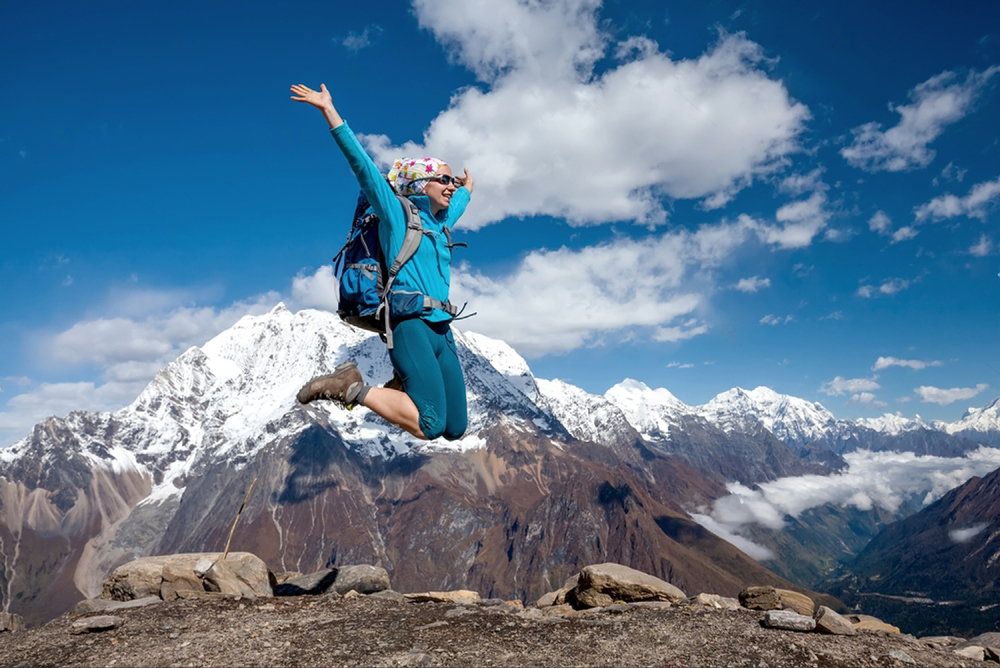
The Manaslu Circuit isn't famous. That's the point.
I ask this question in nearly every trekking inquiry. Not to sell Manaslu, but to help travellers understand what they actually want.
Everest Base Camp is stunning. It's also the most trekked route in Nepal—roughly 50,000 people a year. You'll meet people from 40 countries, eat at lodges with WiFi, and summit a goal that's already been summited by everyone you know. The culture exists around the trekking infrastructure, not separate from it. The views are world-class, but you're experiencing them with a hundred other people on the same ridge.
Annapurna Circuit is beautiful and diverse. It's also becoming concentrated. The teahouses are commercialised. The villages have learned what tourists want to see, and they've adjusted their lives to provide it. You'll see stunning mountains and pass through varied ecosystems, but you're walking a well-worn path with well-prepared hospitality.
Manaslu hasn't had that happen yet. The government keeps it restricted—at least 2 trekkers, a mandatory guide, and regulated permits. This isn't a luxury rule; it's a protection. Because Manaslu remains genuinely remote. The teahouses are simple. The villages don't have a "trekking season" mentality; they have a salt-trading history and a living culture. The Budhi Gandaki Valley doesn't perform for visitors. It just continues.
The difference becomes obvious by Day 3. On Everest, you're hiking alongside scheduled groups. On Manaslu, you're hiking alongside villagers going to school, herding yaks, carrying salt. By Day 7, in Samagaon, you're sitting in a teahouse drinking butter tea with the same family who's made it for 30 years. They're not doing it because your guide booked a "cultural experience." They're doing it because it's Tuesday and they make tea on Tuesday.
Is Manaslu harder? Slightly. Is it less comfortable? No, the teahouses are as good as Everest's. But Manaslu demands something Everest doesn't: presence. You can't phone it in. You can't just hike and take photos. The remoteness doesn't let you.
That's why I recommend Manaslu.
Solo Trekking & Guide Rules
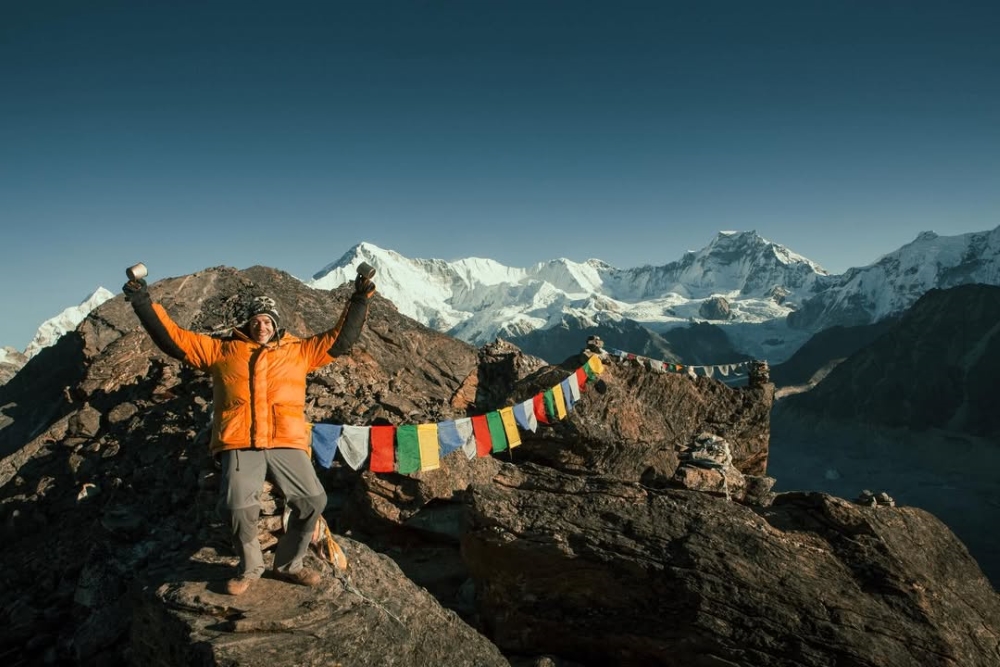
Can You Trek Manaslu Solo?
Yes — with a critical clarification.
As of 2026, Nepal allows solo trekkers on the Manaslu Circuit. You no longer need a minimum group of two people. But a licensed guide is mandatory. You cannot trek alone. "Solo" means without other tourists — not without a guide. One guide can lead up to 4–5 solo trekkers, each at their own pace.
This distinction answers two different questions:
"Can I trek if I don't have friends going?" Yes. Hire a guide, trek on your own terms, at your own pace, with no group dynamics.
"Can I trek without a guide?" No. Guides are non-negotiable. This is government regulation, not company policy.
Why Guides Are Mandatory
Safety. Manaslu is remote. Rescue is difficult. Your guide knows the terrain, recognises altitude sickness symptoms early, and has emergency protocols.
You'll miss 80% of what matters. Local knowledge — histories, village relationships, culture, hidden trails — comes from your guide. Without it, you're just hiking.
Local employment. Guides are primarily from nearby communities. The requirement ensures money flows to locals, not just to lodges.
Region protection. The guide requirement controls volume and protects Manaslu's integrity. Without it, overcrowding would destroy what makes it special.
If you're solo and want to trek Manaslu, we pair you with a guide and can arrange shared teahouse rooms to reduce costs, or private rooms if you prefer. Either way, the guide ensures both safety and meaning.
Chat with us about solo trek options.
How We Do Manaslu Differently: The HST Approach
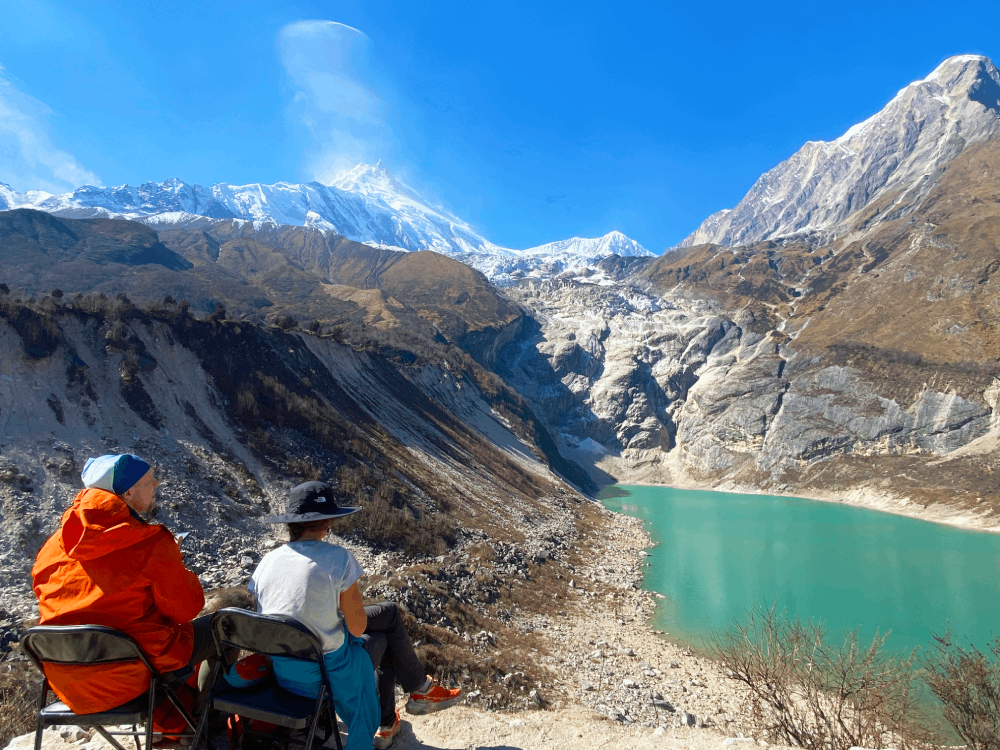
Most trekking operators follow the same script: same itinerary, same tea houses, same guide assignments. The trekking industry has commoditised the trek. At Himalayan Scenery Treks, we've built a different system around Manaslu specifically. Not because we're trying to be clever, but because Manaslu's remoteness and cultural sensitivity demand it. Here's how.
Guide Selection: Character Before Credentials
A guide on Manaslu carries more weight than on Everest. On Everest, infrastructure absorbs mistakes. On Manaslu, there's just the guide and the villages and your group.
Our process:
- We don't hire guides 2 days before your trek. We identify potential guides 3–6 months out, then assess them in context—taking them through the Samagaon villages, the Samdo border area, the high-altitude sections—watching how they interact, how they listen, what questions they ask.
- We weigh character over credentials. All our Manaslu guides are certified. But certification doesn't tell you if someone listens to a trekker's subtle complaint or ignores it. It doesn't tell you if they have relationships in the villages or just know the tea houses. We look for guides who have walked Manaslu 10+ times, who know the teahouse owners by family name, and who understand that a trekker's experience depends entirely on the guide's presence.
- We provide brief guides in writing, a week before the trek. Every guide receives a document on your group: your fitness level, your interests, what you mentioned in pre-trek calls. Some groups want fast and efficient. Some want slow and cultural. Some have dietary restrictions. Some want early mornings; some want late starts. The guide reads this. The guide prepares.
- We send guides to the villages ahead of the group. For peak-season treks, our guides scout the teahouses 1–2 weeks early, confirming room availability, food stocks, and any issues. This sounds basic. Most operators don't do it. Most discover on Day 3 that a teahouse is full or closed, then scramble. Our groups arrive at pre-confirmed accommodation. It's a small thing that compounds.
Acclimatisation Days: Building, Not Resting
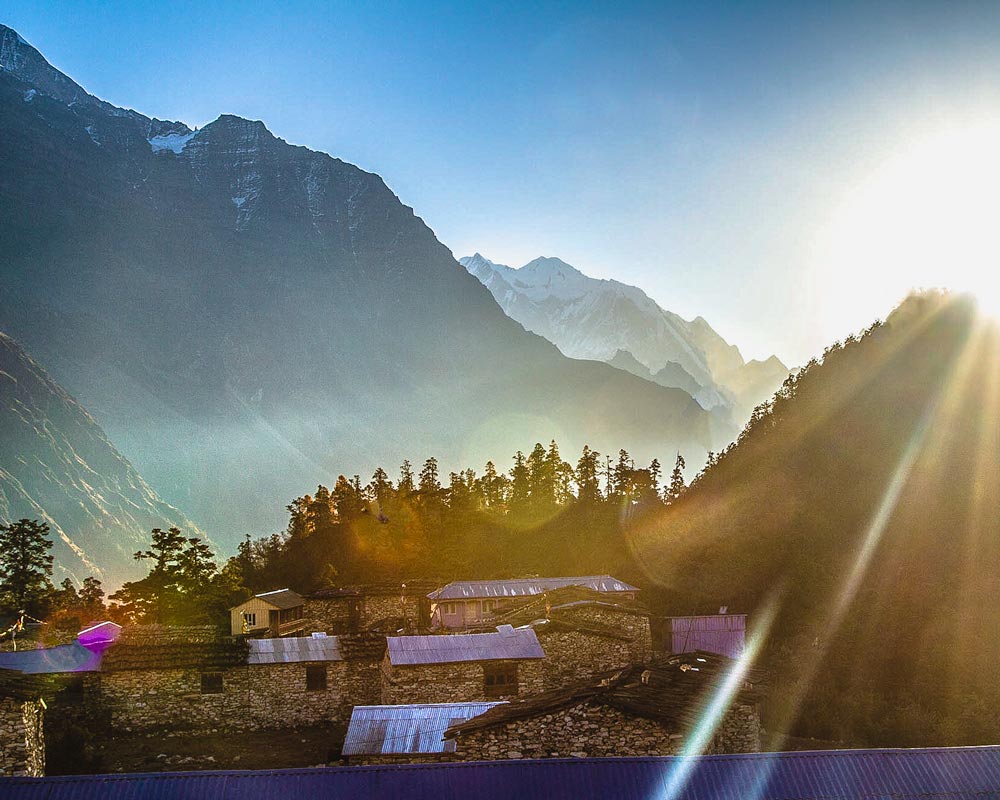
Most operators treat acclimatisation days as rest days. You stay in the same teahouse, eat lunch, rest, and eat dinner.
We structure them as building days.
- Day 8 in Samagaon (3,860m acclimatisation): Instead of resting, you hike to Manaslu Base Camp (4,630m) with the guide. This is not a summit push. It's a 4-hour walk that builds acclimatisation and shows you the mountain's scale. Trekkers return understanding why Larkya La Pass (Day 12) feels manageable—they've already been higher.
- Day 6 in Shyala (optional): A day hike to Pungyen Gompa (a small monastery, 3 hours round trip). You don't tour it. You sit. You watch. You talk to monks if the moment allows. Most groups skip this because it's "not on the itinerary." We include it because it's the most human day on the trek.
- Day 10 in Samdo (3,875m): Another acclimatisation day. Instead of resting, trekkers walk to the Tibet border overlook. This 2-hour walk prepares your body for Larkya La while satisfying the psychological need to "do something" on a rest day.
The result: Your body arrives at Larkya La Pass already acclimatised, and your mind arrives already present.
Village Integration: No Performances
The phrase "cultural immersion" has been turned into a marketing slogan. It usually means a scheduled dance, a cooking class you're observing, or a photo op in traditional dress.
That's not what happens on our treks.
Instead:
- Guides introduce you to locals as themselves, not as tourists. Our guides say, "This is my friend Sarah from Boston" instead of "These are tourists who want to see your village." The difference is subtle and enormous. You become a person. You're not a transaction.
- You cook with the teahouse family, not for them. On Day 6, in Shyala, your guide arranges for you to help prepare dinner with the teahouse owner's family. You're not watching a cooking demonstration. You're peeling potatoes, stirring dal, asking questions while they work. By 7 PM, you understand why the food tastes the way it does—not because someone explained it, but because you made it.
- You sit with locals, not at them. Evenings in Samagaon aren't scheduled as "cultural time." They're just evenings. You're sitting by the fire in the common room with the family. Someone's child is there. Someone's playing music. You talk. Or you don't. It's natural.
- Guides explain the actual history. You're walking a salt-trading route that's been used for centuries. Your guide doesn't recite this as a fact. They point to an old woman at a teahouse and say, "Her grandfather carried salt from Tibet. That's how her family built this lodge. That's why they still treat trekkers well—it's a continuation of hospitality from traders." Suddenly, you're not hiking a historic route; you're walking through someone's family story.
Nutrition & Pacing: Built for Your Body
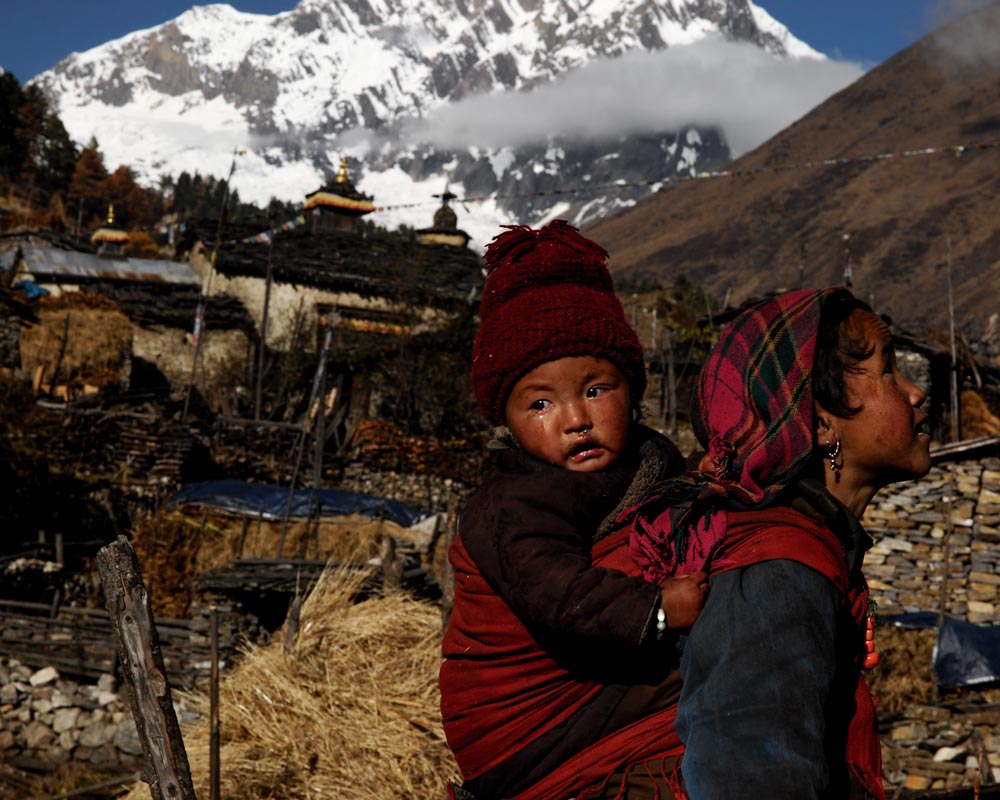
Most teahouses serve the same menu: dal bhat, noodles, and fried food. It's fine. It gets you up the mountain.
We coordinate with teahouses ahead of time to ensure:
Variety in protein. Egg dishes, cheese, beans, not just carbs.
Fresh vegetables, when possible. The higher you go, the less fresh food exists. But in Samagaon and the lower sections, we request fresh greens.
Dietary accommodations actually work. If you're vegetarian, we don't just say "no meat." We confirm the cook will use separate oil and prepare distinct meals. This happens because the guide briefs the teahouse owner a week early.
Hydration strategy. Your guide carries electrolytes, not just energy bars. We emphasise water intake from Day 1. Small thing; it prevents most altitude issues.
Guide Presence: What It Means
A good Manaslu guide doesn't vanish at the teahouse. They stay nearby. They watch for early signs of altitude sickness—not the obvious symptoms, but the subtle ones: unusual quietness, eating less, moving more slowly. They notice if someone's struggling emotionally (homesickness, doubt, fear) and address it before it becomes a problem.
They also know when to lead and when to let you experience silence alone. There are sections of Manaslu where conversation feels wrong. A guide who understands this gives you space. A guide who doesn't talk the whole way.
Our guides are trained to read the group's energy and adjust in real time.
Why This Matters
This approach costs more operationally. We brief guides more thoroughly. We scout teahouses. We coordinate meals. We design acclimatisation with intention. We staff more carefully.
But here's what happens: Trekkers return and say, "That guide felt like a friend, not a service." Or, "I felt like I actually belonged there, not like I was visiting."
That's the difference.
Planning Your Trek: Starting Points & Getting There
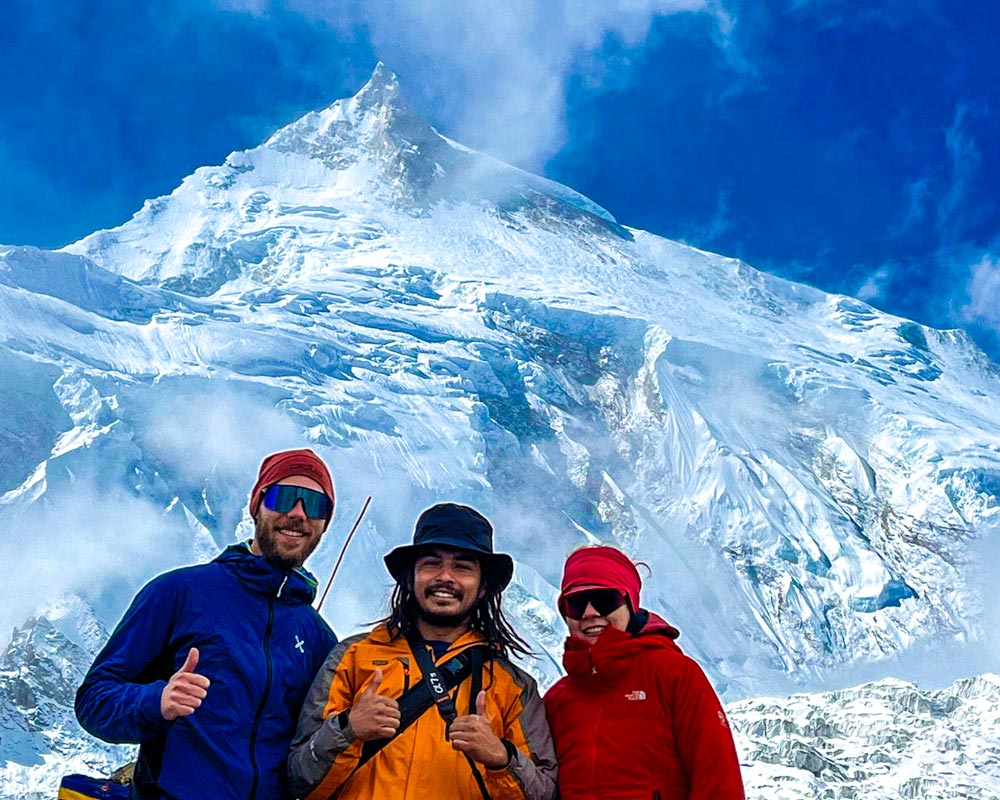
The Manaslu Circuit Trek begins with a choice: Soti Khola or Machha Khola. Both lead to the same peak. The entry point determines your first few days' experience.
Soti Khola: The Deeper Entry
Soti Khola sits 145 km northwest of Kathmandu—an 8–10 hour drive through the Prithvi Highway toward Pokhara, then branch off into the Gorkha district.
The road deteriorates as you climb toward the hills. By the time you're near Soti Khola, you're on rough jeep tracks. Sections flood in the monsoon. Sections are genuinely precarious. This isn't exaggeration; it's the reality of remote Nepal.
But this is also why Soti Khola matters: It filters. The rough drive means fewer casual trekkers. You arrive at the trail already isolated, already committed. The villages below Soti Khola aren't accustomed to trekking tourism. You're genuinely novel.
Starting here, you trek through the Gorkha district—home to Gurkha warriors historically, but primarily Magar and Gurung communities now. The first days pass through rhododendron and pine forests. The villages are small. The tea houses are basic but genuine.
Machha Khola: The Accessible Entry
Machha Khola is more accessible—a rough road now extends to Lububesi, a 3–4 hour walk below Machha Khola. Most groups start here because it's slightly easier to arrange.
From Machha Khola, you cross a suspension bridge into Jagat and begin the climb toward the higher valleys. This route is more established—more teahouses, more infrastructure—but still genuinely remote by trekking standards.
Which Should You Choose?
- Choose Soti Khola if: You want maximum isolation, don't mind a rougher approach, and have 15+ days.
- Choose Machha Khola if: You want slightly easier logistics, prefer a 14-day timeframe, or are arriving late in the season.
We recommend Soti Khola for most trekkers. The extra remoteness is worth the effort.
Best Season & Weather Reality
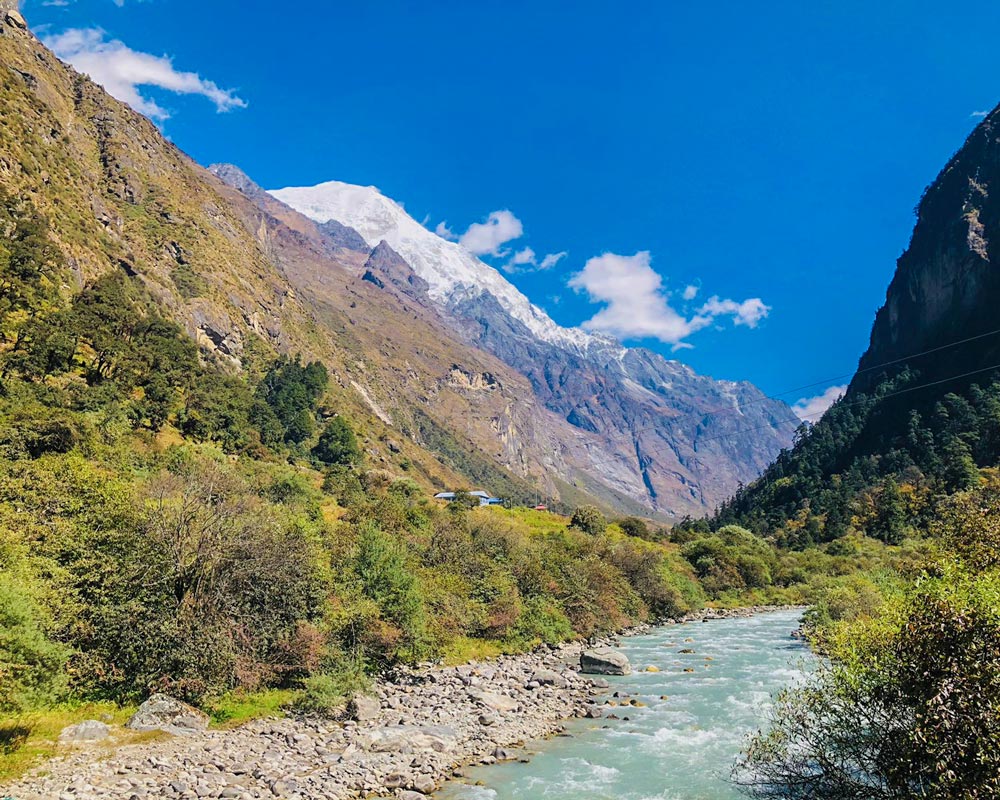
November has become the most reliable month due to climate change. Over the past 8–10 years, the weather pattern has shifted. September and October have become unpredictable—sudden storms, monsoon tail-ends, erratic rain. May has become too hot and dusty.
November gives you stable weather: clear skies, cold nights, but predictable cold. The Himalayan views are consistent. The trails are dry. You'll experience the peak experience of Manaslu.
The tradeoff: Teahouses may not be fully staffed because the peak season hasn't technically "started." But this is solvable—our guides book accommodations in advance. You'll have warm rooms and hot meals. Most other groups will have crowds and competition for rooms.
Spring (Late March Through Mid-April) Is Secondary
Late March through April remains solid. The rhododendrons bloom. The weather is warming but not yet chaotic. The teahouses are fully open. By May, the season deteriorates—it becomes hot and dusty. Visibility drops. The experience flattens.
If you're committed to spring, aim for late March through mid-April. Avoid May.
Autumn (September–October) Is Now Unreliable
I don't recommend it anymore. The monsoon's tail-end extends too far into September and early October. Rain can arrive suddenly. The trails become muddy sections. The Budhi Gandaki swells unpredictably. Landslides happen. We've had groups turned back due to flash flooding in recent years.
If you must do autumn, aim for October 15+, when the monsoon typically breaks. Even then, it's a gamble.
Summer (June–August) & Winter (December–February) Are Not Options
Summer brings heavy rainfall, landslides, and river crossings that become dangerous. Winter brings extreme cold above 4,000m and avalanche risk on Larkya La Pass. Neither is worth it.
Real Talk on Climate Variability
No season is guaranteed anymore. We've had November snow. We've had April rain. What we can say is: November gives you the highest probability of stable weather. Book accordingly.
For the complete month-by-month breakdown, seasonal strategy, guide availability, gear requirements, and what each season actually feels like on the trail, see our detailed seasonal guide
Permits Explained (Complete Breakdown)
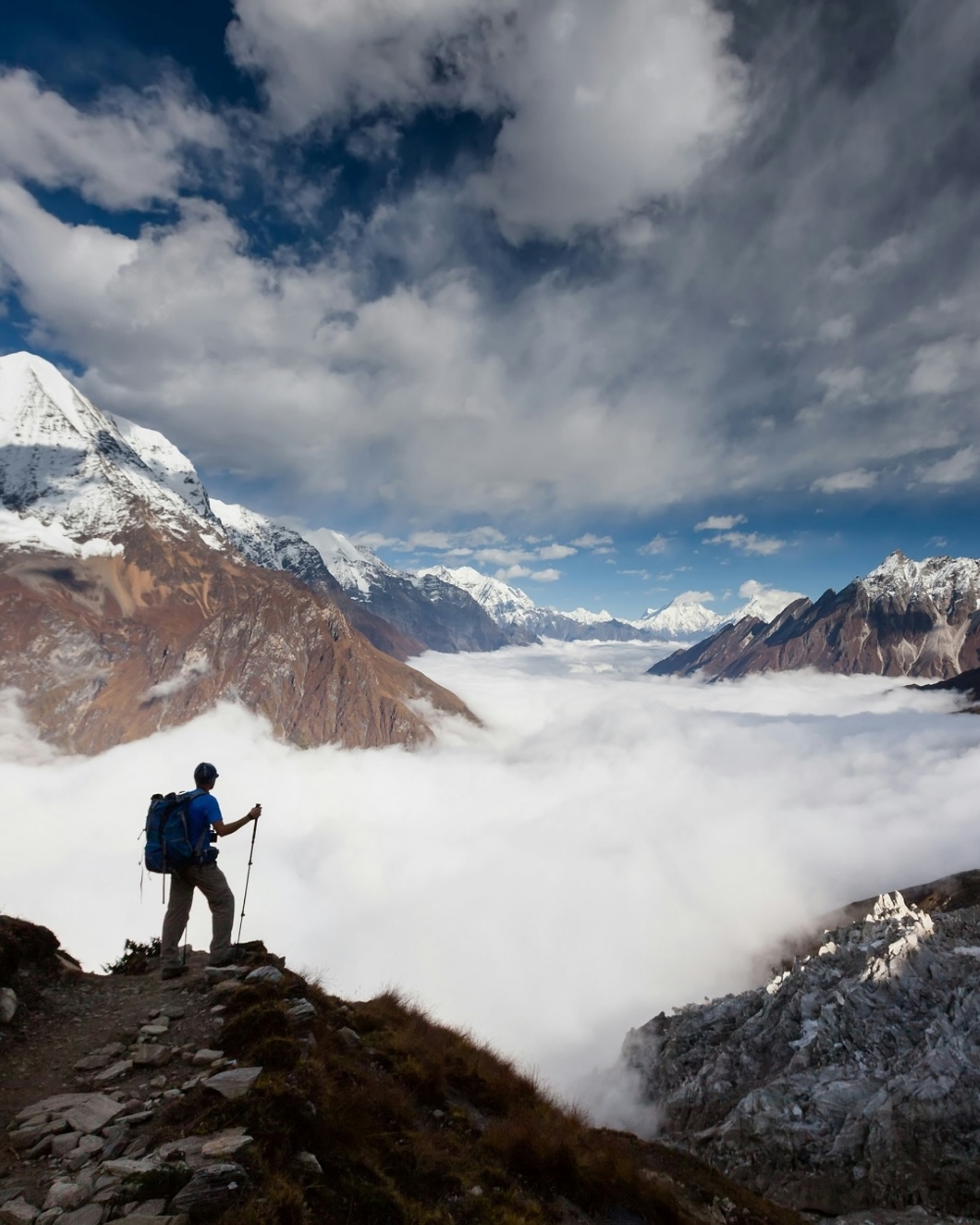
Manaslu is a restricted region. You need four permits to trek here, all obtained through a licensed trekking agency.
| Permit | Cost |
|---|---|
| Manaslu Restricted Area Permit (MRAP) | Sep–Nov: $100 first 7 days + $15/day extra. Dec–Aug: $75 first 7 days + $10/day extra |
| Manaslu Conservation Area Permit (MCAP) | $30 |
| Annapurna Conservation Area Permit (ACAP) | $30 |
| Local Government Entry Fee (Tsumnubri Rural Municipality) | NPR 1,000 (~$8 USD) |
Total permit cost: approximately $170–$273 per person, depending on trek duration and season. A 10-day trek in December–August costs around $173. A 14-day trek in the peak autumn season costs around $273.
We arrange all permits. Bring your passport and two passport photos to Kathmandu; we file everything. Approval takes 1–2 working days. Permits are issued when your trek starts.
The guide requirement sounds restrictive. It's actually protective. Manaslu's remoteness means rescue is difficult and slow. Guides ensure someone knows the terrain, recognises altitude sickness symptoms, and has emergency protocols. It also protects local employment and controls tourism volume. The conservation fees fund the trails you walk on — without them, the Budhi Gandaki Valley paths would have eroded years ago.
Travel insurance covering altitudes up to 5,000m+ and emergency evacuation is essential. This is not optional.
14-Day Itinerary(Complete Breakdown)
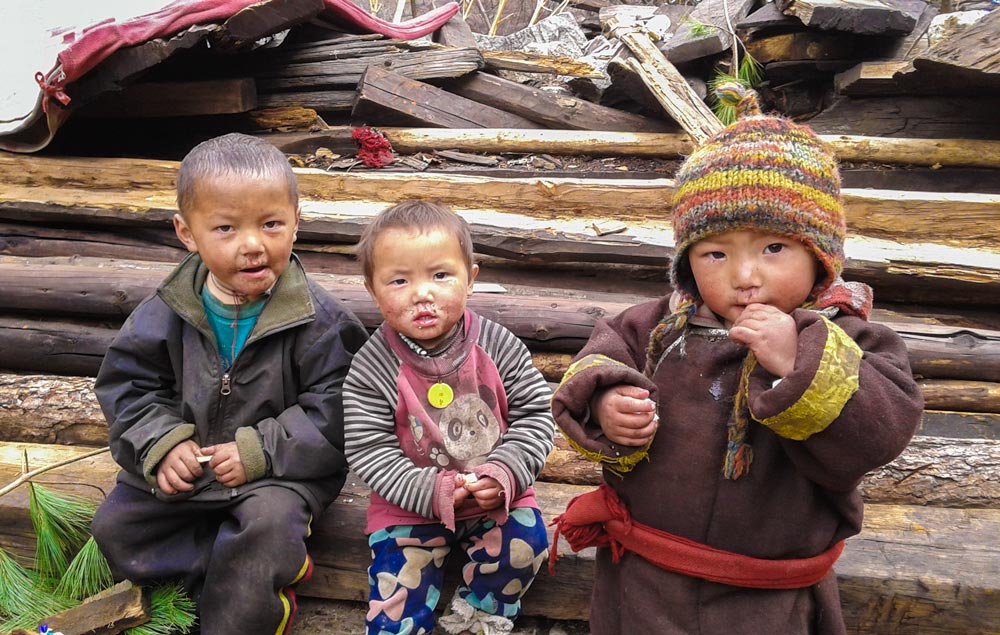
The standard Manaslu Circuit is 14 days — 12 trekking days, 2 acclimatisation days. The itinerary is fixed by geography. The experience varies by your pace and your guide's awareness.
| Day | Location | Terrain | Altitude | What Actually Happens |
|---|---|---|---|---|
| 1 | Kathmandu | City | 1,400m | Final prep. Final checks. Last night with WiFi. Sleep early. |
| 2 | Machha Khola | Drive + short hike | 800m | 8–10 hour jeep drive. Settle into the first teahouse. Notice the river noise. Sleep poorly (adrenaline). |
| 3 | Jagat | Uphill forest | 1,300m | 5-hour hike through rhododendron. Your legs remember they're climbing. The trail is clear. Guide is quiet — letting you adjust. |
| 4 | Deng | Steady climb | 1,860m | 6-hour day. Tiny village. You sleep in a teahouse that's been here for 30 years. Family is kind. A hot shower is possible (barely). |
| 5 | Namrung | Ascent through the forest | 2,680m | 6 hours. Altitude starts becoming noticeable. Your guide watches for headaches. You eat more than usual. The teahouse has a good fire. |
| 6 | Shyala | High forest | 3,150m | 4-hour walk. Optional acclimatisation: afternoon hike to Pungyen Gompa (2 hours). Monks may be there; you sit quietly. If skipped, continue to Samagaon (6 hours). |
| 7 | Samagaon | Entry to High Valley | 3,860m | 5-hour hike through high pastures. Valley opens. Mount Manaslu appears. Teahouse is substantial — this is the trek's hub. Your guide introduces you to the owner by name. You eat, rest, and observe. |
| 8 | Samagaon | Acclimatisation | 3,860m | You don't rest. Hike to Manaslu Base Camp (4,630m, 4 hours round trip). See the peak up close. Return to Samagaon. Evening: You're adjusted to the altitude now. |
| 9 | Samdo | High-pass approach | 3,875m | 5-hour hike. Terrain becomes rawer — less vegetation, more stone. Samdo is tiny, close to the Tibet border. The teahouse is simple but clean. |
| 10 | Samdo | Acclimatisation | 3,875m | Don't rest. Walk to the Tibet border overlook (2 hours). You're now at the trek's psychological summit before Larkya La. Your lungs are ready. |
| 11 | Dharamshala | Larkya La Pass crossing | 4,610m | Wake at 5 AM. Hike 6–7 hours to the pass (5,106m). Descend for 2 hours to Dharamshala. The pass is cold and exposed. The view is of the 360-degree Himalayas. You go quiet. |
| 12 | Bhimthang | Descent | 3,650m | 6-hour descent through rhododendron and pine. Your knees remember. Pace is fast but manageable. Bhimthang is a relief. |
| 13 | Tilije | Final descent | 1,950m | 5-hour hike. Elevation loss is fast. Air thickens. Temperature rises. You're tired and relieved in equal parts. |
| 14 | Kathmandu | Drive home | 1,400m | 8–10 hour drive back. You sleep most of the way. You arrive at your hotel in the evening. You shower. You realise that two weeks have changed something. |
Key notes:
Days 6, 8, and 10 are designed strategically. Day 6 is optional — include it for cultural depth. Days 8 and 10 are acclimatisation days, not rest days. Your guide structures them as experience days.
Larkya La Pass (Day 11) is the physical summit. You don't sleep at 5,106m. You cross it and descend.
Total ascent is gradual by design. Your body has time to adjust because acclimatisation is built in deliberately, not left to chance.
See our full 14-day Manaslu Circuit Trek package
Physical Preparation
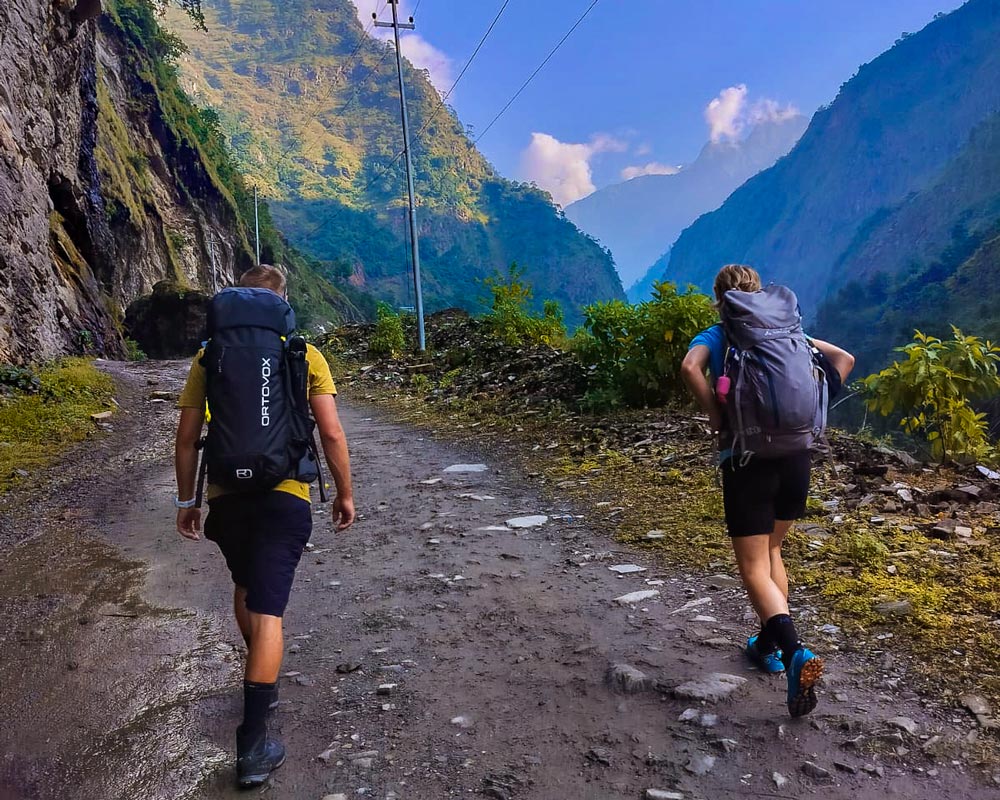
I've guided trekkers in their 20s who broke down at Namrung and 62-year-olds who crossed Larkya La without stopping. Fitness age isn't the variable. Fitness type is.
The Manaslu Circuit doesn't ask for speed or strength. It asks for one specific thing: the ability to walk 5–6 hours uphill with a loaded pack on consecutive days without needing a full rest day to recover. That's it. If you can do that, you'll cross Larkya La. If you can't, you'll suffer from Day 3 and potentially turn back before the pass.
What training actually looks like:
Don't run. Walk. Specifically, walk uphill with weight. A half-marathon training plan builds the wrong system — cardiovascular capacity without connective tissue adaptation. Your lungs are ready long before your knees are.
The 12-week framework I give our trekkers:
Weeks 1–4: Three walks per week, 2–3 hours each. Add a 4–5 kg pack by Week 2. Flat terrain is fine here — you're building habit and joint conditioning, not fitness.
Weeks 5–8: Two long days (4–5 hours), one short recovery walk. Find a hill. If you're in a flat city, use stairs with a loaded pack for 45 minutes — it sounds absurd but it works. Increase pack to 6–8 kg.
Weeks 9–12:One long day per week (6–8 hours), one medium day (4–5 hours), one recovery walk. If you can fit a 2-day overnight hike before you fly to Kathmandu, do it. Consecutive days are where real preparation happens.
The descent problem nobody warns about:
Trekkers focus entirely on the ascent to Larkya La. The descent — 1,400 vertical metres to Bhimthang — is where bodies fail. Knees that haven't been trained downhill give out on Day 12 when you have nothing left to give. Train descents deliberately. Load your pack and walk down the stairs. Do it until it stops hurting the next day.
Altitude — what I tell every trekker before they leave:
You'll feel the altitude starting around 3,000m. Headache, reduced appetite, disrupted sleep. These are normal. They're your body adjusting, not failing. The problem isn't feeling symptoms — it's pushing through them. Every serious altitude incident I've seen in 8+ years on this route started with someone deciding their headache wasn't bad enough to mention.
Our guides are briefed to catch this before you do. A slight change in your gait, slower speech, unusual fatigue — they see it. Their protocol is clear: moderate symptoms means we descend that day. Not tomorrow.
The itinerary is built around this. Days 8 and 10 aren't rest days — they're acclimatisation days where you move at altitude without ascending. Your body adapts to 3,860m before you attempt 4,610m. By the time Larkya La arrives, 5,106m is hard but not shocking.
Diamox is a conversation to have with your doctor before you leave, not a decision to make on trial. It helps. It doesn't replace the itinerary.
Medical prep — the practical list:
GP visit 6–8 weeks out: blood pressure check, general fitness sign-off, Diamox discussion
Dental check: a toothache at 4,200m with no dentist within two days is its own category of suffering
Vaccinations current: Hepatitis A/B, Typhoid, Tetanus
Eye check if you wear contacts — altitude and trail dust affect eyes more than people expect
For trekkers over 55:
Age is not a disqualifier. Recovery time is. Extend your prep to 16 weeks. Train to descend more aggressively than ascents. Consider a porter — carrying your own pack across Larkya La is not a point of pride, it's an energy expenditure you may need elsewhere. The trekkers I've seen make Larkya La look easy at 65 all had one thing in common: they didn't waste energy on ego decisions.
Not sure if you're ready? Tell us your current fitness baseline when you inquire — we'll give you an honest answer, not a reassuring one. →
What to Pack
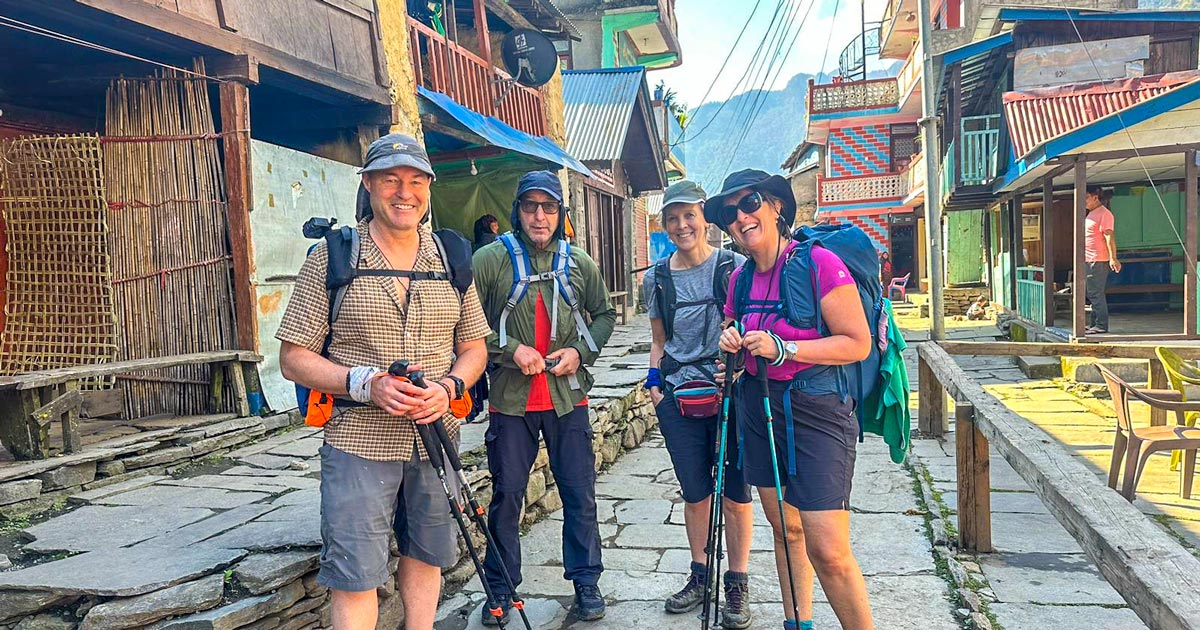
I travel to Manaslu with an 8 kg pack. My trekkers carry 6–10 kg in a day pack; their main bag (10–15 kg) goes on a porter. After 8+ trips, I've stopped carrying anything I didn't use on the last one.
The layering system (non-negotiable):
Manaslu takes you from 800m valley heat to -15°C at 5 AM on Larkya La. You're not packing for one climate. You're packing for six, over 14 days, in a bag that a person carries on their back.
Moisture-wicking base layer × 2 (not cotton — cotton holds sweat and makes it cold and dangerous)
Fleece mid-layer × 1
Packable down jacket × 1 (this is your warmth layer at altitude — don't compromise here)
Hardshell waterproof jacket × 1 (not softshell — when November snow hits Larkya La, softshells soak through in 20 minutes)
Waterproof trousers × 1
Trekking trousers × 2
Warm hat, sun hat, buff/neck gaiter
Gloves: liner pair + waterproof outer pair
The most common mistake I see: arriving with a softshell and no hardshell, having read that November is "dry season." Technically true. Larkya La at 5,106m in any month can produce wind, snow, and cold that requires real waterproofing.
Footwear:
Waterproof trekking boots, broken in before you leave. Non-negotiable. Blisters on Day 1 mean suffering for 13 more days in boots you can't change.
Camp sandals or light shoes for teahouse evenings.
Gaiters: useful from November onwards for Larkya La, not essential below that.
Sleep:
Teahouses above 3,500m provide blankets. Most of those blankets are communal, slightly damp, and not rated for sub-zero nights. Bring a sleeping bag rated to -10°C. A silk liner adds warmth and separates you from the blanket situation.
Health and hygiene:
Water purification: tablets or a Sawyer filter — stream water on Manaslu is clean, and bottled water above 4,000m costs NPR 600+ per litre while generating plastic with nowhere to go
Blister kit: Compeed, needle, antiseptic — more important than most trekkers expect until Day 3
Altitude medication if prescribed; ibuprofen; anti-diarrhoea; rehydration salts
High-SPF sunscreen and lip balm — UV intensity at altitude is routinely underestimated
Hand sanitiser, toilet paper (available in most teahouses; not guaranteed above 4,000m)
Electronics:
Headlamp + spare batteries kept warm in an inner pocket (cold kills batteries fast)
Power bank: minimum 20,000 mAh — electricity above 3,000m costs NPR 200–500 per charge and isn't always available
Camera or phone, whichever you'll actually use
Satellite communicator (Garmin inReach or equivalent): not required, strongly recommended for solo trekkers
Documents — printed, not just in your phone:
Passport original (required at every permit checkpoint)
Two passport photos (for permit filing in Kathmandu)
Travel insurance certificate, printed
Emergency contacts written on paper
What not to bring:
More than two pairs of trousers. Heavy books. A tripod, unless photography is your work. Anything you're genuinely unsure about — leave it. You'll know by Day 4 you didn't need it.
One honest note on gear:
You can rent sleeping bags, trekking poles, and down jackets in Thamel, Kathmandu at reasonable daily rates. If this is your one trek, renting is sensible. If you trek regularly, invest in your own. Don't buy fake North Face from the cheaper Thamel stalls — it looks identical to real gear and fails at exactly the moment you need it not to.
Accommodations & Meals
I've slept in every teahouse on this route across 8+ years. Some have improved dramatically. Some haven't changed since I first walked through in 2012. Here's what you're actually getting.
What "teahouse" means on Manaslu:
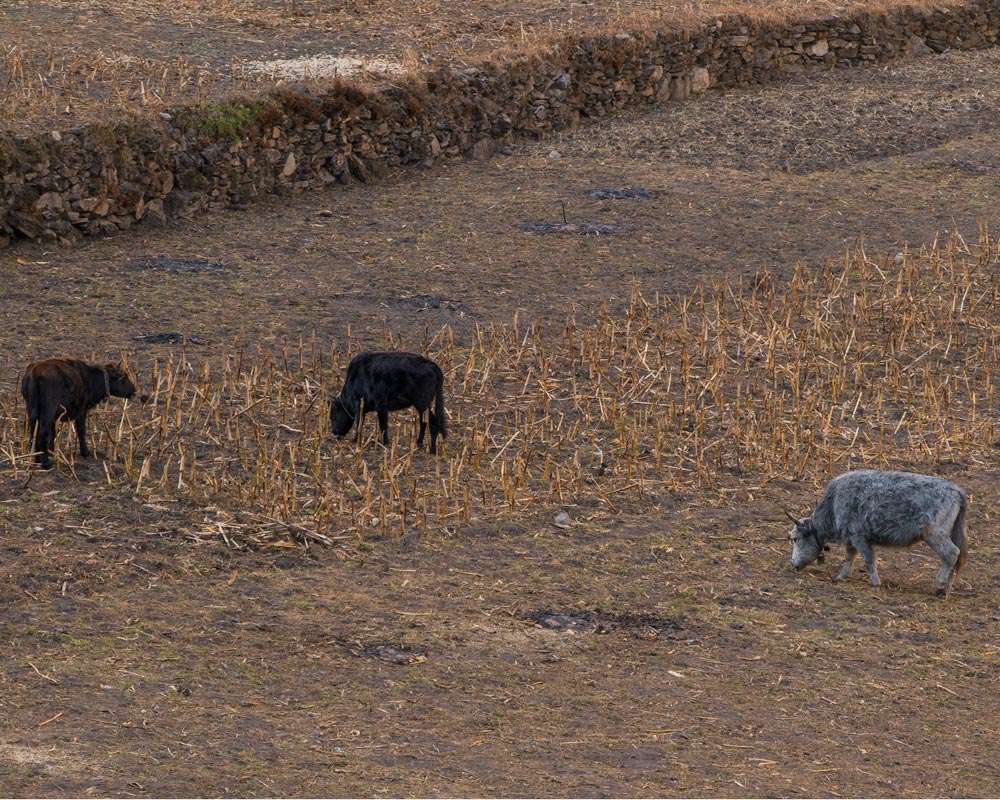
On Everest, "teahouse" has become a euphemism for a small lodge with a dining room, charging ports, and WiFi. On Manaslu, teahouse still means what it always meant: a family home that added rooms for trekkers. You're sleeping in someone's house. You eat at their table. The child doing homework in the corner isn't staged ambience — it's Tuesday night.
Below Samagaon (Days 1–6):
Basic rooms: twin beds, foam mattresses, thin walls. Shared bathrooms — squat toilets standard, occasionally Western-style. Hot water means a bucket of warm water or a weak solar-heated shower in better teahouses. Beds are clean. Rooms are cold at night. You sleep in your sleeping bag, under their blanket, in your base layer. This is normal and expected.
Samagaon and Samdo (Days 7–10):
The circuit's hub. Teahouses here are more established — slightly larger rooms, better stoves in the dining area, charging ports (NPR 200–500 per session). Samagaon has three good teahouses. Ask your guide which family is running the kitchen best that season. It matters more than the building.
Dharamshala (Night before the pass):
The most basic night on the trek. One lodge at 4,610m. Mattresses in a shared dormitory or small private rooms. Functional, not comfortable. You won't care — you go to sleep thinking about the past and wake at 4:30 AM to cross it.
Food — what you're actually eating:
Dal bhat is the backbone. Rice, lentil soup, vegetable curry, and pickles. Portions are unlimited — ask for seconds. It's a reliable, hot, and efficient fuel at altitude. Trekkers who tire of dal bhat by Day 5 have misunderstood something: at 4,000m in cold weather, your body wants complex carbohydrates and salt. Dal bhat is designed for exactly this.
Beyond dal bhat: noodles, fried rice, Tibetan bread, eggs in various forms, tsampa porridge, soup, seasonal vegetables. Menus shrink as you climb — what's available in Machha Khola may not exist in Samdo. Above 3,500m, food stocks depend on the last supply run.
Personal favourites from 8+ years on the route: the apple pie in Samagaon (it appears every year and I've stopped questioning it), yak sukuti in Samdo, butter tea from the teahouse in Shyala, where we've been returning since 2015.
Breakfast before Larkya La:
Arranged with the teahouse the night before. You eat at 4:30–5:00 AM. Porridge, eggs, tea, something warm. Appetite at altitude disappears. Eat anyway — a 6-hour pass crossing is ahead, and the next meal is on the other side.
Water and electricity:
Don't drink unfiltered water. Bring a filter and use stream water — it's clean on Manaslu, and the alternative is expensive and plastic-generating. Budget NPR 200–500 per charge for electricity above 3,000m. WiFi exists patchily below 3,000m. A local NTC or Ncell SIM gives spotty data to around 3,500m. Above Samagaon: satellite or silence.
The disconnection is part of what the trek does. Don't fight it.
What Happens Daily
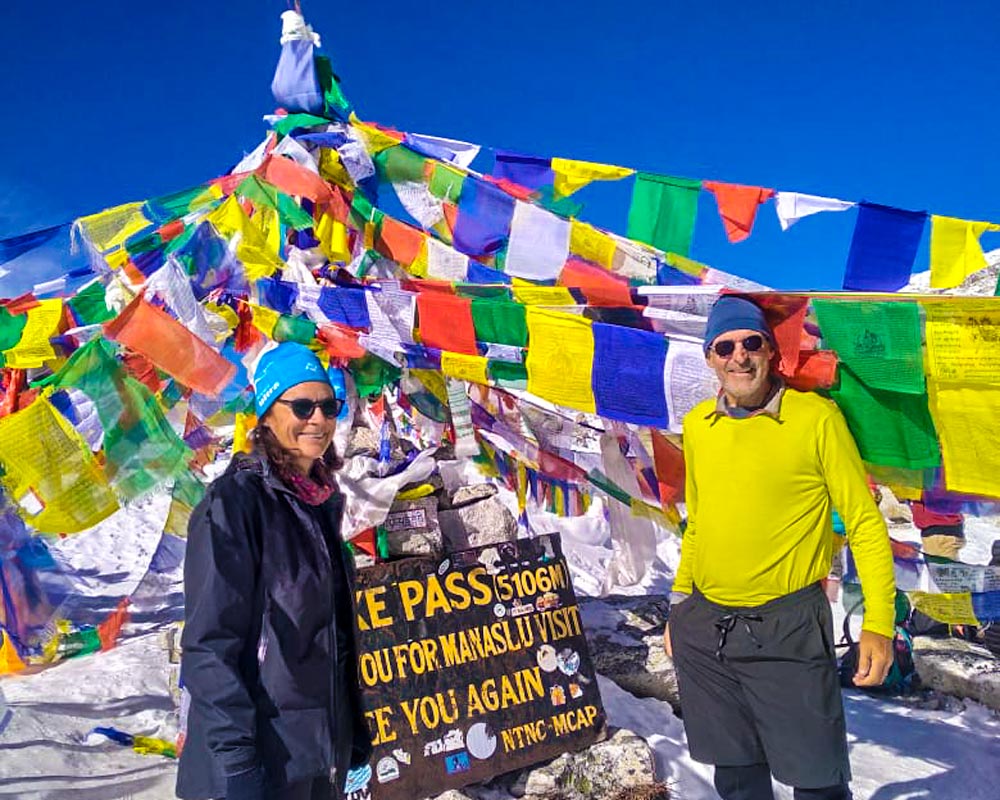
Most itineraries describe days in kilometres and altitude gain. That's useful for logistics. It tells you nothing about what actually happens.
Here's Day 7. Samagaon. The way it unfolds.
You're awake before 6 because the teahouse dog has been disputing something outside your window since 5:40. The light through the curtain is the particular grey-blue of high-altitude morning — different from sea-level grey, cleaner somehow.
Breakfast is porridge and milk tea. Your guide drinks his slowly, looking at the valley. He doesn't explain what he's looking at. You drink yours and look too.
You leave at 7:30. The trail climbs immediately out of Shyala — no flat warmup, just up. Your pack feels heavier than yesterday for no reason you can identify. This happens every day. Your guide is 10 metres ahead and says nothing. This is the correct behaviour. He's not ignoring you; he's letting you find the morning's pace.
By 9 AM, the forest trail opens into high pasture. You've been under the rhododendron canopy for two days. The open valley is a relief — you can see where the trail goes for the first time in hours, and it follows the Budhi Gandaki upstream into what looks like a wall of peaks.
A yak train passes in the opposite direction. The herder is 14 years old, maybe, with a long stick and the expression of complete professional indifference. He doesn't look at you. You step off the trail. The yaks don't acknowledge your existence. This is, somehow, refreshing.
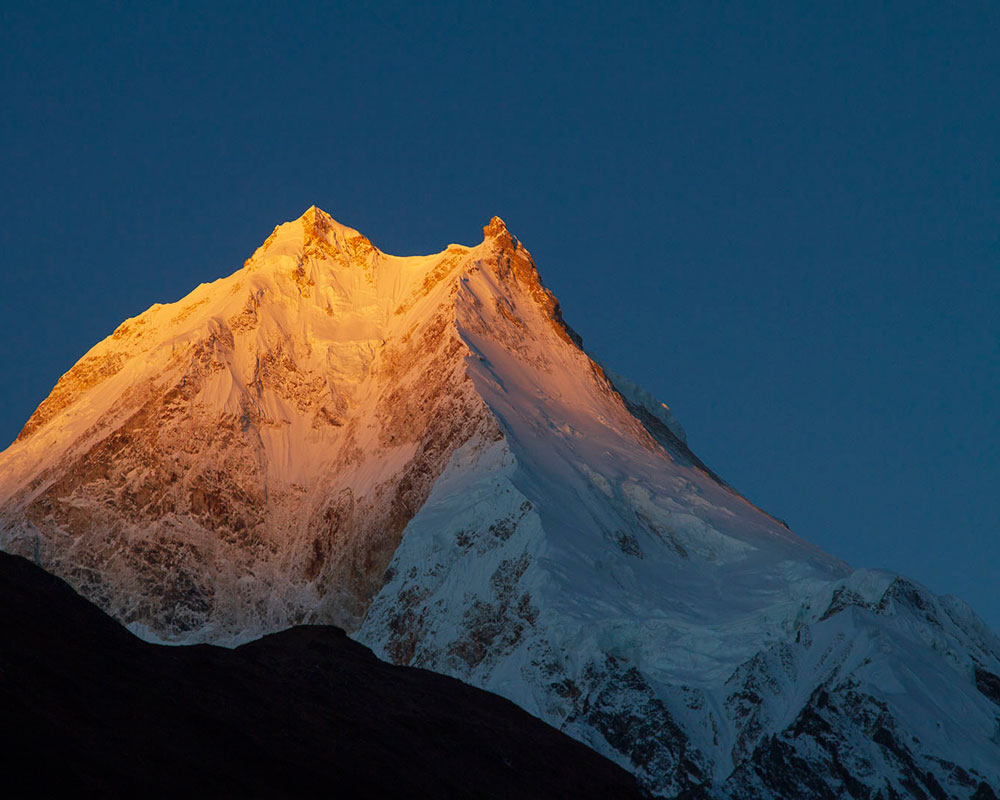
At 11 AM, Manaslu appears. Not dramatically. First, it's a white shape above the valley wall that you mistake for a cloud. Then your guide says something quietly — just your name — and you stop walking and look properly. 8,163 metres. The summit is so far above you that it seems to belong to a different atmosphere.
You stand there longer than you planned.
Samagaon arrives around 1 PM. The village is larger than you expected — stone houses, a monastery above on a hill, three teahouses, a community that has never reorganised itself around trekking season. A woman is hanging laundry. Two old men are talking by a doorway. Nobody looks up at your arrival. You're not an event. You're someone passing through. This is the correct welcome.
Your guide introduces you to the teahouse owner — a woman who has run this place for over 20 years. He uses her name. She shows you your room. Two windows face directly at Manaslu. You drop your pack and stand at the window for a while.
Lunch is dal bhat. You eat all of it and ask for more.
The afternoon has nothing on the itinerary. You walk through the village slowly. There's a mani wall — carved prayer stones — running along the village edge. You walk beside it on the correct side (left, clockwise; your guide explained this on Day 3). Nobody else is around.
By 4 PM, you're at the teahouse fire. Butter tea arrives. You drink it without making a face. This is a milestone. It took until Day 4.
Dinner at 6:30. Two trekkers from Germany are at the next table. You talk about the past. None of you knows exactly what Larkya La will be like. This is the correct relationship to have with it.
By 9 PM, you're in your sleeping bag with three layers on, looking at the ceiling. The river outside hasn't stopped. You fall asleep faster than you have in months.
Fourteen days of this. Each one is different. Each one is the same in one important way: you're present in a place that doesn't perform for you, and you have nothing else to do but be there.
That's what Manaslu does. It's not complicated. It just requires showing up.
Challenges & Safety
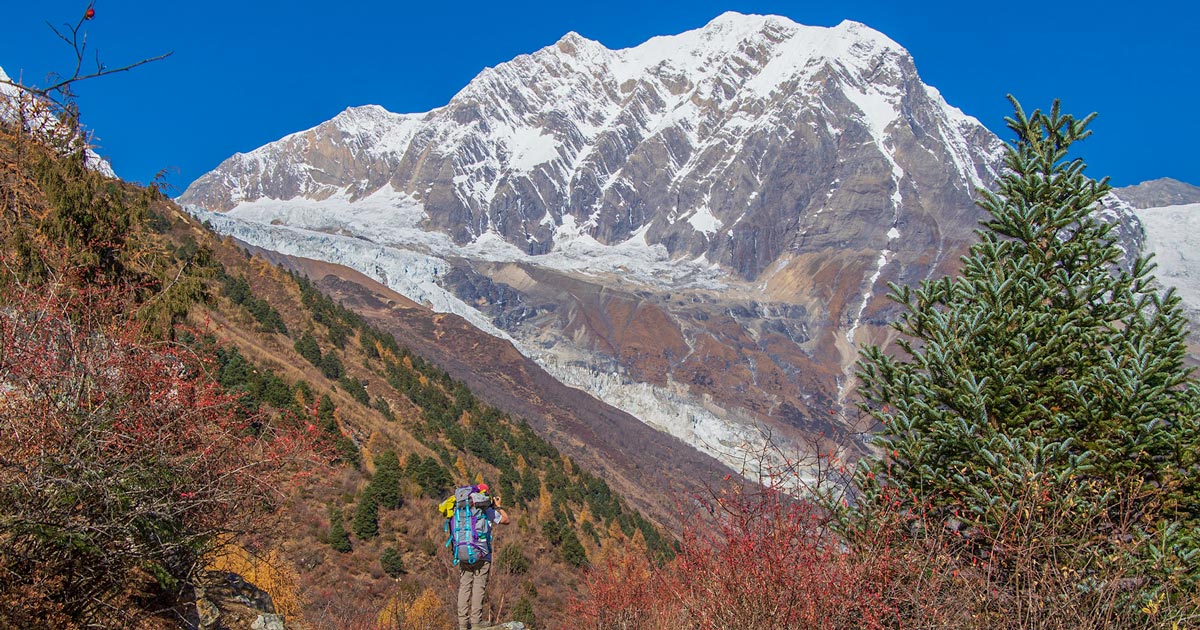
I won't tell you this trek is safe the way other operators sometimes do — implying risk is theoretical, that accidents happen elsewhere, that preparation eliminates everything. That's not honest.
Manaslu is remote. Rescue is difficult. The nearest hospital is a helicopter flight away. Understanding the actual risks — and how we manage them — is how you make a real decision.
Altitude sickness:
The most common serious risk on this route. Mild symptoms — headache, reduced appetite, disrupted sleep — are normal above 3,000m and manageable. High Altitude Pulmonary Oedema (HAPE) and High Altitude Cerebral Oedema (HACE) are rare, serious and require immediate descent.
The guide's role here is not ceremonial. A guide who has walked this route 10+ times recognises pre-symptomatic changes — in your gait, your speech, your pace — before you feel them yourself. Our guides are briefed specifically on recognition and have a clear protocol: moderate symptoms mean descent that day. Not rest-and-see. Descent.
We've never had a serious altitude emergency on our treks. I connect this to two things: the acclimatisation days built deliberately into the itinerary, and guides who are empowered — not pressured by the trekker's preference — to make the call.
Larkya La Pass:
At 5,106m, the pass is exposed, cold, and weather-dependent. A standard November crossing takes 5–6 hours at a steady pace. In fresh snow or high wind, it becomes difficult. In severe conditions, it closes.
Your guide decides departure time — typically 4–5 AM to cross before afternoon weather develops. If conditions are dangerous, you wait. Our itineraries include buffer days for exactly this. The pass has been there for 50 million years. It will be there tomorrow.
Route finding above 3,500m:
Trail markings thin out above Samdo. The route is known but not always obvious in low visibility or light snow. This is a specific, practical reason the guide requirement exists — not a regulation for its own sake. A wrong turn at 4,500m in falling visibility is a different problem than a wrong turn at 1,500m.
River crossings in shoulder seasons:
Late September and early October, the Budhi Gandaki runs high. Major crossings have suspension bridges; smaller sections can flood unpredictably. We monitor conditions actively. In recent years, we've delayed groups at Jagat due to high water. If you're considering a late-monsoon start, raise this with us before booking.
Teahouse food supply above 3,500m:
Above Samdo, supply chains are real constraints. In shoulder season, some teahouses operate with reduced menus. We scout availability ahead of our groups. Bring energy bars — not as replacement meals, but as insurance for the day a teahouse runs short.
Emergency protocol:
Every HST guide carries a first aid kit with altitude medication, including dexamethasone for HACE/HAPE emergencies, a satellite communicator, and has completed wilderness first aid training. Every trekker should carry travel insurance covering emergency helicopter evacuation to 5,000m+. A helicopter evacuation from Samagaon to Kathmandu costs $4,000–8,000 USD without coverage. With insurance, it's a single phone call.
Buy the insurance before you leave home. It's the most important line in this guide.
On turning back:
We've had trekkers turn back at Namrung. At Samagaon. One family turned back two days before Larkya La due to a knee injury. Each of them walked 8 or 9 days in a valley that didn't know or care that they had left. The experience didn't stop mattering because they didn't cross the pass.
Turning back when your guide says to, or when your body says to, is not failure. It's the decision that brings you home to try again.
Specific medical conditions or safety questions? Raise them before you book, not after — we'll tell you what we actually think.
Extensions & Follow-Up Treks
The Manaslu Circuit ends near Dharapani, where the trail joins the Annapurna region and a road returns to Kathmandu. Most trekkers take the road. A few don't.
Tsum Valley (7–10 additional days):
The Tsum Valley branches off the main circuit before Samagaon, requiring a separate restricted area permit. It's rarely trekked — even by Manaslu standards. The valley contains some of the most intact Tibetan Buddhist culture remaining in Nepal: monasteries, practices, and a pace of life that has genuinely not reorganised itself around trekking tourism.
I've walked Tsum twice. The first time, I didn't understand what I was seeing. The second time, I did. If Manaslu interests you because it's real and unperformed, Tsum Valley is more of that — further in, quieter, less visited.
We run combined Manaslu + Tsum Valley treks at 20–22 days. It's not a marketing extension; it's a different depth of experience that shares a trailhead with the circuit.
See our Manaslu and Tsum Valley 22-day trek →
Annapurna Circuit connection (10–14 additional days):
At Dharapani, you enter Annapurna territory. The Annapurna Circuit is more commercialised than Manaslu — this is simply true. But its diversity is genuine: Thorong La Pass at 5,416m, Mustang's rain shadow, Jomsom and Kagbeni's Central Asian landscape. After Manaslu's Buddhist valley culture, Annapurna's variation feels like a different country.
Combined Manaslu + Annapurna is 25–28 days — two circuits, two high passes, two entirely different cultural worlds. We run this for trekkers who have the time and understand it's not just more walking; it's more Nepal.
One honest note on back-to-back circuits:
Most people shouldn't do them consecutively. You arrive at the Annapurna Circuit already tired, already acclimatisation-adjusted, already slightly spent. Annapurna deserves a fresh body and fresh attention.
If you have 28 days: Manaslu Circuit + 4 recovery days in Pokhara + start Annapurna. The rest doubles the quality of the second circuit. If you have 20 days, do Manaslu properly. Return for Annapurna separately. Two great treks beat one exhausting trip that covers both.
Post-trek Kathmandu (2–3 days):
Most trekkers fly home within 48 hours of finishing. This is a mistake — not physically, but experientially. Kathmandu, after 14 days on Manaslu, looks completely different. The noise is louder. The food is extraordinary. The colour is overwhelming. You notice the city in a way that requires having been away from it.
Spend time in Patan's Durbar Square. Eat a proper meal. Sit with what happened on the trail.
We can arrange post-trek days in Kathmandu — accommodation, local orientation, or just a reliable airport transfer if you'd rather navigate alone.
FAQ
What is the best time to trek Manaslu?
November is currently considered the most reliable month for the Manaslu Circuit due to changing weather patterns. Spring (March–April) is the second-best option. Autumn (September–October) has become less predictable, while summer and winter are generally not recommended.
How long is the Manaslu Circuit Trek?
The standard itinerary takes 14 days in total, including 12 trekking days and 2 acclimatisation days. Shorter 10-day express versions and longer 22-day routes with Tsum Valley are also available.
What permits do I need for Manaslu?
You need four permits for the trek:
- Manaslu Restricted Area Permit – $100 USD
- Manaslu Conservation Area Permit (MCAP) – NPR 3,000
- Annapurna Conservation Area Permit (ACAP) – NPR 3,000
- Local Government Entry Fee – NPR 1,000
The total cost is approximately $155 USD.
Is Manaslu harder than Everest Base Camp?
Manaslu reaches 5,106m at Larkya La Pass, while Everest Base Camp reaches 5,364m. Although EBC is slightly higher, Manaslu is often considered more challenging because the trails are rougher, less maintained, and far more remote.
What is the cost of trekking Manaslu?
The total cost usually ranges between $1,500–$3,500 USD, depending on the level of service and comfort. Main expenses include:
- Permits: around $155
- Guide: $300–$500
- Porter: $200–$400
- Teahouse accommodation: $600–$1,200
- Meals: $400–$800
- Transportation and extras vary
What is altitude sickness, and how do I prevent it?
Altitude sickness (AMS) can cause headaches, nausea, dizziness, and fatigue. To reduce the risk:
- Ascend gradually
- Drink 3–4 litres of water daily
- Eat properly
- Rest when needed
- Inform your guide immediately if symptoms appear
Most mild cases improve with rest and proper acclimatisation.
What will I eat on the Manaslu trek?
Teahouses along the trail commonly serve dal bhat, vegetable curries, noodles, eggs, soups, bread, and tea. Breakfast often includes porridge or pancakes. Vegetarian, vegan, and some gluten-free options are usually available with advance notice.
Do I need travel insurance for Manaslu?
Yes. Travel insurance is essential and should include coverage for trekking above 5,000m as well as emergency helicopter evacuation. Rescue operations in the Himalayas can cost more than $10,000 USD without insurance.
Conclusion
The Manaslu Circuit isn't the hardest trek in Nepal. It's not the most famous. It's not the highest (Larkya La Pass at 5,106m is lower than Thorung La Pass on Annapurna).
What it is: honest. Unperformed. Genuinely remote in ways that matter.
You'll finish this trek and return to Kathmandu and think, "That was hard." You'll also think, "That was real."
The difference matters more than you might expect.
In Samagaon, on your acclimatisation day, you'll sit in a teahouse with a woman who's made tea for 30 years. You won't be doing a "cultural experience." You'll be drinking tea. You'll ask where she learned to make it. She'll say her mother taught her. That's all. It's the most profound moment on the trek, and it requires nothing but presence.
On Larkya La Pass, crossing at 5,106m, you'll stand in the wind with mountains surrounding you for 360 degrees and think of nothing. Your mind will be still. This stillness is worth the entire trek.
You'll return to your normal life changed in ways you won't articulate for months. Your threshold for difficulty will have shifted. Your sense of what's possible will have shifted. Your relationship to your own body will have shifted.
That's what Manaslu teaches. Not just the trek. The space it creates.