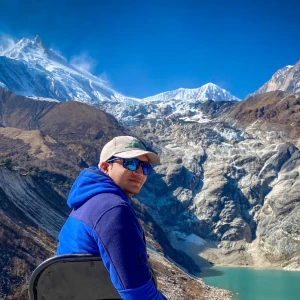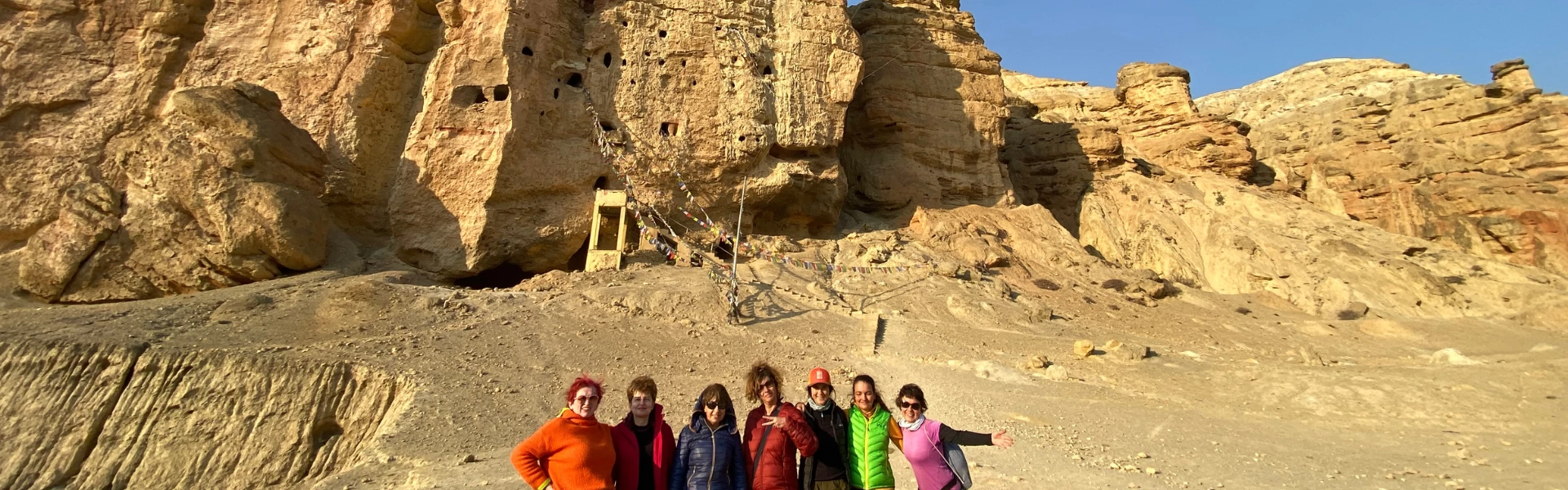
Most people ask me what there is "to do" in Mustang like they're filling out a checklist. Lo Manthang, tick. Sky caves, tick. Mustang lets you in a little at a time, and only if you're paying attention.
It sits in Nepal's rain shadow, cut off from the monsoon by the Annapurna and Dhaulagiri ranges, which is why the landscape looks nothing like the Nepal on postcards — no jungle, no terraced green hills, just red cliffs, wind-carved rock, and villages that have been running on the same rhythm for eight hundred years. Foreigners have only been allowed in since 1992. The region still caps visitor numbers through the permit system, which is the only reason any of this has survived intact.
Here's what's actually worth your time, and why.
Lo Manthang: A Living City, Not a Ruin
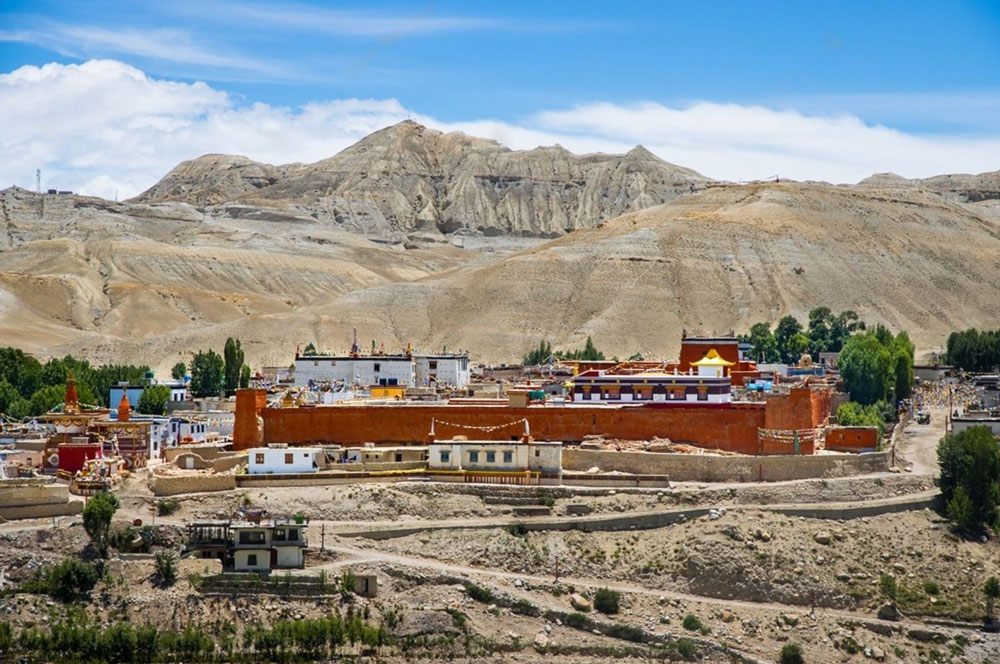
Everyone calls Lo Manthang "the last forbidden kingdom" — a name that makes it sound abandoned. People still live inside those six-metre earthen walls, the same walls King Ame Pal raised in 1440 when he built his capital here as a waypoint on the salt trade route to Tibet.
Walk through the gates, and you're inside a working town: flat-roofed mud houses stacked with firewood for winter, courtyards where families are drying grain, kids cutting through alleys on their way somewhere. The Royal Palace — five storeys, stone and packed mud, its walls once covered in Ranjana-script scripture — still stands at the centre, though the interior is currently closed to visitors.
The four monasteries are the real draw for most travellers, and rightly so. Jampa Gompa, the oldest, dates to the early 1400s and holds some of the best-preserved Buddhist murals in the Himalaya. Thubchen Gompa is a cavernous red assembly hall built a generation later. Both are still active — you'll often catch monks mid-ritual, not performing for anyone, just doing what they do every morning.
That's the thing to understand about Lo Manthang: nothing here is staged for you. You're a guest in someone's daily life.
The Sky Caves: Nobody Actually Knows Why They're There
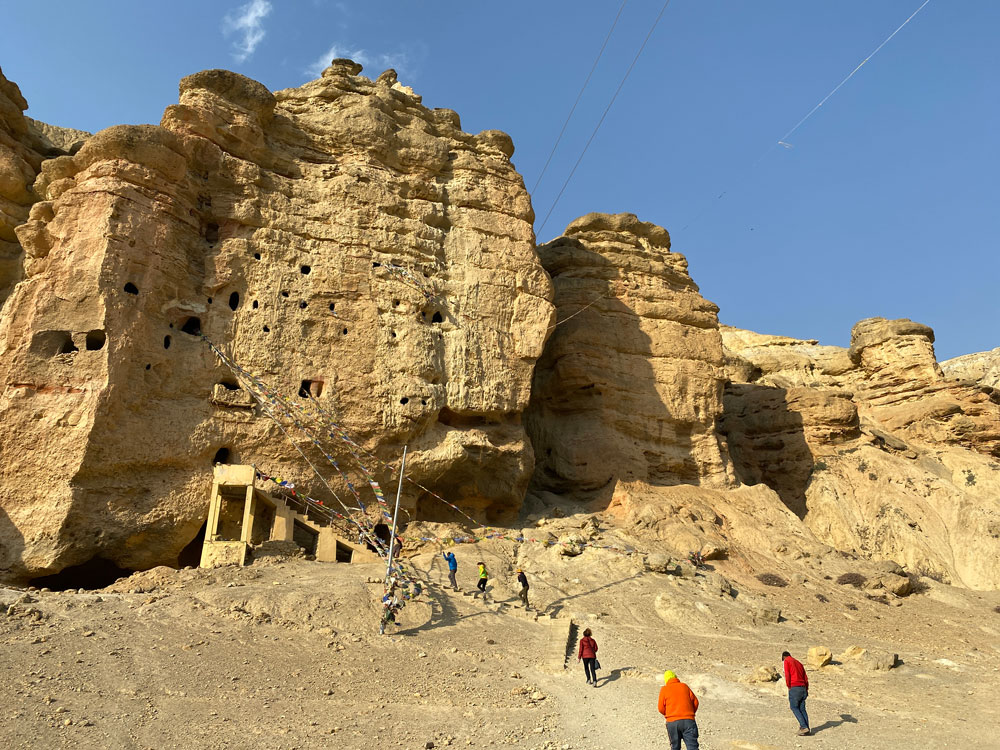
Above Chhoser, Dhakmar, and a handful of other villages, the cliffs are riddled with man-made caves — thousands of them, some five storeys tall with interconnected rooms, carved directly into vertical rock faces with no visible means of access. The largest, Shija Jhong in Chhoser, is the one most itineraries stop at.
Nobody has a confirmed answer for why they exist. Grain storage is one theory — Mustang's high desert soil doesn't produce much, so stockpiling after harvest made sense. Defence is another — the entrances are small and hard to spot from below, which would've made them useless to raiders. Then archaeology complicated both theories: in the 1990s, a joint Nepal–University of Cologne team found partially mummified bodies inside dating back at least 2,000 years, and in 2010, a separate dig near Samdzong turned up 27 skeletons with cut marks consistent with Bon sky burial practices. Storage, shelter, and burial sites are all plausible, and probably all true at different points across two millennia. That mix of hard fact and open question is what makes the caves worth the detour — you're getting a genuine mystery, not a tidy answer.
Kagbeni: Where Mustang Actually Teaches You Something
.webp)
There's a moment I keep coming back to. I was in Kagbeni trying to photograph a woman filling her water bucket. She noticed, got annoyed, and told me straight — if I wanted her picture, I'd have to pay for it. I reached for my wallet. The second I pulled out cash, she laughed, waved it off, and walked away.
Fifteen minutes later, I was in her courtyard, drinking raksi she'd just distilled, watching her husband braid her hair.
That's the whole region in miniature. She let me in because she decided to, not because I paid for it — and that's closer to what luxury actually means in Mustang: comfort doesn't earn you access here, a place deciding to stay open around you does. It's why I don't build itineraries that rush through Kagbeni on the way to somewhere else. It deserves an evening, not a photo stop.
Muktinath: Where Two Faiths Share One Flame
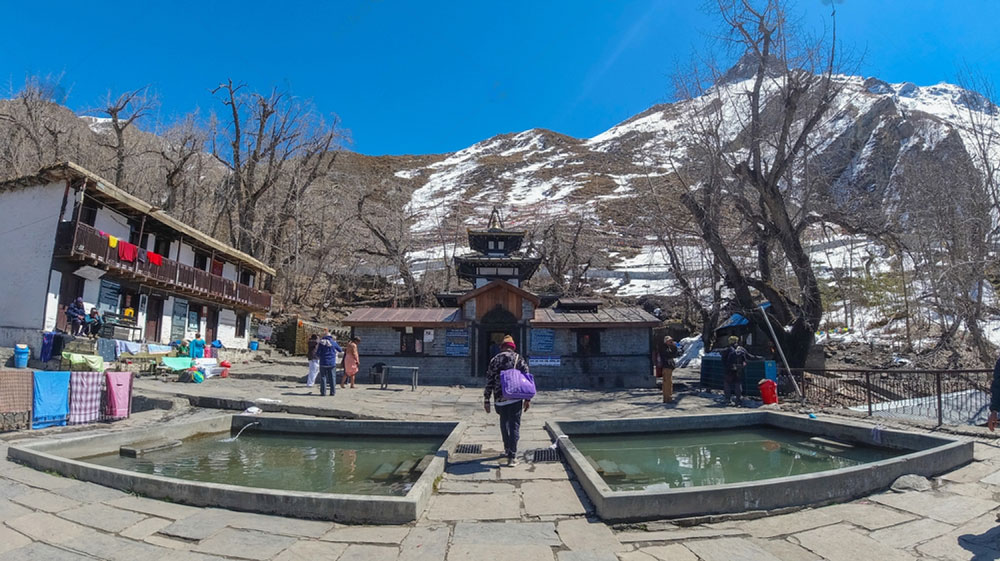
Muktinath sits at 3,710 metres, ringed by snow peaks, and is sacred to both Hindus and Buddhists — for Vishnu worshippers it's one of the holiest Vishnu sites in the world, and for Vajrayana Buddhists it's one of 24 places tied to Guru Rinpoche's enlightenment. Inside the complex, the Jwala Mai temple houses a natural gas flame that's burned, by tradition, for centuries — taken as a symbol of earth, air, and water in union. Most pilgrims also pass through the 108 water spouts that ring the temple, believed to cleanse the soul.
You reach it three ways: on foot via the Annapurna Circuit, by jeep, or on horseback for a slower, more traditional approach. Whichever way you choose, acclimatise properly first — this isn't a place to rush at altitude.
Trekking Mustang: Two Very Different Trails
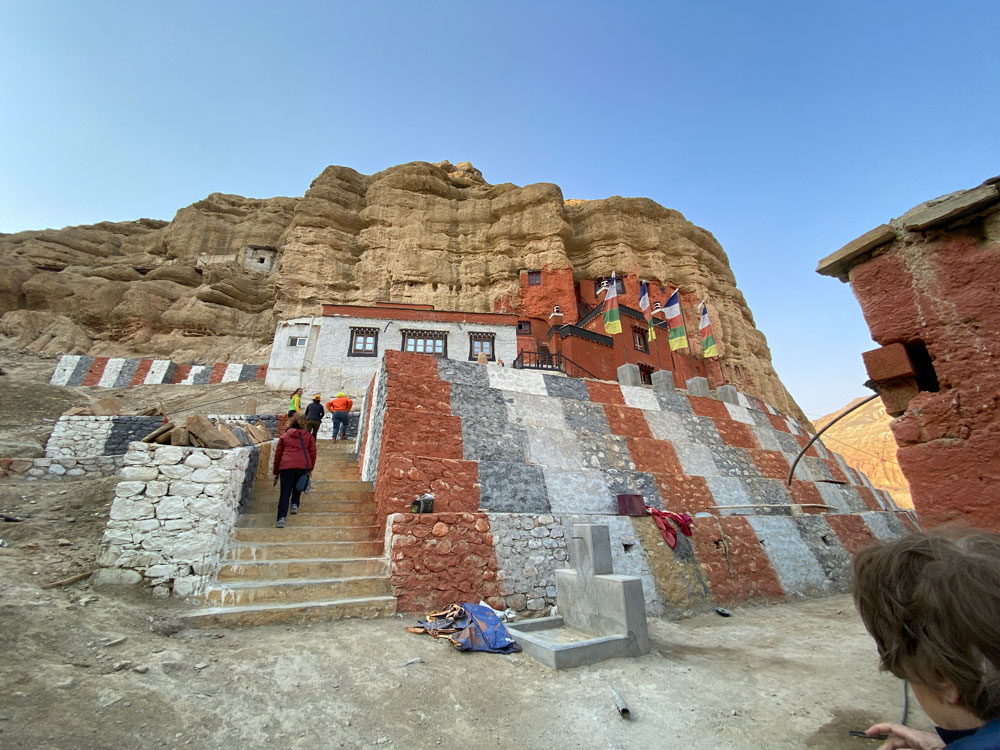
If you're walking rather than driving, there are two real routes.
The Lo Manthang Circuit (around 10 days) is the deeper option — Kagbeni, Chele, Ghami, Dhakmar, Ghar Gompa, Yara, Lo Manthang, Chhoser, up to the Kora La border. It's higher, harder, and takes you through villages that see very few outsiders. This is the one I point serious trekkers toward when they want Upper Mustang properly.
The Jomsom–Muktinath Trek (4–5 days) is shorter and gentler — Jomsom, Marpha, Kalopani, Muktinath, Jharkot, and the Bon Buddhist village of Lubra — and pairs well with a shorter window in Nepal. Best walked in spring or autumn, when the skies are clearest, and the passes are stable.
For travellers with limited time who still want the depth without the walking, our Luxury Upper Mustang Jeep Tour covers the same ground by road, with the same access to villages and monasteries — just a different route in. For anyone set on walking it, the Upper Mustang Trek is the one I'd point you to first, and our permit guide has the current Restricted Area Permit costs and rules before you commit to either.
Why I Don't Lock Itineraries in Advance
A few seasons back, I had an Israeli family in Mustang — no hiking planned on their itinerary at all. On day three, they asked my guide if they could break from the schedule and hike instead. We rerouted on the spot: Dhakmar cliffs, the sky caves, Ghar Gompa monastery on foot. They were wrecked by the end of it. They also called me afterwards, unprompted, just to say thank you for the flexibility.
That's the part of this job that doesn't show up on a "things to do" list — a guide who can read a group and change the plan mid-trip instead of protecting the schedule at their expense. If you're weighing operators, that's a better question to ask than what's included: can they actually adjust once you're on the ground?
The Tiji Festival
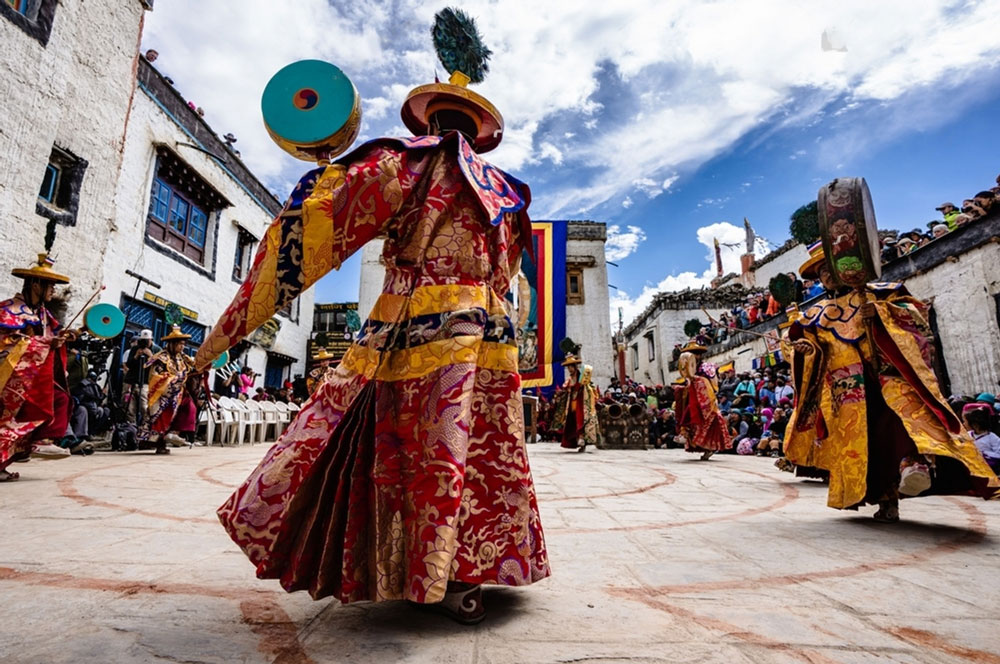
Tiji is a three-day Buddhist ritual held in Lo Manthang, timed to the Tibetan lunar calendar — masked dances re-enacting the deity Dorje Jono's victory over a demon threatening the kingdom with drought. For 2026, the festival is expected in mid-May, though as with every year, the exact dates are only confirmed a few months out once the monastery finalises them against the lunar chart — check with us before locking travel dates. It's one of the few genuinely unstaged religious festivals left in the Himalaya, mostly because the permit system keeps attendance small on its own.
Where You Stay Matters Less Than You Think
Comfortable lodges exist in Mustang now, including higher-end options with proper heating, good food, and real beds after a long trekking day. That matters after altitude and dust. But the lodge isn't the experience — it's where you recover so you're sharp enough for the parts that actually are: Kagbeni at dusk, a monastery at morning prayer, a family that decides to let you in. We build comfort into our Mustang itineraries deliberately, but never in a way that keeps you inside it.
FAQ
What is the best time of year to visit Mustang?
Spring (March–May) and autumn (September–November) offer the clearest skies and most stable trails. Spring also lines up with the Tiji Festival.
Do I need a permit to visit Mustang?
Yes — Upper Mustang requires a Restricted Area Permit, and you must travel with a licensed Nepali agency and guide. See our permit guide for current costs and rules.
How many days do I need in Mustang?
A jeep tour can cover the essentials in 5–7 days. Trekking the Lo Manthang Circuit properly takes closer to 10 days. The shorter Jomsom–Muktinath route can be done in 4–5.
Can I visit Mustang without trekking?
Yes. Our Luxury Upper Mustang Jeep Tour reaches the same villages and monasteries by road, for travellers who want the depth without the walking.
Is Mustang suitable for older or less experienced travellers?
The Jomsom–Muktinath route is manageable for most reasonably fit travellers. The Lo Manthang Circuit and higher altitudes call for better fitness and proper acclimatisation — talk to us about pacing before you book.
Why I Keep Coming Back to Mustang
I've been building trips here for years, and it still doesn't fully open up on schedule. You can see Lo Manthang's walls in the morning. You can't predict when someone will decide to let you into their courtyard, or which day a guide will read the group right and tear up the plan — and that unpredictability is the whole point. The places that stay real are the ones that can't be scripted.
If you're weighing a jeep tour against the trek, or trying to time a trip around Tiji, that's exactly the kind of decision worth talking through rather than guessing at from a blog post.
Get in touch, and we'll build the route around what you actually want out of it.