I run operations at HST, which means I sign off on every guide and porter contract that goes out. A guide earns $30 to $40 a day on a standard route, $40 to $50 in the Everest region, and $50 on a restricted route like Manaslu. A porter earns $15 to $25 a day, depending on the region. Food, lodging, and insurance sit on top of that, not inside it. Tips add more.
Why the Numbers You'll Find Online Don't Agree
I've read the range too. $17 a day on one site, $60 on another. Neither is lying. They're measuring different things.
There's no single law in Nepal that fixes a trekking wage. TAAN, the trekking agencies' association, publishes a benchmark, and agencies choose whether to honor it.
Three things create most of the spread:
- Wage-only versus all-inclusive. A bare daily wage looks like $30. A figure that folds in food, gear, insurance, and permit costs looks like $60. Same guide, different math.
- Season. In our busiest windows, March to May and September to November, guides work more days and pull in more tips. The rate doesn't change. The number of paid days does.
- Route and altitude. A guide heading into Manaslu or Upper Mustang carries restricted-area permits and extra training. That's reflected in a higher day rate.
If a quote doesn't say which of these three it's counting, ask before you trust the number.
What an HST Guide Actually Earns Per Day
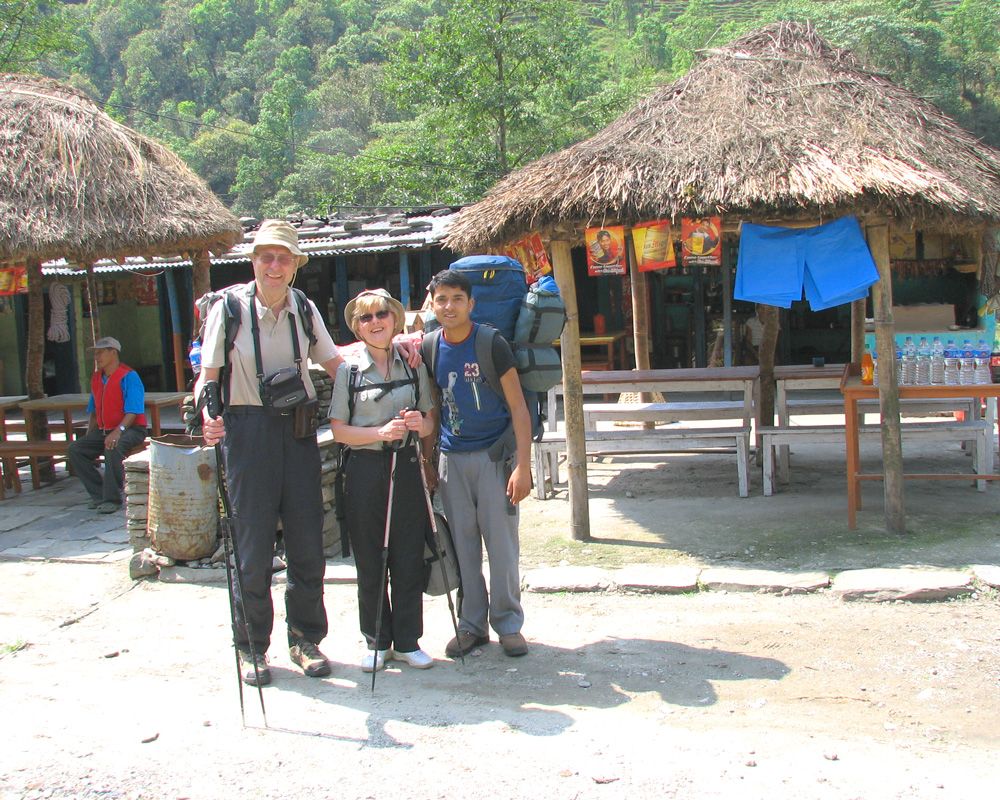
A guide leading a standard route, Langtang or Annapurna, earns $30 to $40 a day. In the Everest region, where the altitude and trail conditions ask more of them, that's $40 to $50. On Manaslu, where the permit is restricted and the route is remote enough that a mistake matters more, it's $50.
Our own site hasn't always reflected this cleanly. One of our older cost pages still lists a flatter range across regions, closer to $25 to $40 depending on where you land on the page. That's the kind of inconsistency I want fixed, because a Manaslu guide and a Poon Hill guide aren't doing the same job, and the rate should show that.
Food and lodging come separately and are never pulled out of the wage. Most teahouses along our routes give guides free or discounted rooms, and meals are part of the trek's operating budget.
Season changes how many days a guide works. It doesn't change what I pay per day. A guide working through autumn peak gets more contracted trips than one working through the July monsoon lull, at the same daily rate.
What an HST Porter Actually Earns Per Day
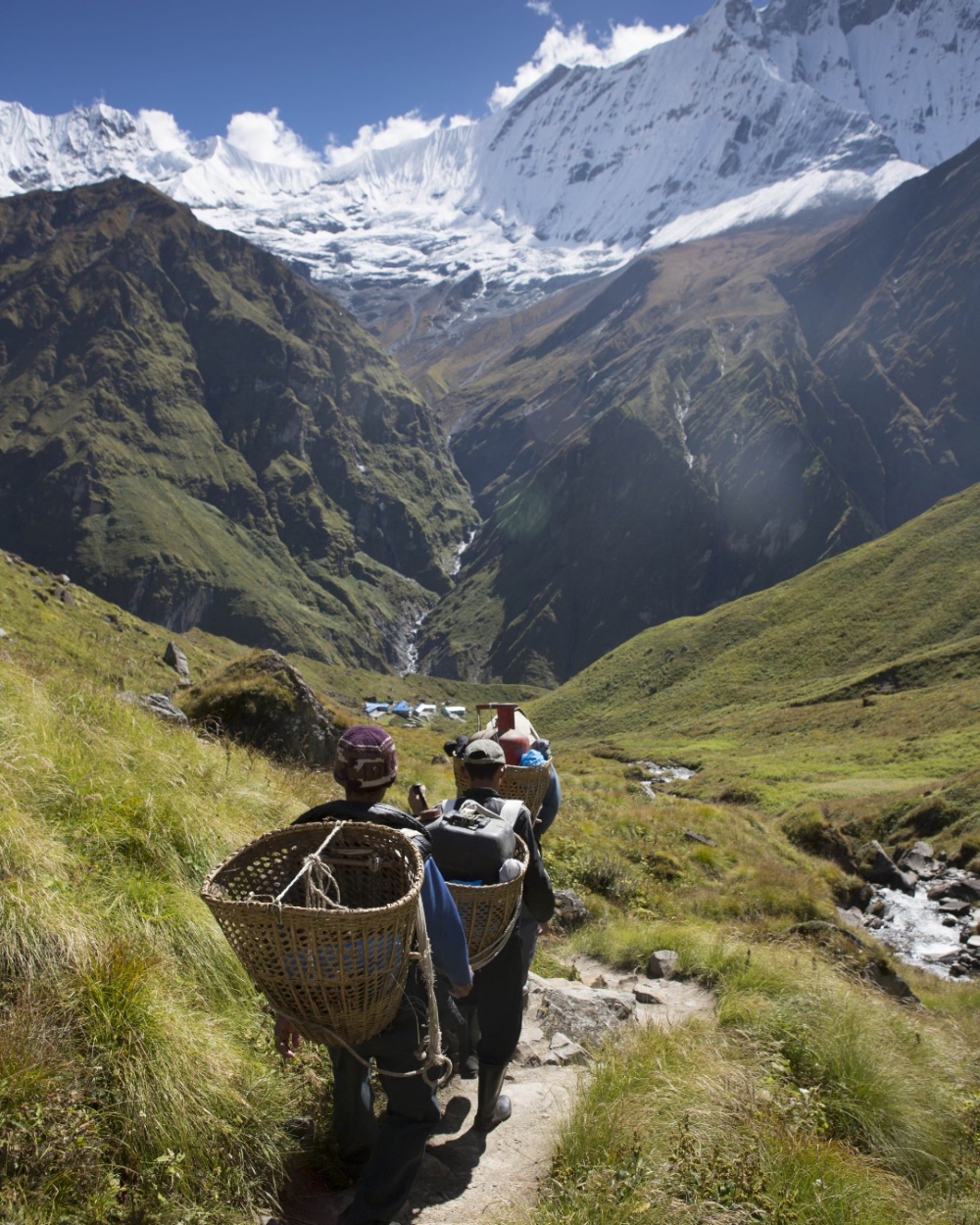
Porters earn $20 to $25 a day in the Everest and Annapurna regions, and $15 to $20 a day on lower-altitude and Langtang routes. Same structure as guides: wage only, with food, lodging, and insurance covered on top.
I check load limits personally when I can. We split heavier loads across two porters rather than letting one person carry past a safe weight. It costs more per trek, and I'd rather absorb that than not be able to look a porter's family in the eye.
Where Tips Fit In
Base wages in this industry are kept low by design, to keep the trek itself affordable. Tips close that gap for the people actually walking the trail with you.
What I tell clients: around $10 a day for a lead guide, $5 a day for a porter, handed to them directly in cash at the end, not through us.
We don't put a tip line on the invoice, and I don't ask our guides to angle for one. Clients are told what's typical so they can budget for it. What they give beyond that is between them and the person who earned it.
Why This Matters When You Compare Trekking Companies
Guide and porter wages are the easiest line to cut on a quote, and the one a trekker has the least ability to check. You see the itinerary and the teahouses. You don't see the payroll.
When a competitor's price comes in well under ours for the same route, same days, same group size, I start by asking where the difference is coming from. Permits are fixed by the government. Teahouse costs don't vary much. Staff wages do.
If you want the full regional breakdown of what guides cost across our routes, see how guide costs break down by region. For the complete picture of everything that goes into a trek's price, permits, food, gear, and staff wages together- read our full guide to trekking costs in Nepal.
Book a Trek Where This Is How We Pay
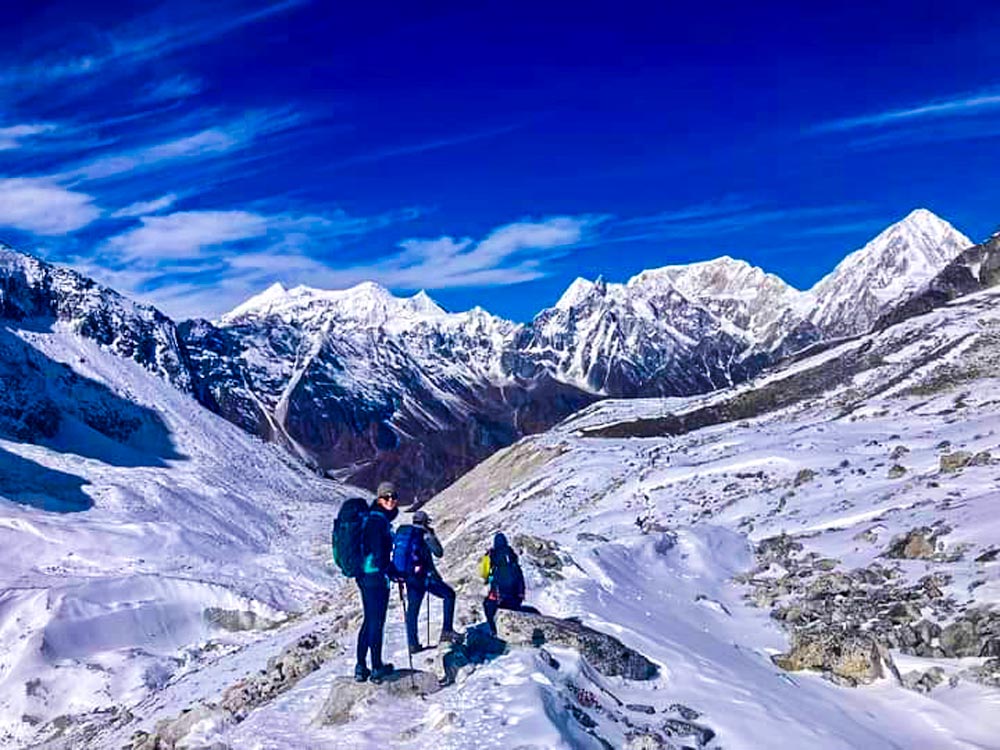
If fair wages for guides and porters matter to how you choose a company, that's exactly what you're getting with HST. Every guide and porter on our treks is paid at or above the rates in this article, on every route, every season, no exceptions.
Get a custom trip quote or message us directly, and we'll walk you through exactly what's included before you book.
FAQs
How much should I tip my Nepal trekking guide?
Plan on $10 a day for a lead guide and $5 a day for a porter, given directly in cash at the end of the trek rather than pooled through the agency.
Do porters get paid less than guides?
Yes. A guide carries language skills, route knowledge, first aid training, and direct responsibility for your safety. A porter's work is physically demanding in a different way and is paid fairly for it, but the responsibility gap between the two roles is real, and so is the pay gap.
Why do trekking company prices vary so much if guide pay is similar?
Wages are one line among several. Permit handling, group size, teahouse quality, and agency margin all sit on top of similar staff pay, which is why two quotes for the same route can still land far apart. See our guide cost breakdown for how each piece adds up.
The Bottom Line
$30 to $50 a day for a guide depending on route and region, $15 to $25 a day for a porter, with tips added on top of both. If a quote you're comparing comes in far below that, ask what got cut before you book it. For the full breakdown of where every dollar of a trek goes, read our complete cost guide, or talk to us directly about your trip.