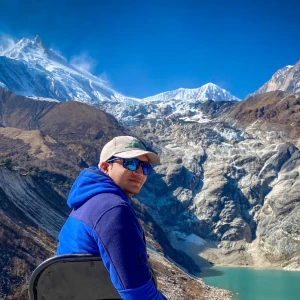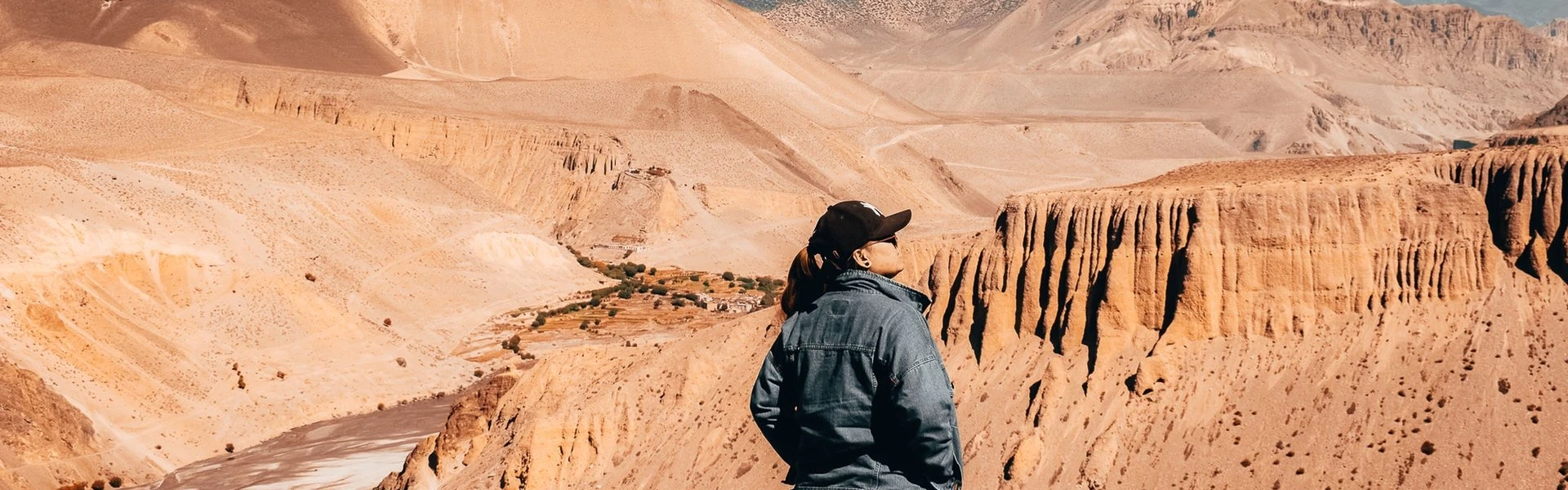
I flew into Jomsom for my first solo trek through Upper Mustang without knowing what I was walking into. 3+ years of running treks across every district of this country, and I still hadn't done Mustang alone. There's a difference between leading a trek and being led by one, and that difference is where this story starts.
The stress hits before you even leave Kathmandu. Solo travel to Upper Mustang used to come loaded with extra friction: minimum group requirements, permit complications, the sense that this particular region wasn't built for one person. That changed, and the door is open now in a way it wasn't before.
Still, knowing the door is open and walking through it alone are two different things. I remember standing at the checkpoint in Kagbeni, watching the Kali Gandaki cut its channel south, feeling something close to nerves. Not fear exactly. More like the awareness that for the next ten days, there would be no group dynamic to hide inside. No one else's pace to match. Just me, my guide Narayan, and a landscape that doesn't care whether you're ready for it.
Solo Upper Mustang Trek Permits: What Changed in 2026
As of March 2026, solo travellers are permitted to trek Upper Mustang with a licensed guide and a Restricted Area Permit (RAP), which costs $50 per person per day. The old two-person minimum no longer applies. One traveller, one guide, one permit is now all it takes to legally enter the region.
This is the single biggest shift in Mustang's accessibility in years. Solo travellers previously had to find a second person to make the group minimum work, delay their trip, or book through a group-joining departure that didn't match their timeline. That requirement is gone. The Department of Immigration's official notice on restricted area trekking permits confirms it in writing. For the full mechanics, including how the RAP is issued and what documents your agency needs, read our Upper Mustang permit guide.
Why Upper Mustang Suits the Solo Mind
Most treks in Nepal reward company. Everest Base Camp, Annapurna Circuit, even Manaslu to some degree- these routes have a rhythm built around shared experience: teahouse dinners with strangers, camaraderie on the climb, stories traded over dal bhat. Mustang works differently. The terrain itself is solitary. Wind-carved cliffs, a high desert plateau that looks more like Tibet than Nepal, villages spaced far enough apart that you feel the distance in your legs and your thoughts both.
That solitude isn't a gap to fill. It's the point. Solo travellers who come to Mustang aren't looking for a crowd to blend into. They're looking for the kind of space that lets internal noise settle. I've watched it happen to trekkers I've operated with over the years on Everest Base Camp and Manaslu too, but it shows up fastest and most clearly in Mustang. Somewhere around day four, walking the long stretch toward Charang, I stopped narrating the trip to myself. Stopped thinking about what came next. I was just walking, and the walking was enough.
This is the psychology Mustang was built for, whether by geology or by accident. A landscape this stark doesn't leave room for distraction. It asks you to be present with it. That's usually the thing solo travellers are actually after, whether they'd put it that way or not.
Read a story of a solo female to Upper Mustang.
The Guide as Companion, Not Chaperone
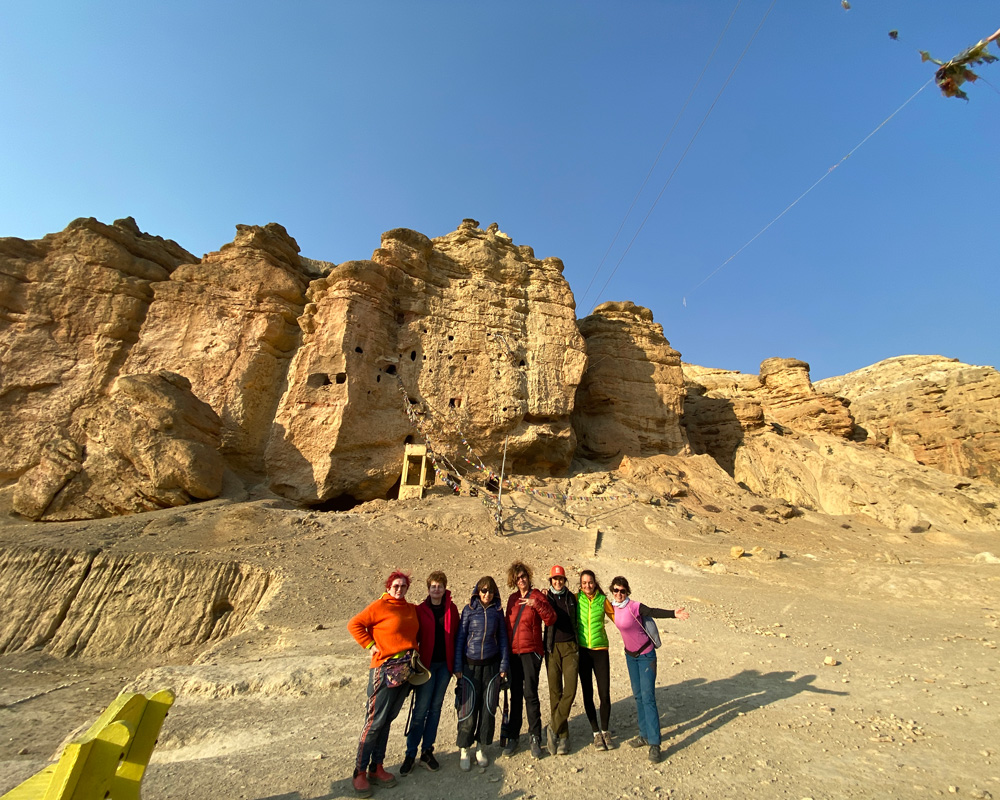
Here's where people misunderstand solo trekking with a guide. They imagine it as supervision, as if the guide is there to manage you rather than walk with you. That's not what a good Mustang trek looks like.
Narayan has spent most of his life in this region. He knows which chorten marks the halfway point to a village before it's visible, which family in Lo Manthang will pour you tea if you ask about their roof repairs, when the wind will pick up in the afternoon and when it's safe to keep walking past your planned stop.
None of that is guidebook knowledge. It's lived knowledge, and it becomes the scaffolding that lets a solo traveller go deeper rather than staying cautious.
The dynamic between one guide and one traveller is completely different from a group trek. There's room for actual conversation, the kind that drifts from trail logistics into where he grew up, what winter is like when the tourists disappear, why his father crossed into Mustang from Tibet decades ago. You start to understand the place through someone who has never known it as scenery. It becomes a country he belongs to, not a route he's leading you through.
In a group, that kind of exchange rarely happens. There's always someone else's question interrupting, someone else's pace to consider. Solo, the guide relationship becomes the whole relationship of the trip. In Mustang, where villages sit hours apart, that's what fills the gaps.
This is exactly why we brief our guides individually for every solo client. Meet the guides we assign to solo treks.
Silence and What It Opens in Mustang
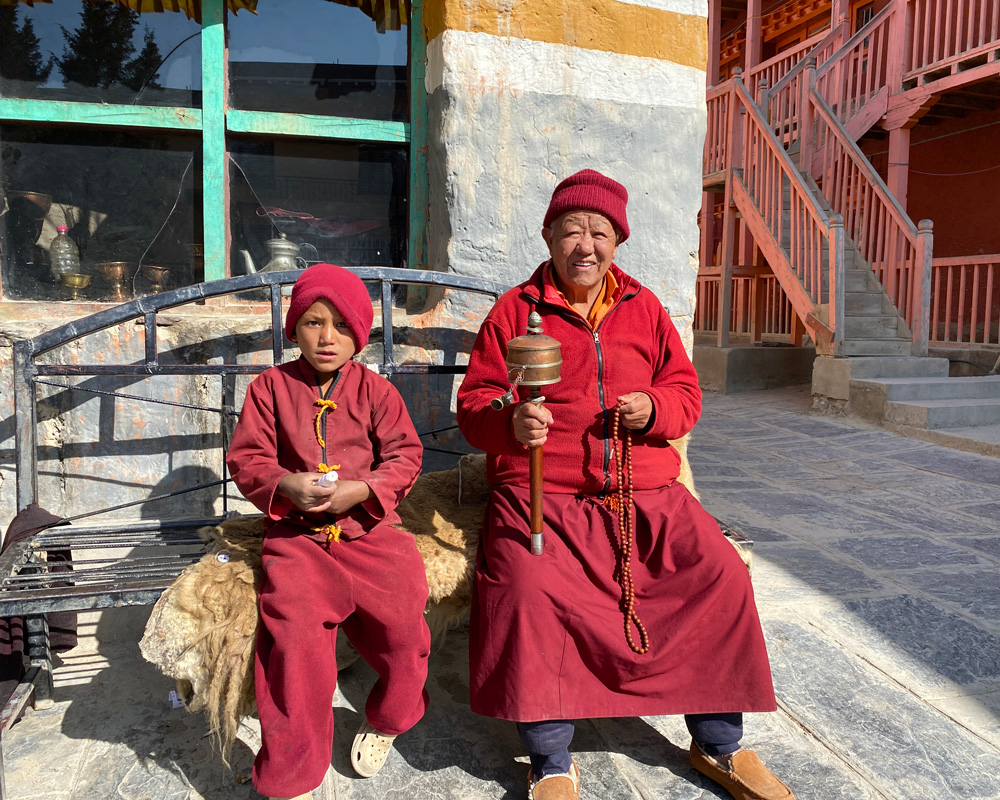
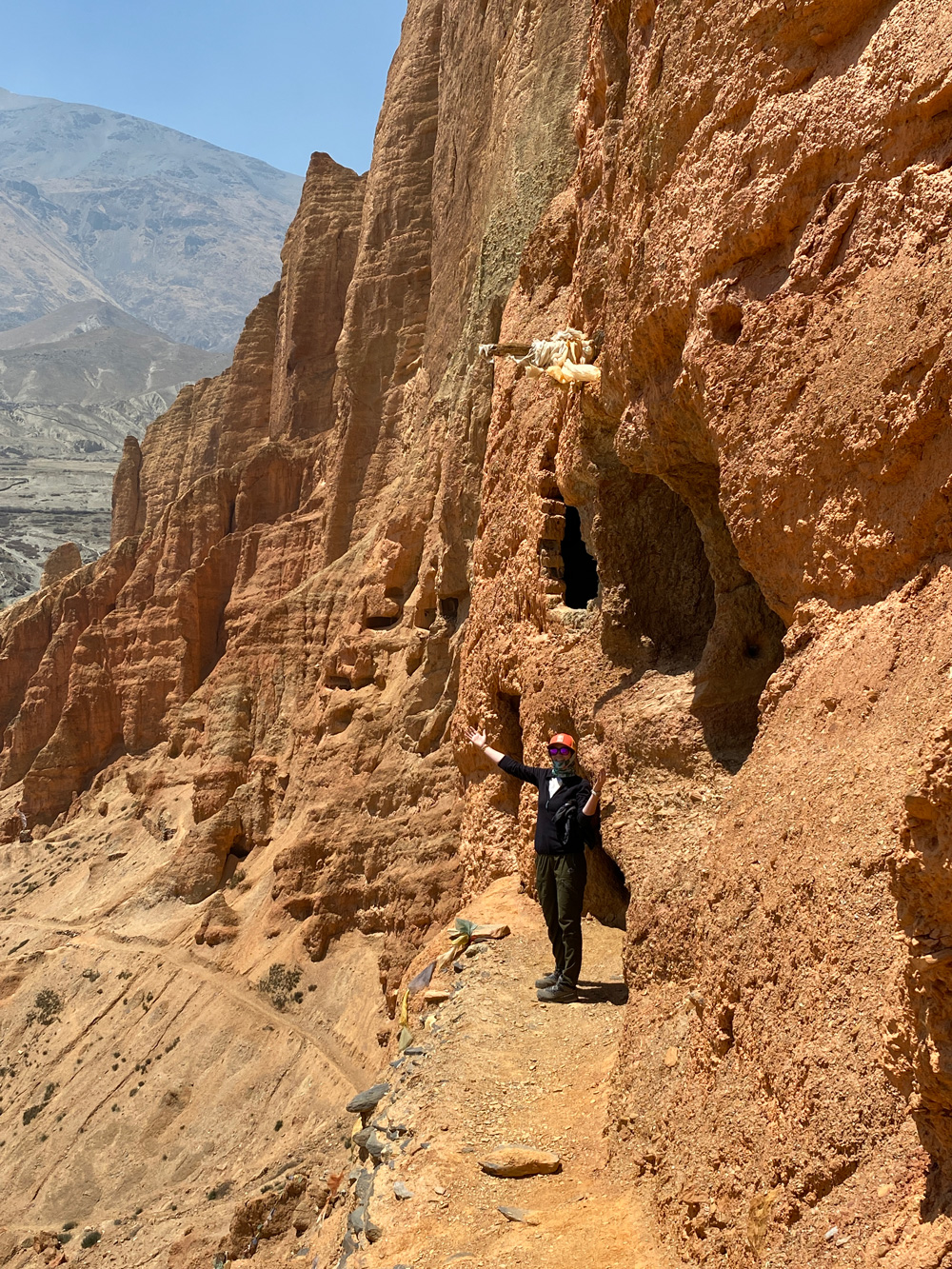
Upper Mustang holds a particular kind of quiet. Not the absence of sound exactly. Wind moves constantly through the canyon walls, prayer flags snap against poles, but there's an absence of human noise that most travellers have never experienced for this long. Days pass with only the wind, footsteps, and Narayan's occasional comment about a cave system carved into the cliffs above, remnants of a civilisation that predates written record in this region.
That silence does something to solo travellers specifically. Without a companion to talk to, you're left with your own thoughts for long stretches, and most people arrive here somewhat afraid of that. Ten days later, they leave having made peace with it, or having learned something from it they weren't expecting.
The cultural access matters too. Because you're moving as one person rather than a group, doors open that wouldn't otherwise. A monk in Lo Manthang who might avoid a crowd will sit and talk with one traveller and a trusted local guide. A family preparing barley for winter will wave you over to help, half out of curiosity, half out of the ease that comes from not being outnumbered. Mustang is a place where Buddhist and Bon traditions still shape daily life rather than perform for visitors, and that kind of access requires a smallness that group trekking doesn't allow.
Permission to Go Alone: Booking Your Solo Mustang Trek
If you're deciding whether Mustang is the right call for a solo trip in Nepal, here's where I land: the region was never unsuited to solo travel. It was inaccessible because the permit structure hadn't caught up yet. That's resolved now. What's left is a landscape that rewards solitude more than almost anywhere else in the Himalaya.
For a wider view of where solo travel works best in Nepal, read our guide to solo trekking across Nepal. Mustang sits firmly in the category of treks solitude suits rather than treks solitude complicates. It's not a place you need company to enjoy. Company would, if anything, get in the way of what it's actually offering.
What stays with me from that trip isn't a single viewpoint or a particular monastery, though there were plenty of both worth remembering. It's the specific quality of walking for hours without needing to explain myself to anyone, arriving in Lo Manthang at dusk with nothing waiting but a cup of tea and Narayan's quiet company, and understanding that this was the whole point. Not an obstacle before some bigger reward. The trek itself, walked alone but never unaccompanied, was the reward.
If that's what you're looking for, Mustang is ready for you now in a way it wasn't two years ago. The kingdom hasn't changed. What's changed is that you're finally allowed to meet it on your own terms.
→ Plan your solo Upper Mustang trek with us, and we'll build the itinerary, permit, and guide match around your pace.
Frequently Asked Questions
What permits are required for a solo Upper Mustang trek?
As of March 2026, solo travellers can trek Upper Mustang with a licensed guide and a Restricted Area Permit (RAP), which costs $50 per person per day. That's confirmed directly in the Department of Immigration's official notice. You'll also need a standard Nepal tourist visa and an ACAP (Annapurna Conservation Area Permit), because the route to Mustang passes through Annapurna Conservation Area before it reaches the restricted zone. The old two-person minimum no longer applies. Full details are in our Upper Mustang permit guide.
How do I obtain Upper Mustang trekking permits as a foreign national?
The RAP can only be issued through a registered Nepali trekking agency, not independently or at the border. Your agency submits your documents to the Department of Immigration in Kathmandu, and the permit is processed before you fly to Jomsom. This is one of the few restricted areas in Nepal where a licensed guide is a legal requirement, not a recommendation, so the permit and the guide booking happen together. We handle the full permit process as part of every solo booking.
When is the best time of year for a solo Upper Mustang trek?
Mustang sits in a rain shadow, so it's trekkable even during monsoon season (June to August), when most of Nepal is wet and cloudy. That makes summer a genuinely good window for Mustang specifically, alongside the more conventional spring (March–May) and autumn (September–November) seasons. Winter is possible but cold and windy, and some teahouses close. Read more on Mustang's Weather.
What gear do I need for a solo trek in Upper Mustang?
Mustang is high desert, so plan for strong sun, wind, and wide temperature swings between day and night rather than snow. A wind-resistant shell, layered insulation, sunglasses rated for high altitude, and a good sun hat matter more here than in wetter regions like Everest or Annapurna. A lightweight, well-fitted daypack is enough for daily carries. Porters or pack animals typically handle the main luggage.
How should I prepare physically for a solo trek in Upper Mustang?
The trekking days are long, but the elevation gain is gentler than Everest or Annapurna. You're crossing a plateau, not climbing continuously. Cardiovascular fitness and back-to-back walking endurance matter more than technical mountain fitness. A few months of regular hiking or long walks with a loaded pack before you travel makes the daily six-to-seven hour stretches far more comfortable.
What travel insurance do I need for high-altitude solo trekking in Nepal?
You need insurance that explicitly covers trekking at your planned altitude and includes helicopter evacuation. Mustang's remoteness makes ground evacuation impractical in an emergency. Solo travellers should double-check that the policy covers trekking without a companion present, as some standard adventure policies assume you're travelling in a group. Confirm altitude coverage extends beyond 4,000 metres, since Upper Mustang's highest points sit close to that range. Learn more about Solo travel to Nepal in 2026.
How do I find a reputable agency for a solo trek into a restricted area like Mustang?
Look for an agency that operates in Mustang directly rather than subcontracting to a local partner. Restricted-area permits and guide licensing need to be handled correctly and on time, and that's harder to guarantee once a booking passes through a second agency. Ask how they select and brief guides for solo clients specifically, not just group treks. An operator who can answer questions about the region's culture and geography in detail, not just logistics, is usually the one who's actually spent time there. See how we work with solo trekkers.
How much does a solo Upper Mustang trek cost?
Cost depends on trip length, season, and the standard of teahouses or lodges included, because Mustang has a wider range of accommodation quality than better-trodden routes. The $50/day RAP is a fixed cost on top of your guide, permits, transport, and accommodation. For current package pricing, see our Upper Mustang trek page for exact figures rather than relying on estimates.
Conclusion
Solo trekking in Upper Mustang isn't a workaround anymore. It's a legitimate way to experience one of the last places in Nepal that still feels genuinely remote, and as of March 2026, the permit system finally reflects that. What used to require finding a second traveller or joining a group now just requires a guide, a permit, and the willingness to spend ten days with your own thoughts for company.
That's the part worth sitting with before you book. Mustang isn't a trek you do alone to prove something. It's a trek that happens to work better alone, because the landscape and the culture both reward the kind of attention a solo pace makes possible.
→ Get in touch, and we'll help you plan a solo Upper Mustang trek built around your pace, not a group's.
→ Or explore the full Upper Mustang trek itinerary and pricing to see how it comes together.