Everyone arrives in Kathmandu expecting the Himalayas to start somewhere else — a flight to Lukla, a long drive to Pokhara. Most people never realise the hills ringing the valley itself hold some of the most honest trekking in the country: no flight delays, no ten-day commitment. Just an hour outside the city, and you're in a different Nepal entirely.
Best Trekking Places Near Kathmandu: What Locals Know That Tourists Don't
Table of Contents
I've been running treks near Kathmandu for 3+ Years now. Not the famous ones — the real ones. The ones where you're walking through the same forests locals have walked for centuries, not crowded trails designed for Instagram.
Most people think trekking near Kathmandu means compromising. Close to the city, so it must be touristy. Limited time, so it must be shallow. I'm here to tell you that's exactly wrong.
The best treks near Kathmandu aren't about distance — they're about depth. They're about a guide who knows your name by day two. A small group (usually 4-6 of us) where conversations matter. A night in a homestay where you actually sleep in a real Nepali home, not a hotel that looks Nepali.
Let me show you what I mean.
Why Kathmandu's Backyard Treks Matter
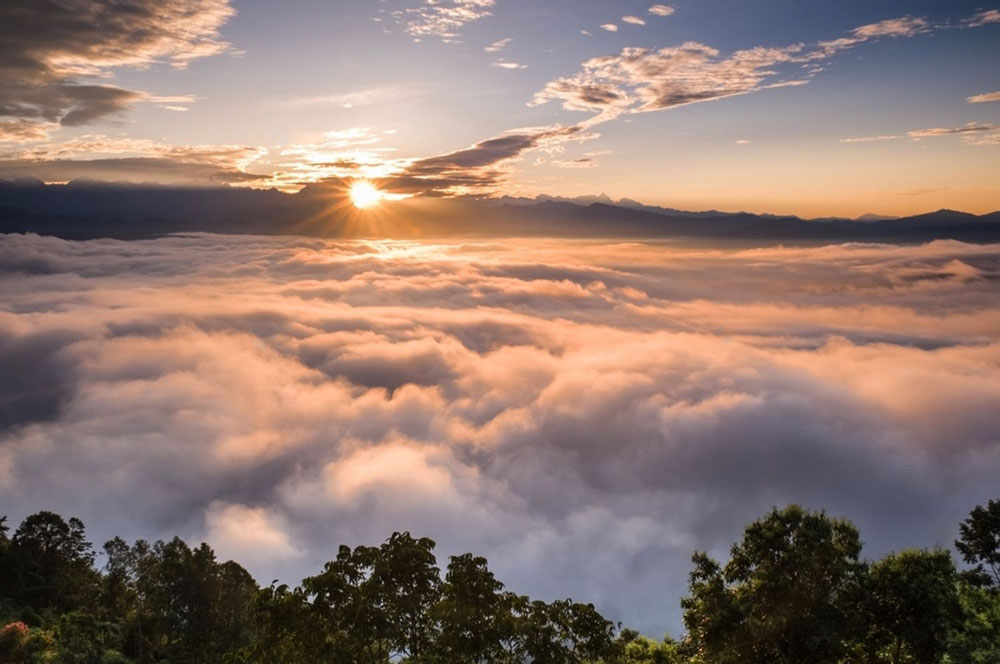
Kathmandu Valley sits at the intersection of three worlds: Hindu lowlands, Buddhist highlands, and Tibetan culture. Within an hour's drive, you move through all three. That's rare. That's powerful.
Here's what I've learned: the treks close to Kathmandu are often the ones that change people most. Not because of altitude or distance. Because of proximity to real life.
You're not escaping into some remote wilderness (that's the Everest trek, and it's brilliant). You're stepping sideways into a version of Nepal that exists 20 minutes from where tourists queue for temples. That shift — from tourist to witness — is everything.
Day Hikes Near Kathmandu: The Gateway Treks
If you have one day, start here. These aren't walks. They're initiations.
Nagarkot: The Sunrise That Teaches You Something
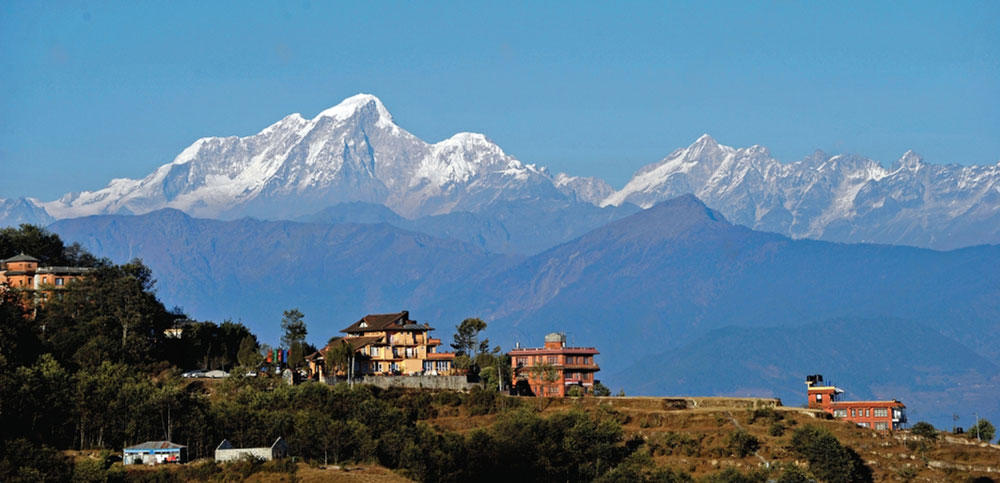
Nagarkot sits at 2,175 meters, overlooking the entire Kathmandu Valley. Most people go for the sunrise. I send people for what happens after.
Here's what I've seen: a client stands at sunrise, phone down, just looking. Behind them, the Himalayas emerge like a memory. Langtang, Ganesh Himal, Manaslu — each peak catching light at a different moment. By the time the sun clears the ridgeline, something shifts in their chest. They're not thinking about their job anymore.
How We Do It Different
We don't rush sunrise. I brief our guides weeks before: "Notice if someone cries. Notice if someone goes silent. Notice when wonder replaces the need to photograph." Our guides know how to hold those moments.
Most operators run groups of 12-15. We cap at 6. You hike with people who are ready for this, not people checking it off a list.
The walk from Sundarijal to Nagarkot (or Chisapani variant) takes 4-5 hours. Gentle slopes, forest canopy, then open ridge. You pass through villages where kids wave from doorways. Real life, unperformed.
Book a Nagarkot Day Hike or explore longer Nagarkot trekking options.
Duration: 1 day
Difficulty: Easy to moderate
Best time: October-November, March-May
Dhulikhel: The Hidden Sacred Valley
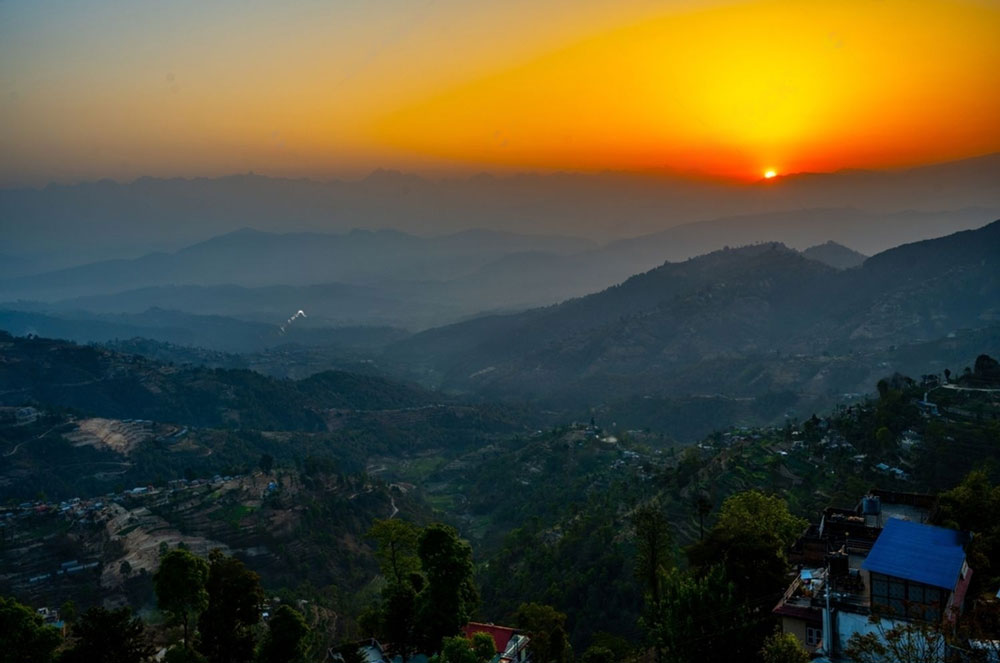
Dhulikhel is 30km east of Kathmandu, but it feels like stepping back in time. Medieval brick temples line the main bazaar. Locals gather at water sources that have served the same function for 400 years. This is where Buddhism and Hinduism don't debate — they coexist.
I send people to Dhulikhel when they tell me they want "authentic culture." Not staged. Not performed for tourists. Real.
The trek here isn't about summits. It's about walking through villages, sitting at chai stops where locals drink (not tourist cafes), maybe visiting a workshop where metalwork happens the way it has for generations.
What Makes This Meaningful
Our guides grew up in or near Dhulikhel. They have relationships. When we stop at a workshop, the owner isn't performing — he's genuinely happy to show us. If you ask real questions, you get real answers.
The Langtang views from the ridges above Dhulikhel are stunning, but that's not why I recommend it. I recommend it because of the feeling — that sense of being trusted by a place, welcomed as a person rather than processed as a tourist.
If you want more than a day here, this is also the first overnight stop on our Kathmandu Valley Trek — Dhulikhel into Namobuddha into Panauti, three villages most visitors never hear of, let alone walk through.
If you want Nagarkot's sunrise and Dhulikhel's slower pace in a single day rather than choosing one, our Nagarkot–Dhulikhel hike links the two — mostly downhill, no overnight needed.
Duration: 1-2 days
Difficulty: Easy
Best time: October-November, February-April
Chisapani: Where the Forest Speaks
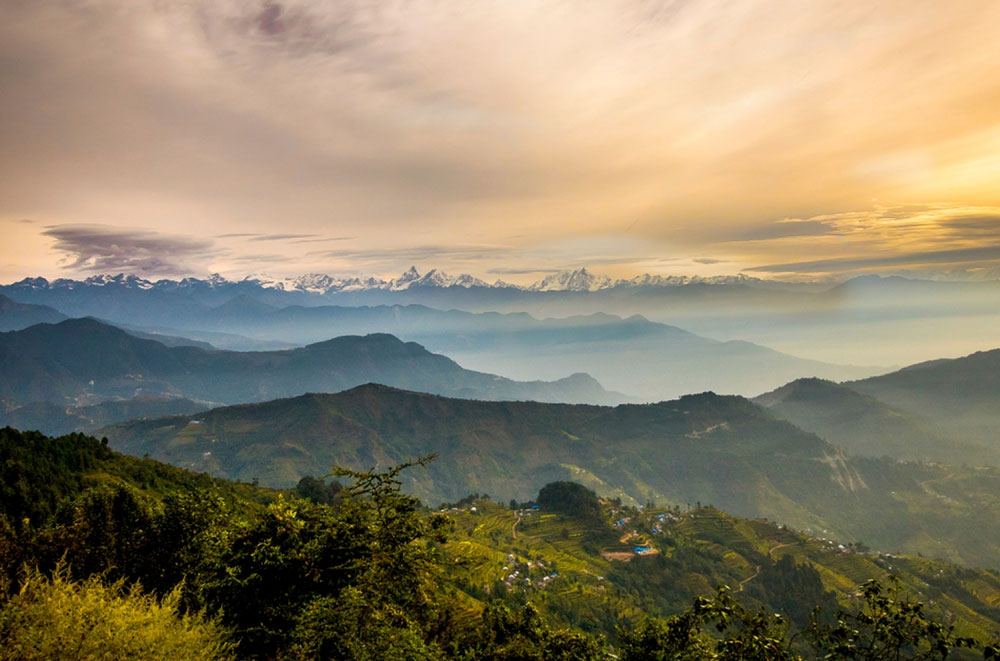
Chisapani translates to "cold water." There's a village there, perched on a ridgeline between two valleys, where the Shivapuri Nagarjun National Park descends into the city below.
The walk to Chisapani starts from Sundarijal (a 30-minute drive from Kathmandu). Dense rhododendron forests. The sound of water. Then you emerge onto a ridge where you can see Kathmandu Valley on one side and the full Himalayan spine on the other.
Why I Love Sending People Here
Chisapani is where the magic of "near Kathmandu" becomes obvious. You're still in the park — still in the forest — but you can see the city twinkling below. It's the juxtaposition that works. You're between two worlds.
The lodges here are basic. That's the point. You're sleeping in a room where the morning light comes in, and the temperature is cool. You eat with other trekkers. You sit on the porch and watch the light move across the valley. There's no wifi. There's no distraction.
Most operators run this as a day hike. I offer it as an overnight. The difference is profound. Discover the Chisapani overnight experience or explore the full Sundarijal-Chisapani-Nagarkot trek.
Duration: 2-3 days (can extend to Nagarkot)
Difficulty: Moderate
Best time: October-November, March-May
Shivapuri National Park: The Breathing Room
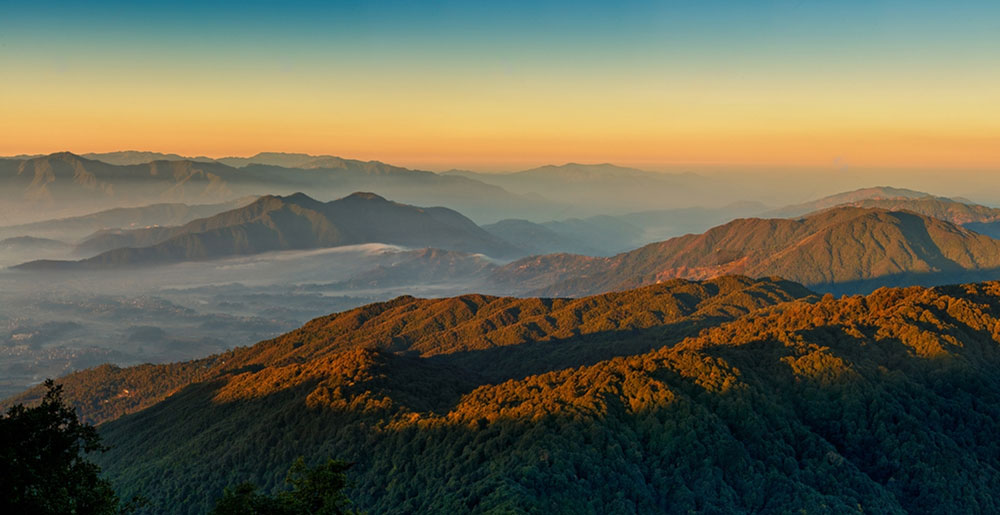
The Shivapuri Nagarjun National Park is massive — it covers most of the northern Kathmandu area. Within it, there are dozens of possible routes. Shivapuri Peak itself (2,732m) is popular, but it's crowded.
Here's what I do instead: I design custom routes that use the same ridgelines but avoid the tourist traffic. Kakani hiking, Jamacho peak hiking, and custom Shivapuri routes are favourites. These places exist in the same park, with the same views, but you're alone with your guide and one or two other people.
The Acclimatisation Difference We Offer
When clients arrive at altitude, most operators run a standard "acclimatisation hike." Step-by-step up, step-by-step down. Clinical.
Our approach: Yes, we hike. But we become the translator of what you're experiencing. Our guide isn't just counting elevation gains. They're noticing your rhythm, your breath, your mood. They're also translating what's happening around you — the bird calls (390+ species in this park), the forest zones, the geology, the history of how this valley was shaped.
Shivapuri was a sacred forest for centuries. It's being restored now after deforestation. Our guides explain this as you walk. You're not just hiking — you're witnessing restoration. That's different.
Duration: 1-2 days
Difficulty: Easy to moderate
Best time: October-November, February-April
Champadevi & Phulchowki: The High Valley Hikes
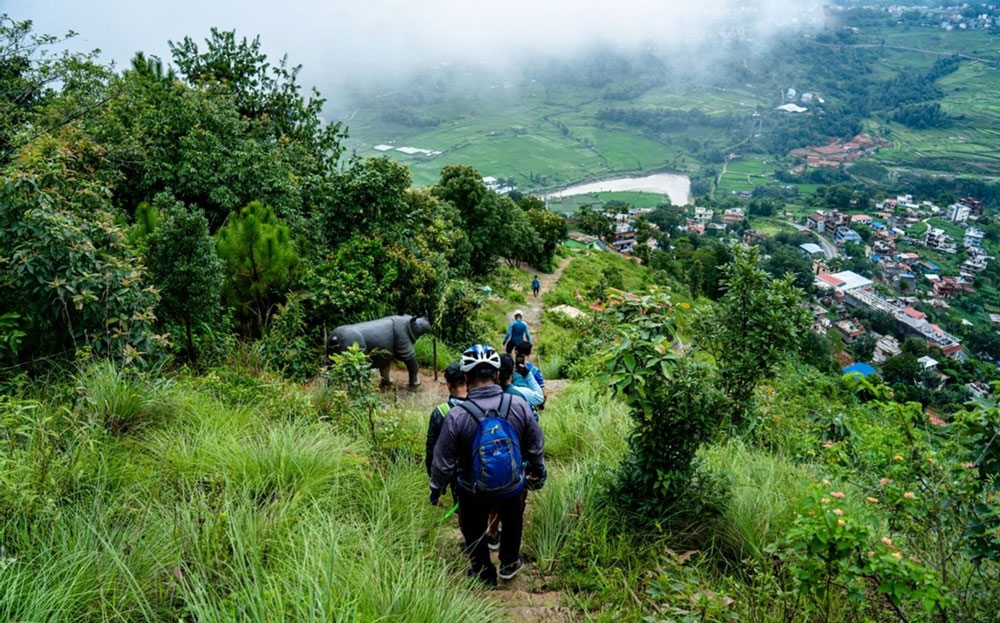
Champadevi Hill (2,285m) sits south of the city, accessible from Pharping in about an hour's drive. The ascent is gentle, passing through small temples and villages. At the top, the entire Kathmandu Valley spreads below you like a map.
Phulchowki Hill (2,765m) — the highest point in Kathmandu Valley — is a different experience. It's reached from Godawari Botanical Garden (about 45 minutes from the city). The forest changes as you climb: rhododendrons in spring (incredible colour), oak, pine, then open alpine meadows.
Phulchowki is a birdwatcher's sanctuary. 250+ species. I've had clients stand there in silence for an hour, just watching for movements in the canopy.
How We Differentiate
Both of these treks can be rushed through in 4-5 hours. We don't. We slow down. We bring binoculars. We sit with you when you're tired. We explain what you're seeing — the birds, the plants, the layers of the valley below.
When you reach Phulchowki's summit, there's a small Buddhist shrine. Locals come here during festivals. We sit there. We don't rush you down just because you reached the top.
Duration: 1 day each
Difficulty: Moderate
Best time: March-May (rhododendrons), September-November
Classic Treks Near Kathmandu: The Real Adventures
If you have 3-10 days, these are the treks that stick with you for life.
Langtang Valley Trek: The Living Landscape
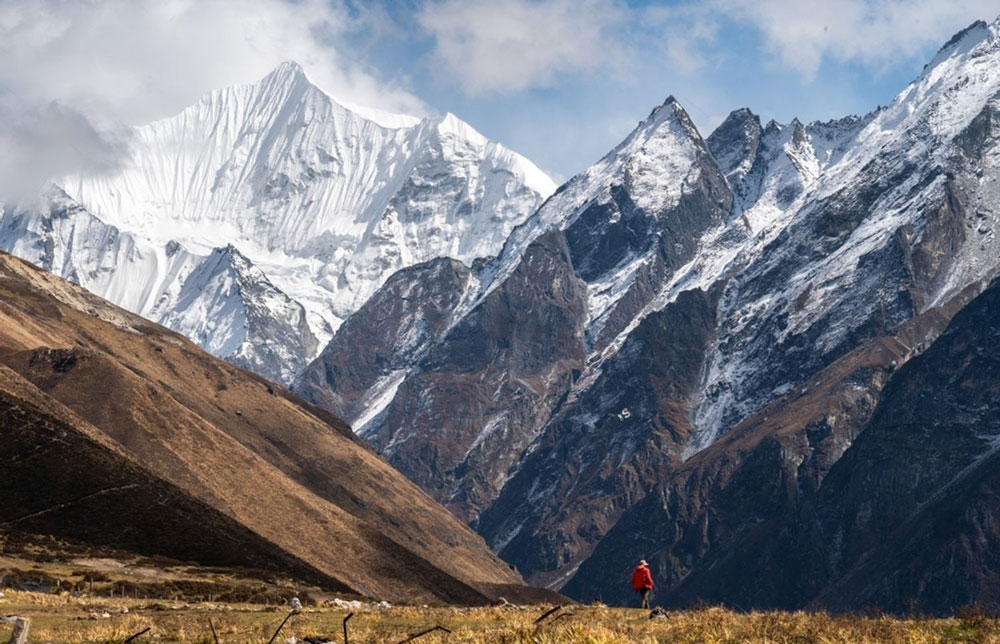
Langtang is 60km north of Kathmandu. It's accessible, but it's real. The valley was devastated by the 2015 earthquake. What's happened since is a story of resilience.
Our guides are Tamang, the primary ethnic group of Langtang. They're not explaining the Tamang culture as outsiders. They're showing you their world.
The trek moves through forests (rhododendrons in spring, pristine in autumn), then into the open valley. Kyanjin Gompa sits at 3,870m — a monastery where monks still maintain centuries-old practices. We don't just visit. Our guide translates the rituals happening in real time.
Experience the Langtang Valley trek with cultural immersion or explore longer Langtang & Gosaikunda combinations.
What Makes This Different
This trek takes 7-10 days, so we design it differently. We use acclimatisation days intentionally. Instead of just hiking in circles, we spend time with local families. Cooking classes teaching Sherpa cuisine. Monastery sessions with monks (not performances — real practice).
Our group's cap is 6-8 people. Small enough that when we stop at a lodge, the owners know us. They cook better. They ask about the trek, not just the payment.
I've had clients return to the same lodge three years later because they felt seen, not served.
Best Time: September-November (clearest), March-May (flowers)
Duration: 7-10 days
Difficulty: Moderate (altitude is the main challenge)
Gosaikunda Trek: The Sacred Lakes
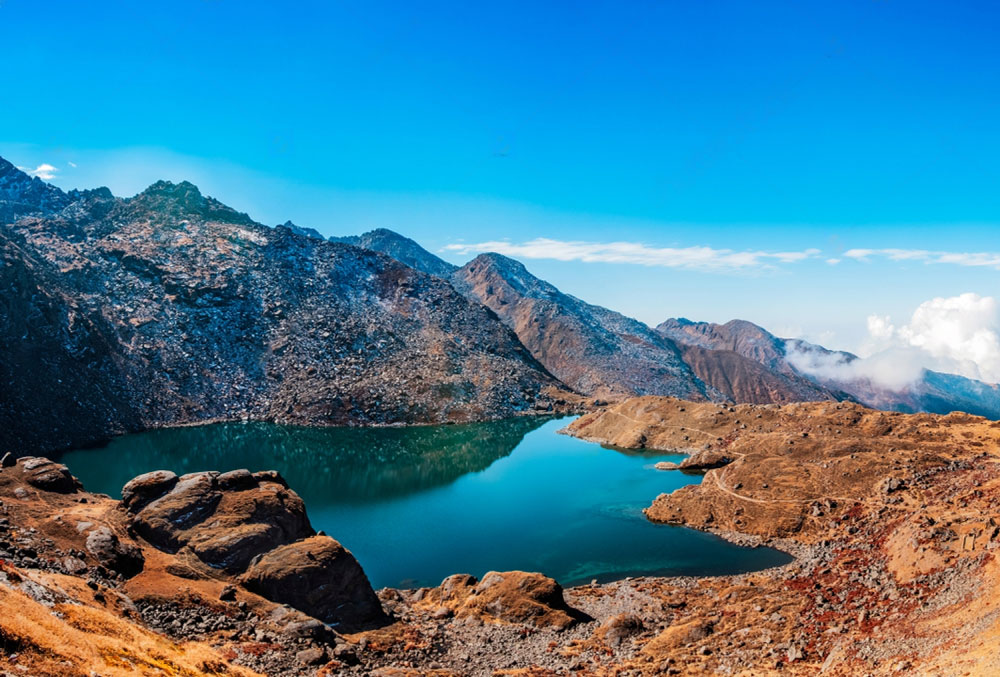
Gosaikunda is a pilgrimage site — a series of high-altitude lakes at 4,380m that have religious significance for both Hindus and Buddhists. The trek connects to Langtang, or you can do it standalone from Dhunche.
Most trekkers treat this as an altitude challenge. I treat it as a spiritual geography lesson.
The Difference
Our guides explain why these lakes are sacred — not academically, but from lived understanding. In August, thousands of pilgrims converge here during a sacred festival. If you trek, then you're trekking with pilgrims, not tourists. You're participating in something centuries old.
The trek is challenging (high altitude, exposed ridges), but the meaning makes the difficulty worthwhile.
Join the Gosaikunda pilgrimage trek or combine it with Langtang for deeper immersion.
Duration: 5-6 days
Difficulty: Moderate to challenging (altitude)
Best time: August (pilgrimage season), September-October, April-May
Sundarijal Chisapani Nagarkot Trek: The Three-Day Immersion
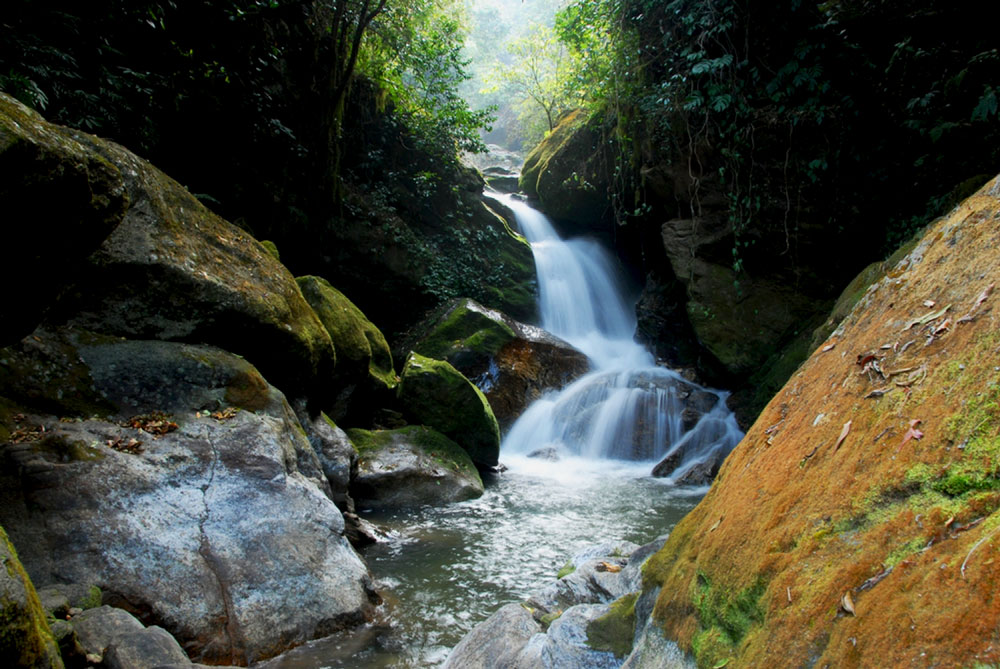
This is the trek I recommend most often. It's close to Kathmandu, it's diverse (forest, ridgeline, villages), and it's long enough that people actually change during it.
Day 1: Sundarijal's waterfalls and dense forests.
Day 2: Chisapani's ridge views and silence.
Day 3: Nagarkot's sunrise and descent.
You meet people from different villages. You stay in family-run lodges. You walk through real neighbourhoods where kids play football, and women sell vegetables.
Book the Sundarijal-Chisapani-Nagarkot 3-Day Trek — this is where depth happens.
Our Approach
We brief guides specifically for this trek: "Notice who's quiet. Notice who's struggling. Notice who's having a breakthrough." Our guides are trained to translate the experience — to help you understand what you're witnessing, not just what you're hiking.
Most groups are 5-7 people. Sometimes it's just you and a guide. The trek adjusts to what you need.
Duration: 3 days
Difficulty: Easy to moderate
Best time: October-November, February-May
How We Design These Treks Differently
I want to be direct about why people book with us and return, and why they recommend us to friends.
The Guide Briefing Process
Most operators brief guides the morning of the trek. "Here's your group. Here's the route."
I call my guides three weeks before you arrive. We discuss:
What are you seeking? (Adventure? Silence? Cultural immersion? Physical challenge?)
What's your temperament? (Do you want to chat constantly or hike in silence?)
What are you running from or toward?
Our guide knows you before you meet them.
For longer treks, this is standard practice. For shorter hikes? If it's a day trip, it's different — we move quickly, the dynamic is lighter. But even then, I'm matching you with someone whose energy aligns with yours.
Small Group Philosophy
I don't market group departures. I operate for smaller groups because that's where magic happens.
When you're 6 people instead of 15, the lodge owners cook better. The villages we pass through don't feel overrun. Your guide can actually see you — notice when you're struggling, when you're transcendent, when you need to stop and sit.
Our group's cap is at 6-10 on longer treks, usually 4-6 on day hikes.
This isn't a marketing thing. It's a value thing.
Acclimatisation That Actually Works
Here's how most operators do acclimatisation: They plan a rest day. They run you up to the next elevation point to test your body. You come back and rest.
Here's how we do it: Yes, we hike. But we become mediators of the experience. Our guides translate culture in real-time. They explain the ecosystem. They sit with you. They notice your body's response and adjust.
On a Langtang acclimatisation day, we might visit a local school, sit with monks at a monastery, or meet a family who survived the earthquake and rebuilt their lodge. You're not hiking to hit elevation. You're immersing yourself. The acclimatisation happens through meaning, not just through exertion.
Community Access & Local Relationships
We have relationships with families, monasteries, homestays, and village guides across these regions. Not transactional. Real relationships.
When we arrive at a lodge, the owner knows us. When we visit a monastery, monks recognise our guides. When we pass through villages, people greet us genuinely — not because they expect payment, but because they know our guides are trusted.
This takes years to build. We've been doing this for 20+ years. It shows.
We Stay Connected
Trekking with us doesn't end when you leave Nepal. We stay in touch through emails, messages, and chats. Clients send photos from their lives back home. We send updates about the guides and communities. Some clients return every 2-3 years.
That's not a sales technique. That's the natural result of genuine connection.
Choosing Your Trek: A Real Conversation
I don't believe in one-size-fits-all itineraries. That's why I want to talk to you before we plan anything.
Are you seeking stillness? Phulchowki or Chisapani.
Are you seeking community? Langtang or Dhulikhel — places where you'll meet locals and other seekers.
Are you seeking to understand a culture? Gosaikunda's pilgrimage or a Tamang homestay in Langtang.
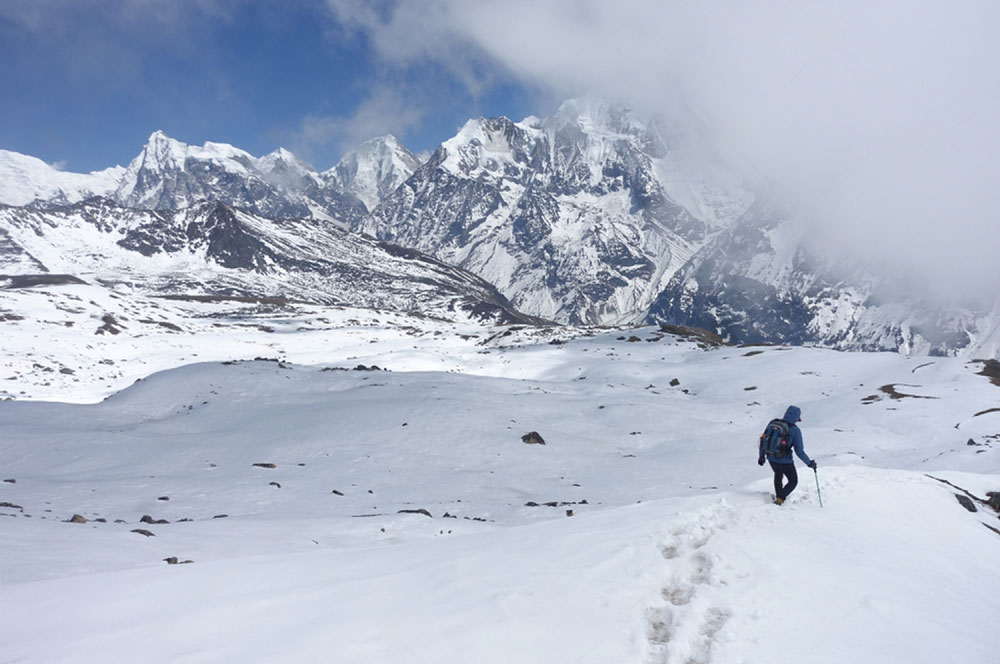
Are you seeking a physical challenge? Langtang or Gosaikunda at an altitude.
Are you seeking solitude? Custom routes through Shivapuri or Kakani.
Want maximum payoff in a single day, no overnight logistics?The Nagarkot–Dhulikhel route — sunrise to sacred valley, downhill most of the way.
The answer determines everything — where we go, how long we take, and who we pair you with as a guide.
Before You Book: A Real Conversation
Here's what I want you to know: not every trek is for everyone. And not every operator (including us) is right for every person.
If you're looking for luxury hotels at the base of each trek, we're not your fit. We stay in lodges. Basic, clean, authentic.
If you're looking to summit peaks and check boxes, some operators specialise in that. We're more about depth than distance.
If you're looking for a guide to be silent and let you figure it out, that's not how we operate. Our guides translate the experience. They're part of the journey.
If you're all-in on those terms? Let's talk.
Ready to Trek?
This isn't a "book now" moment. This is a "let's have a real conversation" moment.
Tell me what you're actually seeking. Not the Instagram version. The real version. What are you hoping changes in you? What part of yourself are you trying to understand?
Then we'll design a trek that actually works.
[Schedule a Trekking Conversation]— Let's talk about what you're seeking. No sales pitch. Just a conversation.
Or [Customise Your Trek]— You know what you want? Let's build it together.
Or [Email Me Directly]— Tell me your story. I'll respond personally.
Practical Information: Making It Real
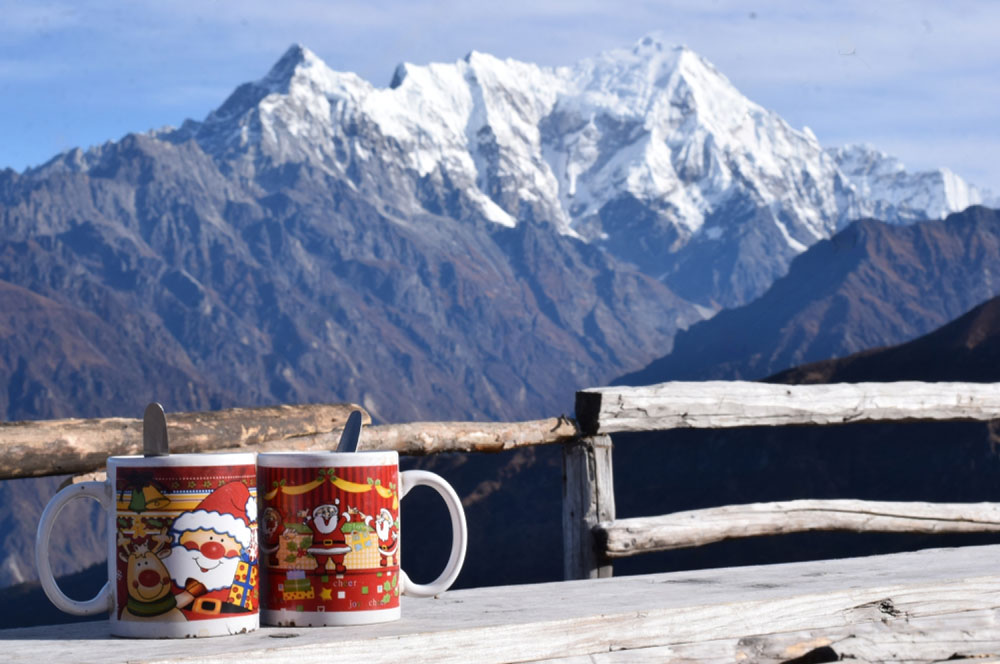
Planning your trek involves a few key steps.
Best Seasons to Trek
October-November (Autumn): Clearest skies, most stable weather, peak trekking season. But also the most crowded. We manage this by going on non-standard routes or shorter group treks.
March-May (Spring): Rhododendrons bloom. The weather is stable. Slightly warmer. Nearly as clear as autumn.
Winter (Dec-Feb): Beautiful, but challenging. Snow at higher elevations. Some lodges close. We still trek, but with adjusted expectations.
Summer/Monsoon (June-Sept): High humidity near Kathmandu, but Langtang and Gosaikunda sit above the clouds. Rain happens, but it's also when the landscape is greenest.
What to Pack
Layers (mornings are cold, afternoons warm)
Good hiking boots (worn in before you arrive)
Warm jacket and rain gear
Sleeping bag (lodge-provided blankets aren't always warm enough)
First aid kit
Sunscreen and sunglasses
Trekking pole (optional, but helpful for knees)
Temperature ranges depend on elevation, but expect 5-20°C in spring/autumn, dropping to -15°C in winter at high elevations like Gosaikunda.
Health & Safety
Drink more water than you think you need
Listen to your body about altitude — if you're struggling, tell your guide
Eat regularly to maintain energy
Inform someone at home about your trek itinerary
Travel insurance that covers trekking (we require this)
Acclimatisation for High Altitude
Don't rush. If you're trekking to Gosaikunda or high Langtang, arrive in Kathmandu a day or two before. Spend time at the valley elevation. Your body adapts faster than you think when you move intentionally.
Our guides monitor this constantly.
FAQs
What are the top recommended hiking trails near Kathmandu for beginners?
We start most first-time trekkers on the Sundarijal to Chisapani or the Nagarkot day hike. Both stay under 2,300m, so altitude isn't a factor, and the trail is a forest track and stone steps — nothing technical. Chisapani runs 5–6 hours through Shivapuri National Park with a waterfall stop; Nagarkot can be a short sunrise walk or a half-day out. What separates us here isn't the trail choice — most operators run the same two — it's that we treat someone's first walk in these hills the same way we'd treat day one of a three-week trek: private guide, no fixed script, paced to how the person actually moves.
Both stay under 2,300m, so altitude isn't a factor — this is exactly the kind of one-day trek near Kathmandu that works even with zero prior hiking experience.
What are the best short day hikes accessible from Kathmandu?
Chisapani via Sundarijal, the Nagarkot day hike, and Dhulikhel are all within a 45–90 minute drive and doable as a single-day round trip. Each gives a different read on the valley — Sundarijal for forest and waterfalls, Nagarkot for the sunrise panorama, Dhulikhel for a quieter Newari-town pace. If you only have one day in Kathmandu, this is where real travel starts — not a bus tour of the city, but a few hours inside the hills that surround it.
Which companies offer guided hiking tours near Kathmandu?
Most Kathmandu-based operators run some version of the Nagarkot–Chisapani circuit, but treat it as filler before the "real" trek. We build the short-hike offering the same way we build our multi-week routes — private guide, private transport, route chosen around who's walking it. If this is the one day you have, it should still feel like it was designed for you, not slotted in from a shared itinerary.
What guided tour options exist for treks near Kathmandu?
Single-day hikes (Chisapani, Nagarkot, Shivapuri) and multi-day loops — our Sundarijal–Chisapani–Nagarkot 3-day route, extendable through Dhulikhel and Namobuddha. We route people through whichever combination matches fitness, time, and what they actually want — cultural depth, mountain views, or simply the walking. That routing decision is a conversation, not a form you fill in — it's where twenty years of watching people on these trails actually pays off.
Single-day hikes (Chisapani, Nagarkot, Shivapuri) and multi-day loops — including a straightforward 2-day trek near Kathmandu built around Nagarkot and Dhulikhel for people short on time
Where can I find reliable trekking agencies in Kathmandu?
Look past the price line — ask what's included: guide certification, insurance, transport. That's where the real difference between agencies sits, not the headline number. We've operated out of Kathmandu for 20 years, and we'd rather lose a booking to someone upfront about that than win one on a figure that doesn't hold up on the trail. Meaningful travel starts with an agency willing to have that conversation before you've paid anything.
Can you suggest scenic day hikes close to Kathmandu?
Nagarkot for the sunrise over eight Himalayan ranges, Chisapani for forest and waterfalls inside Shivapuri National Park, and Dhulikhel for a slower, valley-view pace with fewer crowds. With one day only, Nagarkot gives the most concentrated payoff for the least walking — but "scenic" isn't the whole point. What you remember from a day like this is usually smaller than the view: a tea house stop, a conversation with someone who actually lives there. That's the part we design for.
What travel agencies specialise in hiking trips near Kathmandu?
Most agencies specialise in the big treks — Everest, Annapurna — and treat short hikes near the city as an afterthought. We do the opposite: this cluster gets the same guide briefing and route design as our multi-week treks, because for a lot of clients — first-timers, or people short on time — this is the whole trip, not a warm-up. If a day is all you have, it deserves the same care as three weeks would get. Contact us.
How do I arrange private transport to trailheads outside Kathmandu?
Private vehicle to and from the trailhead is standard on every route we guide in this cluster — picked up from your hotel, driven directly, no shared shuttle or fixed departure time. Independently, expect roughly 45 minutes to Sundarijal, 90 minutes to Nagarkot, and about an hour to Dhulikhel by private car. The transport isn't a detail we tack on — it's the first sign of whether a trip is built around you or around a schedule.
The Bottom Line
I've walked these trails near Kathmandu hundreds of times. I've seen them change with the seasons. I've seen them change people.
The difference between a hike and a trek with us isn't the distance. It's the presence — in the guide, in the group, in the intention.
You're not just moving through a landscape. You're meeting it. And it's meeting you.
Ready?
[Schedule a Trekking Conversation] [Customise Your Trek][Email Me Directly]