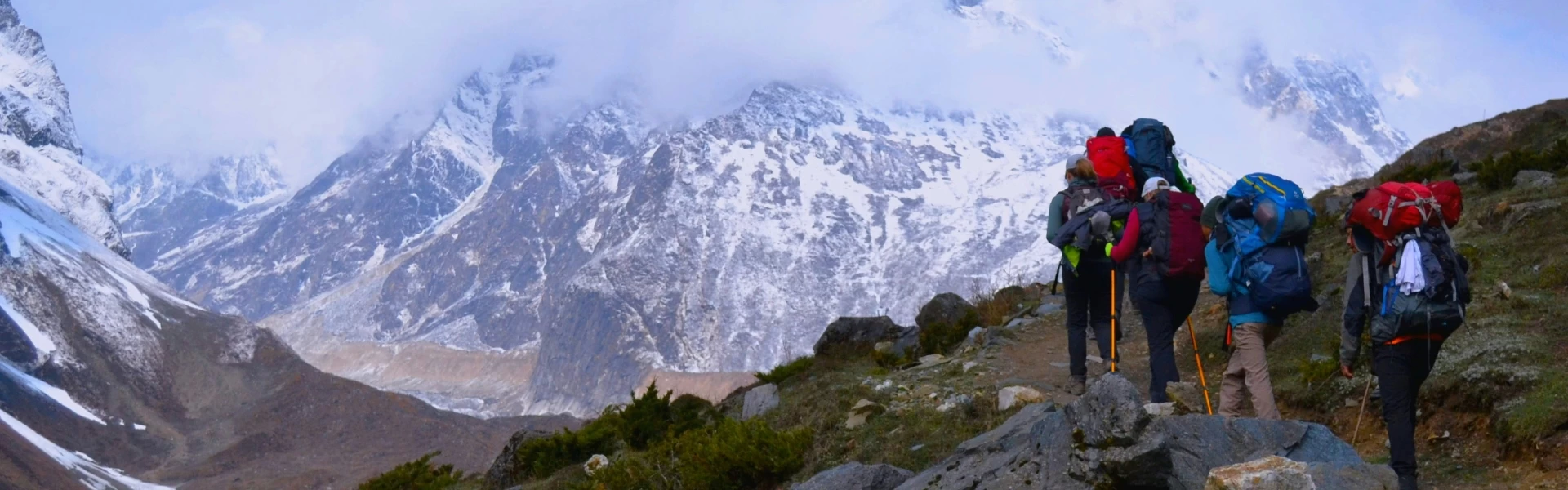
The Manaslu Circuit Trek in Nepal is considered a moderate to challenging trek. Read more about its difficulty.
Is Manaslu Circuit Hard? Honest Difficulty Guide from Someone Who Runs It
Table of Contents
Yes, Manaslu is hard. Not impossible. Not beyond a reasonably fit person. But genuinely hard in ways that other major Nepal treks are not.
Here's the reality:
Everest Base Camp is more accessible. EBC is challenging but well-developed. Infrastructure is excellent. Multiple exit points exist. If something goes wrong, help is close. The maximum altitude (5,644m) is higher, but the daily pace is slower.
Manaslu is rawer. The Larkya La Pass crossing at 5,106m is the single hardest day on any trekking route I run. You start at 3 am in the dark. You gain significant altitude before dawn. You cross the pass in full mountain conditions. You then descend 1,400 metres in the same day. There is no exit point mid-circuit if you're struggling. Once you're committed to Larkya La, you're committed.
Annapurna Circuit is similarly hard but different. Annapurna is longer (15–17 days vs 14). The Thorung La Pass (5,416m) is similar to Larkya La. Annapurna has more villages and more comfort options. More crowded. More exit points.
Bottom line: Manaslu is the hardest of Nepal's "big three" treks, but not unachievable. It requires prior experience and genuine fitness. Not amateur-hour territory.
If you've done EBC comfortably and want to understand what a rawer Nepal feels like, Manaslu is your next trek. If you haven't done a high-altitude trek before, Manaslu is not the place to start.
How Manaslu Compares: EBC, Annapurna, Langtang
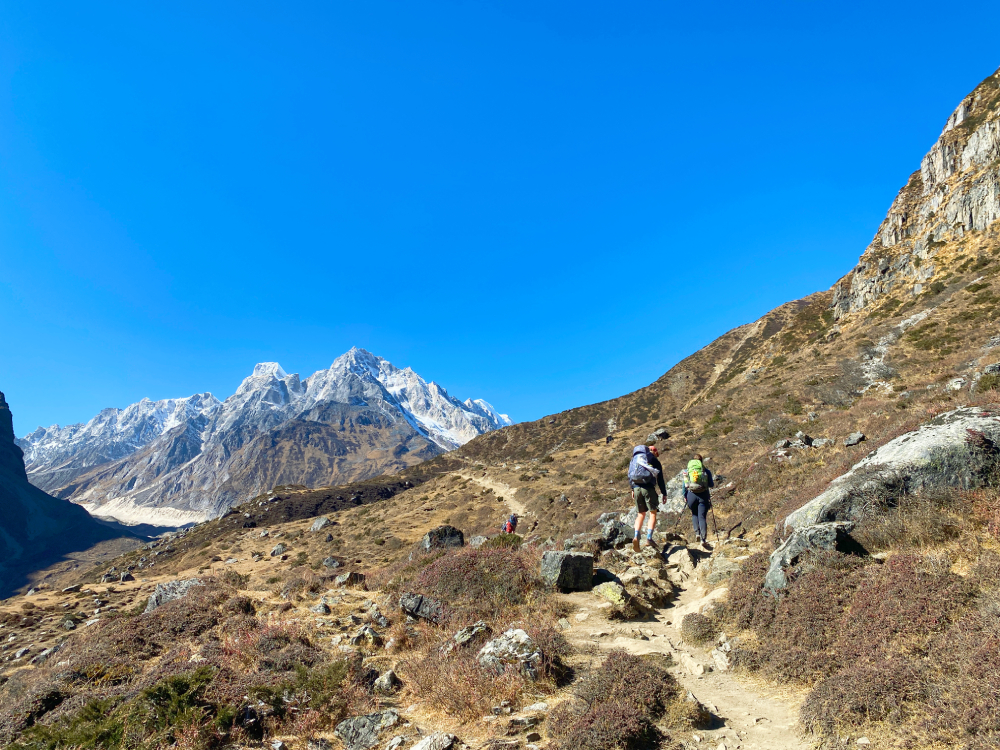
Let me be precise about this because it matters:
Manaslu vs Everest Base Camp
Factor | Manaslu | EBC |
Max altitude | 5,106m (Larkya La) | 5,644m (Kala Patthar) |
Daily pace | 18–22 km, rough terrain | 15–17 km, well-maintained trail |
Hardest day | Larkya La (starts 3 am, 1,400m descent same day) | Gorakshep to Kala Patthar (early wake-up, but no extreme descent) |
Escape points | None. Circuit is committed. | Multiple (turn back at Namche, Dingboche, or Gorakshep) |
Trail condition | Rocky, muddy in monsoon, no handrails | Well-graded, marked, safe |
Infrastructure | Basic teahouses, variable standards | Excellent lodges, reliable facilities |
Rescue access | Helicopter rescue possible but takes time | Immediate access to Namche clinic + evacuation |
Experience needed | Prior high-altitude trekking essential | First-timer friendly with proper preparation |
Verdict | Harder physically and logistically | More accessible; higher maximum altitude |
Who should do which:
EBC: First major trek, want high altitude, want well-developed trail
Manaslu: Done EBC before, want authentic culture, comfortable with uncertainty, want a true wilderness experience
Manaslu vs Annapurna Circuit
Factor | Manaslu | Annapurna |
Duration | 10-14 days | 7–17 days |
Max altitude | 5,106m (Larkya La) | 5,416m (Thorung La) |
Daily distance | 18–22 km | 15–20 km |
Highest day difficulty | Larkya La (extreme) | Thorung La (hard but slightly more developed) |
Culture | Tibetan-Nepali, upper villages | Nepali + Thakali, lower villages more touristed |
Exit points | None; committed circuit | One exit (Jomsom) mid-circuit |
Trail crowds | 10,000 trekkers/year | 40,000+ trekkers/year |
Accommodation | Basic but adequate | Wider range, more options |
Verdict | Harder, more isolated, more authentic | Longer, busier, slightly more developed |
Who should do which:
Manaslu: Want maximum authenticity and isolation
Annapurna: Want a challenge with more comfort options and crowds
Manaslu vs Langtang Valley
Langtang is significantly easier. 3,844m maximum altitude. Much shorter. Highly accessible to first-timers. Beautiful but not in Manaslu's category.
Manaslu is harder than Langtang by a significant margin.
What "Hard" Actually Means on Manaslu
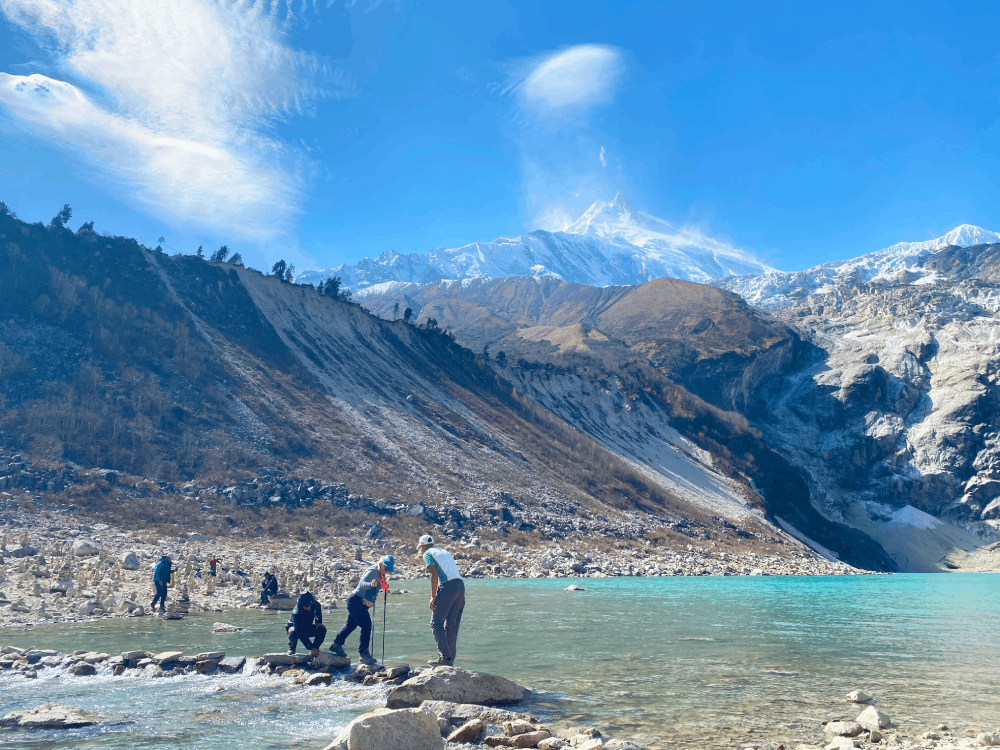
Hard doesn't mean dangerous. It means:
1. Long daily walking (14–22 km)
6–8 hours on your feet, most days
Steep uphills (1,000m elevation gain in a day is normal)
Rocky, uneven terrain (not a maintained trail)
No cable cars, no shortcuts
2. High altitude (3,500–5,106m)
Your body will feel it
Shortness of breath on uphills
Sleep disruption (altitude insomnia is real)
Altitude sickness is possible (rare with proper acclimatisation, but possible)
3. Basic accommodation (teahouses, not hotels)
Thin mattresses, cold rooms
Shared bathrooms, squat toilets
No hot water unless you pay for a bucket
Limited power (some lodges have solar or generators)
4. Isolation
No cell service for days
No hospital within hours
No immediate evacuation options
You're committed to the circuit once you start
5. Unpredictability
The weather changes fast
A lodge might be full (rare, but happens)
Trail conditions vary (monsoon = mud, winter = snow)
You need flexibility in your mindset
If any of these make you uncomfortable, reconsider Manaslu.
Daily Walking Pace and Distance
Here's the actual breakdown of a typical 11-day circuit:
Day | From | To | Distance | Elevation Gain | Time |
1 | Machha Khola | Jagat | 14 km | 500m | 6 hours |
2 | Jagat | Deng | 13 km | 400m | 5 hours |
3 | Deng | Namrung | 15 km | 600m | 6 hours |
4 | Namrung | Lho | 13 km | 500m | 5 hours |
5 | Lho | Samagaon | 12 km | 400m | 5 hours |
6 | Samagaon | REST DAY | 0 km | 0m | Acclimatization |
7 | Samagaon | Samdo | 11 km | 500m | 5 hours |
8 | Samdo | Larkya Phedi | 13 km | 700m | 6 hours |
9 | Larkya Phedi | Bhimthang | 20 km | -1,400m | 8 hours |
10 | Bhimthang | Dharapani | 16 km | 400m | 7 hours |
11 | Dharapani | END/return to Kathmandu | — | — | Drive |
Key observations:
Day 9 (Larkya La) is 8 hours of hard walking with 1,400m of descent. This is the killer day.
Most other days are 5–6 hours of moderate pace. Sustainable if you're fit.
The hardest week is Days 7–9 (upper circuit approaching the pass).
The Altitude Reality: 5,106m is Real
I need to be honest about altitude because this is where people struggle most.
At sea level, your body gets 100% oxygen saturation in your blood. At 5,106m (Larkya La), the air pressure means your blood oxygen drops to around 80–85% saturation. Your body has to work harder for everything.
What you'll feel:
Days 1–3 (3,000m): Nothing. Feels normal.
Days 4–5 (3,500–4,000m): Slight breathlessness on uphills. Sleep is slightly disrupted.
Days 6–8 (4,000–4,500m): Noticeable breathlessness. Sleeping is harder. Some mild headaches possible.
Day 9 (5,106m): Extreme breathlessness during exertion. The descent is as hard on your legs as the climb is on your lungs. Some people get altitude sickness (nausea, headache).
Altitude Sickness Reality:
Acute Mountain Sickness (AMS): Headache, nausea, fatigue. Affects 30–50% of trekkers at this altitude.
High Altitude Cerebral Oedema (HACE): Rare, serious. Mitigated by proper acclimatisation and descent.
High Altitude Pulmonary Oedema (HAPE): Very rare, serious. Requires descent.
How do we prevent this?
Proper acclimatisation: Rest day in Samagaon before the hard climb.
Slow pace: We climb slowly on Day 8 (Samdo to Larkya Phedi), arriving early to rest.
Guide experience: Our guides recognise AMS and make descent decisions fast if needed.
Descent strategy: Larkya La descent is fast—1,400m down the same day, which relieves altitude stress.
I've guided hundreds of people through this. Proper pacing reduces altitude sickness by 80%. Panic and rushing cause most problems.
The Larkya La Pass: The Hardest Day (Detailed)
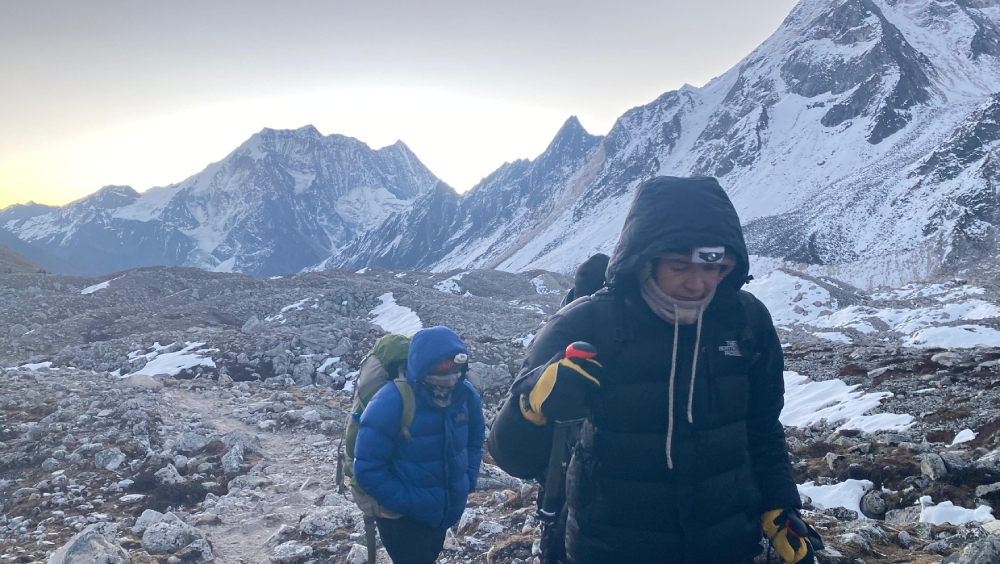
This day determines whether someone "does" Manaslu or "tries" Manaslu. Here's exactly what happens:
The Setup (Days 7–8)
Day 7: You trek from Samagaon to Samdo (upper village, 3,880m). This is a short day (11 km, 5 hours). You arrive early and rest.
Day 8: You trek from Samdo to Larkya Phedi (teahouse at 4,460m). This is 13 km and 700m elevation gain—a moderate day. You arrive by afternoon, eat dinner, and go to bed early.
Why this matters: You're arriving at Larkya Phedi already acclimatised. The lodge is cold but safe.
The Larkya La Day (Day 9)
2:30 AM: Your guide wakes you. You eat a quick breakfast (porridge, tea, bread). Bundle all your clothes.
3:00 AM: You start walking in the dark with headlamps. The trail climbs steeply from Larkya Phedi (4,460m) toward the pass.
4:00–5:30 AM: Full darkness. Steep climbing. You're tired but not yet hot. Focus is just one foot in front of the other. At 5,000m elevation, even experienced trekkers feel breathless.
6:00 AM: First light. You can see the trail now. You're at approximately 4,800m. The pass is above you—but the worst part isn't the altitude, it's the pass crossing itself.
7:00–8:00 AM: You reach the pass at 5,106m. Visibility might be good or terrible depending on the weather. On clear days, you see the entire Himalayas. On bad days, you're in fog/cloud, can barely see 10 metres ahead. This is where anxiety hits for some people.
The reality of the pass: It's not technically difficult. There's no climbing with ropes. No exposure. But it's high, it's exposed to weather, and your body is working at its absolute maximum oxygen efficiency.
8:00 AM–1:00 PM: The descent. 1,400 metres down in 5 hours. This is harder than the climb in a different way—your knees and quads are screaming. Every step down is controlled. The trail is rocky and rough.
1:00 PM: You reach Bhimthang (3,650m). It's been 10 hours since you woke. You eat a massive meal. You collapse into a room. You've done the hardest day.
Why This Day Is Hard (The Real Talk)
Sleep deprivation: You wake at 2:30 AM. Sleep at altitude is already broken. You're starting exhausted.
Altitude stress: Climbing to 5,106m with low oxygen is hard on every system. Your heart is pounding. Your lungs are working flat-out.
Darkness and cold: Starting in the dark adds psychological stress. The cold adds physical stress.
Commitment: Once you're on the pass, you have to keep going. There's no sitting down and resting (you'll get too cold). You either push through or descend back down.
Descent punishment: The 1,400m descent is easier altitude-wise (you're getting more oxygen) but harder mechanically (your knees take the impact).
Length: 8+ hours of non-stop exertion at high altitude is genuinely exhausting.
Who Struggles Most on Larkya La
I've guided enough people to recognise patterns:
People who trained in running/HIIT: Often finish strong. Cardiovascular fitness helps.
People with prior altitude experience: Much easier (EBC graduates do fine).
People who panic: Hardest. Fear and stress consume oxygen.
Overweight trekkers (BMI 30+): Significantly harder. Not impossible, but noticeably tougher.
Older trekkers (65+): Mixed. Some crush it, some struggle significantly.
Out-of-shape trekkers: High likelihood of AMS or turning back.
The Most Common Question: What If I Can't Do It?
If you reach the pass and genuinely can't continue—severe altitude sickness, injury, panic attack—we descend. A guide with you the whole time makes that decision together. It's not failure. It's safety.
If you can't do Day 9, you miss the summit but can exit via the alternate route (takes an extra 2–3 days). It happens. It's okay.
I've had maybe 5% of trekkers not complete the full circuit. Most finish. Proper preparation makes that number much lower (1–2%).
Fitness Requirements: Honest Assessment
What fitness level do you actually need?
What You DON'T Need
Marathon running ability
Rock climbing experience
Gym membership
Yoga certification
Extreme cardiovascular fitness
What You DO Need
1. Cardiovascular endurance: The ability to walk 6–8 hours per day for 13 consecutive days.
Test: Can you walk up a steep hill for 30 minutes without stopping or getting severely winded? If yes, you have baseline fitness.
2. Leg strength: The ability to walk on uneven terrain with a day pack (8–10 kg).
Test: Can you walk down stairs without knee pain? Can you squat deeply without discomfort? If yes, you're fine.
3. Mental toughness: The ability to push through discomfort without quitting.
Test: Do you finish workouts even when you don't feel like it? Can you handle physical discomfort (sore muscles, cold, early mornings)? If yes, you've got this.
4. Altitude experience: Ideally, you've done one high-altitude trek before (EBC or Annapurna).
If you haven't, you can still do Manaslu, but the altitude sickness risk is higher. Proper acclimatisation and descent strategy are essential.
Your Fitness Level vs Manaslu
Your Fitness Level | Verdict |
Sedentary, no exercise | Don't attempt. Risk is too high. |
Occasional walking, no running | Possible, but requires 8–12 weeks training. |
Regular gym-goer, light cardio | Good. Add long walks to your training. |
Run/hike weekly | Excellent. You'll be fine with normal prep. |
Done EBC or Annapurna before | Excellent. You know what to expect. |
Marathon runner or serious mountaineer | More than enough. Pacing is your only concern. |
The Training Plan That Actually Works
8 weeks before your trek, do this:
Weeks 1–4: Build Base
3 days per week: 30–45 min cardio (running, cycling, or fast walking)
2 days per week: 90-min long walk (hills if possible)
1 rest day
Result: You should be able to walk 90 minutes uphill without stopping
Weeks 5–6: Build Endurance
2 days per week: 45–60 min intense cardio (hills, stairs, or steeper hiking)
2 days per week: 2-hour-long walk with elevation gain
1 rest day
Result: You should be able to walk 2 hours uphill, 5+ hours total with breaks
Weeks 7–8: Peak
1 day per week: 45 min intense cardio
1–2 days per week: 3–4 hour hike with significant elevation gain (if possible)
1 rest day
Result: You should be able to walk 4–5 hours uphill without stopping
The secret: It's not speed. It's consistency. You want your body to be accustomed to walking for hours. That's what matters.
Who Can and Cannot Do Manaslu
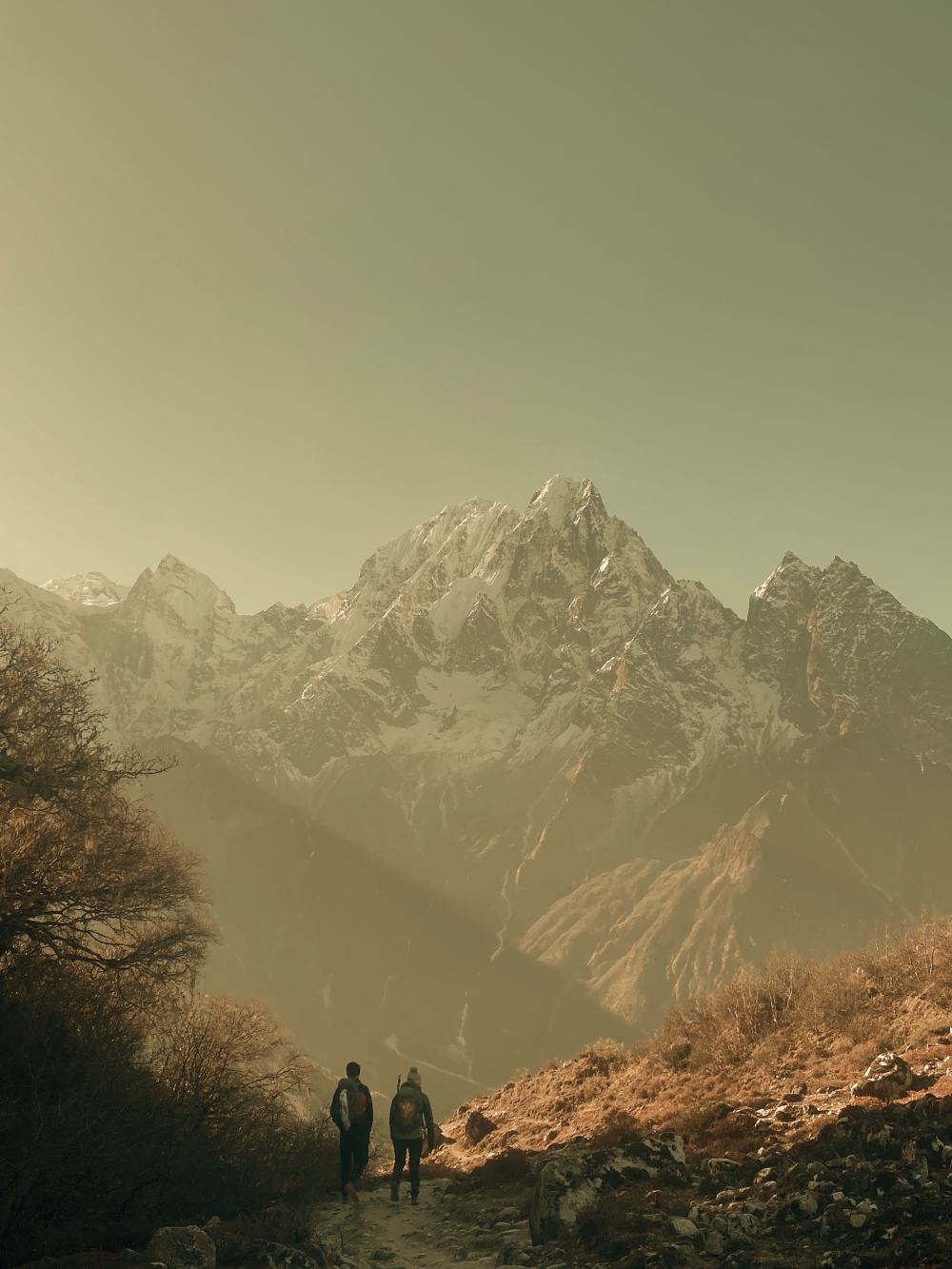
You CAN do Manaslu if you:
✅ Have done at least one high-altitude trek before (EBC, Annapurna, Langtang)
✅ Can walk 6–8 hours per day on rough terrain
✅ Are comfortable with basic accommodation (no hot showers, squat toilets)
✅ Can handle altitude discomfort (breathlessness, disrupted sleep)
✅ Have prior experience with being physically uncomfortable
✅ Trust your guide's decisions on pacing and safety
✅ Can handle isolation (no cell service, no hospitals nearby)
✅ Are flexible about weather changes and trail conditions
You SHOULD NOT do Manaslu if you:
❌ Have no high-altitude trekking experience and haven't done EBC first
❌ Have severe altitude sickness history (HACE, HAPE)
❌ Have a sedentary lifestyle and haven't trained for 8+ weeks
❌ Have significant knee, hip, or ankle issues
❌ Panic easily or struggle with uncertainty
❌ Cannot handle basic accommodation without distress
❌ Have heart/cardiovascular conditions not cleared by a doctor
❌ Are pregnant (altitude + isolation = risk)
❌ Require immediate medical access for pre-existing conditions
If you're uncertain, talk to your doctor and our guides. Honest assessment saves suffering.
Stories from the Trail: Real People, Real Struggles
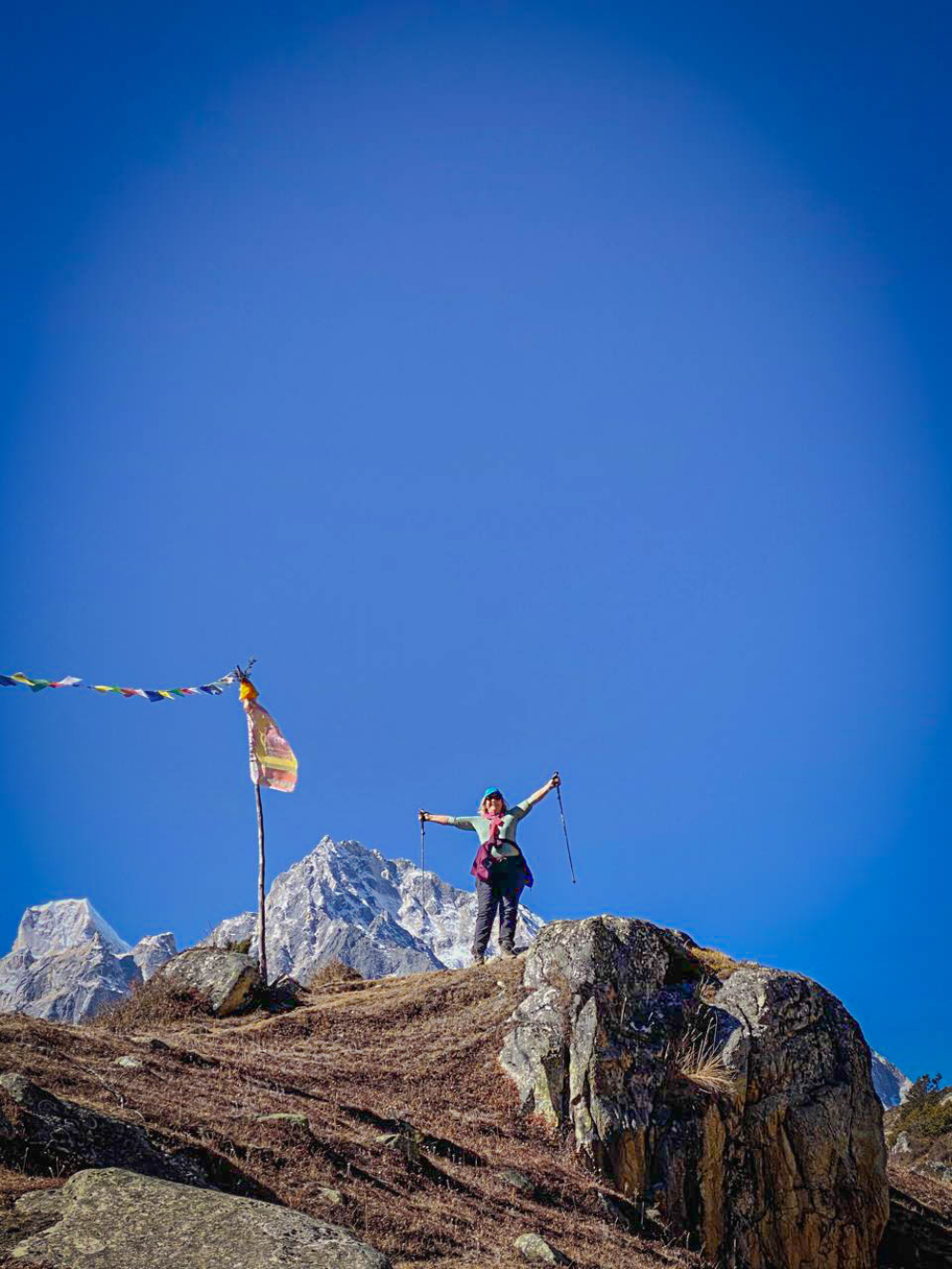
Story 1: The Doctor Mom Who Thought She Wasn't Fit
Elizabeth, 65, came from New Zealand with her family of 7. She said: "I don't really exercise. But I walk a lot back home. Will that be enough?"
Honest answer: Not really. But she was determined.
What happened: We made her train for 10 weeks. Long walks, stairs, hills. She felt like she wasn't progressing. On Day 9 (Larkya La), she struggled. Started feeling nauseous around 4,800m. We slowed down. Gave her extra water. Encouraged her.
She summited the pass in tears—not from pain, but from accomplishment.
Lesson: Fitness matters, but determination matters more. With proper training and guidance, people surprise themselves.
Story 2: The Marathon Runner Who Quit
James, 28, was a fit runner. He'd done 10 marathons. He said: "I'm very fit. This should be easy."
What happened: Day 1–3, he felt fine. Days 4–7, he got impatient. "Why are we going so slow?" Days 8–9, he hit altitude. The high altitude doesn't care how fast you run on flat ground. His ego got in the way of pacing. He pushed too hard on Day 8 and had severe AMS on Day 9.
We brought him down. He sat out the pass, and we had to helivac him.
Lesson: Fitness doesn't equal altitude readiness. Pacing is the secret. Running speed is irrelevant.
Story 3: The Couple (65 and 70) Who Crushed It
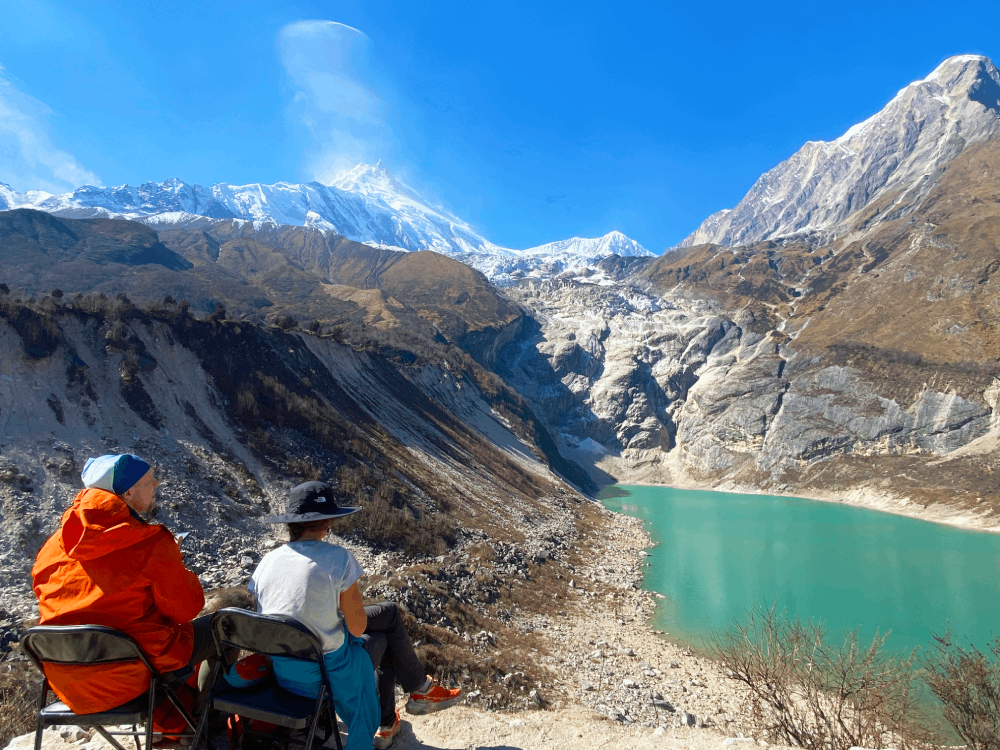
Richard and Margaret, a British couple who'd done the Annapurna Circuit 10 years earlier. They were slower than younger trekkers but steady.
What happened: They finished all 14 days without issue. Arrived at Larkya La with huge smiles. Said: "This reminds us why we love the mountains."
Lesson: Age is not the limiting factor. Experience and proper pacing are.
Story 4: The Guy Who Didn't Prepare
Tom, 45, booked Manaslu. Told me he'd "prepare by the time you arrive." He didn't. Flew in from New York, slept 2 nights in Kathmandu, and started trekking.
What happened: Days 1–4, he felt fine (low altitude). Days 5–7, he started complaining. On Day 8, he had a severe altitude headache. Day 9, we turned him back.
He paid for a trek he couldn't do.
Lesson: Preparation is not optional. You can't cram fitness the week before.
How to Prepare (Training That Actually Works)
12 Weeks Before (Start Here)
Get a baseline fitness check:
Can you walk 5 km without stopping? (Yes = proceed)
Any heart/lung issues? (Yes = doctor clearance first)
Any knee/ankle issues? (Yes = consider easier trek)
Weeks 12–8: Base Building
Goal: Create an aerobic foundation.
Weekly schedule:
Monday: 30 min steady-pace walking (or jogging at an easy pace)
Wednesday: 30 min steady-pace walking
Friday: 45 min long walk (comfortable pace)
Saturday: 60 min long walk, ideally on hills
Rest: Tuesday, Thursday, Sunday
Progressive: Each week, add 5–10 minutes to your long walks.
By week 8, target: 90-min walk without stopping, with elevation gain if possible.
Weeks 8–4: Build Endurance and Altitude
Goal: Simulate trek conditions (long days, rough terrain).
Weekly schedule:
Monday: 45 min fast walk/light jog (builds cardiovascular capacity)
Wednesday: 45 min fast walk (builds cardiovascular capacity)
Saturday: 2–3 hour hike with significant elevation gain (simulates trek days)
Rest: Other days
Progressive: Increase distance or elevation gain each week.
By week 4, target: 3–4 hour hike with elevation gain, no stopping.
Weeks 4–2: Peak Fitness and Mental Prep
Goal: Build confidence and peak fitness.
Weekly schedule:
Monday: 45 min high-intensity (stair climbing, steep hills, interval training)
Wednesday: 45 min moderate pace
Saturday: 4–5 hour hike with significant elevation gain
Rest: Other days
Mental prep: Start visualising the trek. Read about Manaslu. Watch videos. Reduce anxiety through familiarity.
Weeks 2–0: Taper and Rest
Goal: Recover and arrive fresh.
Reduce training volume by 50%
Keep some light activity (walking, easy cycling) to maintain fitness
Focus on sleep, nutrition, and hydration
Get a massage if possible (reduce muscle tension)
Nutrition During Training
Protein: 1.2–1.6g per kg body weight (supports muscle building)
Carbs: 4–6g per kg body weight (fuels long workouts)
Fat: 1–1.5g per kg body weight (hormone health)
Hydration: 3–4 liters water daily minimum
Not a nutrition expert? Just eat whole foods, don't overeat, and stay hydrated. Most people overthink this.
Gear Testing
Before you trek, test your gear:
Walk in your trekking boots on multiple long hikes (break them in)
Sleep in your sleeping bag (test comfort at a campground)
Carry your day pack (8–10 kg) on training walks
Practice with your trekking poles
Test any altitude medication (with doctor clearance)
FAQs: The Questions I Get Asked Most
I've done EBC. Can I do Manaslu?
Yes, absolutely. You know what high altitude feels like. You know what teahouse trekking is like. Manaslu will feel familiar but more raw. You'll handle it fine.
Is it harder than the Annapurna Circuit?
Different hard. Larkya La is arguably harder than Thorong La (same altitude, harder descent). Manaslu is more isolated. Annapurna is longer. If you've done Annapurna, you can do Manaslu.
What if I get severe altitude sickness?
We descend. Your guide is trained to recognise HACE and HAPE. If either appears, we bring you down immediately. Descent is the cure. You might not finish the full circuit, but you won't be left stranded. If necessary, we will heli-evacuate you.
Can I do a shorter version?
Yes. Our 10-day short version skips some acclimatisation days and saves permits. Not recommended for first-timers (altitude risk), but possible if you've done high-altitude treks before.
How old is too old?
No age limit. We've guided people 75+ successfully. Age is not the issue. Fitness and experience are. Get properly trained, and you're fine.
What if I'm claustrophobic or have anxiety?
Manaslu is not for you. The isolation and uncertainty can amplify anxiety. Recommend Annapurna Circuit (more crowded, more escape points) instead.
Do I need supplements or altitude medication?
Not necessary with proper acclimatisation. Ginkgo biloba, iron supplements, or Diamox (prescription) can help some people. Discuss with your doctor. Most people don't need them.
What if I turn back on Day 9?
You're not a failure. You get an extra 2–3 days added to the circuit via the alternate route. You still see amazing villages. Just don't complete the full pass. Some people choose this and say it was still incredible.
Can I do it if I'm overweight?
Yes, but prepare harder. Extra weight increases knee stress and makes climbing harder. With 12–16 weeks of training and proper pacing, most people manage. Recommend discussing with our guides beforehand.
Is the guide really necessary?
Absolutely. Not just for permits (it's legally required). The guide makes decisions about pace, weather, altitude risk, and village interactions. They make the difference between a great trek and a suffering trek.
The Real Talk Ending
Manaslu is hard. But hard and impossible are different things.
Hard means:
You'll be tired.
You'll be uncomfortable.
You'll question your fitness on Day 9.
Your legs will hurt.
You'll sleep badly at altitude.
But hard also means:
You'll stand at 5,106m and see the entire Himalayas.
You'll sit in Samdo and realise you're in a community that still doesn't depend on tourism.
You'll watch a guide you barely knew on Day 1 become a friend by Day 14.
You'll finish knowing you just completed something genuinely difficult.
Impossible is different. Impossible means your fitness is zero, or your altitude sickness is severe, or your mind is closed to the experience.
If you're fit, you've trained, you have prior altitude experience, and your mindset is open—you can do Manaslu.
The question isn't whether you're hard enough for Manaslu. The question is whether you're ready to be uncomfortable for 14 days in exchange for something real.
Ready to Prepare?
Start training now. Our guides can review your fitness and give personalised feedback.
Manaslu Circuit Trek — 14 Days
Short Manaslu Circuit Trek — 10 Days
Not sure if you're ready? Contact our guides for an honest fitness assessment.
Related Articles
Planning Manaslu? Read these first:
Manaslu Circuit Trek vs Everest Base Camp — An Honest Comparison — Which trek is right for you?
Manaslu Circuit Trek Cost 2026: Complete Budget Breakdown — What you'll pay and why
The Tibetan Culture of the Manaslu Circuit Trek — What you'll experience culturally
Manaslu Circuit Trek Permits 2026 — New Solo Trekking Rule — Permits and logistics
Manaslu Circuit Trek Weather by Month: Complete 2026 Guide — Seasonal planning
Manaslu Circuit Trek Teahouses: Where You'll Actually Sleep — What accommodation is actually like