I have walked the Manaslu Circuit three times — in 2018, 2021, and November 2024.
Same mountains every time. Completely different world every time.
Not because the trail changed, though it has in small ways. Because I changed. And because Manaslu has the specific quality of destinations that give you something different depending on who you are when you arrive. In 2018, I was early in my career, still learning what Nepal's mountains actually were. In 2021, the trail was quieter and heavier — the pandemic had left something in the villages you could feel without being able to name. In 2024, I walked with a family of seven from New Zealand who came through a recommendation from previous clients, and I watched them choose the local bhatti over the lodge restaurant every single evening because they had come for the real Manaslu, not the comfortable version of it.
That is what this trail does. It finds out who you are.
This article is about what you actually encounter on the Manaslu Circuit — specifically, the Tibetan-Nepali cultural landscape that most operators describe generically and almost none of them truly understand. I have spent twenty years in these mountains. This is what I know.
Where the cultural shift begins on the Manaslu Circuit trek
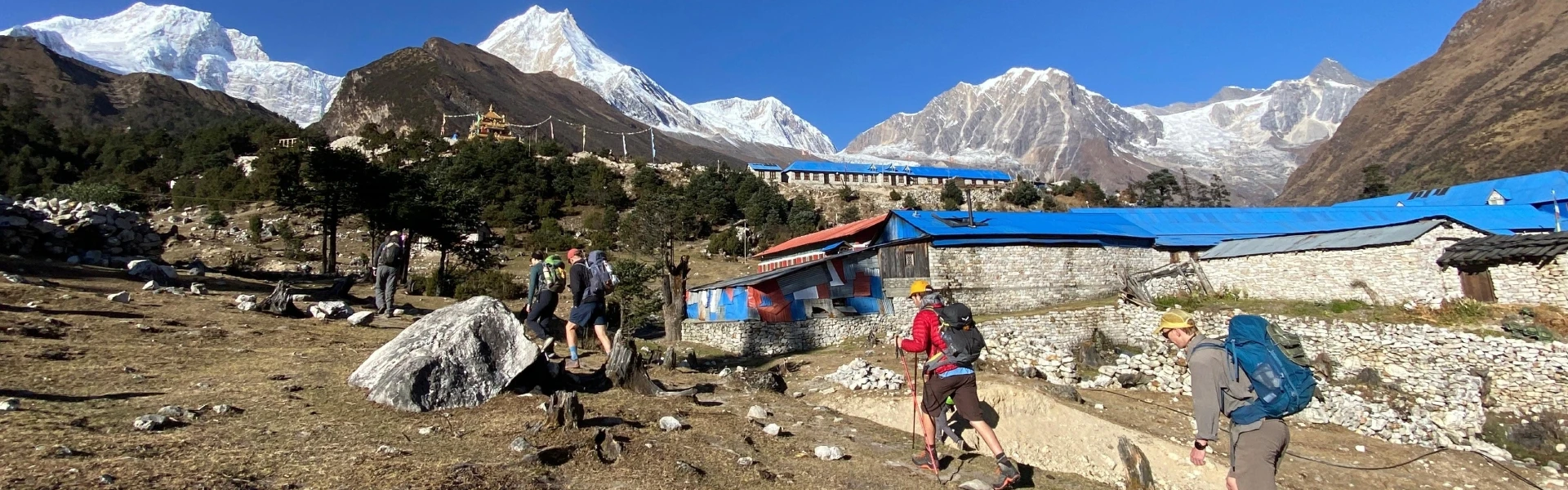
The Manaslu Circuit trek does not reveal its cultural depth immediately. From the trailhead at Machha Khola through the lower villages of Jagat and Deng, the landscape and communities feel broadly Nepali — terraced farms, suspension bridges over the Budhi Gandaki river, the familiar rhythm of a Himalayan trail.
The shift begins at Namrung and deepens through Lho Village. By the time you reach Samagaon and Samdo in the upper circuit, the Tibetan influence is unmistakable and total.
The reason is geographical and historical. The Gorkha District has been connected to Tibet through ancient trade routes for centuries. Tibetan traders, monks, and families moved through the high passes and settled in the Budhi Gandaki valley, bringing their architecture, their agricultural practices, their religious life, and their language with them. What exists today in these upper villages is not a museum of that exchange — it is the living, ongoing result of it.
In Lho, I first felt it clearly. Fields tended by yaks. Families eat millet bread with homemade chutney before a day of high-altitude farming. The careful management of scarce firewood is only seen in communities that have lived at altitude long enough to respect the limits of their environment. I did not observe these things from a distance. I walked through them, smelled the smoke from the kitchens, and understood that I was inside a way of life rather than beside it.
The three villages where Tibetan culture runs deepest
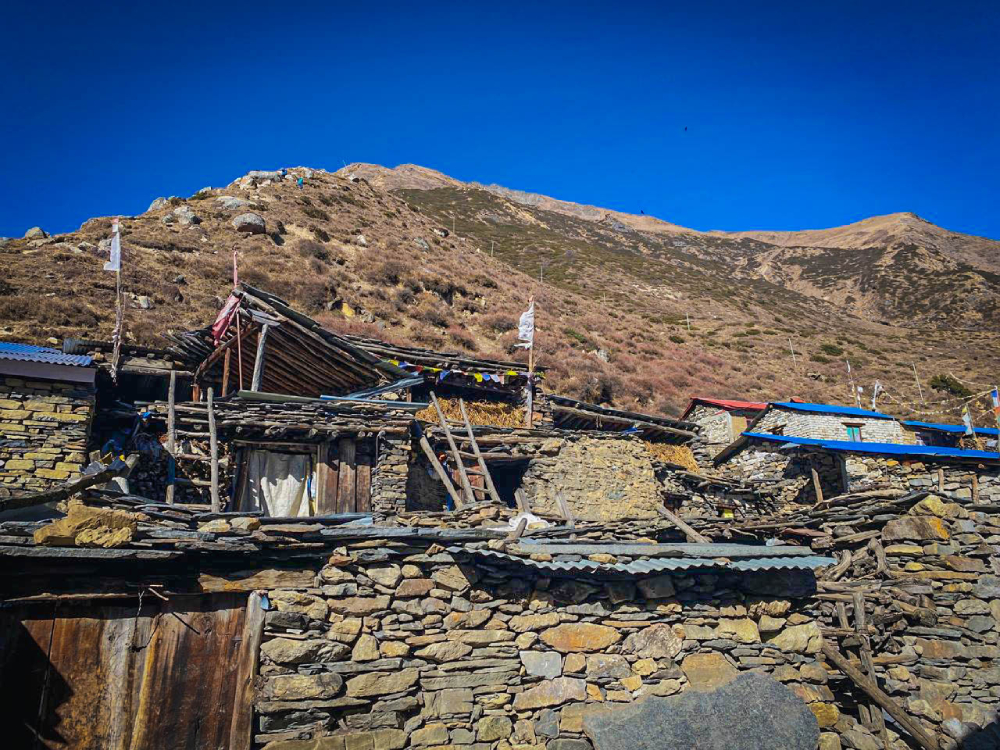
Lho Village is where the transition becomes visible. The architecture shifts — houses built lower and more compact in the Tibetan style, walls made from mud and slate stone, flat rooftops stacked with firewood against the high-altitude winters. The daily routines and clothing begin to reflect Tibetan practice alongside Nepali tradition. Lho is where the trail starts telling you something different.
Samagaon is where the culture reaches its most complete expression. Life here moves at the rhythm of the mountains. Yaks plough the fields — a Tibetan agricultural practice that does not exist in Nepal's lowlands — in land that has been farmed this same way for generations. The village has internet access now, which surprises some trekkers, but technology does not disrupt the fundamental rhythm of Samagaon. The chores are the same. The animals follow the same schedule. The pace is set by the altitude and the season, not by a screen.
Samdo sits approximately four kilometres from the Tibetan border. It is the rawest point of the entire Manaslu circuit trek. The trade memory here is Tibetan goods crossing the high passes that are now officially closed, but were, for centuries, the economic lifeline of this community. The clothing of older residents is distinctly Tibetan in style. Yet the schoolchildren study in Nepali, the administrative language is Nepali, and the national identity is firmly Nepali. Samdo holds both things simultaneously and without any apparent contradiction, which is itself one of the most extraordinary things to witness on the trail.
What daily life actually looks like in these villages
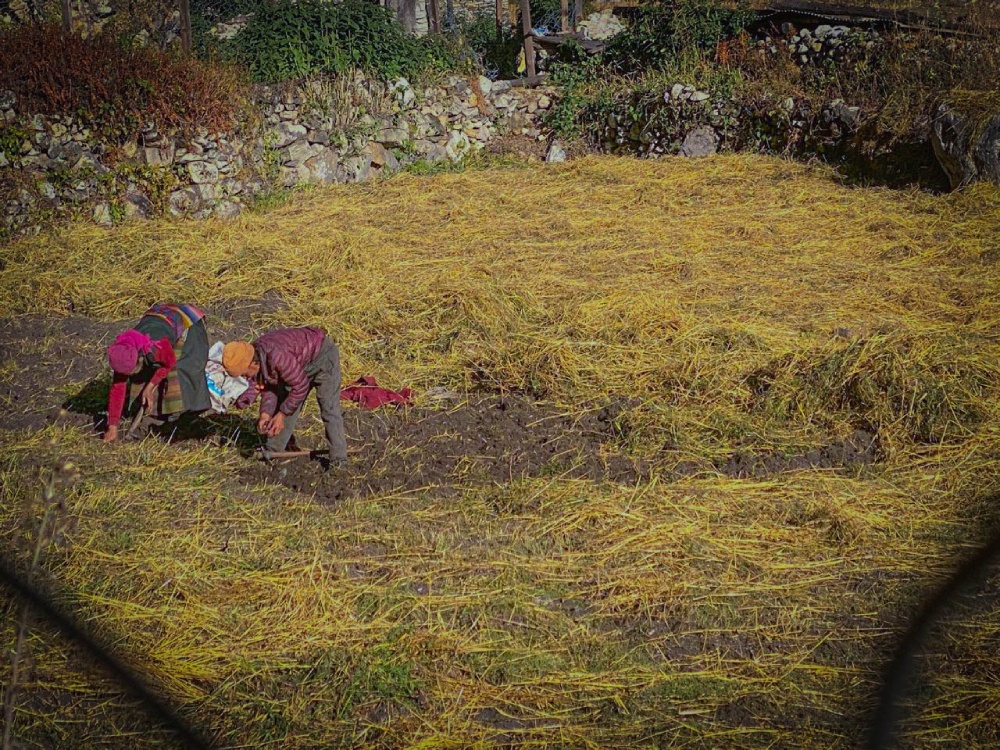
Evenings in the upper Manaslu villages reveal the quiet beauty of a life organised around necessity rather than convenience.
Mothers call their children home as the light changes. Smoke rises from chimneys as families begin cooking. Animals return from the high pastures — yaks managed with a calm authority that comes from generations of doing exactly this. Some households still use traditional firewood; others have adopted LPG stoves. The transition between old and new happens at every elevation in Nepal, and the Manaslu villages are no different, but the pace of that transition here is slower, and the old practices remain more visible than almost anywhere else on a major trekking route.
In Samagaon in 2018, a teahouse refused to take money from me. I tried three times. The family simply would not accept payment. These were people who had been trading across Tibet for generations, living demanding lives at high altitude with limited access to everything, and their response to a guest — even one who had arrived as a stranger — was to feed him and send him on his way as a member of the household rather than a customer. That quality of hospitality is not a performance for trekkers. It is how the community has always operated.
The monasteries of the Manaslu Circuit — genuinely untouched
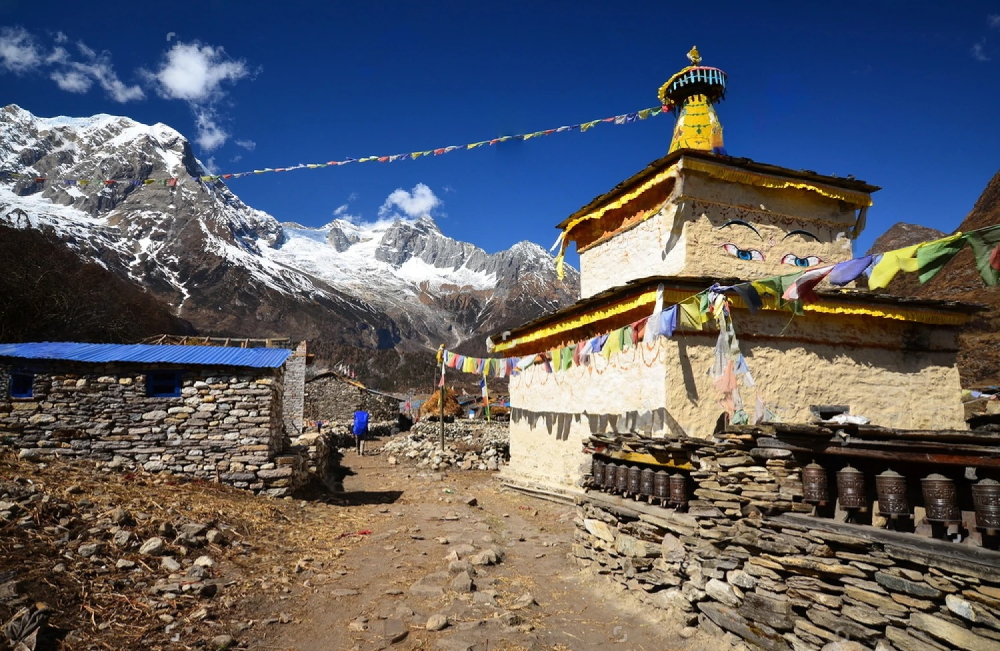
Two monasteries on the Manaslu Circuit trek stand in a category of their own.
Pungyen Gompa, above Samagaon, and Pema Choling Monastery on the trail toward Birendra Lake are not the polished, tourist-oriented religious sites you find in Kathmandu or Pokhara. They are built from mud, stone, and timber — the same materials as the houses around them, because they were built by the same people using what the land provides. Ancient scripts and thangkas have been preserved for decades in these rooms. The butter lamps burn in the same light they have always burned in.
The distinction matters: these monasteries are not preserved for visitors. They are maintained because the practice is alive. When you enter Pungyen Gompa, you are not visiting a heritage site. You are briefly present in a place that has continued without interruption and will continue after you leave. That feeling — of being a temporary guest in something that does not require your validation — is increasingly rare in the world and completely authentic here.
Manaslu culture vs Everest region culture — the honest comparison
The Sherpa culture of the Everest region is extraordinary and has been shaped by thirty years of high-volume trekking tourism. This is not a criticism — it is simply a fact with consequences. The communities along the Everest Base Camp trail have adapted to receiving large numbers of visitors, and that adaptation shows in the lodges, the menus, the service standards, and the degree to which cultural experiences have been structured around tourist schedules.
On the Manaslu circuit trek, this process is at an earlier stage. The communities here are still primarily oriented around their own life rather than around the logistical requirements of trekkers passing through. The cultural experiences you encounter are not arranged for you — they are simply present because you are walking through a living place.
This is the core difference. The Everest region shows you Sherpa culture with exceptional warmth and accessibility. The Manaslu region shows you a culture that does not primarily show you anything. You are a guest passing through a world that belongs to itself. That distinction is why experienced trekkers who have done EBC return from Manaslu saying it felt like Nepal used to feel.
The moments that stay with you — personal accounts from the trail
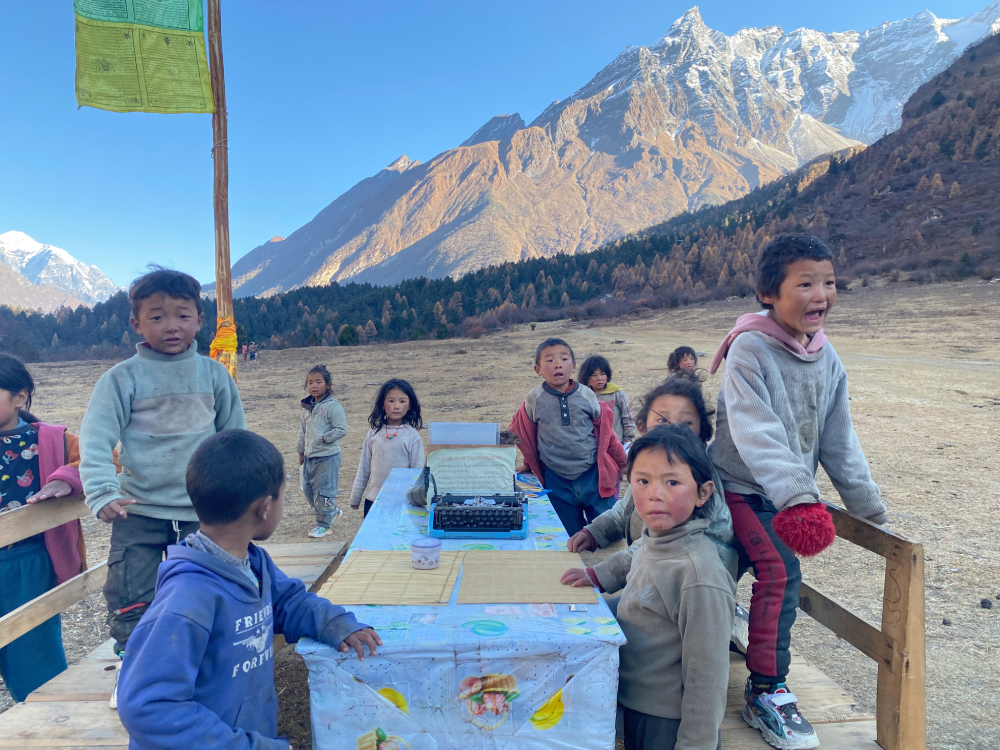
In Samdo in 2018, a teahouse refused my money and fed me as a member of the household. I have mentioned this already. I mention it again because it is the kind of story that sounds unlikely until it happens to you, and then becomes the thing you tell people when they ask what Manaslu is like.
In Shyala in 2021, a small girl heard me speaking Nepali to a lodge owner and ran to her mother shouting — in Nepali — "Oh, he's actually Nepali in disguise!" She had assumed from my appearance that I was a foreigner. The shock and delight on her face when she discovered I could speak her language was the purest expression of the innocence that still exists in these communities. That moment stayed with me through the entire pandemic year.
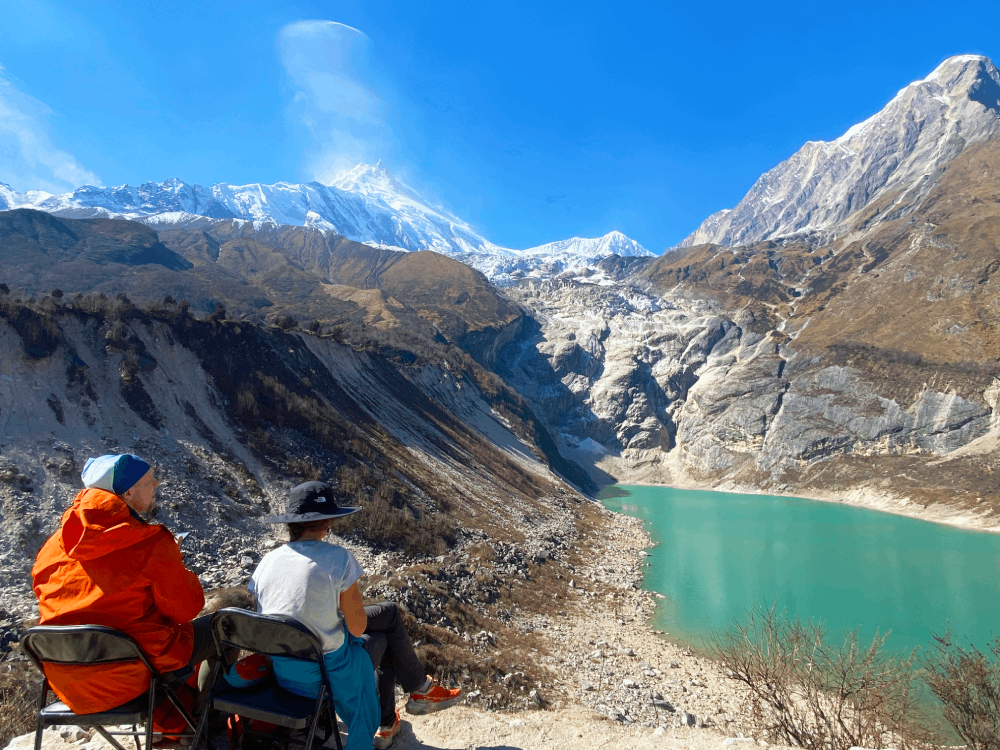
Near Birendra Lake in 2024, I photographed a man I passed on the trail. Later, in Samagaon, I showed him the image on my camera. His face lit up in a way that I have thought about many times since. I promised him a printed copy on my next visit. That promise is one of the reasons I keep going back.
In Jagat, on the same trip, a lodge owner thanked me quietly for preparing my clients honestly about what the trail was like. He said it made his community's interactions with trekkers better — that when people arrived with realistic expectations, they received the place differently. Then he introduced his daughter and told her to pay attention. Small moments. Enormous weight.
How the Manaslu Circuit trek has changed from 2018 to 2024
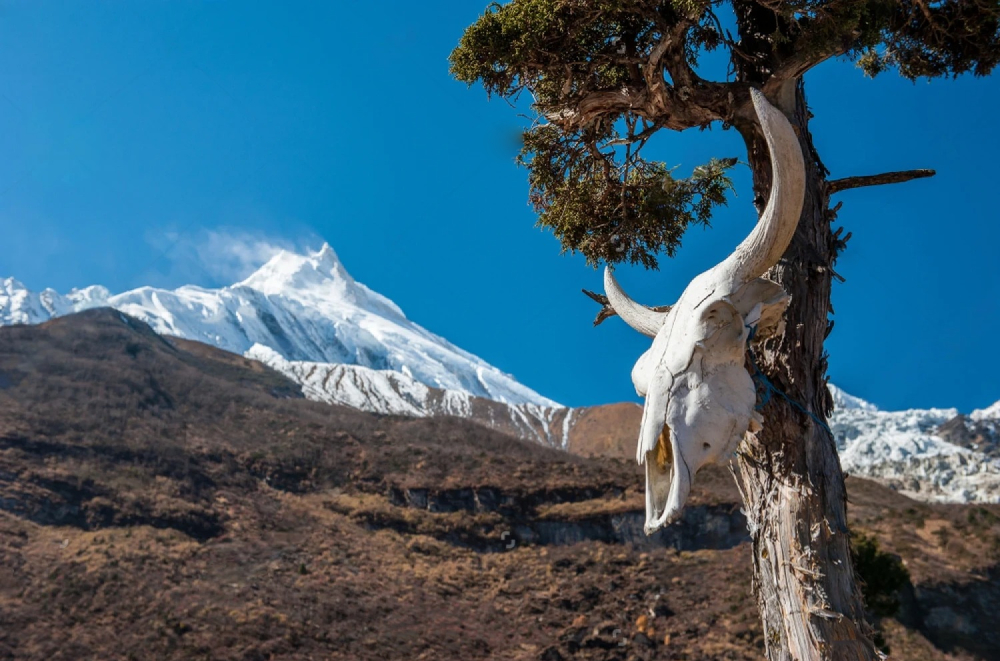
The trail has evolved in ways that matter. Lodge quality has improved significantly — some now offer private bathrooms, better mattresses, and more reliable food options. The infrastructure in the lower villages is noticeably more developed than it was six years ago. The permit process is now digital.
What has not changed is the culture. Samagaon and Samdo remain essentially intact. The monasteries are the same monasteries. The yaks plough the same fields. The families who choose to live here — and it is a choice, not a lack of options — are still here, still operating at the rhythm that the altitude and the season set.
As of March 2026, solo trekkers can now apply for a Manaslu restricted area permit individually — the previous requirement of finding a second foreign trekker has been removed. A licensed guide through a registered agency is still mandatory. This change makes the trail accessible to a wider range of trekkers without diminishing any of what makes it extraordinary.
Who the Manaslu Circuit trek is genuinely right for
This trek is not for beginners. Daily walking averages 18 to 22 kilometres on rough terrain. The Larkya La Pass crossing at 5,106 metres — typically starting at 3 am from Dharmasala — is a long, demanding day that requires genuine physical preparation and previous high-altitude experience.
The Manaslu circuit trek is for trekkers who have done Everest Base Camp or the Annapurna Circuit and want to understand what Nepal's mountains feel like when the tourist industry has not yet fully arrived. It is for trekkers who care about culture as much as scenery. It is specifically for trekkers who want an experience that cannot be replicated, packaged, or performed on demand.
If panoramic views are your primary goal, other trails are more accessible. If you want both the mountains and the specific, irreplaceable feeling of walking through a world that is still genuinely itself, the Manaslu Circuit is the best trek in Nepal.
Frequently asked questions
Is the Manaslu Circuit culturally richer than the Everest Base Camp trail?
For Tibetan-Nepali cultural depth specifically, yes. The upper Manaslu villages offer a living cross-cultural landscape that EBC's more developed trail does not provide in the same way. Both are extraordinary in different ways.
Can solo trekkers now do the Manaslu Circuit?
Yes. As of March 22, 2026, solo foreign trekkers can obtain a Manaslu restricted area permit individually. A licensed guide is still legally required.
What permits do you need for the Manaslu Circuit trek?
Three permits: the Manaslu Restricted Area Permit (MRAP), the Manaslu Conservation Area Permit (MCAP), and the Annapurna Conservation Area Permit (ACAP). Your registered trekking agency processes all three.
What is the best time to trek the Manaslu Circuit?
Autumn (September-November) is the primary season. Spring (March-May) is also excellent. We run winter departures for experienced trekkers comfortable with cold conditions on the Larkya La.
How difficult is the Manaslu Circuit compared to Everest Base Camp?
Similar daily walking demands, with the Larkya La crossing being harder than any single day on the EBC route. EBC reaches a higher maximum altitude (5,644m vs 5,106m). Manaslu requires more prior experience.
Ready to trek the Manaslu Circuit? See our full itinerary and book directly:
Manaslu Circuit Trek — 14 Days | Short Manaslu Circuit Trek — 10 Days | Manaslu and Tsum Valley Trek — 22 Days