You are not burned out because you are weak. You are burned out because your nervous system has not had a genuine break in years.
Not a holiday. Not a spa weekend. A genuine break — the kind where your body stops producing stress hormones at the rate it has normalised, where your sleep returns to its full depth, where the part of your brain responsible for clear thinking stops working at reduced capacity.
Most stress relief solutions address the symptom. They do not address the environment that keeps producing it. You decompress for two days and walk back into the same conditions. The cycle continues.
Himalayan trekking addresses the environment. Not metaphorically — neurologically. There is a growing body of scientific research showing that multi-day trekking in high-altitude mountain environments produces measurable changes in cortisol levels, sleep architecture, cognitive function, and emotional regulation. Changes that outlast the trip itself.
This article explains exactly what happens to your brain and nervous system when you trek in the Himalayas, why it works when other approaches do not, and what a properly designed trek looks like if recovery — not just scenery — is the goal.
First: Why Your Current Stress Is Different From Any Stress Your Body Was Designed For
Your nervous system was built for short, sharp threats. A physical danger appears. Your body releases cortisol and adrenaline. You respond. The threat passes. Your body recovers. This is the cycle your biology expects.
What modern life delivers instead is chronic, low-grade, never-ending stress. Your body's threat system — the hypothalamic-pituitary-adrenal axis, or HPA axis — stays partially activated all day, every day. Emails, deadlines, financial pressure, social comparison, and screen overload all register as low-level threat signals. The cortisol drip never fully stops.
This is a physiological problem, not a mindset problem. According to an article in Frontiers, Elevated baseline cortisol does three things to the brain over time:
It shrinks the hippocampus — the region responsible for memory, learning, and emotional regulation. It disrupts slow-wave sleep — the deepest stage, when the brain repairs itself and processes emotions. It narrows prefrontal cortex function, which is the part of your brain handling complex decisions, creativity, and perspective.
In other words, chronic stress degrades the exact mental qualities you most need to navigate the life that is stressing you.
A meditation app helps. A weekend retreat helps. But neither produces the scale of environmental contrast the nervous system actually needs to reset. That is where the Himalayas come in — and why the science behind mountain trekking is more interesting than most people realise.
What Actually Happens to Your Brain on a Himalayan Trek
Altitude Forces the Deceleration Your Body Has Been Refusing
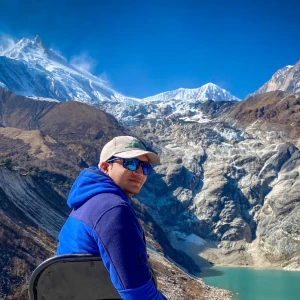
The Himalayas are a mountain range in Nepal and Tibet containing eight of the world's ten highest peaks, including Everest. Trekking in Nepal typically means walking through this landscape at elevations between 1,400 metres (Kathmandu, the capital) and 5,364 metres (Everest Base Camp) — though most wellness-focused treks stay between 3,000 and 4,500 metres comfortably.
At elevations above 2,500 metres, the air contains less oxygen per breath than at sea level. This is not dangerous when approached correctly and gradually — it simply means the body has to work harder to do less. Your breathing deepens. Your heart rate stays elevated at a lower walking pace. And critically, you physically cannot maintain the speed and intensity of lowland life. The altitude will not allow it.
Most of our clients initially experience this as frustrating. Within forty-eight hours, they experience it as relief.
The body, denied the ability to rush, begins the process it has been postponing for months. Cortisol levels start to fall. Breathing — slower and deeper than it has been in years — begins to activate the parasympathetic nervous system, the branch responsible for rest and recovery. The nervous system starts to remember that deceleration is safe.
Research into high-altitude environments has documented something interesting: increased alpha wave activity in the brain during mountain acclimatisation. Alpha waves are the brainwave pattern associated with relaxed alertness, creative thinking, and meditative states — the same state that mindfulness practitioners spend months training to reach. The mountain produces it by physiological necessity.
Nature at Scale Does Something to the Brain That Smaller Nature Cannot
Attention Restoration Theory is a framework developed by environmental psychologists Rachel and Stephen Kaplan. It distinguishes between two types of mental attention:
Directed attention is the effortful, voluntary focus that modern cognitive life demands constantly. Reading emails, making decisions, managing tasks — all of this runs on directed attention. And like any resource, it depletes. When it is chronically depleted and never allowed to fully restore, the result is the exhaustion, irritability, and mental flatness that burnout produces.
Involuntary attention is the effortless engagement that natural environments trigger. When you are looking at something genuinely vast and beautiful — a valley between two ridgelines, a river cutting through a gorge a thousand metres below the trail — your mind engages without effort. No mental energy is spent. And while your involuntary attention is occupied, your directed attention rests and restores.
A mountain landscape, specifically, triggers what researchers call the awe response — a state produced by encountering something genuinely larger than the frame the brain normally operates within. Awe measurably reduces activity in the subgenual prefrontal cortex, the brain region most associated with the rumination and repetitive negative thought that anxiety and depression rely on. Put simply: you cannot be simultaneously awed and stuck in your own head.
A Stanford study comparing urban walkers and nature walkers found that ninety minutes of nature walking produced significant reductions in this type of repetitive thinking. Now consider ten days immersed in one of the largest mountain landscapes on earth, with no urban infrastructure, no traffic, no ambient digital stimulus. The cumulative neurological effect is not a rounding error.
Walking — the Specific Kind — Is a Neurochemical Intervention
Not all exercise produces the same neurological outcome. What matters for stress recovery is sustained, moderate-intensity rhythmic movement over an extended period — and that is precisely what Himalayan trekking delivers.
Walking for multiple hours each day across varied terrain activates the production of:
BDNF (brain-derived neurotrophic factor) — sometimes called "Miracle-Gro for the brain." BDNF promotes the growth of new neurons, strengthens synaptic connections, and partially reverses the hippocampal shrinkage that chronic stress produces. It is elevated by sustained aerobic exercise more reliably than by almost any other intervention.
Anandamide — a naturally occurring neurotransmitter whose name comes from the Sanskrit word ananda, meaning bliss or joy. Anandamide is produced during sustained aerobic activity and is associated with reduced fear response, improved neuroplasticity, and the specific feeling of lightness and openness that long-distance walkers describe arriving around day three. There is something that is not accidental about finding ananda in the landscape that gave the word its meaning.
Serotonin and dopamine — regulated by sustained movement in ways that short gym sessions and city walks do not reach, because those forms of exercise do not sustain long enough to move through the initial cortisol response into the recovery phase, where these neurotransmitters stabilise.
The specific quality of Himalayan trekking — multiple consecutive days, terrain that demands full physical attention, altitude that moderates pace — produces a neurochemical environment that standard exercise cannot replicate.
Why a Rushed Trek Defeats the Purpose
Here is the problem with how most trekking is sold: it is sold as an achievement.
Maximum altitude. Minimum days. The most iconic viewpoints. The hardest passes. And for some travellers, with specific goals, that is the right experience.
But if you are coming to the Himalayas for recovery — for the neurological reset that stress-depleted professionals increasingly need — a rushed trek does not deliver it. It relocates the achievement mindset into a mountain setting and calls that wellness. It is not.
The neurological work of a trek requires something that achievement-oriented itineraries will not give you: time with nothing to accomplish.
When we design recovery-focused treks at Himalayan Scenery Treks, the schedule is deliberately spacious. A day that might conventionally be six hours of walking becomes four hours of walking and two hours of unstructured presence. Sitting by a river. Watching the light change on a peak. Letting a conversation with a guide go where it goes. These hours are not wasted time between trail sections. They are the point.
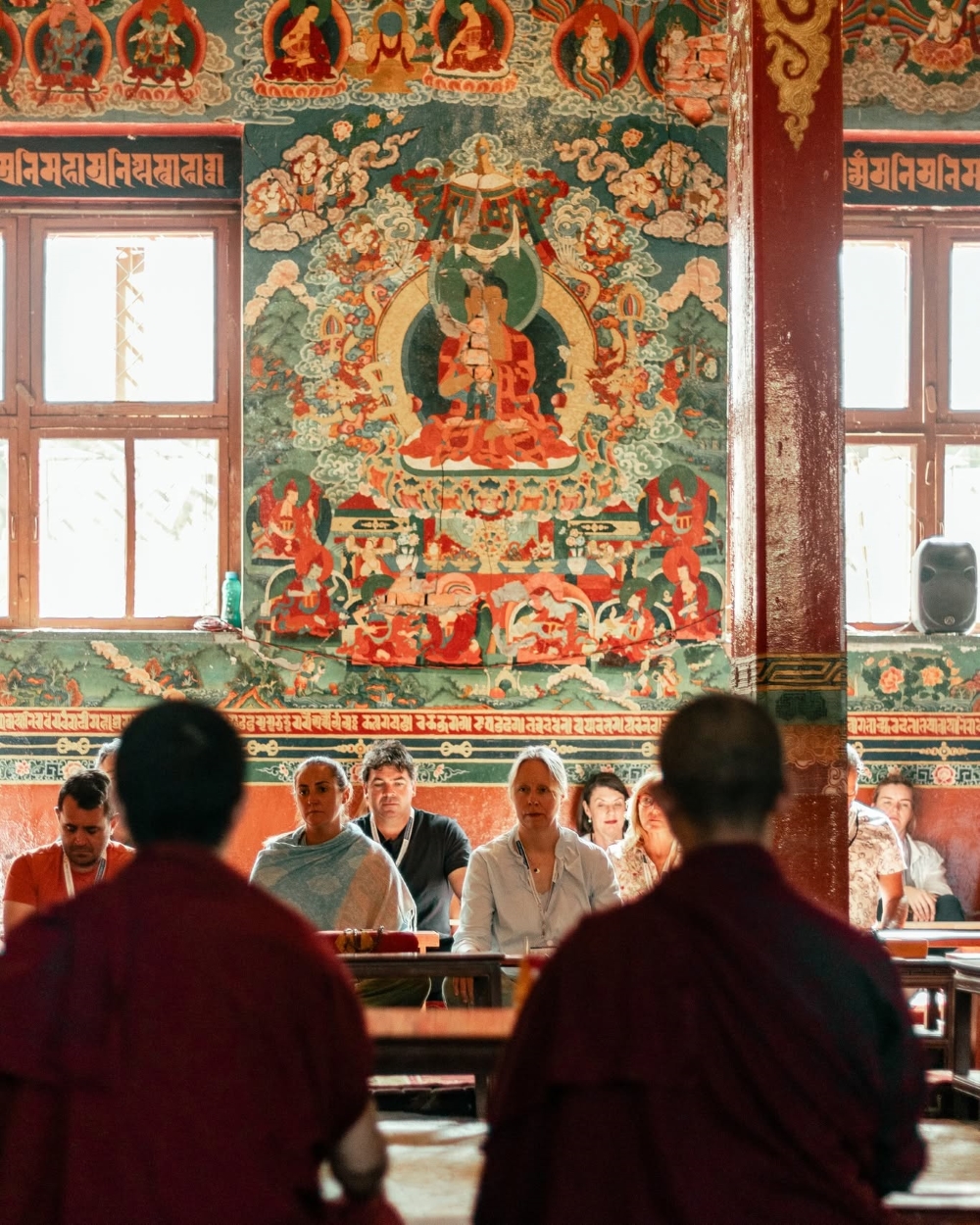
This is also when the unexpected things happen. The things clients describe ten years later. Not the summit views — the monastery courtyard where a monk offered tea and stayed to talk for an hour. The kitchen of a mountain family, where the smell of woodsmoke and yak butter has not changed in generations. The afternoon in a meadow above the treeline where nothing happened at all, and that nothingness turned out to be exactly what was needed.
You cannot plan these moments. You can only leave space for them. And a rushed itinerary leaves no space.
Acclimatisation Days: Not a Safety Measure. A Recovery Opportunity.
Before we go further, acclimatisation needs to be explained properly because it is one of the most misunderstood elements of Himalayan trekking.
When you gain altitude quickly — say, flying into Lukla (2,860m, the small mountain airstrip that serves the Everest region in Nepal) from Kathmandu (1,400m) and immediately pushing higher — the body does not have enough time to adjust to lower oxygen levels. Altitude sickness results: headache, nausea, fatigue, and in serious cases, dangerous fluid accumulation in the lungs or brain.
The solution is acclimatisation: spending additional days at intermediate altitudes before ascending further. Standard practice on the Everest Base Camp approach, for example, is to spend two nights in Namche Bazaar (3,440m) — a busy trading village perched above a steep valley, roughly four walking days above Lukla — before continuing to higher elevations.
The trekking industry treats acclimatisation days as inconvenient necessities. Days to endure before the real walking resumes.
We treat them as the most neurologically important days of the trek.
Here is why. By day two or three of acclimatisation, the acute physiological adjustment is largely complete. What remains is a day or two with no mandatory objective, at altitude, in a mountain village, with a body that is physically resting but not sedentary. This is the precise condition that clinical rest protocols try and fail to replicate.
At Himalayan Scenery Treks, our acclimatisation day design has four components:
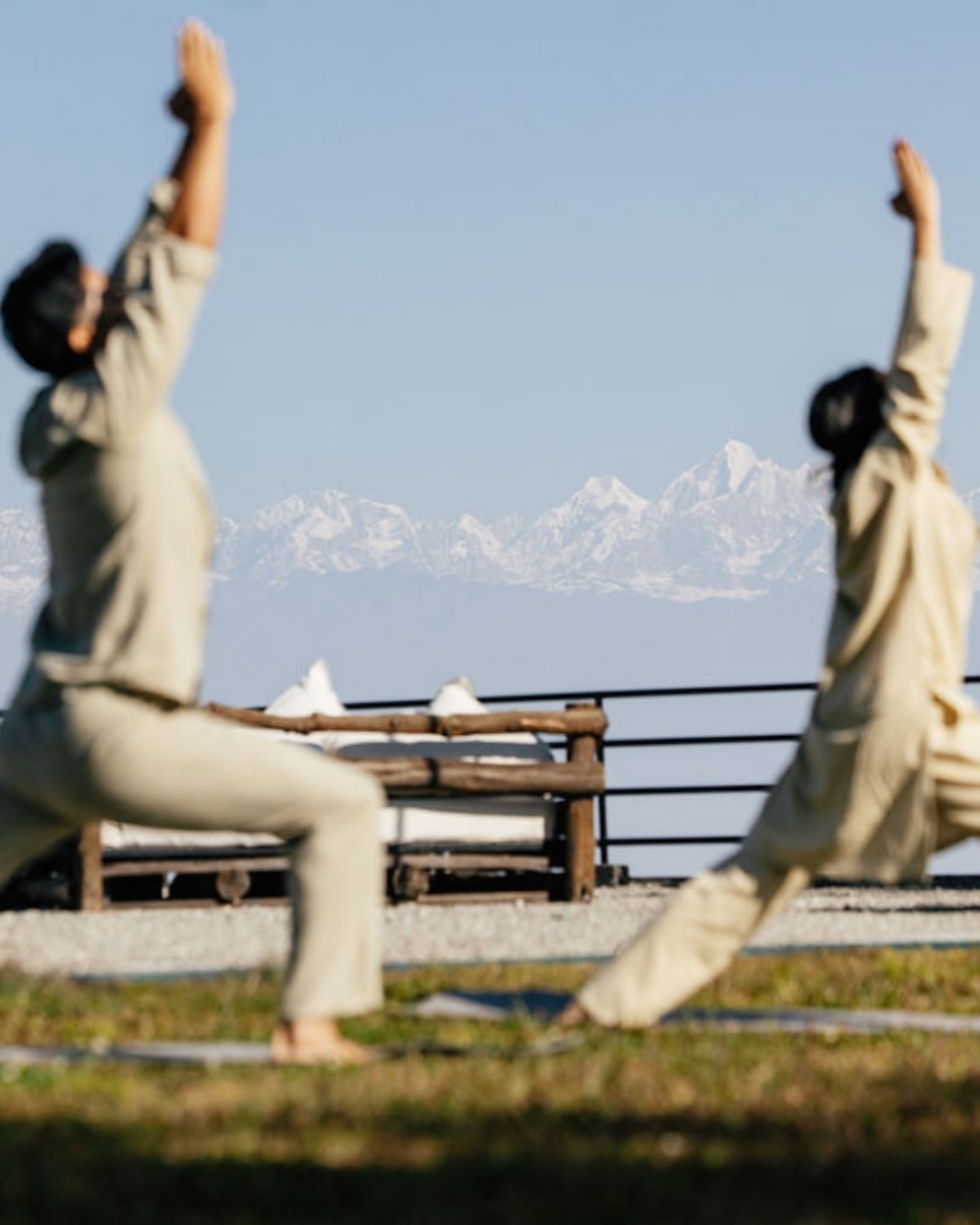
A short morning walk to a higher elevation. "Walk high, sleep low" is the standard altitude medicine recommendation, and it is also excellent recovery science. A two-hour morning walk to a viewpoint above the village — not a summit push, just enough movement to prevent the psychological stagnation of a full rest day — keeps the body engaged while respecting its need for measured adaptation.
A midday cultural experience. A cooking class with a Sherpa family. A session on learning about high-altitude agriculture. An introduction to traditional medicine with a village elder. These are not tourist activities. They are an hour of complete sensory engagement with something entirely outside your professional life — a neural register that your brain has likely not activated in months. The contrast is neurologically significant.
Genuine unstructured afternoon time. This is the hardest thing to sell to high-functioning professionals, and the thing they most consistently describe as transformative in retrospect. No plan. No agenda. Nowhere to be. The instruction is simply: exist in this place for a few hours. Read. Sleep. Write something. Stare at a mountain. Most clients have not done this in years. Most find that it takes about ninety minutes before the restlessness gives way to something they cannot immediately name.
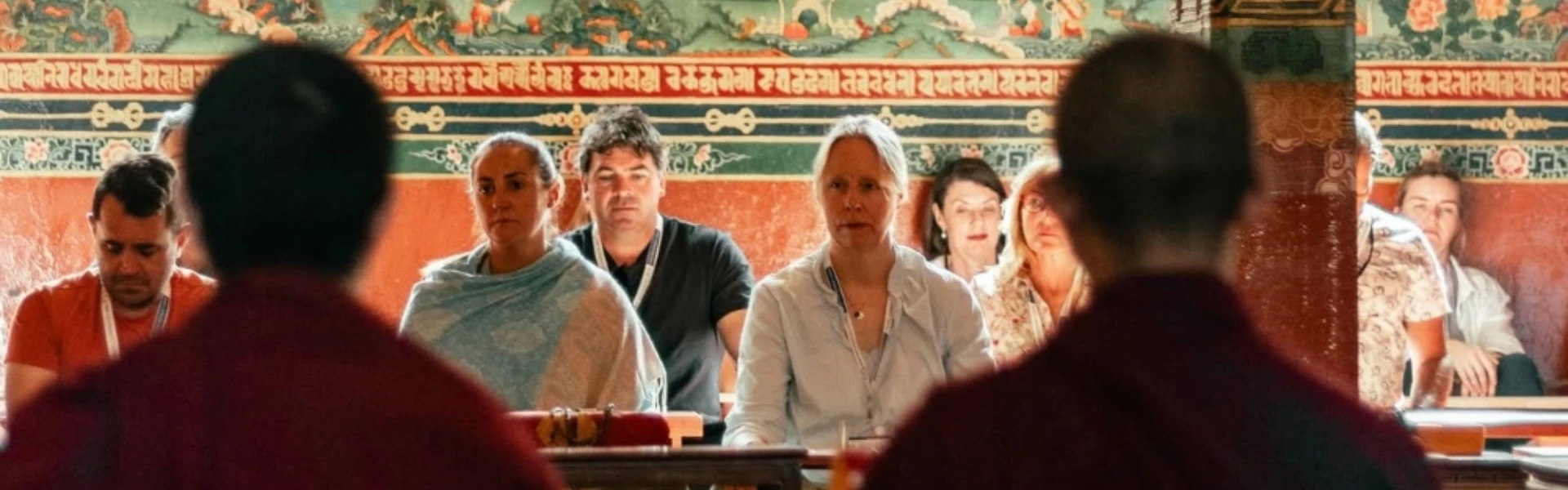
Evening monastery access. Several monasteries in Nepal's trekking regions have longstanding relationships with our guides — relationships built over years of respectful, reciprocal connection, not commercial arrangements. Where this access exists, the evenings on acclimatisation days can include genuine interaction with monastic communities. Not guided tours. Actual human presence in a space designed for contemplation.
The cumulative effect of this structure is a day that functions as a full neurological reset. Clients who arrive wound tight — defensive, distracted, half-present — leave these days different. The change is visible and consistent. Acclimatisation days are where most of the real healing happens.
Sleep at Altitude: The Restoration That Cannot Be Manufactured
One of the least-discussed benefits of Himalayan trekking is what it does to sleep.
In the first two nights at altitude, sleep is often strange. Lighter, more fragmented, with vivid dreams as the body regulates oxygen levels through the night. This is normal and passes.
By nights four and five, something shifts. The body has adapted to altitude, accumulated genuine physical tiredness, and been freed from artificial light and screen stimulation. Slow-wave sleep — the deepest phase, the one most severely disrupted by chronic stress, the one responsible for cellular repair, growth hormone release, and emotional consolidation — returns with a depth that many clients describe as unlike anything they have experienced in years.
This is not anecdotal. The conditions that high-altitude mountain environments create — significant daily physical exertion, cool air, genuine darkness, reduced cortisol, absence of digital stimulus — are almost precisely the conditions that sleep scientists identify as optimal for full sleep architecture restoration.
People who have been sleeping badly for years sleep well in the mountains. They wake up with a quality of alertness — clear, rested, unhurried — that they have forgotten was possible. This, as much as the views, is what many of them come back for.
Which Trek Is Right for Stress Recovery
Not all Himalayan treks serve the same neurological purpose. Here is how we guide the choice for wellness-focused travellers.
The Langtang Valley Trek(7–10 days) is situated two to three hours by road from Kathmandu, making it the most accessible major trekking region in Nepal. The valley was devastated by a landslide in the 2015 earthquake and has been rebuilt by the Tamang communities who remained. There is a quiet resilience in this valley — in the rebuilt lodges, in the people who stayed — that many travellers find deeply affecting. It is less trafficked than Everest, more intimate in scale, and retains a quality of genuine encounter with daily mountain life that is harder to find on busier routes. For first-time trekkers or those with limited time, this is our primary wellness recommendation.
The Manaslu Circuit Trek (14–16 days) circles Manaslu — the world's eighth highest mountain at 8,163 metres — through remote villages and high passes in western Nepal. This route requires a restricted area permit because it borders Tibet, which limits visitor numbers and preserves a quality of authentic cultural life that the more popular routes have largely lost. The monasteries are working religious communities. The villages are real, not developed for tourism. The scale of the landscape is extraordinary. This is our recommendation for travellers who have more time, who have some trekking experience, and who want the deepest available combination of physical challenge, cultural authenticity, and natural scale.
The Everest region (12–15 days, approached slowly) remains one of the most transformative landscapes on earth — but only if designed correctly for a wellness goal. The route toward Everest Base Camp is the most visited trekking route in Nepal, which means it must be designed around genuine acclimatisation days and a guide briefed on recovery intent, not summit achievement. Done this way — slowly, deliberately, with the programme described above built into the acclimatisation stops — the Everest approach delivers everything the science promises. Done as a race to a famous altitude, it does not. If you want the full comfort of this route without the return walk, our Luxury Everest Base Camp Trek with Helicopter Return is designed precisely for that.
The Annapurna Luxury Lodge Trek (9–12 days) circles Annapurna Massif through Gurung and Magar villages, where daily life continues untouched by tourism. Unlike crowded teahouse circuits, the luxury lodge version places you inside the landscape, not above it. Walking days are deliberately short (3–4 hours), transforming endurance into presence. You cook with local chefs, sleep in family-run heritage lodges, and walk with guides who have genuine village relationships. The physical engagement is real without exhaustion — your nervous system processes the mountain quietly. For travellers seeking immersion with accessibility, deeper than Everest's crowds yet more rewarding than Langtang's gentleness, this route delivers both.
What You Will Carry Home

The neurological changes that Himalayan trekking produces are real. They are also not permanent — cortisol returns when the stressors return, sleep quality degrades when screens reappear, and directed attention depletes again under normal cognitive load.
But something more durable than the neurochemical state itself comes back with you.
A reference point.
You now know, in your body, what it feels like when your nervous system is genuinely restored. What clear thinking feels like. What real sleep feels like. What the absence of urgency feels like when it is not numbing, but alive.
That reference point changes your relationship with the conditions that erode it. It makes the gap between how you are living and how your nervous system is capable of functioning visible in a way it was not before. Many clients make significant life changes after a wellness trek in Nepal — not because the mountains convinced them, but because the mountains reminded them of something they had forgotten they already knew.
Plan Your Wellness Trek
At Himalayan Scenery Treks, recovery-focused trekking is not a product we sell. It is an approach we design around your timeline, your starting point, and what you are specifically looking to restore.
Not sure where to start? Our full Nepal trekking packages cover every region and experience level, or contact us directly, and we will design something specific to you.