Discover the Annapurna Base Camp trek costs and budget wisely. Get essential tips for an unforgettable experience—read the full guide now!
How Much Does Annapurna Base Camp Trek Cost? The Real Breakdown (2026)
Table of Contents
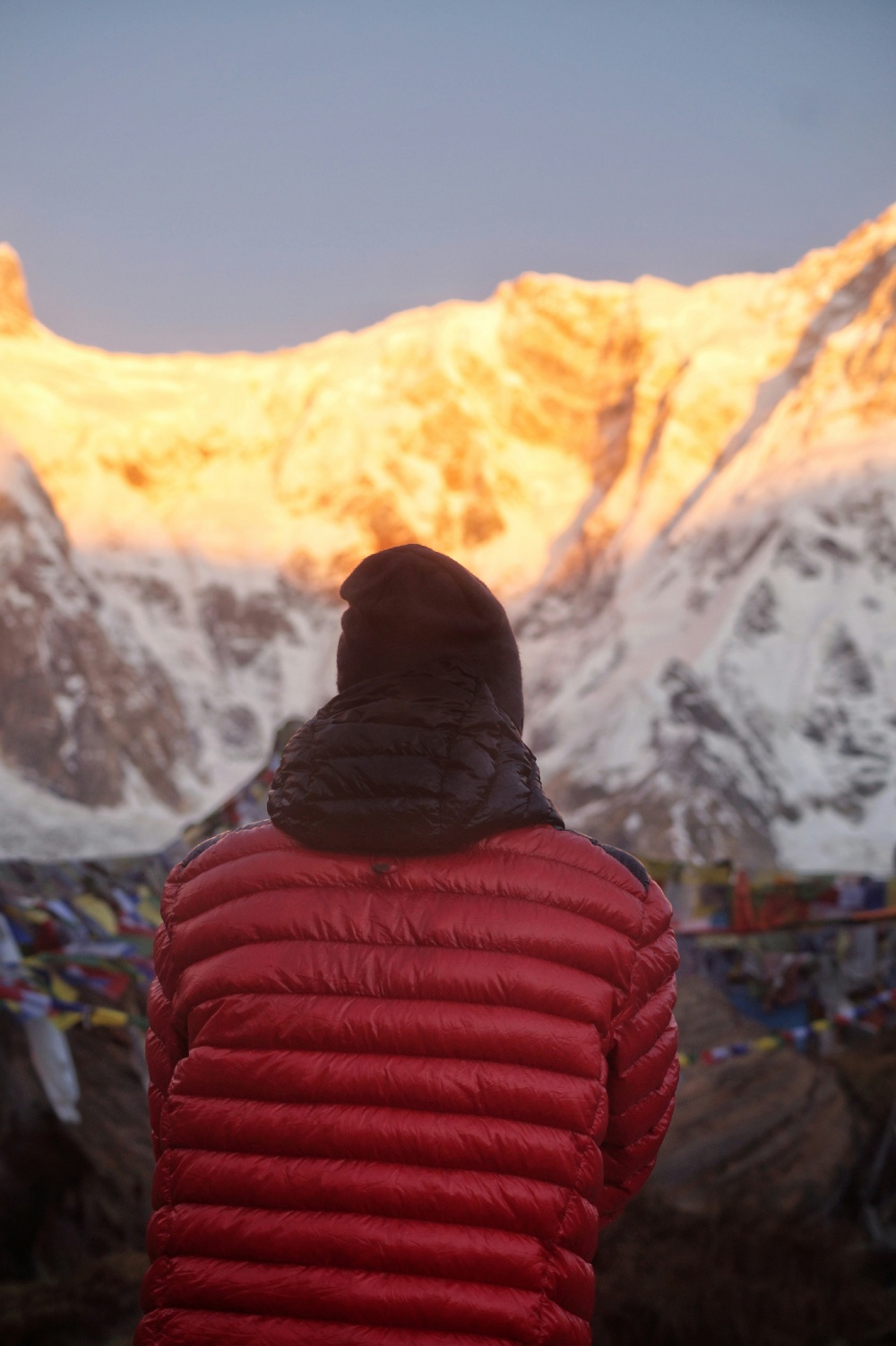
I watched a couple from Boston turn down the helicopter from Annapurna Base Camp. They'd already paid for it—$1,800 each. But on day eight, sitting in a teahouse at 3,100 meters, watching the sun hit Machapuchare, they asked their guide to cancel.
"We're walking out," they said. "We want four more days with these mountains."
That decision cost them another $400 in lodge fees and meals. They don't regret a dollar.
This is what cost actually looks like on the Annapurna Base Camp trek. Not just the number you pay upfront, but what you get in return—and why experienced trekkers often spend more than they planned to.
I've guided or managed trekking operations in the Annapurna region for over a decade. I know where your money goes. Let me show you.
Quick Cost Summary (The Numbers)
- Budget Trek (Group, All-Inclusive): $500-$700 per person (5 days)
- Standard Trek (Private, All-Inclusive): $1,350–$1,550 per person (10 days)
- Luxury Trek (Private, All-Inclusive): $1,650–$1,950 per person (10 days)
All prices include permits, accommodation, meals, guide, porter, and transportation ( jeep Pokhara to/from trek start). Does NOT include: tipping, personal gear, travel insurance, amenities (hot showers, charging), domestic flights (optional upgrade: $210 round-trip), helicopter return (optional: $1,800–$2,200/person), transportation(Tourist bus Kathmandu-Kathmandu).
Where Your Money Actually Goes
Here's the cost breakdown for Annapurna Base Camp.
Permits: $50 Total (Non-Negotiable)
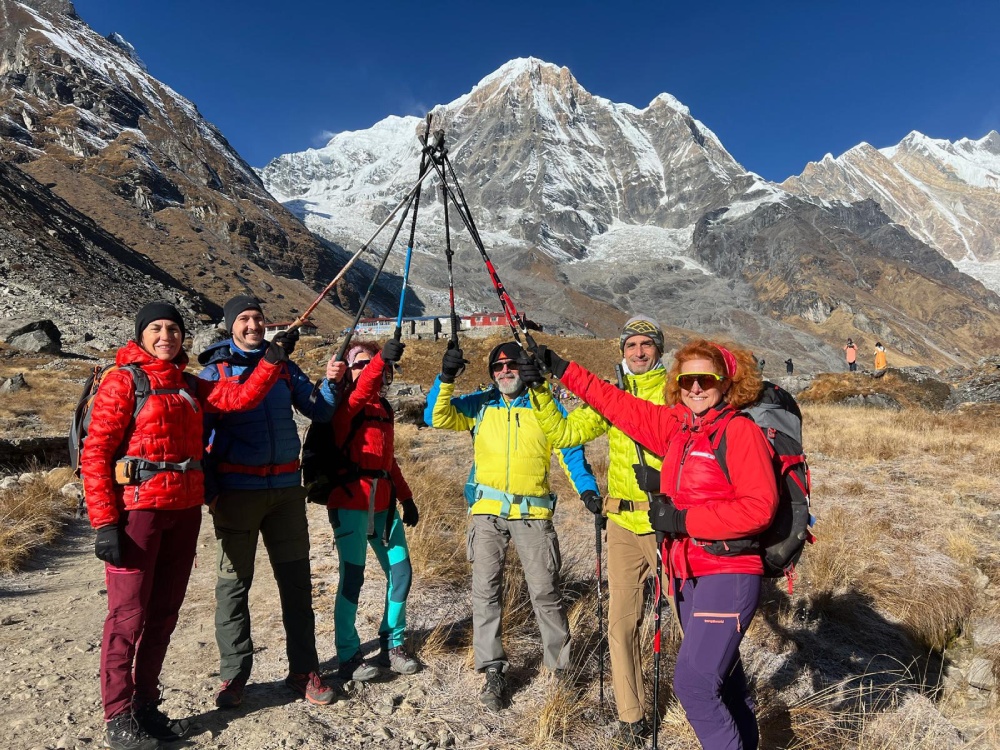
Annapurna Conservation Area Permit (ACAP): $30
This isn't bureaucracy. The ACAP directly funds conservation work in the Annapurna region. You'll see it: trail maintenance, porter welfare programs, community healthcare access in villages you trek through.
We carry every client's ACAP with us. You get a physical copy as a souvenir—it's proof you contributed to conservation while you were here.
Trekker's Information Management System (TIMS) Card: $20
TIMS tracks your location in case of an emergency. If you get injured or lost, authorities know where to find you. It's also a safety record—every trekker in Nepal is registered.
Both permits are handled by us before you arrive. You never touch the paperwork.
Accommodation: $5–$15 Per Night (This Is Where It Gets Real)
What $5–$7/night buys you:
Basic bed with clean sheets and a blanket
Tea or water in the morning
Communal dining space
Basic bathroom (pit toilet or squat toilet)
No hot water
What $10–$15/night buys you:
Same bed, better mattress
Hot shower (sometimes)
Better food options
Private bathroom
Cleaner facilities overall
Here's the truth: not all teahouses are equal, and this matters.
HST works with specific lodges. Not because they're famous, but because the owners care.
Examples:
Chhomrong (Day 3): We use a family-run lodge where the owner's daughter cooks. Her dal bhat isn't trying to be anything—it's nourishing, consistent, and flavoured with 20 years of knowing what trekkers need. $8/night.
Deurali (Day 5): Higher altitude means cold nights. We use a lodge with good insulation, better blankets, and a functioning stove in the common room. $12/night. Worth it.
Annapurna Base Camp (Day 6): There are three lodges at ABC. We use the one run by a Sherpa family from Machapuchare Base Camp village. They know the altitude. They adjust meals accordingly. They're not performing hospitality; they're living it. $15/night.
The math: 10-night trek × $10/night average = $100 accommodation
(If you book budget: $50–$70. If you choose a private trek with better lodges: $120–$150.)
Food: $15–$25 Per Day (Fuel for the Mountain)
Breakfast (~$5–$7):
Porridge, toast, eggs, fruit
Nepali butter tea or coffee
Pancakes, if you're lucky
Lunch (~$6–$8):
Usually self-purchased at the lodge or a tea stop
Dal bhat (lentil soup + rice) = $4–$6
Noodles or momos = $3–$5
Dinner (~$7–$10):
Dal bhat (again, but different)
Vegetable curry, potato, mustard greens
Occasionally: yak cheese, local trout
Why not meat? The Annapurna Conservation Area restricts livestock grazing for environmental reasons. Most meat is imported and unsafe at altitude. Don't eat it.
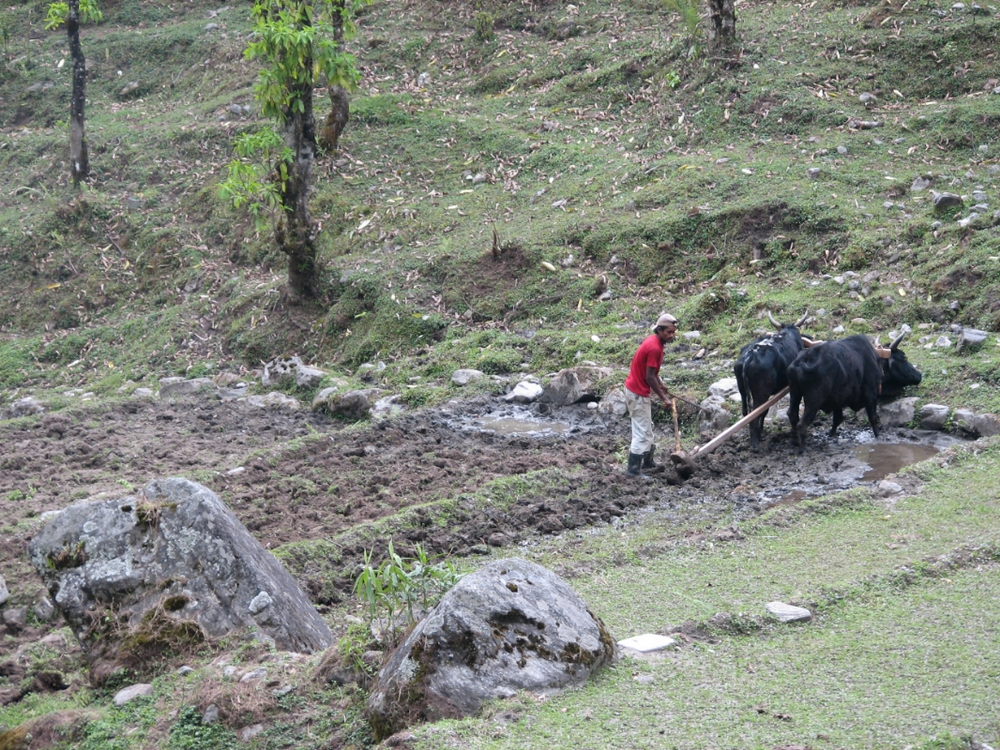
The logistics: Teahouses buy fresh daily from villages. A farmer brings potatoes and greens to Chhomrong; that's what you eat. This isn't a menu—it's the region feeding itself, and you're part of it.
The math: 10 nights × $20/day = $200 food
(Budget: $150. Private trek with better kitchen preparation: $250–$300.)
Guide: $30–$50 Per Day (This Determines Your Trek)
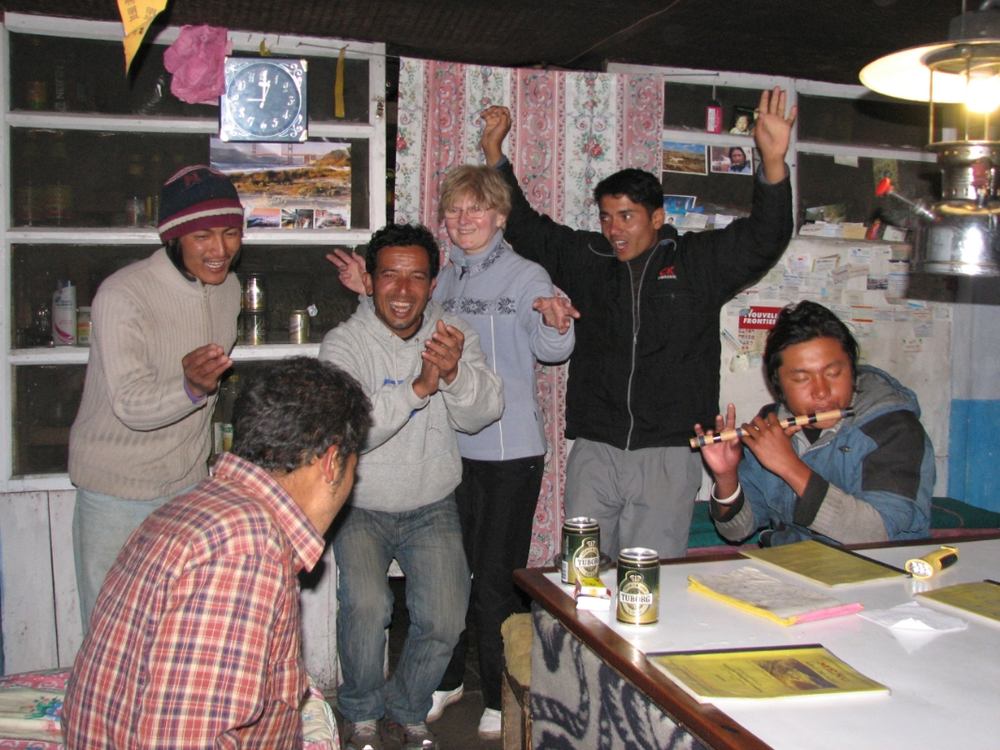
A guide costs money. The question is: what kind of guide?
Basic Guide ($30–$35/day):
Knows the route
Speaks English
Can point to mountains
Minimal training in altitude sickness recognition
Good Guide ($40–$45/day):
50+ ascents of ABC
Trained in altitude sickness, weather prediction, and route modification
Speaks English + 1 other language (Spanish, French, German)
Knows village names, family stories, and local history
Pre-briefs clients on their pace, interests, and fitness level
Exceptional Guide ($50–$60/day):
100+ ascents
Advanced training (wilderness first responder, high-altitude medicine)
Multiple languages
Anticipates your needs before you feel them
Modifies the itinerary during the trek based on weather, your energy, and group dynamics
HST's Standard: We send good guides. Our guides have walked ABC 50+ times minimum. They're briefed on your background, interests, and fitness level before the trek starts. They know which villages have the best local stories, which lodges have the best kitchens, and which weather windows matter.
For a 10-day trek with a $45/day guide: $450 guide cost
Porter: $25–$30 Per Day (Or Walk Lighter)
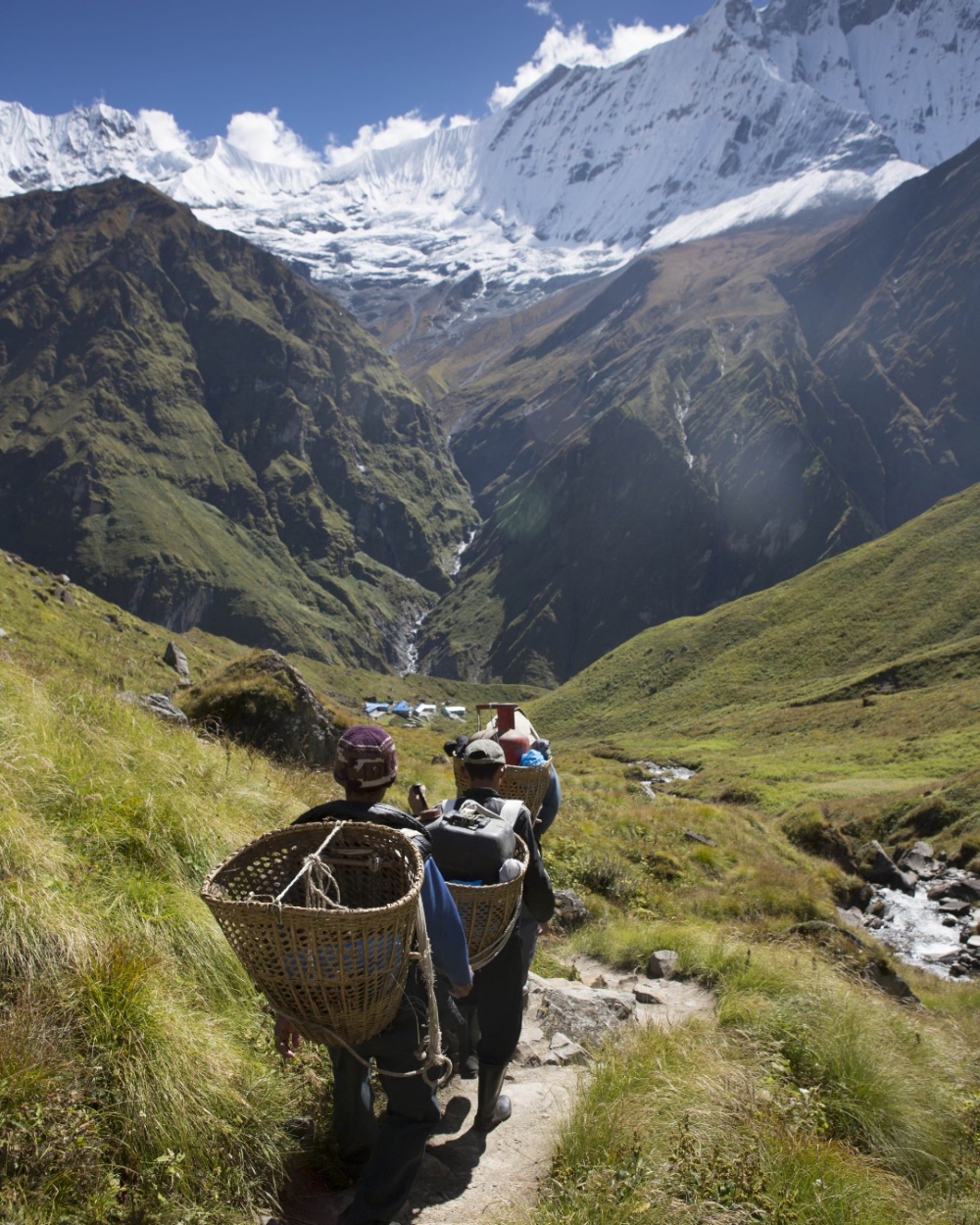
A porter carries your bag (max 20 kg). You walk with just a daypack.
Without a porter: You carry 8–10 kg for 5–6 hours daily. Doable, but it taxes your knees and reduces your capacity to enjoy the view.
With a porter: You carry 2–3 kg. You breathe easier. You can stop and watch a Gurung farmer terrace a hillside without your shoulders screaming.
Cost: $25–$30/day = $250–$300 for a 10-day trek
Reality check: Porter wages in Nepal are low. This $25/day is significantly above the base porter rate because we insist guides and porters are treated as professionals, not cheap labour. That costs money. It's the right price.
Transportation (Included in All HST Packages)
Kathmandu to Pokhara (Not Included) (Add ons):
Your package doesn't include a tourist bus (comfortable seats, 7–8 hours). This is our standard.
Optional upgrade: Domestic flight ($127 one-way) available if you want to skip the bus. Flights take 25 minutes, save 12 hours total travel time, and give you scenic views of the Kathmandu Valley. Add $254 for round-trip flights to your package cost.
Pokhara to Trek Start (Included):
We arrange a jeep from Pokhara to your trek starting point (Nayapul or Tikhedhunga, depending on your trek choice). Return jeep is also included.
Why this matters: You don't book separate transport, find a driver, or worry about meeting your group. Your guide meets you in Pokhara. The jeep is arranged. You're on your way within hours.
Trek Start to Base Camp to Return:
On foot with your guide and porter. All logistics between lodges are managed by HST.
Return to Kathmandu:
Same transport channel you arrived in (bus or flight, depending on what you chose).
HST Trekking Packages: What Each Price Point Includes
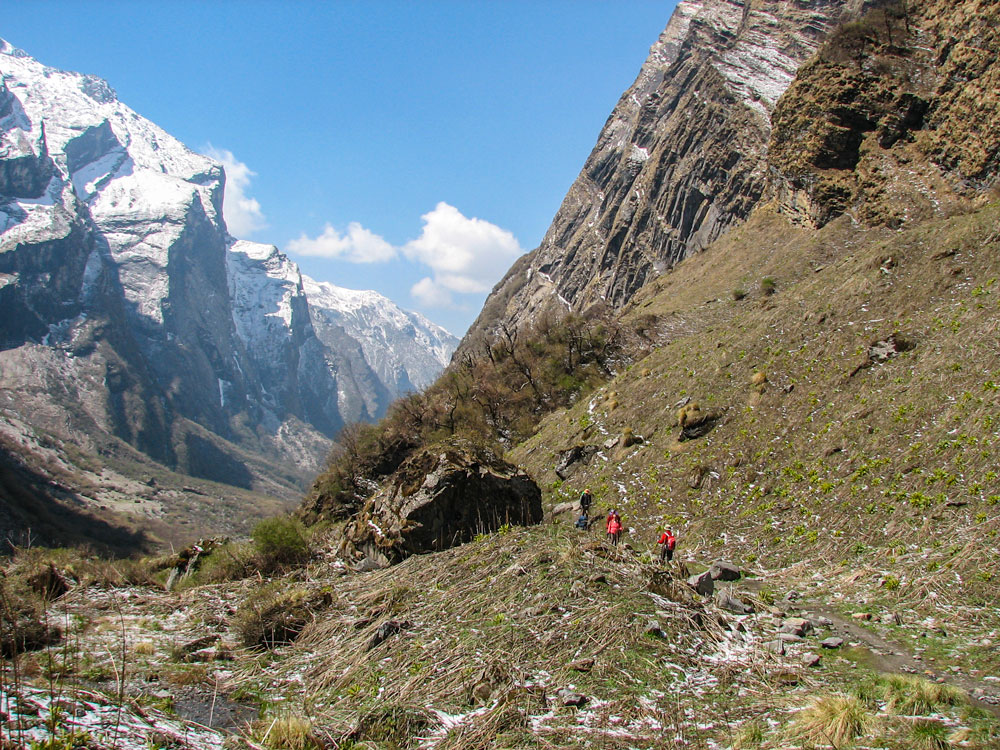
Group Trek: $950–$1,150 Per Person (10 Days)
Includes:
Permits (ACAP + TIMS)
Accommodation (teahouses, 9–10 nights)
All meals (breakfast, lunch, dinner on trekking days)
English-speaking guide (50+ ABC ascents)
One shared porter (if group is 4+)
Jeep Pokhara–trek start–Pokhara
Does NOT include:
Tipping (guide + porter: budget $100–150)
Tourist bus Kathmandu–Pokhara round-trip
Personal gear (boots, backpack, sleeping bag, jacket)
Travel insurance
Amenities (hot showers $3–5, phone charging $2–3)
Domestic flights (available upgrade: +$210 round-trip, saves 12 hours)
Helicopter return (available: +$1,800–$2,200/person, weather dependent)
Who books this: Budget-conscious trekkers, first-time hikers, people testing their fitness, and travellers with tight budgets.
Typical group size: 6–8 people (shared guide and porter lowers the per-person cost significantly)
Best for: First-time trekkers, people focused on the mountain experience over customisation, and anyone new to high-altitude trekking.
Real cost to you: $1,050–$1,300 (including estimated $100–150 tipping)
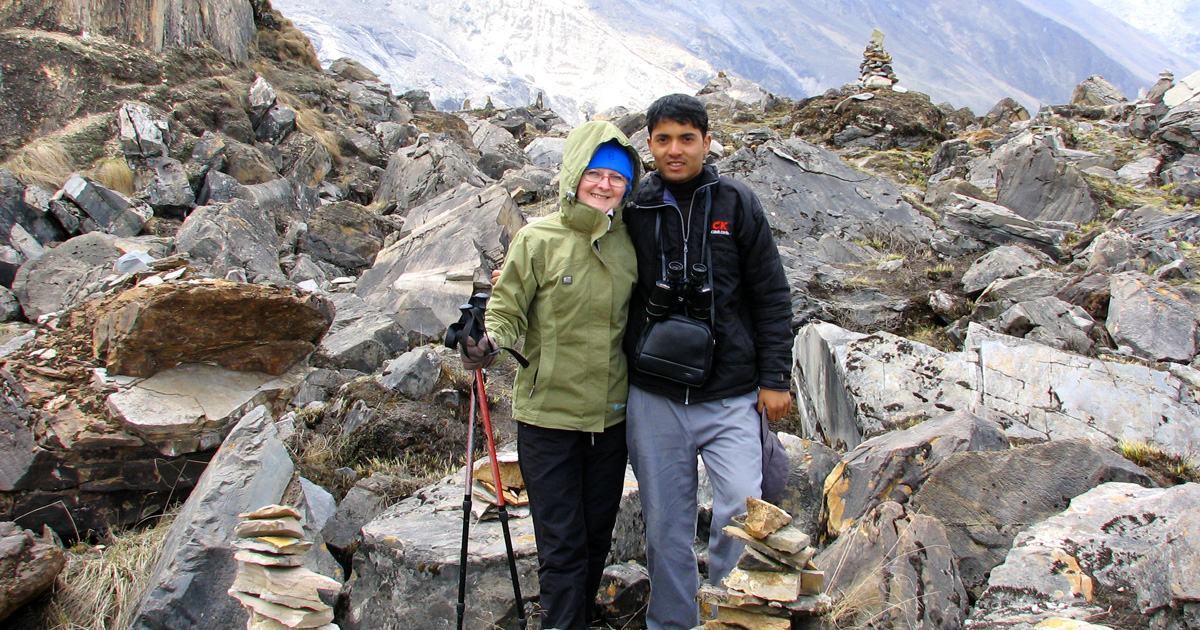
Standard Private Trek: $1,350–$1,550 Per Person (10 Days)
Includes:
Permits (ACAP + TIMS)
Accommodation (better teahouses, more comfortable beds, 9–10 nights)
All meals (guide can request dietary preferences in advance)
Dedicated English-speaking guide (60+ ABC ascents, multi-language)
Dedicated porter
Pre-trek briefing (we call you to discuss fitness, interests, pace preferences)
Route customisation based on your preferences
Jeep Pokhara–trek start–Pokhara
Does NOT include:
Tipping (guide + porter: budget $120–180)
Tourist bus Kathmandu–Pokhara round-trip
Personal gear
Travel insurance
Domestic flights (available upgrade: +$210 round-trip, saves 12 hours total)
Helicopter return (available: +$1,800–$2,200/person, weather dependent)
Who books this: Couples, small groups (2–3 people), trekkers with prior trekking experience, and those who want flexibility and custom pacing.
Typical group size: 2–4 people
Best for: People with trekking experience, those who want a slower pace or custom route adjustments, anyone prioritising guide quality and personal attention, travellers wanting convenience + expertise.
Real cost to you: $1,470–$1,730 (including estimated $120–180 tipping)
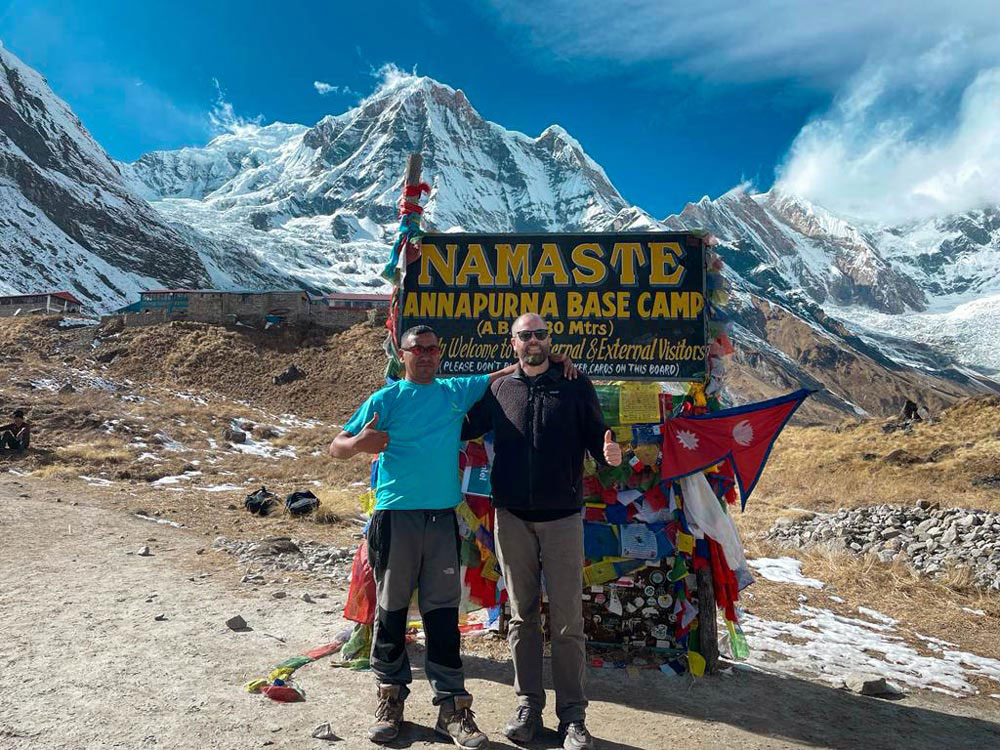
Luxury Private Trek: $1,650–$1,950 Per Person (10 Days)
Includes:
Permits (ACAP + TIMS)
Accommodation (high-end teahouses, best locations, hot showers included, 9–10 nights)
All meals (chef-coordinated with teahouses, dietary accommodations, fresh ingredients)
Expert guide (100+ ABC ascents, advanced wilderness first aid training, high emotional intelligence)
Dedicated porter + optional kitchen porter
Pre-trek consultation with Operations Manager (Naresh Dahal)
Custom itinerary (acclimatisation adjustments, route choices based on fitness/interests, pace flexibility)
Photography guidance from your guide
Post-trek debrief and photo collection
Private jeep Pokhara–trek start–Pokhara
Does NOT include:
Tipping (guide + porter + kitchen porter: budget $150–250)
Domestic flights Kathmandu–Pokhara round-trip (no bus)
Helicopter return option (additional $1,800–$2,200/person, weather dependent)
Travel insurance
Premium personal gear
Who books this: Experienced trekkers with limited vacation time, clients with accessibility needs, those prioritising experience and depth over budget, and anyone wanting deeper cultural immersion and customisation.
Typical group size: 1–2 people
Best for: Quality over budget, limited time, customisation priority, clients wanting flights + all logistics handled + expert guidance.
Real cost to you: $1,800–$2,200 (including estimated $150–250 tipping)
Cost Breakdown Examples: 10-Day Trek (WITH TRANSPORTATION)
Group Trek (6-person group)
Line Item | Cost Per Person |
|---|---|
Permits (ACAP + TIMS) | $50 |
Accommodation (10 nights @ $8) | $80 |
Food (10 days @ $18) | $180 |
Guide share (10 days @ $45, divided by 6) | $75 |
Porter share (10 days @ $27, divided by 6) | $45 |
Tourist bus Kathmandu–Pokhara round-trip | $30 |
Jeep Pokhara–trek start–Pokhara | $20 |
HST Package Total | $480 |
Tipping (estimate) | $100–$150 |
YOUR ACTUAL SPEND | $580–$630 |
Advertised as: $950–$1,150 per person (includes all above)
Private Trek (2-person couple)
Line Item | Cost Per Person |
|---|---|
Permits (ACAP + TIMS) | $50 |
Accommodation (10 nights @ $12) | $120 |
Food (10 days @ $22) | $220 |
Dedicated guide (10 days @ $50) | $500 |
Dedicated porter (10 days @ $28) | $280 |
Tourist bus Kathmandu–Pokhara round-trip | $30 |
Jeep Pokhara–trek start–Pokhara (private) | $100 |
HST Package Total | $1,300 |
Tipping | $120–$180 |
YOUR ACTUAL SPEND | $1,420–$1,480 |
Advertised as: $1,350–$1,550 per person (includes all above)
Note: If a couple upgrades to flights instead of the bus, add $105/person per segment (x2 segments) = +$210 total.
Luxury Private Trek (couple, flights + private transport)
Line Item | Cost Per Person |
|---|---|
Permits (ACAP + TIMS) | $50 |
Accommodation (10 nights @ $15, premium lodges) | $150 |
Food (10 days @ $25, chef-coordinated) | $250 |
Expert guide (10 days @ $60) | $600 |
Dedicated porter (10 days @ $30) | $300 |
Domestic flights Kathmandu–Pokhara round-trip | $210 |
Private jeep Pokhara–trek start–Pokhara | $200 |
HST Package Total | $1,760 |
Tipping | $150–$250 |
YOUR ACTUAL SPEND | $1,910–$2,010 |
Advertised as: $1,650–$1,950 per person (includes all above)
Annapurna Base Camp Trek vs. Other Nepal Treks: Cost Comparison
Trek | Duration | Cost Range | Altitude | Crowding | Best For |
|---|---|---|---|---|---|
ABC (Annapurna Base Camp) | 5–12 days | $950–$1,950/person | 4,130m | Moderate | First-time trekkers, shorter trips, cultural immersion |
Everest Base Camp | 12–15 days | $1,200–$1,800/person | 5,364m | Heavy | Iconic achievement, longer expeditions |
Annapurna Circuit | 14–20 days | $1,100–$1,700/person | 5,416m (pass) | Moderate | Full-circuit experience, diverse ecosystems |
Manaslu Circuit | 14–18 days | $1,300–$2,000/person | 5,106m (pass) | Low | Remote trekking, fewer tourists, raw Himalaya |
Langtang Valley | 7–10 days | $950–$1,650/person | 3,844m | Moderate | Post-earthquake resilience, quick escape from Kathmandu |
Poon Hill (Short) | 3–4 days | $400–$600/person | 3,210m | High | Sunrise addiction, quick mountain fix |
Cost-value analysis:
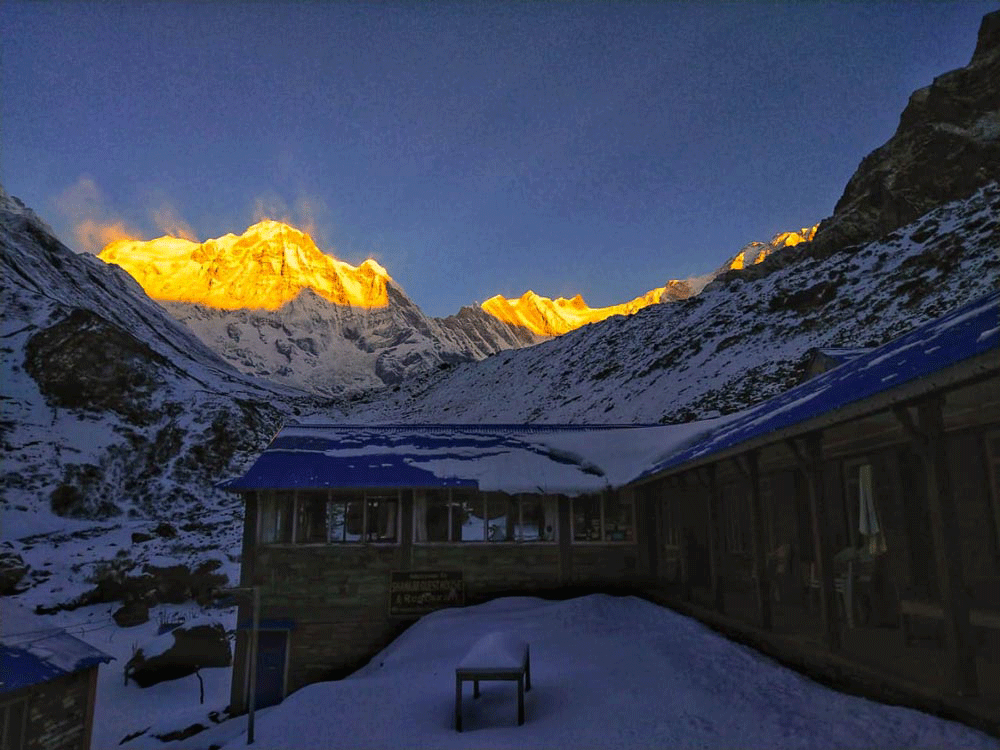
- ABC is the sweet spot: High reward (stunning views of Machapuchare, Modi River Valley, Annapurna South), moderate cost, moderate altitude, short enough for busy travellers.
- Everest is iconic but longer: You're paying for the name as much as the experience. Higher altitude, more logistics, longer commitment.
- Manaslu is the best-kept secret: Similar price to ABC, far fewer crowds, rawer experience, requires more fitness and acclimatisation.
- Langtang is underrated: If you have 10 days and want to skip Pokhara, this beats ABC for accessibility from Kathmandu.
Money-Saving Strategies (Without Cutting Quality)
1. Trek in Shoulder Season (April–May, October–November)
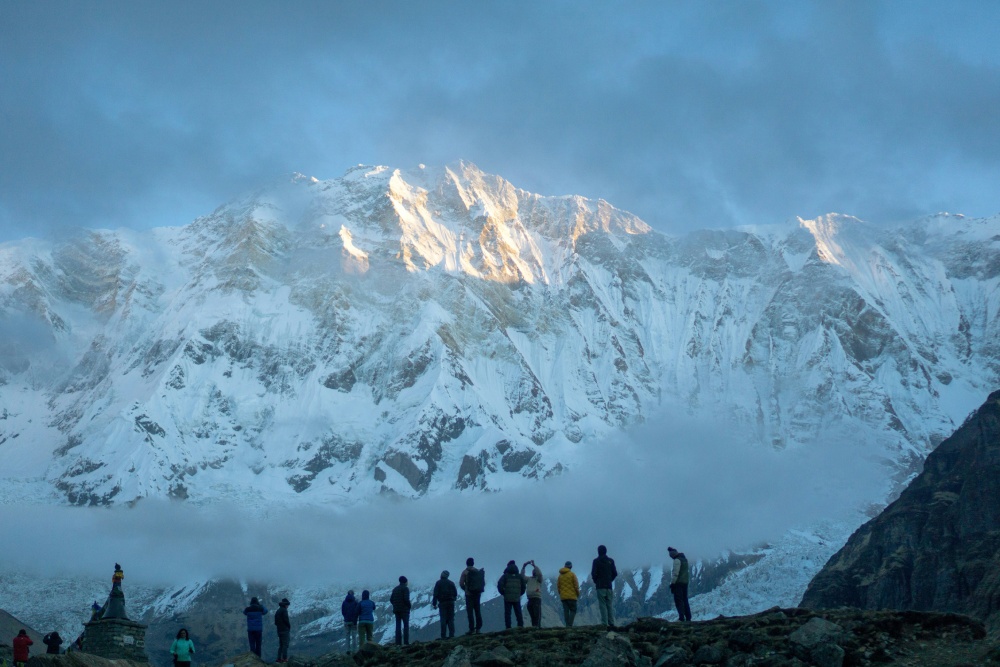
Peak seasons (spring + autumn) see price hikes of 15–20%. Shoulder season = better rates, fewer crowds, good weather.
Saving: 10–15% on all package pricing
2. Book a Group Trek, Not Private
A group trek with HST costs $400–500/person, less than private, and you get the same guide quality, permits, accommodations, AND transportation included.
Saving: $800–$1,000 for a couple
Trade-off: Shared guide and porter, set itinerary, group pace (though good guides adjust for slower members).
3. Skip the Domestic Flight Upgrade
Your package includes a tourist bus (Kathmandu–Pokhara, 7–8 hours). Flights save time but cost extra.
Tourist bus: Included in package
Domestic flight upgrade: +$210 round-trip
Saving: $210 per person if you have time for the bus
Trade-off: 12 extra hours of travel time, but you see rural Nepal. Many people find the bus ride interesting.
4. Bring a Water Filter
A LifeStraw ($25) or similar filter eliminates bottled water costs during the trek and lasts for years.
Saving: $20–30 per trek
Bonus: Reduces plastic waste in the mountains.
5. Skip the Helicopter Return
Walking out from ABC adds 1–2 days but costs nothing. Helicopter return costs $1,800–$2,200/person.
Saving: $1,800–$2,200 per person
Trade-off: More trekking, more time away, but many trekkers say the walk-out is the best part.
What Actually Costs Extra (Beyond Your Package)
Amenities at Teahouses
Charging your phone: $2–$3 per charge (usually from solar panel or diesel generator)
Hot shower: $3–$5 (higher altitude = more expensive; luxury package includes this)
WiFi (if available): $3–$5 for limited connection
Extra blanket: Usually free if you ask; sometimes $1
Total for 10 days: $20–40
Drinking Water
Tap water at teahouses is generally safe (sourced from mountain springs). But:
Bottled water: $1–$2 per litre (prices spike at altitude)
Water purification tablets: $10 for 100 tablets (buy in Kathmandu before trek)
LifeStraw or similar filter: $20–40 upfront, lasts years
Smart move: Bring tablets or a filter. Reduces waste, saves money, and ensures safe water access.
Tipping (Cultural Expectation)
Tipping is customary, not required. But it matters for people who earn modest wages.
Guide: $5–$10 per day (based on quality and your satisfaction)
Porter: $3–$5 per day
Kitchen porter (if hired): $2–$3 per day
Teahouse staff: $1–$2 for the whole trek (optional)
For a 10-day trek: Budget $100–150 total
This money goes directly to them. It's not included in package prices. It's how trekking communities earn a living wage.
FAQs About ABC Trek Costs
Q: What's included in HST package pricing?
A: Permits, accommodation, all meals (on trekking days), guide, porter, transportation (bus Kathmandu–Pokhara round-trip + jeep Pokhara to/from trek start).
NOT included: Tipping, personal gear, travel insurance, amenities (hot showers, charging), domestic flight upgrades, and helicopter returns.
Q: Is transportation from Kathmandu included?
A: No. The HST package doesn't include:
- Tourist bus Kathmandu–Pokhara (round-trip, 7–8 hours each way)
- Flight Kathmandu-Pokhara ($127 per way, 25 min trip)
Q: Can I fly instead of taking the bus?
A: Yes. Domestic flight Kathmandu–Pokhara is $127 one-way (~$254 round-trip). This is an optional upgrade to your package. Flights take 25 minutes, give you scenic views, and save 12 hours of travel time. Worthwhile if you have limited time or prefer not to spend a day on a bus.
Q: Do I really need a porter?
A: No. But walking with a 10 kg bag for 5–6 hours daily at an altitude taxes your knees and energy. A porter ($250–300 for 10 days) lets you enjoy the trek instead of enduring it. For couples or small groups, a shared porter is a good compromise.
Q: Is the water safe?
A: Tap water at teahouses is generally safe (sourced from mountain springs). But altitude affects digestion. Bring purification tablets or a filter as backup. Never drink from rivers.
Q: What if I want to go faster or slower than the itinerary?
A: Tell your guide on day one. Good guides modify the pace based on your fitness. This is one reason guide quality matters—a basic guide sticks to the schedule; a good guide adapts based on your energy and the group's rhythm.
Q: Do I need to tip?
A: No, but it's expected in Nepal's trekking economy. Guides and porters earn modest wages; tips ($50–100 for 10 days) make a real difference to their families. Budget $100–150 for tipping on a 10-day trek.
Q: When is the best time to trek ABC?
A:
Spring (March–May): Clear views, rhododendrons blooming, warmer days. Busiest season.
Autumn (September–November): Clearest views, fewest crowds, stable weather. Recommended.
Summer (June–August): Monsoon rains, views obscured, lowest prices, emptiest trails.
Winter (December–February): Cold, possible snow at base camp. Cheapest, loneliest, requires strong preparation.
Q: Can I trek ABC alone?
A: Yes, but you need a guide. Guides are required by law in Nepal for foreign trekkers in protected areas. A guide costs $30–50/day. A solo trek with a guide typically costs $1,200–$1,400 for 10 days (group rates apply).
Q: What's the difference between a group trek and a private trek?
A:
Group trek: You join 4–8 other trekkers, share a guide and porter, save money ($950–$1,150/person), build community with other trekkers, fixed itinerary.
Private trek: Your own guide and porter, custom pace and route, more expensive ($1,350–$1,950/person), complete flexibility, personalised attention.
Q: Is ABC harder than Poon Hill?
A: Yes. Poon Hill (3,210m) is a 3–4 day hike. ABC (4,130m) requires 5–10 days and involves genuine trekking fitness. ABC altitude is moderate but cumulative—most people feel it by day 4–5.
Q: Can I get altitude sickness on ABC?
A: Yes, but it's less common than on EBC (5,364m). At 4,130m, mild headache or fatigue is normal. Serious AMS is rare if you ascend slowly. Our guides watch for symptoms and adjust pace accordingly. The altitude is manageable for most people with basic fitness.
Q: Will I have WiFi on the trek?
A: Limited. Some teahouses have WiFi (weak, $3–5/day). Most villages have no signal. Plan to disconnect. This is often the best part—your mind gets quiet, and you notice the mountains.
Q: What if the weather is bad and I can't reach ABC?
A: It happens. Your guide has the authority to turn back if the weather is unsafe. You don't pay less if you turn back early—you've paid for access and logistics, not a guaranteed summit. Most treks succeed, but safety is non-negotiable.
Why HST?
We're not the cheapest operator. We're the operator who knows which teahouse owner has been feeding trekkers for 20 years, which guide has walked ABC 70+ times, and which route gets you in front of Machapuchare at sunrise.
We're also the operator who'll tell you if ABC isn't right for you. If you have 14 days and want fewer crowds, we pitch Manaslu. If you want raw Himalaya without the expense, we offer Langtang. We don't sell treks; we match people to mountains.
What you get with HST:
Pre-trek briefing: We call you (or email) before your trek to understand your fitness, interests, and preferences. This shapes your guide choice and route.
Guide expertise: Our guides average 60+ ABC ascents. Many speak 2–3 languages. They're not hired guns; they're invested in your experience because we send the same guides repeatedly.
Lodge curation: We work with specific teahouse families we trust. Not all lodges are on our list. Families we use typically host our trekkers repeatedly because we refer consistently and pay fairly.
Altitude management: Our guides adjust pace and meals based on your acclimatisation. This reduces AMS risk and increases enjoyment.
Cultural access: Because we've walked these villages repeatedly, we have relationships. Your guide can facilitate conversations with local families, not just point at them.
Transportation handled: You don't book buses separately or worry about logistics. We manage everything from Kathmandu arrival to trek return.
Post-trek support: You get photos, a debrief, and recommendations for your next trek (Manaslu? Everest? Bhutan?).
Related Reads
- Annapurna Base Camp Trek via Poon Hill — Two Iconic Views, One Trek
- Short Annapurna Base Camp Trek — 5 Days from Pokhara to the Sanctuary
- Manaslu Circuit Trek — 14 Days Around the World's 8th Highest Peak (alternative if you want fewer crowds)
- Langtang Valley Trekking (quick escape from Kathmandu)
- Everest Base Camp Trek — 15 Days (if you want the icon)
- Manaslu Circuit Trek Cost 2026: Permits, Guides & Complete Budget Breakdown
Final Word
The Boston couple who walked out instead of helicoptering left with a dozen photos they'll never publish, and memories they'll revisit forever.
Cost them $1,900 instead of $1,500.
Best money they ever spent.
That's what cost actually means on a trek. It's not the number—it's what you get in return, and whether you're willing to pay for depth.