Plan your Tsum Valley trek with our comprehensive cost breakdown. Understand expenses and budget effectively for your adventure. Read more to prepare!
Tsum Valley Trek Cost 2026: Permits, Guides & Complete Budget Breakdown
Table of Contents
I have walked into Tsum Valley more times than I can easily count — first with a small group in 2016, then repeatedly as a route I trust enough to send clients on without coming along myself. The first question is always the same. Not about the monasteries. Not about Mu Gompa or the Tsumba people or the silence that sits over the valley like something deliberate. It's always about cost.
Here's the direct answer: HST runs the 12-day Tsum Valley trek from $999 per person on group departures, fully inclusive of permits, guide, porter, all meals on trek, shared bus transport, and evacuation support. Across the market, you'll see this trek quoted at $1,200–$1,800 per person for group and $1,800–$2,500 privately.
The range is real because the variables are real. Season moves the permit cost. Group size moves the guide, and transport costs more than anything else. And the specific itinerary — Tsum Valley only, or the full Manaslu combo — shifts the number significantly.
What makes Tsum Valley different from anything else in Nepal isn't just the landscape. It's only a few thousand trekkers who enter each year. The valley exists on its own terms. The permit system, the mandatory guide, the restricted area classification — these aren't obstacles. They're what keep it this way. I break down every cost below so you can plan without surprises.
Why Understanding the Tsum Valley Trek Cost Matters
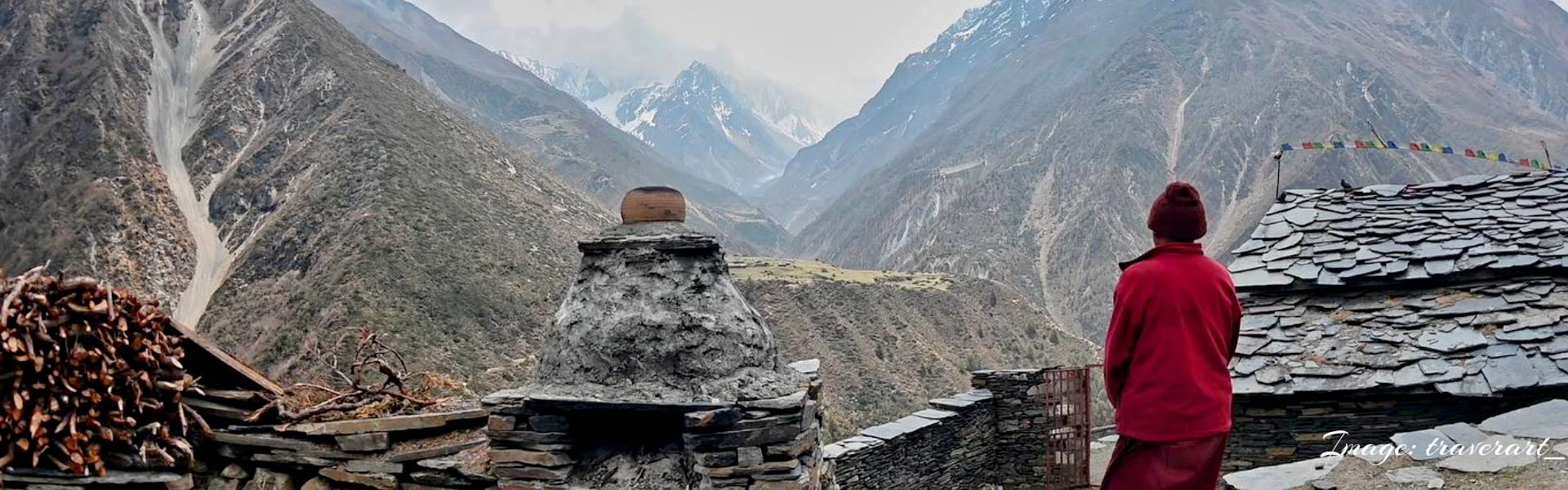
Tsum Valley sits in northern Gorkha, near the Nepal-Tibet border. It only opened to foreign trekkers in 2008 and remains one of Nepal's most tightly controlled restricted areas. That classification shapes the entire cost structure.
Unlike Annapurna or the Everest region, you cannot self-arrange this trek. You cannot pick up a permit at a checkpoint. A licensed guide is mandatory — not a recommendation, a legal requirement. And the infrastructure in the valley itself is genuinely basic: fewer tea houses, longer gaps between villages, supply chains that push food prices up at elevation.
Understanding the cost isn't about finding ways to reduce it. It's about knowing exactly where the money goes, so you're not caught off guard at the permit office and not under-budgeted halfway into the valley.
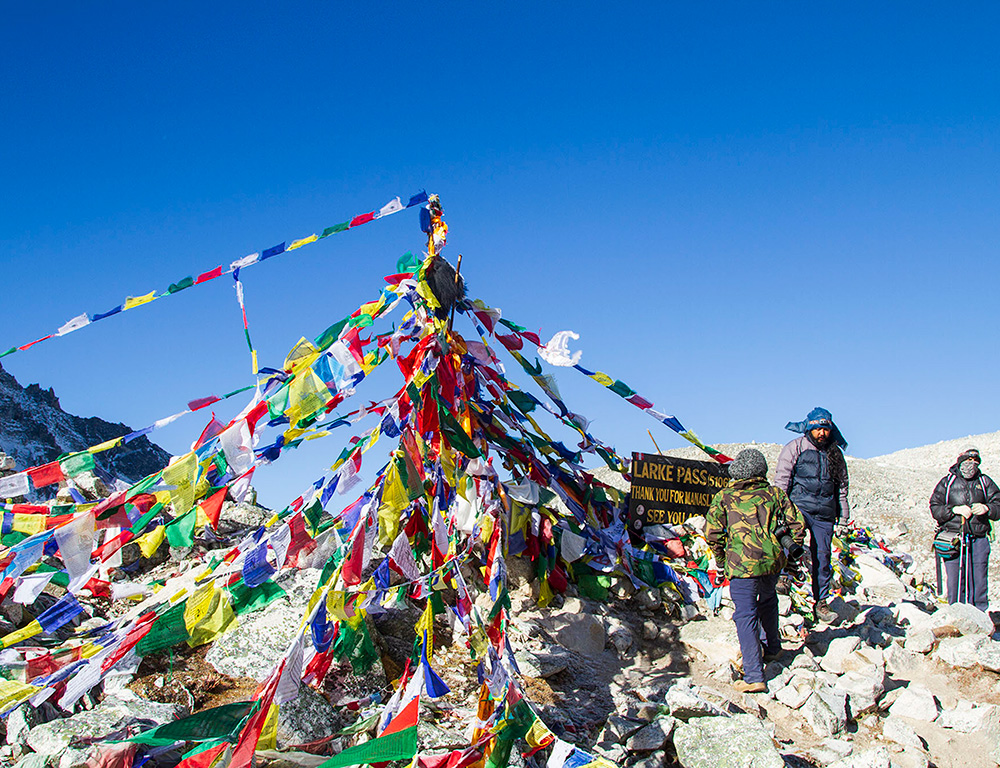
The standard itinerary is 12 days for Tsum Valley alone. Combined with the Manaslu Circuit, it runs 20–22 days, crossing Larkya La Pass at 5,160 metres.
12-Day Tsum Valley Trek Cost Breakdown (Per Person, USD)
| Expense | Market Range (Group) | Market Range (Private) |
|---|---|---|
| Permits (Tsum RAP, MCAP, ACAP, Chumnubri) | 91–105 | 91–105 |
| Guide (12 days) | 100–175 (shared) | 350–500 (dedicated) |
| Porter (12 days) | 75–150 (shared) | 250–380 (dedicated) |
| Meals & Lodging | 300–450 | 300–450 |
| Transport (Kathmandu ↔ trailhead) | 70–140 | 250–350 |
| Miscellaneous (tips, snacks, extras) | 100–150 | 100–150 |
| Market Total | $736–1,170 | $1,341–1,935 |
HST Group Package — $999 per person (single supplement: $350)
Included in the Cost
Three meals per day during the trek (breakfast, lunch, and dinner)
Shared teahouse/lodge accommodation during the trek
All required permits:
Manaslu Conservation Area Permit (MCAP)
Tsum Valley Restricted Area Permit (RAP)
Manaslu Restricted Area Permit
Shared local bus transportation between Kathmandu and Machhakhola (round trip)
English-speaking licensed trekking guide
Salary
Food
Accommodation
Transportation
Insurance
One porter for every two trekkers
Salary
Food
Accommodation
Transportation
Insurance
Twice-daily oxygen saturation (oximeter) monitoring
Basic medical kit
Trekking map
Trekking hat
Duffel bag for the trek
Trip completion certificate
Evacuation coordination and management, if required
Not Included in the Cost
Hotel accommodation in Kathmandu
Meals in Kathmandu
Nepal visa fee
Personal expenses
Alcoholic and non-alcoholic beverages
Private transportation
Tips for guides, porters, and staff
Check current group departure dates →
Permit Costs for the Tsum Valley Trek
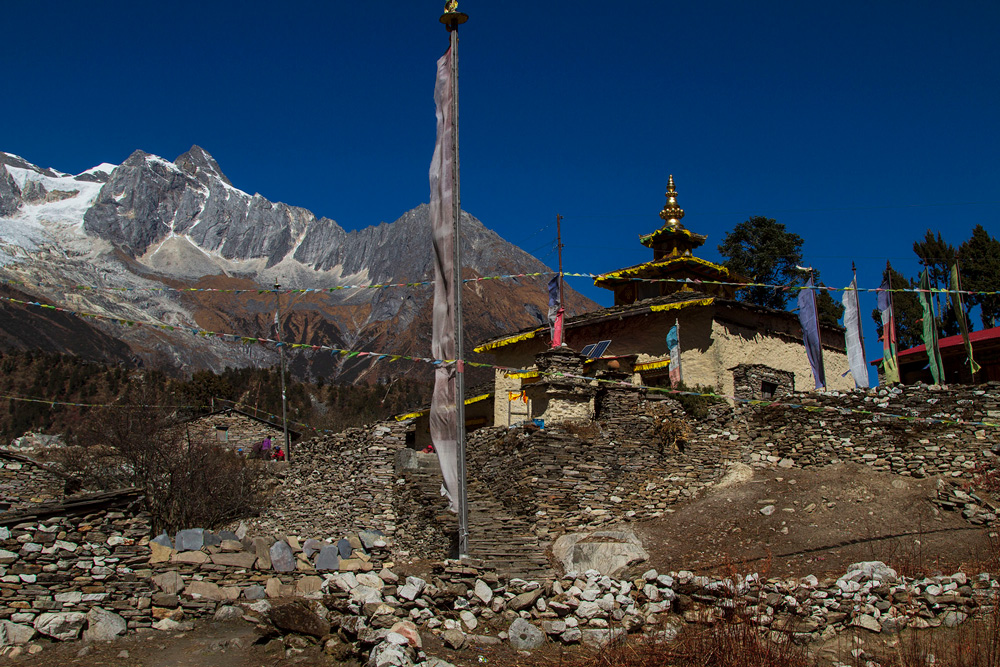
Tsum Valley is a restricted area. Five permits are required, and all restricted permits must be processed through a registered trekking agency in Kathmandu. You cannot obtain them independently.
For a full breakdown of the application process, see our Tsum Valley Trek permits guide.
1. Tsum Valley Restricted Area Permit (RAP)
Issued through the Department of Immigration in Kathmandu, through a registered agency only.
- Sep–Nov (Autumn): USD 40 per person for the first week, then USD 7 per additional day
- Dec–Aug (Winter/Spring/Summer): USD 30 per person for the first week, then USD 7 per additional day
For a 12-day trek in autumn: $40 + (5 × $7) = $75. In winter: $30 + (5 × $7) = $65.
(You may see $70 quoted as a flat RAP figure elsewhere. That is outdated and incorrect — it conflates two permits or references a superseded fee structure.)
2. Manaslu Conservation Area Permit (MCAP)
USD 30 per person (NRs 3,000). Flat fee, no daily surcharge, valid for the full trek. Obtainable through the Nepal Tourism Board offices in Kathmandu or Pokhara.
3. Annapurna Conservation Area Permit (ACAP)
USD 30 per person (NRs 3,000). Required because most Tsum Valley itineraries exit through Dharapani, entering the Annapurna Conservation Area on the return. Same flat-fee structure.
4. Chumnubri Rural Municipality Permit
Approximately USD 15 per person, paid in NPR. This permit is frequently missing from cost articles. It funds local infrastructure — trails, schools, village services — within the Chumnubri area, which the Tsum Valley route passes through. It is mandatory, not optional.
5. Manaslu Restricted Area Permit (MRAP) — if combining with Manaslu Circuit
- Sep–Nov: USD 100 for the first week, then USD 15 per additional day
- Dec–Aug: USD 75 for the first week, then USD 10 per additional day
Travel Insurance
Must cover high-altitude trekking and helicopter evacuation to 6,000 metres. Since March 2026, your RAP will not be issued without proof of qualifying insurance. Budget $30–$80 depending on duration and provider.
Total permits (Tsum Valley only, off-peak): ~$91–95 per person
Total permits (Tsum Valley only, peak season): ~$101–105 per person
All permits are included in HST's $999 package price.
Major Factors That Affect the Tsum Valley Trek Cost
Trek Duration — The Biggest Variable
A 12-day Tsum Valley-only itinerary is the standard. The 20–22 day combination with the Manaslu Circuit adds Larkya La Pass and significantly more terrain. Each extra day adds $80–130 in permits, meals, and lodging — and requires the MRAP on top of the Tsum Valley RAP.
My recommendation: 12 days is the right length for Tsum Valley alone. It gives you a full day at Mu Gompa (3,700m), time in Chhokangparo, and enough buffer for weather without feeling rushed. If you're going to combine it with Manaslu, don't compress it. The combination deserves 20 days minimum.
Group Trek vs. Private Trek
Group-Joining Trek — from $999 per person (HST)
Share a guide with other trekkers
Shared porters
Fixed departure dates
Social, efficient, economical
Less flexibility on pace or rest days
Private Trek ($1,800–$2,500 for 12 days)
Dedicated guide and porter(s)
Custom itinerary and pace
Your own transport and timing
Full flexibility at every decision point
Ideal for couples, families, photographers, or trekkers with specific interests
The decision between group and private comes down to how you travel, not how much you want to spend. I've seen people on group treks in Tsum Valley have experiences that are genuinely transformed by the other trekkers they meet. I've also seen people who needed the quiet of a private trek to actually absorb where they were. Know yourself.
Season — Affects Permit Fees and Daily Costs
Autumn (Sep–Nov):
Permit premium: RAP costs $40/week vs $30 off-season
Teahouse meals: slightly higher due to peak demand
Best weather, best mountain clarity, most tea houses open
Busy by Tsum Valley standards, which still means very few people
Winter/Spring (Dec–May):
Permit discount: RAP at $30/week
Meals cheaper across the valley
Fewer trekkers — more solitude, quieter monasteries
March and April bring rhododendron to the lower sections
Monsoon (Jun–Aug):
Avoid unless you have a specific reason and local knowledge. The route through the Budhi Gandaki involves river crossings and exposed sections that become serious in heavy rain.
For full seasonal planning, see our best time to trek Tsum Valley guide.
Daily Expenses During the Trek
Meals
Cost: $15–25 per day, depending on elevation and season. The higher you go, the more food costs — everything above Chumling is carried in.
Included in HST's $999 package — breakfast, lunch, and dinner throughout the trek. If you're trekking independently or with another operator, budget $15–25 per day. The higher you go, the more food costs — everything above Chumling is carried in.
Dal bhat in the lower valley is the right call. Filling, always available, unlimited refills in most places. Above Chhokangparo, the menu narrows. At Mu Gompa itself, you eat what the lodge provides. This is not a complaint — the simplicity matches the place. Bring your own snacks for the upper valley, regardless.
Lodging
Cost: $4–12 per night.
Included in HST's $999 package — shared lodge accommodation throughout. Independent budget: $4–12 per night. Basic shared rooms in most tea houses. Single rooms exist at the larger lodges in Chumling and Chhokangparo.
The lodges are clean. After a full day of walking through Tsum, the simplicity of the room doesn't register until morning.
For what to expect at each stop, see our Tsum Valley teahouses guide.
Drinks and Snacks
Cost: $4–8 per day. Tea, milk tea, butter tea. Butter tea divides people — I always drink it, because refusing it in someone's home in Tsum feels like the wrong choice. Bring good chocolate and a filter water bottle. Bottled water is available, but it gets expensive above Chumling.
Not included in the HST package — this is your main on-trail expense. Budget $4–8 per day for tea, water, and snacks. Bring a filter water bottle — bottled water is available, but gets expensive above Chumling. Butter tea is offered in homes along the upper valley; I always drink it.
Guide and Porter Fees
Included in HST's $999 package. For independent context: a licensed guide costs $35–50 per day, all-inclusive (their food, lodging, transport, insurance). A porter runs $25–35 per day carrying 20–25 kg.
The guide requirement in Tsum Valley is not bureaucratic overhead. Checkpoints at Jagat and the Tsum Valley entry point are thorough — permit names are cross-referenced against passports, and since May 2026, Nepal's digital tracking system logs your details at each gate. A good guide manages all of this without friction.
Beyond logistics, the guide is the difference between walking through Tsum Valley and actually being in it. The monasteries along this route — Rachen Gompa, Mu Gompa — are not tourist sites. They are active religious institutions. Whether you get to sit with monks, whether anyone speaks to you, whether you understand what you're looking at — all of this depends on who is walking with you and what relationships they've built here over the years.
I select our Tsum Valley guides personally. Character comes before credentials. The ability to create a moment of real connection between a client and a monastery that has existed for four centuries is not something you find on a CV.
Tipping: Tips are not included and not mandatory, but are genuinely appreciated. After a 12-day trek, $150–200 for the guide and $100–150 per porter is standard. We suggest allocating 5–10% of the total package price.
Two Ways to Trek Tsum Valley — and What Each Costs
Option 1: Tsum Valley Only — 12 Days
The focused itinerary. In through the Budhi Gandaki, north into Tsum, up to Mu Gompa, and back out. No Larkya La, no Manaslu Circuit. Just the valley.
| Day | Route | Overnight |
|---|---|---|
| 1 | Drive Kathmandu → Machhakhola (869m) | Machhakhola |
| 2 | Trek Machhakhola → Jagat (1,340m) | Jagat |
| 3 | Trek Jagat → Lokpa (2,240m) | Lokpa |
| 4 | Trek Lokpa → Chumling (2,386m) | Chumling |
| 5 | Trek Chumling → Chhokangparo (3,031m) | Chhokangparo |
| 6 | Trek Chhokangparo → Nile (3,361m) | Nile |
| 7 | Trek Nile → Mu Gompa (3,700m), return to the Nile | Nile |
| 8 | Trek Nile → Chhokangparo | Chhokangparo |
| 9 | Trek Chhokangparo → Lokpa | Lokpa |
| 10 | Trek Lokpa → Jagat | Jagat |
| 11 | Trek Jagat → Machhakhola | Machhakhola |
| 12 | Drive Machhakhola → Kathmandu | — |
Cost for this itinerary:
- Group trek: $1,200–$1,500 per person
- Private trek: $1,800–$2,200 per person
Option 2: Tsum Valley + Manaslu Circuit — 20–22 Days
The full picture of the Manaslu region. Tsum Valley first, then rejoin the circuit at Deng, continue to Samagaon, cross Larkya La, and exit at Dharapani. This is the route I recommend to anyone who has the time. The two sections complement each other in ways that are hard to explain until you've done both.
| Day | Route | Overnight |
|---|---|---|
| 1 | Drive Kathmandu → Machhakhola | Machhakhola |
| 2 | Trek → Jagat | Jagat |
| 3 | Trek → Lokpa | Lokpa |
| 4 | Trek → Chumling | Chumling |
| 5 | Trek → Chhokangparo | Chhokangparo |
| 6 | Trek → Nile | Nile |
| 7 | Trek → Mu Gompa, return to Nile | Nile |
| 8 | Trek → Chhokangparo | Chhokangparo |
| 9 | Trek → Gumba Lungdang (3,400m) | Gumba Lungdang |
| 10 | Hike to Ganesh Himal Base Camp (4,900m), return | Gumba Lungdang |
| 11 | Trek → Deng (1,860m) | Deng |
| 12 | Trek → Namrung (2,630 m) | Namrung |
| 13 | Trek → Samagaon (3,520m) | Samagaon |
| 14 | Acclimatisation — Birendra Lake or Pungyen Gompa | Samagaon |
| 15 | Trek → Samdo (3,860m) | Samdo |
| 16 | Acclimatisation — hike toward Rui La (4,998m) | Samdo |
| 17 | Trek → Dharamshala (4,460m) | Dharamshala |
| 18 | Cross Larkya La Pass (5,160m) → Bhimthang (3,590m) | Bhimthang |
| 19 | Trek → Dharapani (1,960m) | Dharapani |
| 20 | Drive → Kathmandu | — |
Cost for this itinerary:
- Group trek: $1,800–$2,500 per person
- Private trek: $2,500–$3,200 per person
See the full Manaslu Circuit Tsum Valley Trek package for current group departure dates.
Transportation Cost for the Tsum Valley Trek
Getting to the Trailhead
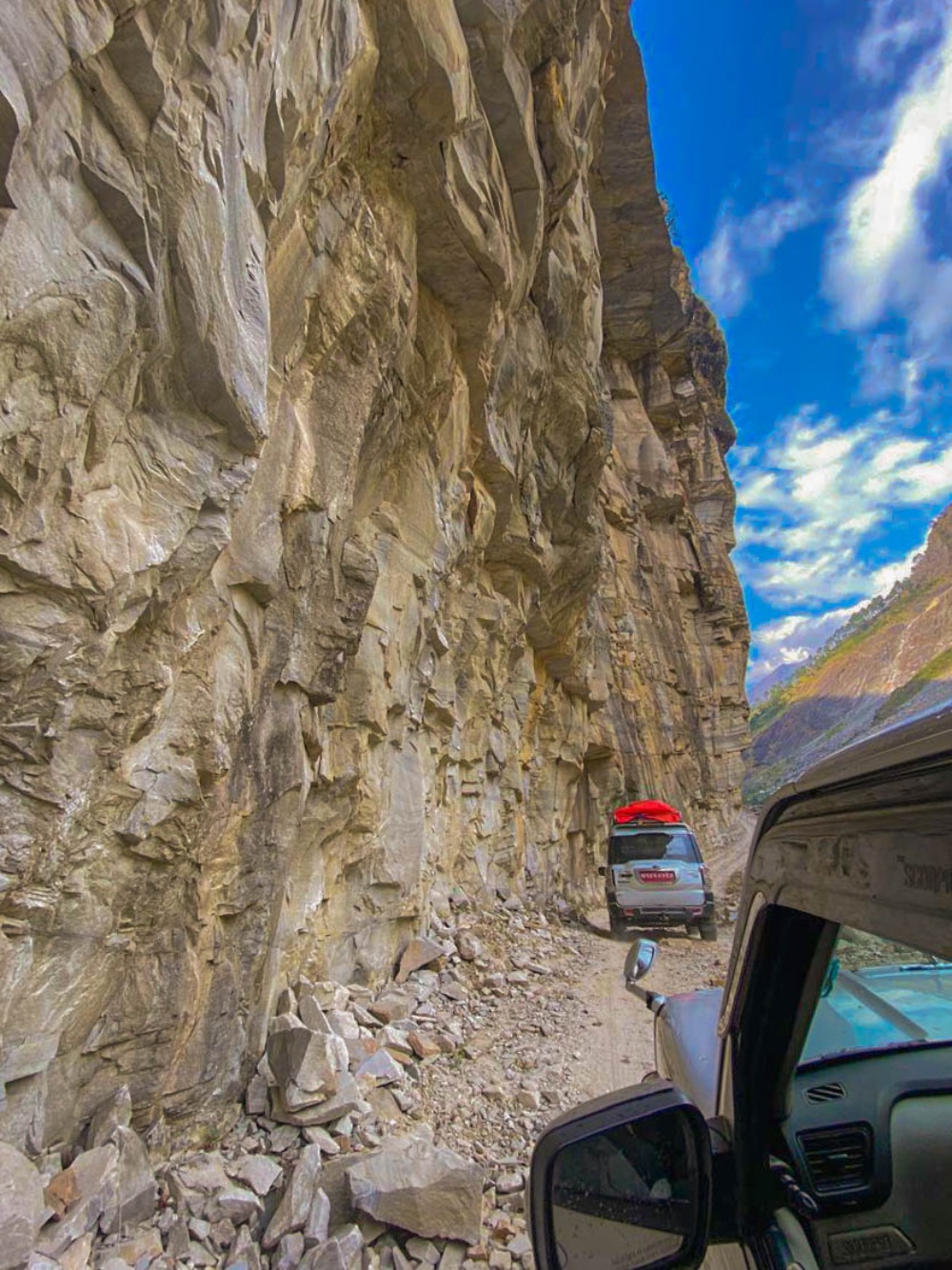
Most Tsum Valley itineraries start from Machhakhola, roughly 7–8 hours from Kathmandu. I've done this drive in every condition the road can produce. Private jeep is the correct choice for clients — not for comfort alone, but because arriving at the trailhead without 7 hours of bus fatigue makes day one a real walking day instead of a recovery day.
| Route | Public Bus | Private Jeep (whole vehicle) |
|---|---|---|
| Kathmandu → Machhakhola | $10–15/person | ~$280 |
| Kathmandu → Jagat | Not available | ~$350 |
A group of four splitting a private jeep pays roughly $70/person — the same as a bus ticket, but on your own schedule and without the stops.
Starting from Jagat, cuts two days of walking from the itinerary. The road to Jagat is rough,r and I only recommend it with a driver who knows it. For trekkers with limited time, it's worth considering.
Return from the Trek
For a Tsum Valley-only itinerary, you return to Machhakhola and drive back to Kathmandu.
- Shared jeep: $20–30/person, unpredictable timing
- Private jeep: ~$280, direct and on your schedule
For the Manaslu combo, you exit at Dharapani and drive from Tilche.
- Shared jeep (Dharapani → Kathmandu): $25–35/person
- Private jeep: ~$450 direct
After 12 or 20 days on the trail, book the private jeep back. It costs more. It is worth it completely.
Tsum Valley vs. Manaslu Circuit Trek: Which Should You Choose?
| Feature | Tsum Valley Trek | Manaslu Circuit Trek |
|---|---|---|
| Main Focus | Tibetan Buddhist culture, monasteries, and traditional villages | Mountain scenery, varied terrain, high mountain pass |
| Best For | Cultural travellers, photographers, and slower-paced trekkers | Adventure trekkers seeking a complete Himalayan circuit |
| Typical Duration | 10–14 days | 14–18 days |
| Combined Route | Usually combined with Manaslu for 18–24 days | Can be completed alone or combined with Tsum Valley |
| Highest Altitude | Mu Gompa (3,700 m) | Larkya La Pass (5,160 m) |
| Difficulty Level | Moderate | Moderate to challenging |
| Altitude Risk | Relatively low | Higher due to Larkya La crossing |
| Trail Type | Out-and-back valley route | Full mountain circuit |
| Cultural Experience | Exceptional. Ancient Tibetan Buddhist communities, monasteries, chortens, mani walls, and traditional lifestyles remain largely unchanged. | Strong cultural experience in lower villages, but the trek gradually becomes more focused on alpine landscapes and mountain crossings. |
| Scenery | Deep valleys, Buddhist sites, remote villages, prayer flags, and monastery complexes. | River gorges, glaciers, alpine meadows, Manaslu views, and high mountain landscapes. |
| Monasteries | The main attraction. Mu Gompa, Rachen Gompa, and several smaller monasteries are key highlights. | Samagaon Monastery and a few village monasteries, but culture is secondary to the trekking experience. |
| Mountain Views | Good views of Ganesh Himal and surrounding peaks. | Outstanding views of Manaslu, Himlung Himal, Cheo Himal, Kang Guru, and Annapurna II. |
| Acclimatization Opportunities | Less demanding altitude profile. | Acclimatisation hikes to Manaslu Base Camp (4,800 m) and Birendra Lake are major highlights. |
| Trail Traffic | Very quiet. Often, there are only a handful of trekkers each day. | More trekkers than in Tsum Valley, but still far less crowded than Everest or Annapurna. |
| Accommodation | Basic teahouses and monastery guesthouses. | Better-developed teahouse network throughout the route. |
| Physical Challenge | Moderate daily walking with gradual altitude gain. | Longer trekking days, steeper terrain, and a demanding pass crossing. |
| Permit Requirements | Restricted Area Permit, Manaslu Conservation Area Permit (MCAP), and Annapurna Conservation Area Permit (ACAP), where applicable. | Same permit structure as Tsum Valley. |
| Budget | Generally lower due to shorter duration. | Higher due to additional trekking days and logistics. |
| Who Will Enjoy It Most? | Travellers interested in culture, spirituality, local life, and remote Himalayan communities. | Trekkers looking for a classic Himalayan circuit with diverse terrain and a major high-pass crossing. |
My Recommendation
| If You Have... | Choose... | Why |
|---|---|---|
| 10–12 days | Tsum Valley Trek | The route fits comfortably within the timeframe. Rushing the Manaslu Circuit is not recommended. |
| 14–18 days | Manaslu Circuit Trek | You can complete the circuit properly, including acclimatisation days. |
| 20–24+ days | Tsum Valley + Manaslu Circuit | This is the most complete version of the region. You experience both the cultural heart of Tsum and the dramatic landscapes of the Manaslu Circuit. |
| Interested in monasteries and local culture | Tsum Valley | The monasteries and Tibetan heritage are the main reasons to visit. |
| Interested in mountain scenery and challenge | Manaslu Circuit | The landscapes, glaciers, and Larkya La crossing are the highlights. |
| Want the fullest experience of the region | Both Together | The combined trek offers culture, scenery, high-altitude trekking, and some of Nepal's most remote villages in a single journey. |
Bottom line: Tsum Valley is about culture and preservation. Manaslu Circuit is about scale and adventure. If time allows, the combined Tsum Valley and Manaslu Circuit Trek delivers one of the most complete trekking experiences in Nepal outside of technical mountaineering routes.
How to Reduce the Tsum Valley Trek Cost
Trek in Winter or Early Spring (Dec–May). The RAP drops from $40 to $30 per week. Teahouse meals cost less. Over 12 days, you save $150–200 per person without losing anything significant from the experience.
Join a Group Trek. A shared guide across 4–8 trekkers cuts your per-person guide cost by 60–70% compared to a private guide. Tsum Valley is a route where group dynamics tend to be good — the type of trekker it attracts is not the Annapurna tourist crowd.
Trek 12 Days, Not More. The 12-day itinerary covers everything that matters in Tsum Valley. Adding days doesn't add proportional experience in the upper valley — the highest point is Mu Gompa, and there's limited terrain above it.
Carry Snacks from Kathmandu. Above Chumling, energy bar prices climb with the altitude. Stock up in Thamel before you leave.
Use a Filter Bottle. Bottled water costs $1–3 at lower elevations and $3–5 at higher elevations. A quality filter bottle costs nothing per litre and eliminates the plastic.
What not to cut: Insurance (legally required for the permit), guide quality, and the time to do the route properly. Arriving at Mu Gompa a day early because you rushed the approach is not how this trek should end.
Small Costs That Add Up (Don't Ignore These)
Drinks on trail: Not included in the HST package. Budget $4–8 per day for tea, water, and snacks. This is your primary variable expense on trek.
Kathmandu hotel and meals: Not included. Budget $40–80/night for a mid-range hotel in Thamel, plus meals.
Nepal visa: USD 30 (15 days), USD 50 (30 days), USD 125 (90 days) on arrival at Tribhuvan International Airport.
Charging and Wi-Fi: Available at most tea houses but charged per hour above Chumling. Carry a power bank — minimum two full phone charges.
Hot showers: $2–4 per shower at lower elevations. Above Chumling, bucket showers or nothing.
Monastery donations: Not mandatory, never expected. If a monk spends time showing you around Rachen Gompa or Mu Gompa, contributing to the monastery's upkeep is the right thing to do.
Tips: Not included, not mandatory, genuinely appreciated. Guide: $150–200 for 12 days. Porter: $100–150 per porter. We suggest 5–10% of the total package price as a rough guide.
Quick Cost Summary: What to Budget For
| Expense | Cost (USD) |
|---|---|
| HST Group Package (all-in) | $999 per person |
| Single supplement | $350 |
| Private transport upgrade (jeep, split 4 ways) | ~$70–90/person |
| Kathmandu hotel (per night, mid-range) | $40–80 |
| Nepal visa | $30–125 depending on duration |
| Drinks on trail | $4–8/day |
| Monastery donations | Your call |
| Tips (guide + porter) | $250–350 total |
| Travel insurance | $30–80 |
| Realistic all-in total (group, 12 days) | ~$1,400–1,600 per person |
Private trek (12 days): $1,800–$2,200 per person
Manaslu + Tsum Valley combo (20 days): $1,800–$3,200 depending on group size and season
FAQs
Q: What permits do I need for the Tsum Valley Trek?
Five permits are required: the Tsum Valley Restricted Area Permit, the Manaslu Conservation Area Permit (MCAP), the Annapurna Conservation Area Permit (ACAP), the Chumnubri Rural Municipality permit, and — if combining with the Manaslu Circuit — the Manaslu Restricted Area Permit (MRAP). All restricted permits must be arranged through a registered trekking agency in Kathmandu.
Q: Can I trek Tsum Valley solo?
As of March 22, 2026, solo trekkers can obtain a Restricted Area Permit without needing a second participant. A government-licensed guide is still mandatory throughout — this has not changed. A guide is a legal requirement, not a recommendation.
Q: How much does the Tsum Valley permit cost in 2026?
The Tsum Valley RAP costs USD 40 per week in peak season (September–November) and USD 30 per week off-season (December–August), plus USD 7 per additional day beyond the first week.
Q: Is a TIMS card required for Tsum Valley?
No. The restricted area permits a substitute for the TIMS card on this route.
Q: What is the Chumnubri permit, and why is it required?
It is a local government permit required for all trekkers entering the Chumnubri Rural Municipality, which includes the Tsum Valley route. It costs approximately USD 15 per person and funds local infrastructure. Many cost guides omit it. It is mandatory.
Q: What does HST's Tsum Valley Trek package include at $999?
The $999 group price covers three meals a day during the trek, shared lodge accommodation, all permits (MCAP, Tsum Valley RAP, and restricted area entry), shared bustransport from Kathmandu to Machhakhola and return, an English-speaking licensed guide, one porter per two trekkers, oximeter monitoring twice daily, a medical kit, and evacuation management. Excluded: Kathmandu hotel, Nepal visa, personal expenses, drinks, and tips. Single supplement is $350.
Q: Is Tsum Valley cheaper than the Manaslu Circuit?
The 12-day Tsum Valley-only trek costs slightly less than the full 14-day Manaslu Circuit, primarily because permit fees are lower and the itinerary is shorter. The combined route costs more than either alone. See our Manaslu Circuit Trek cost breakdown for a direct comparison.
Q: Is travel insurance required?
Yes. Since March 2026, the RAP will not be issued without travel insurance that explicitly covers helicopter evacuation to 6,000 metres. This is a regulatory requirement, not an agency policy.
Conclusion
The Tsum Valley Trek costs $999 per person on HST group departures — fully inclusive of permits, guide, porter, meals, shared transport, medical kit, and evacuation support. Across the market, comparable treks run $1,200–$1,800 for group and $1,800–$2,500 privately.
The cost is higher than in the Annapurna or Langtang regions. It should be. The permits control who comes. The guide requirement controls how people move through the valley. The restricted area classification is not bureaucracy — it is what makes Tsum Valley still feel like a place that belongs to itself.
What the cost buys is access to a valley that opened to foreigners less than 20 years ago and has, somehow, not been diminished by that opening. The monks are still at Mu Gompa. The Tsumba families still farm the same terraces. The prayer flags at the high passes are not there for photographs.
That is the correct frame for evaluating whether the cost is worth it.
Check group departure dates and book → | Customise your itinerary →