.webp)
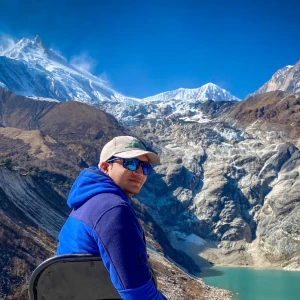
Most people who contact me about Nepal want to go to Everest Base Camp. A few ask about Annapurna. Almost nobody asks about Tsum Valley — and that is exactly why I keep recommending it.
The first time I walked into Tsum Valley, I noticed something I couldn't immediately name. The villages looked like Nepal. The mountains looked like Nepal. But the atmosphere was different. Quieter. Heavier in a way that felt earned rather than imposed. It took me a while to understand what I was feeling: this is a place where the 21st century simply hasn't arrived yet. Not because of poverty or neglect — but because the Tsumba people built a life so complete within itself that the outside world never had much to offer them.
If you have trekked in Nepal before and want to go somewhere that actually stops you mid-step and makes you reconsider what travel is for, Tsum Valley is that place.
What Is Tsum Valley?
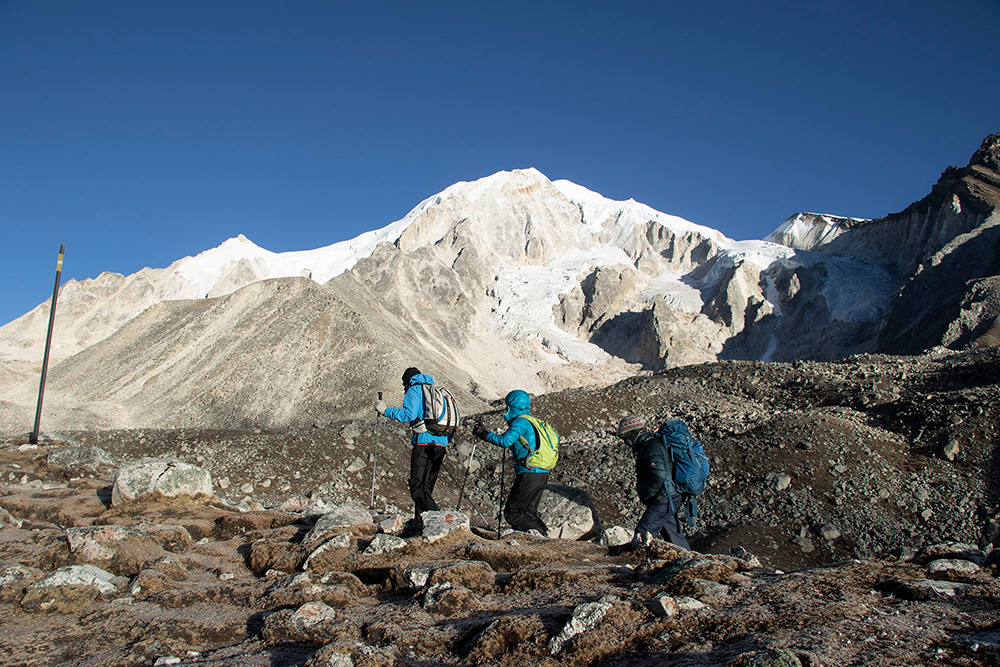
Tsum Valley sits in the Gorkha District of northern Nepal, running along the Tibetan border inside the Manaslu Conservation Area. The valley stretches roughly 38 kilometres from the village of Lokpa up to the Tibetan border, flanked by Ganesh Himal to the west and Sringi Himal to the east.
The name comes from the Tibetan word Tsombo, meaning vivid or clear. Locals have long called it Tsum Tso Chuksum: thirteen provinces under one territory. Centuries ago, this was a functioning kingdom. The ruins of that kingdom are still here, sitting quietly at the edge of villages that have never needed to advertise themselves.
What makes Tsum Valley different from any other trek in Nepal is not the altitude or the scenery. It is the civilisation. The Tsumba people are Tibetan Buddhists in their language, beliefs, and the way they organise daily life. They have never been heavily shaped by Hindu Nepal or modern Kathmandu. Their monasteries are active. Their rituals are real. Nothing here is performed for visitors — life in Tsum Valley simply continues as it has for centuries.
One thing worth knowing before you go: meat is not available in Tsum Valley. The valley follows Buddhist dietary practice across all its teahouses. This is not a restriction — it is a signal. You are entering a place that operates on its own terms, not yours.
Why Tsum Valley Stays Hidden — And Why That Is the Point
Tsum Valley only opened to foreign trekkers in 2008. Before that, it was completely closed, a restricted area even within Nepal. When it opened, the government placed it under a Restricted Area Permit to control visitor numbers and protect what exists here.
This matters before you go: Tsum Valley is deliberately inaccessible. You cannot trek here independently. You cannot walk in without a permit. You cannot book last-minute and expect logistics to hold. This is not a limitation — it is a feature.
In my experience, the places in Nepal most worth visiting are almost always the ones with the highest barriers to entry.
Tsum Valley Trek Highlights
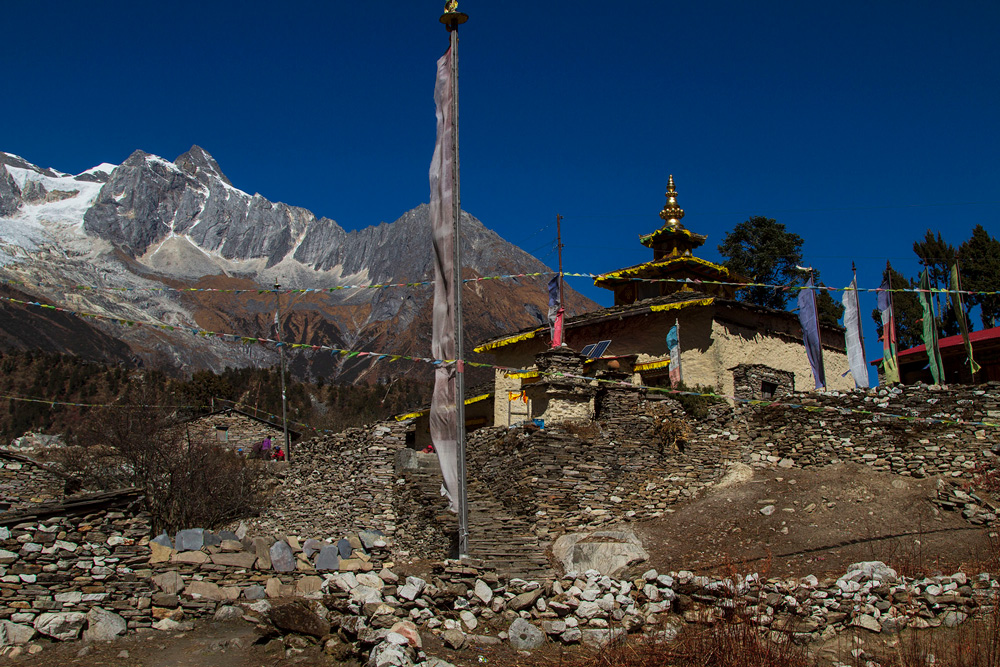
Mu Gompa (3,700m) — the largest monastery in the valley, sitting near the Tibetan border. The monks here are not performing for visitors. They are simply monks, going about a day that looks almost identical to how it looked 300 years ago.
Milarepa's Cave at Piren Phu — the 11th-century Tibetan Buddhist saint Milarepa reportedly meditated in a cave above Piren Phu. Walking up to it, you are moving through a landscape considered sacred for over a thousand years. There is a small admission fee (around NPR 300) to enter the cave — worth every rupee.
Ganesh Himal views — not Everest, not Annapurna. Ganesh Himal is quieter and wilder, and in many ways more striking because you are looking at it without a crowd in front of you.
Tsumba villages — Chhekampar, Nile, Chhule — stone-built settlements where children often speak no Nepali at all, only Tibetan. That one detail tells you more about how remote this valley is than any altitude figure.
Tsum Valley Trek Itinerary (12 Days)
This is the itinerary we use at Himalayan Scenery Treks for a complete Tsum Valley experience — enough time to move at a pace that lets the place actually land.
Day 1 — Drive Kathmandu to Machha Khola (869m) | 8–9 hours
The drive runs through Dhading Besi and Arughat before dropping you onto the Budhi Gandaki for the final stretch. A private 4WD jeep cuts the discomfort considerably compared to the local bus — worth the extra cost if you can swing it, especially on the rougher sections past Arughat. By the time the terraced hillsides start giving way to forest, you're already somewhere most visitors to Nepal never see.
Day 2 — Trek to Jagat (1,410m) | ~6 hours
The trail hugs the Budhi Gandaki through Lower Khorlabeshi and into Tatopani, where a natural hot spring makes for one of the better rest stops on the entire route — take it if your legs need it. Past a suspension bridge at Dobhan, the path continues to Jagat. This is the checkpoint where your Restricted Area Permit gets checked for the first time. Everything past this point is the Tsum Valley restricted zone.
Day 3 — Trek to Lokpa (2,240m) | ~6–7 hours
The day climbs to Salleri, where Mount Sringi shows itself clearly if the weather holds, then drops to Sirdibas. From there, you cross what's reportedly Nepal's longest suspension bridge to reach Philim, continue to Ekle Bhatti, and finally arrive in Lokpa — the actual entry point into Tsum Valley proper. Local legend holds that Padmasambhava blessed this stretch of valley centuries ago. Whether or not you take that literally, something about the quiet here makes it easy to understand why people believe it.
Day 4 — Trek to Chumling (2,386m) | ~5–6 hours
Boudha Himal and Ganesh Himal start showing themselves properly today as the trail crosses the Syar Khola and passes through Lungwa. Chumling itself holds three monasteries worth your time — Panago Gompa, Mani Dhungyur, and Gurwa Gompa — each a different angle on the same Tibetan Buddhist tradition that defines this entire valley. This is your first real immersion in Tsumba village life, and it's worth slowing down for.
Day 5 — Trek to Chhokangparo (3,031m) | ~5–6 hours
The valley opens up here. Chhokangparo is actually two settlements, Chhokang and Paro, sitting on flatter ground than anything you've crossed so far. Locals will often offer butter tea if you linger near a household — it's an acquired taste, but accepting it is one of the more genuine cultural exchanges you'll have on this trek. This is the heart of what people mean when they say "Upper Tsum."
Day 6 — Trek to Nile (3,361m) | ~4–5 hours
Nile is the last village on the western side of Upper Tsum, reached along the Shiar Khola. The real reason to slow down here is Phiren Phu Cave, just outside the village — known locally as Pigeon Cave, and believed to be where the Tibetan saint Milarepa meditated, with what's described as his footprint still visible in the rock. Nearby gompas carry scripture carved directly into stone. Whatever you believe about the legend, standing in a place that this many generations have considered sacred changes how you experience the rest of the day.
Day 7 — Trek to Mu Gompa (3,700m) and back to Nile
The trail passes Dephyudonma Gumba on the way to Mu Gompa, the largest monastery in the valley and the highest point of this trek. Inside, you'll find the Kangyur scriptures, a life-size statue of Avalokiteshvara, and painted portraits of Padmasambhava and Tara. Yak pastures stretch out around the monastery in every direction. This is a there-and-back day — you return to sleep in Nile rather than at altitude, which is the right call given how quickly you've gained height over the past two days.
Day 8 — Trek back to Chhokangparo (3,031m) | ~5–6 hours
Retracing the route through Upper Tsum, past the same yak pastures and along the Shiar Khola, but the light hits differently on the way down. Several clients have told me the descent feels less like leaving and more like the valley letting them go gradually, one familiar landmark at a time.
Day 9 — Trek to Lokpa (2,240m) | ~5–6 hours
Back through Chumling and across the Syar Khola again. The forest feels denser on this leg than it did on the way up, probably because you're paying more attention now that the trek's centrepiece is behind you.
Day 10 — Trek to Jagat (1,410m) | ~6 hours
The trail follows the Budhi Gandaki back through familiar suspension bridges and forest. Your RAP gets a final check as you pass back through Jagat, closing out the restricted-area section of the trip.
Day 11 — Trek to Machha Khola (869m) | ~6 hours
The last full trekking day. Terraced fields and river views again, but the rhythm is different now — less anticipation, more reflection on what the past week actually gave you.
Day 12 — Drive to Kathmandu | 8–9 hours
Same road, same 8–9 hours, but it never feels as long going back as it did going out.
Tsum Valley Trek Cost: What You Actually Pay in 2026
A Tsum Valley Trek booked through Himalayan Scenery Treks starts at $999 per person at the current promotional rate (down from the standard $1,200). Solo travellers pay a $350 single supplement on top of that — we publish this figure directly rather than folding it into a vague markup. At today's rate, that puts a solo trek at roughly $1,349. What you get for it: a pace entirely your own, rest days when you actually need them, and a guide whose full attention is on one client instead of split across a group.
Here is the full cost breakdown for 2026:
| Cost Item | Peak Season (Sep–Nov) | Off-Peak (Dec–Aug) |
|---|---|---|
| Tsum Valley Restricted Area Permit (RAP) | $40 first week, $7/day after | $30 first week, $7/day after |
| Manaslu Conservation Area Permit (MCAP) | NPR 3,000 (~$30) | NPR 3,000 (~$30) |
| Chumnubri Rural Municipality Permit | ~$5–10 | ~$5–10 |
| Licensed guide | $35–$45/day | $35–$45/day |
| Porter (optional) | $25–$30/day | $25–$30/day |
| Tea house accommodation | $5–$15/night | $5–$10/night |
| Meals on trek | $20–$35/day | $15–$25/day |
| Kathmandu hotel (2–3 nights) | $60–$120/night | $60–$120/night |
| Kathmandu to the trailhead transport | $100–$150 | $100–$150 |
Three permits are required — not two. Most agencies mention the RAP and MCAP. The Chumnubri Rural Municipality Permit is the third, checked at the trailhead, and it is mandatory. We handle all three as part of every booking.
On solo trekking: As of March 22, 2026, Nepal removed the minimum two-person requirement for restricted area permits. Single travellers can now trek to Tsum Valley legally with just a licensed guide from a registered agency. If this rule was the reason you kept putting this trek off, it is no longer a barrier.
What is included in HST packages: all permits, licensed guide, airport transfers, Kathmandu accommodation, ground transport to and from the trailhead, and meals during the trek.
What is not included: international flights, travel insurance, personal gear, tips, hot showers on trek (charged separately, usually $1–2), device charging at teahouses (small additional fee), and personal purchases.
On insurance: travel insurance with explicit helicopter evacuation cover is mandatory for all HST clients in this region. Standard travel insurance often excludes high-altitude rescue. Check your policy specifically before you travel — not the general summary, the actual exclusions list. We will tell you exactly what to look for when you book.
For a full seasonal and group-size breakdown, read our Tsum Valley Trek cost guide.
Tsum Valley Trek Difficulty: The Honest Version
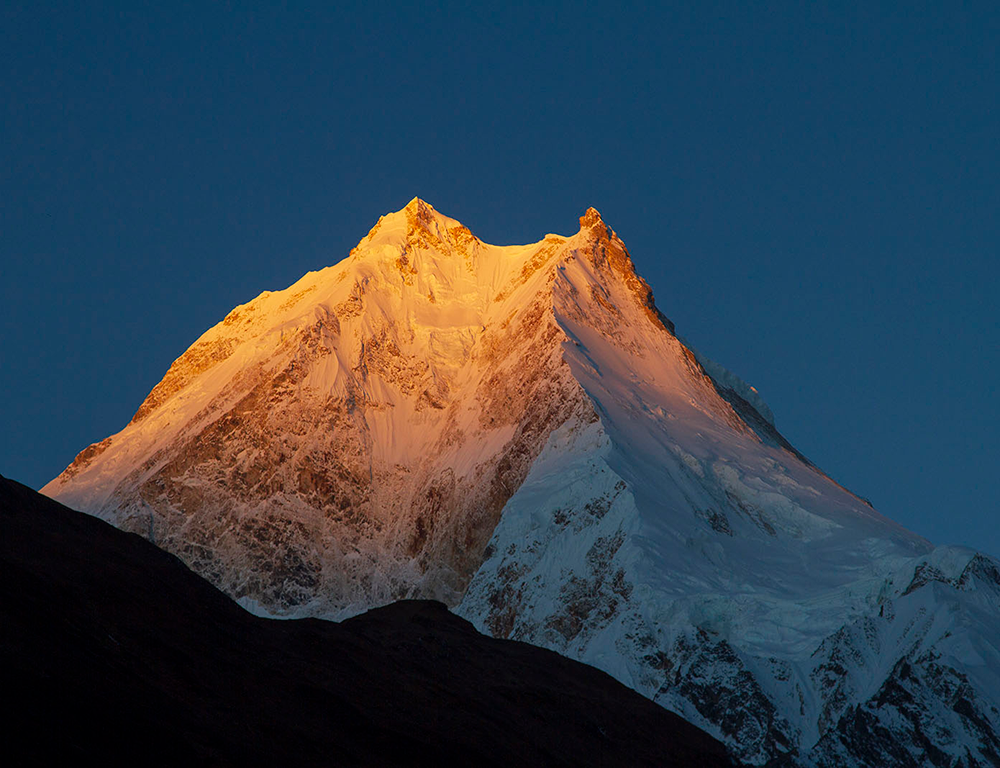
This trek is rated moderate. Here is what that actually means on the ground:
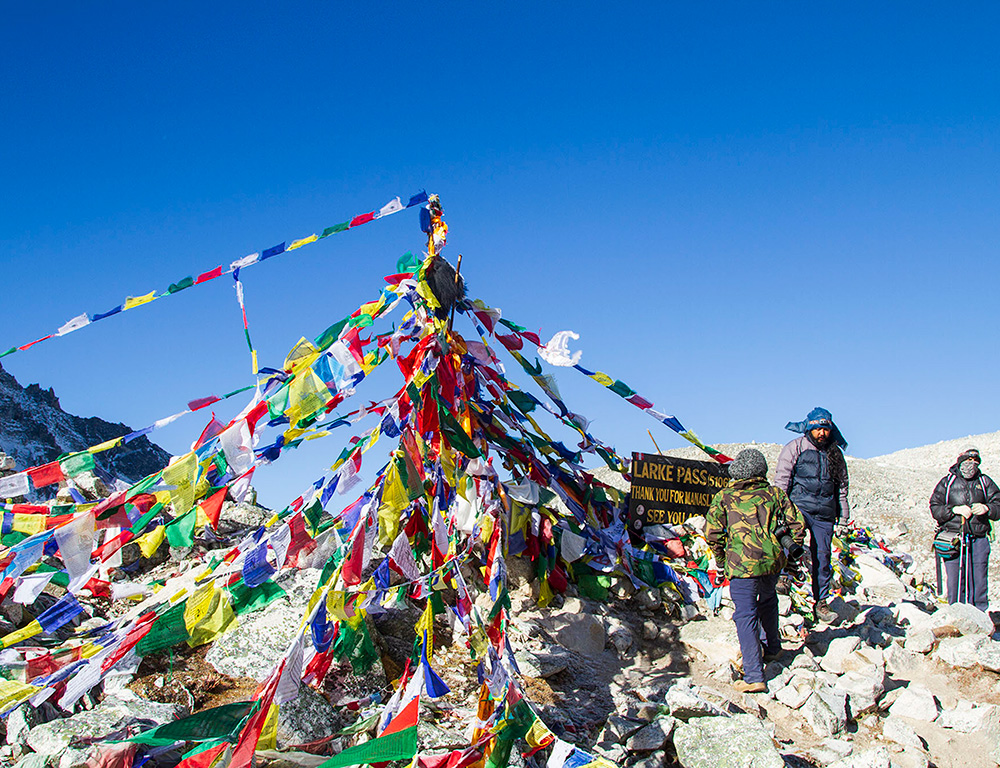
Altitude: The highest point is Mu Gompa at 3,700m. That is well below Everest Base Camp (5,364m) or the Larke La Pass on the Manaslu Circuit (5,160m). Altitude sickness is still possible — it always is above 3,000m — which is why we build a proper acclimatisation day into the itinerary at Nile rather than pushing straight to Mu Gompa.
Daily walking: 5–7 hours on average across rocky, uneven terrain with some steep sections and river crossings. No technical climbing. If you can comfortably walk 10–12km at home, including some hills, your body can handle Tsum Valley.
Remoteness: This is what most people underestimate. Above the Nile, there is no mobile signal and no ATM — carry all cash from Kathmandu. Teahouse facilities become simpler: shared bathrooms, basic beds, limited menu. Medical evacuation means a helicopter. The trail does not offer the safety net of Everest or Annapurna.
Fitness preparation: Start walking 45 minutes a day, four to five times a week, six to eight weeks before departure. Add incline wherever possible — stairs, hills, a treadmill on a gradient. That is genuinely all most fit travellers need.
Permits for Tsum Valley (2026): The Complete Picture
Three permits are required. Here is what each one is and where it is checked:
1. Restricted Area Permit (RAP) — Tsum Valley
Issued only through a registered trekking agency. Cannot be obtained independently.
- Peak season (Sep–Nov): $40 for the first week, $7 per additional day
- Off-peak (Dec–Aug): $30 for the first week, $7 per additional day
- Checkpoint: Jagat
2. Manaslu Conservation Area Permit (MCAP)
Fixed cost regardless of season: NPR 3,000 per person (~$30).
Supports conservation and community development across the Manaslu region. Checkpoint: Arughat or Sotikhola.
3. Chumnubri Rural Municipality Permit
A local entry permit for trekking in the Manaslu and Tsum Valley municipalities. Cost: approximately NPR 1,000–1,500 (~$7–10). Less discussed but equally mandatory — checked at the trailhead.
All three are arranged by HST before departure. You do not visit any government office yourself.
Best Time to Trek Tsum Valley
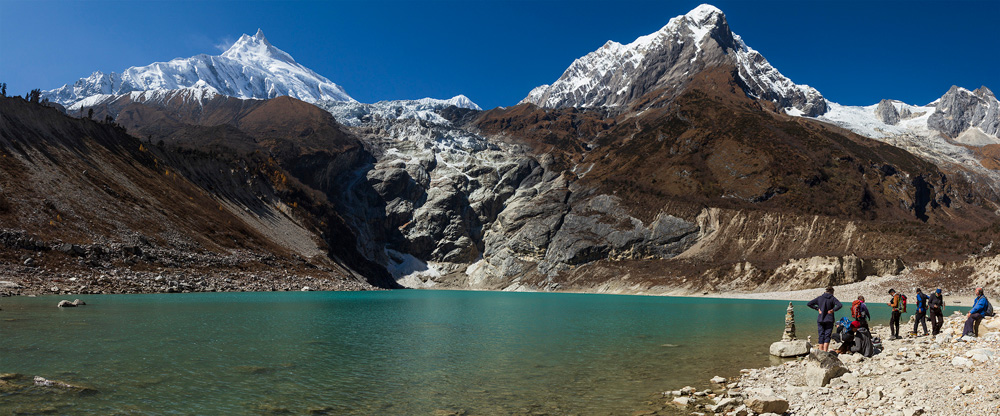
October to November is the premier window. Post-monsoon skies are clear, temperatures are stable, mountain views are at their sharpest, and the monasteries are active with post-harvest festivals. This is peak season — permits cost more, teahouses are busier.
March to April is the second window. Rhododendrons bloom below 3,000m, the days are warming, and the valley comes back to life after winter. This is my personal preference for Tsum Valley — slightly fewer trekkers than autumn and the light is extraordinary in the mornings.
Avoid December to February unless you are specifically prepared for the cold. Some teahouses in upper villages close in deep winter, and certain trail sections can be icy. Experienced cold-weather trekkers can do it — but it requires specific preparation.
Avoid June to September (monsoon). Landslides are a genuine risk on the Budhi Gandaki trail approach. The valley itself receives less monsoon rain than southern Nepal due to its position behind the Himalayan rain shadow, but the approach trail is the problem.
Accommodation on the Tsum Valley Trek
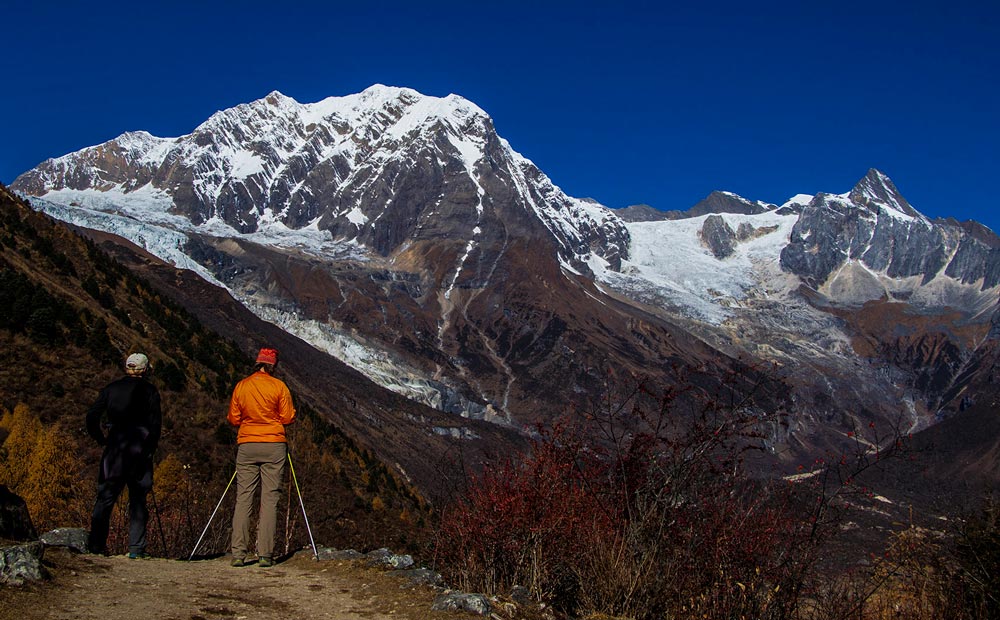
The accommodation on this trek is teahouse-based throughout. Rooms are twin-share with basic mattresses, blankets, and pillows — bring a sleeping bag liner for warmth, especially above 3,000m. Bathrooms are shared and usually outside the main building. Hot showers exist in lower villages and cost $1–2 extra. Above Nile, expect bucket water rather than running showers.
Device charging is available at most teahouses for a small fee — bring a power bank as backup since outages happen. Wi-Fi exists in lower villages and is unreliable above Ghap. Plan to be offline for the upper valley section. In practice, most of my clients find that the best thing about Tsum Valley is precisely that disconnection.
On food: teahouses serve dal bhat, Tibetan bread, thukpa, tsampa porridge, momo, and noodles. The menu simplifies as you gain altitude. One thing to know before you go: meat is not served anywhere in Tsum Valley. The entire valley follows Buddhist dietary practice. This applies to all teahouses without exception. If you eat meat daily at home, plan for this — it is not a hardship, but it is worth knowing in advance.
In Kathmandu, we accommodate you in a quality hotel in Thamel suited to your preferences and budget. We can arrange anything from a comfortable three-star guesthouse to a boutique heritage property.
Tsum Valley vs. Manaslu Circuit: Which One?
This is the most common question I receive from people considering this region.
| Tsum Valley | Manaslu Circuit | |
|---|---|---|
| Primary draw | Culture, Buddhism, deep isolation | High passes, dramatic mountain scenery |
| Highest point | 3,700m (Mu Gompa) | 5,160m (Larke La Pass) |
| Physical demand | Moderate | Strenuous |
| Crowd level | Very low | Low to moderate |
| Duration | 12-16 days | 14–17 days |
| Best for | Cultural depth, restricted area experience | Experienced trekkers wanting a Himalayan crossing |
| Meat available? | No (Buddhist valley) | Yes, in the lower villages |
The strongest option is to combine both. Our Manaslu Circuit and Tsum Valley Trek covers the full loop in 22 days — a high pass crossing on the Manaslu side, then descent into the cultural depth of Tsum. It is the most complete single-trip Himalayan experience I know of at this altitude range.
Who Is This Trek For?
Tsum Valley suits you if:
You have trekked in Nepal before and want to go somewhere that operates differently
You are interested in Tibetan Buddhism as a living practice, not a museum exhibit
You want a restricted area experience without the extreme altitude of Upper Mustang or Dolpo
You are comfortable with basic teahouse conditions and genuinely offline days
You can walk 5–7 hours a day for 10–12 consecutive days
Tsum Valley is probably not the right first trek if:
You have never been to altitude before (start with Annapurna Base Camp or Ghorepani Poon Hill to understand how your body responds)
You need reliable connectivity for work
You are specifically looking for high-altitude passes above 5,000m
Frequently Asked Questions
Can a solo traveller trek to Tsum Valley in 2026?
Yes. As of March 22, 2026, Nepal removed the previous requirement for a minimum of two trekkers to obtain restricted area permits. Single travellers can now legally trek Tsum Valley with a licensed guide from a registered agency. You still need to book through an agency — solo and independent are not the same thing here.
Do I need a guide even as an experienced trekker?
Yes, legally and practically. The Restricted Area Permit requires a licensed guide from a registered Nepali agency — there is no exemption for experience level. Beyond the legal requirement, a good guide in Tsum Valley is the difference between observing the culture and actually touching it. Our guides in this region speak the local dialect. That matters.
How remote is it, really?
Mobile signal disappears after the Nile. There are no ATMs on the route — carry all cash from Kathmandu. Medical evacuation by helicopter is the only option in a serious emergency. Treat this like a genuine wilderness trek, not an organised trekking trail.
What language do people speak in the Tsum Valley?
The Tsumba people speak their own Tibetan dialect, distinct from both standard Tibetan and Nepali. Most adults in larger villages have some Nepali, but in Nile and beyond, it is minimal. Your guide handles all communication, which is one of the practical reasons the guide requirement makes sense beyond the legal one.
Is meat available on the trek?
No. Tsum Valley follows Buddhist dietary practice, and meat is not served anywhere in the valley. Dal bhat, Tibetan bread, thukpa, momo, and tsampa porridge are the staples. Plan your nutrition accordingly, especially if you are a heavy protein eater.
Can I combine Tsum Valley with the Manaslu Circuit?
Yes, and I recommend it for anyone with 22 days available. The combination delivers both the high-pass crossing at Larke La (5,160m) and the cultural depth of Tsum in a single trip. See the full itinerary on our Manaslu Circuit and Tsum Valley Trek page.
What is the Restricted Area Permit, and why does Tsum Valley need one?
The RAP is a government permit required for trekking in sensitive zones near Nepal's borders. Tsum Valley requires it because of its proximity to Tibet and to protect the Tsumba culture from uncontrolled visitor access. It costs $40 per week in peak season and $30 per week off-peak, and can only be obtained through a registered agency.
Is travel insurance mandatory?
We require it for all HST clients in the Manaslu region. Standard travel insurance is usually not enough — your policy must explicitly cover high-altitude helicopter evacuation. Check the exclusions section of your policy, not the summary page. If you are unsure what to look for, ask us when you book.
What is Piren Phu Cave?
Piren Phu — meaning "pigeon cave" in Tibetan — is a sacred meditation cave above Mu Gompa where the Buddhist saint Milarepa is believed to have meditated in the 11th century. It is one of the most significant spiritual sites in the entire Tsum Valley, and the reason Day 11 in our itinerary is dedicated entirely to this area. There is a small admission fee of approximately NPR 300 (~$3) to enter.
What is the difference between Mu Gompa and Rachen Gompa?
Mu Gompa is the largest monastery in Tsum Valley, located at 3,700m at the upper end of the valley, home to monks and housing the ancient Kangyur scriptures. Rachen Gompa is an active nunnery lower in the valley with over 100 resident nuns. Both are extraordinary for different reasons. Our itinerary gives proper time to both rather than treating either as a checkpoint.
Ready to Trek Tsum Valley?
Tsum Valley is not the right trek for everyone — and that is part of what makes it right for the people it suits. It is remote, it is basic in places, and it asks something of you beyond physical fitness. But for the traveller who wants to walk into a place that is genuinely different from anywhere else in Nepal, it delivers something that the popular routes simply cannot.
We have been running treks in this region for years. Our guides know the valley, speak the local dialects, and understand the culture at a depth that changes what the experience actually is.
View our Tsum Valley Trek package →
Want the full Himalayan experience in one trip?
Manaslu Circuit + Tsum Valley Trek — 22 Days →