Reaching Mustang from Kathmandu is easier than most first-time travellers expect, but it isn't a direct journey.
Whether you're headed to Muktinath in Lower Mustang or continuing north into the restricted zone, every trip starts the same way: Kathmandu to Pokhara first, then either a short flight to Jomsom or a longer push north by jeep.
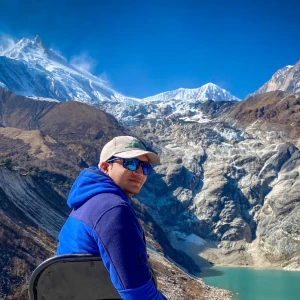
I flew into Jomsom for the first time years ago, and I still remember the pilot banking hard into the Kali Gandaki Gorge with Annapurna close enough on one side to pick out individual ridgelines, Dhaulagiri on the other. It was over before I'd finished looking. Months later, I drove the same stretch with a client, and somewhere past Ghasa, I realised the flight had shown me the mountains but skipped the part in between — the terraces thinning out, the air drying, the villages changing character block by block until you're somewhere that doesn't look like the rest of Nepal anymore. Neither route is wrong. They just show you different things.
Here's what I can tell;
The fastest route gets you there the same day. Going entirely by road takes two, with a night in Pokhara in between. Which one you choose comes down to how much time you have and how much you're willing to let the weather decide for you — flights save hours but answer to mountain wind, the road takes longer but almost always shows up.
How Far Is Mustang from Kathmandu?
The distance depends on where your journey actually ends.
Most trips use Jomsom as the gateway, since it's where the airport and the road both terminate before you continue on foot or by jeep toward Kagbeni, Muktinath, or further north into the restricted zone.
In a straight line, Kathmandu and Jomsom sit about 300 km (186 miles) apart. That number surprises people, because getting there takes far longer than 300 km should.
The reason is simple: there's no direct road, and no direct flight. Every route runs west to Pokhara first, then north through the Kali Gandaki Valley. The mountains decide the path, not the map.
Which is why the same trip can take under an hour of flying, or close to two days on the ground.
Distance by Road
The road is the slower option, and it's also the one that actually shows you Nepal changing underneath you.
Kathmandu to Pokhara covers roughly 200 km, usually 6 to 7 hours by tourist bus, longer if there's construction on the highway — there usually is somewhere along that stretch.
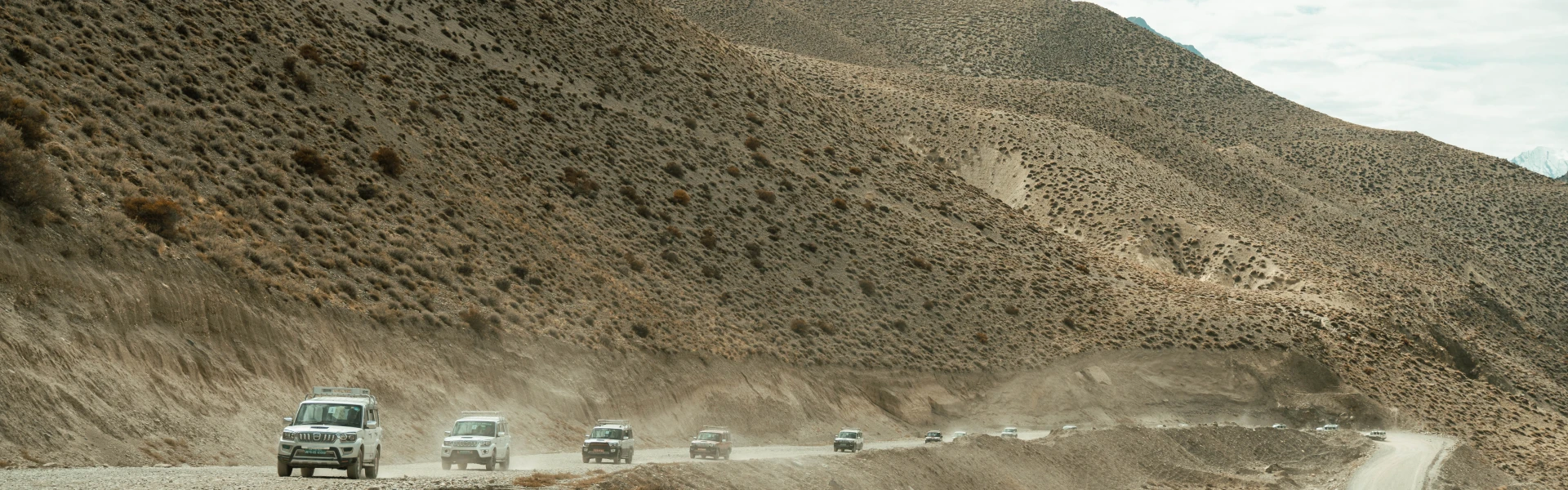
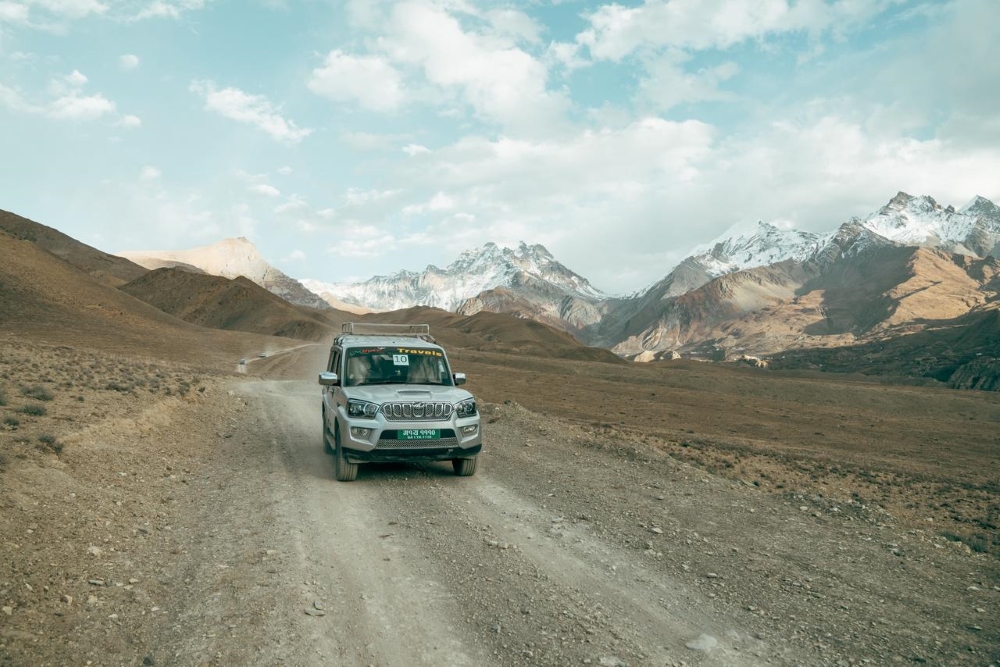
Past Pokhara, the road stops behaving like a highway. You're in a shared or private 4WD jeep from here, built for a route that a standard vehicle wouldn't survive.
Pokhara to Jomsom is about 155 km and takes 6 to 8 hours, past rivers, waterfalls, and small settlements, until the landscape turns dry and the hills give way to the high desert Mustang is known for.
Some clients try to push both legs into a single day. I don't recommend it — not because it's impossible, but because the jeep leg is rough enough that you want to start it rested, not straight off a 7-hour bus ride.
Distance by Air (via Pokhara)
Flying is the fastest way in, and it's what I book for most clients whose trip is a week or under.
There's no single flight from Kathmandu to Jomsom, whatever the search results imply. It's two separate tickets: Kathmandu to Pokhara, then a smaller aircraft on to Jomsom.
The first leg takes about 25 minutes. The second is 15 to 20, and it's the one people remember — the plane threads the Kali Gandaki Gorge, Annapurna and Dhaulagiri close on either side, before dropping onto Jomsom's short mountain airstrip.
What that scenery costs you is reliability. Jomsom flights run early, and only when the wind allows it — which I'll get into below, because it changes how I build every itinerary that includes this leg.
Pokhara to Mustang Distance
From Pokhara, the remaining distance to Jomsom is about 155 km, 6 to 8 hours by road.
This isn't a transfer to get through — it's one of the better drives in Nepal. The Kali Gandaki River stays with you the whole way as the hills go from green to rock, past apple orchards and villages that don't announce themselves the way tourist stops usually do.
It's also why I often route clients to fly one direction and drive the other. The flight gets you to the gorge from the air. The drive gets you to Marpha and Kagbeni at ground level, which the flight skips entirely.
How does each travel option actually work in Mustang?
Here's how travel options actually work for you in Mustang:
Option 1: Flying from Kathmandu to Mustang
Flying suits anyone working for a week or less in Nepal.
There's no direct commercial route — it's Kathmandu to Pokhara, then a change of aircraft to Jomsom. On a good-weather day, you can leave Kathmandu in the morning and be in Mustang before lunch.
The real value isn't the time saved on paper. It's what that time buys you — an extra day, actually, inside Mustang instead of getting there.
Kathmandu to Pokhara Flight
This leg is unremarkable in the best way. Several airlines fly it daily, the trip takes about 25 minutes, and delays are uncommon compared to what comes next. Most clients land, collect bags, and walk straight to check in for the Jomsom flight.
Pokhara to Jomsom Flight
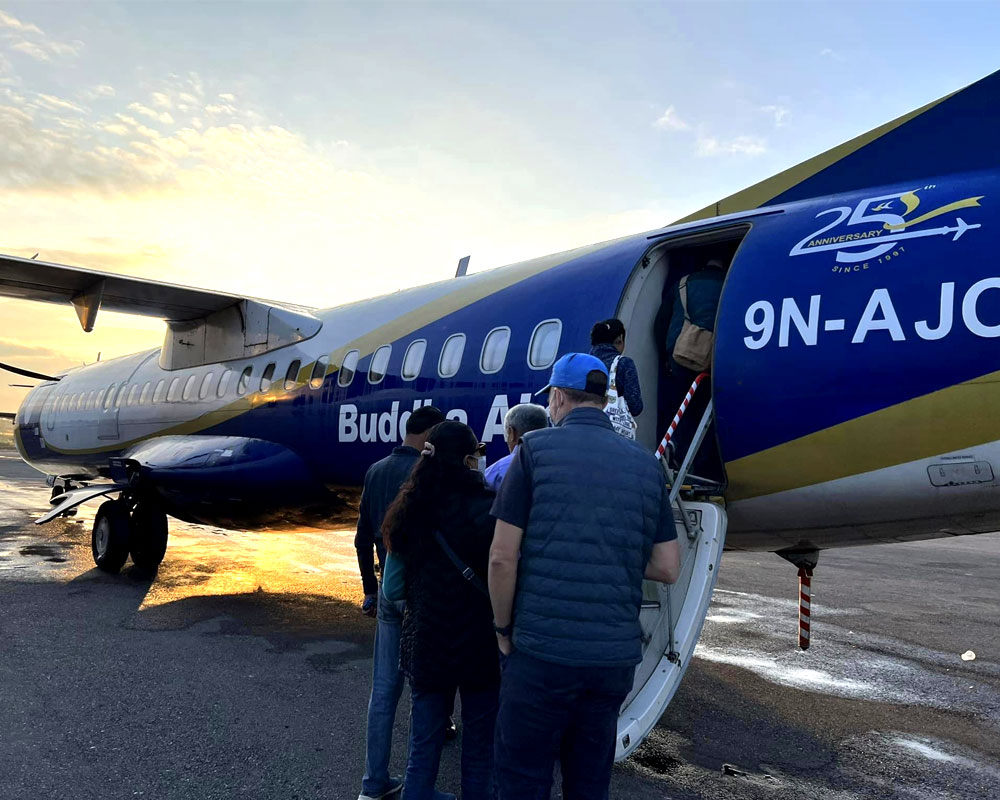
This one's different. Smaller aircraft, 15 to 20 passengers, 15 to 20 minutes in the air — and it's usually the flight clients bring up again months later.
The plane drops into the Kali Gandaki Gorge at low altitude, close enough to the rock walls that the scale of the mountains actually registers, before landing on Jomsom's short strip.
Option 2: Reaching Mustang by Road
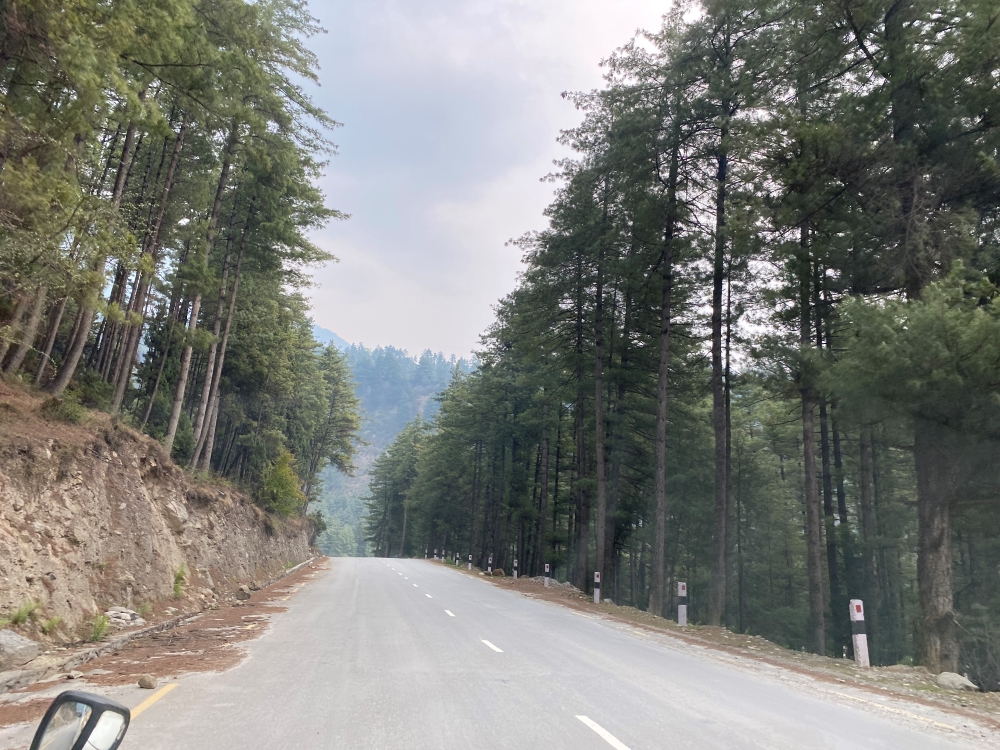
The road takes longer, and more than a few clients have told me afterwards that it was the part of the trip they didn't expect to enjoy as much as they did.
Unlike the flight, it lets you watch the change happen — hills to gorges to pine forest to orchards to the bare cliffs that mean you've arrived.
Kathmandu to Pokhara
Nepal's main highway connects the two; tourist buses run daily, and the trip takes 6 to 7 hours depending on traffic. Private vehicles are available if you'd rather set your own pace.
Most of my itineraries include an overnight in Pokhara here, not just for the rest, but because it's a good city to sit in for an evening before the jeep road starts.
Pokhara to Jomsom by Jeep
Past Pokhara, you're in a 4WD built for this specific road — 6 to 8 hours, through Beni, Tatopani, Ghasa, Marpha, and a handful of smaller villages, each one a genuinely different slice of life along the Kali Gandaki, not a stop built for photographs.
Why I Often Recommend Driving One Way
When the schedule allows it, I usually route clients to fly one direction and drive the other.
You still get the gorge flight. But you also get Marpha and Kagbeni at walking pace instead of thirty thousand feet, and that combination — the view from the air, the ground truth from the road — tends to be what people describe when they talk about the trip later.
How Much Does It Cost to Reach Mustang from Kathmandu?
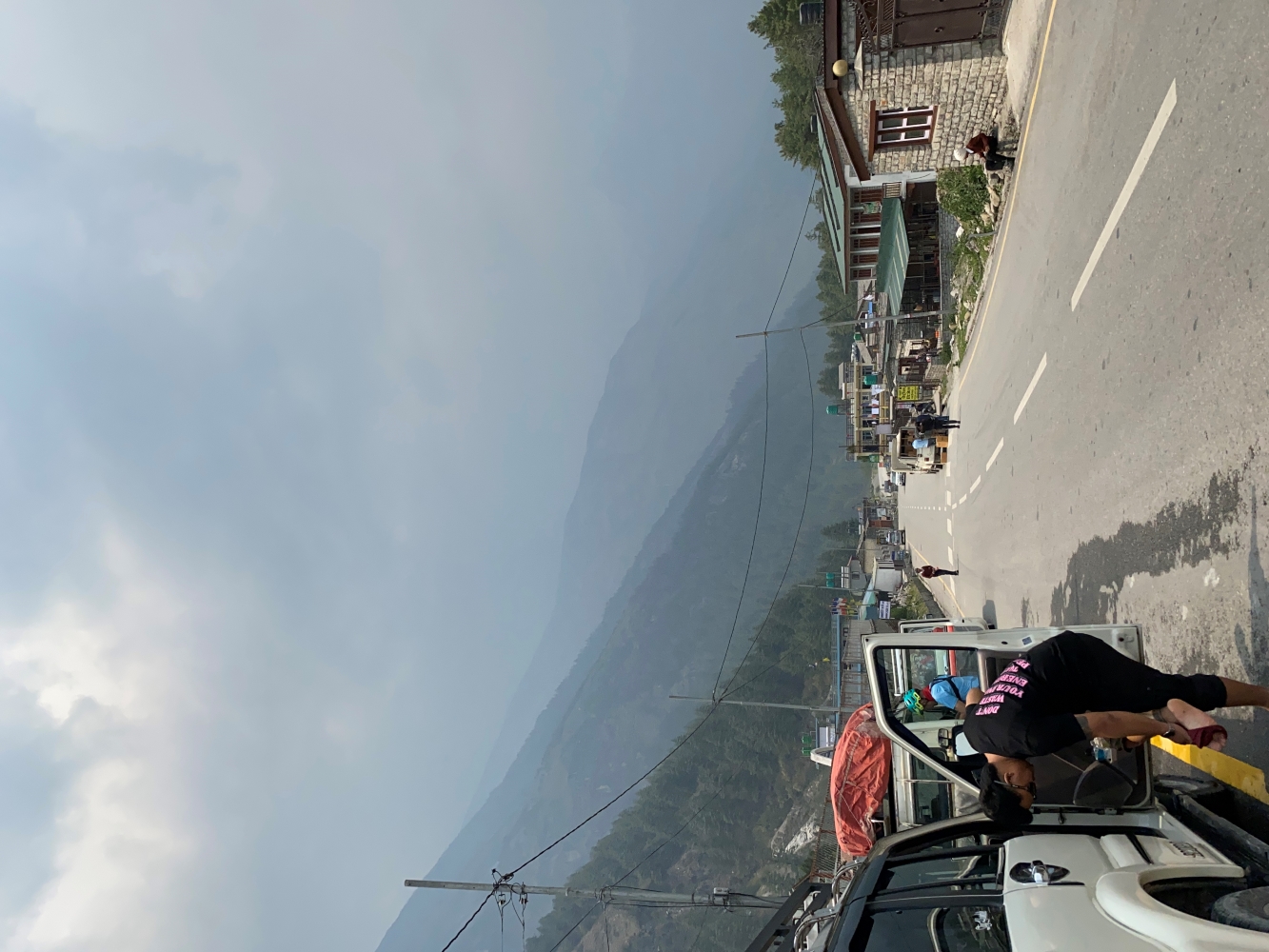
Cost comes down to how you travel, and most people underestimate it because they only price one leg.
Flying is the fastest and most expensive. The road is far cheaper but costs you a day. Mixing both — bus to Pokhara, fly to Jomsom, or the reverse — is usually the best balance, and it's what I recommend more often than either extreme.
Flying from Kathmandu to Mustang
Two tickets, not one — Kathmandu-Pokhara and Pokhara-Jomsom are separate routes with separate pricing, which catches people who searched for a single "Kathmandu to Mustang flight" and assumed it existed.
As of 2026:
| Flight Route | Typical One-Way Fare |
|---|---|
| Kathmandu → Pokhara | US$120 |
| Pokhara → Jomsom | US$180 |
Expect the higher end during March–May and September–November, when Everest and Annapurna trekkers are competing for the same domestic seats. If you're timing a trip around the Tiji Festival, book Jomsom seats weeks out — they sell out ahead of the ceremony every year. For a more season-based Mustang guide.
Travelling by Road
The cheapest way in. Tourist buses to Pokhara run US$10–25, depending on comfort level. From there, a shared jeep seat is far less than hiring the vehicle outright, which makes sense for solo travellers or small groups. A private jeep costs more but buys you the ability to stop in Marpha, linger somewhere unplanned, and move at your own pace rather than someone else's timetable.
Split across a family or small group, a private jeep often works out better value than people assume going in.
Helicopter Charter
For clients on a genuinely tight schedule, a private helicopter between Pokhara and Lo Manthang starts around US$3,000/way for the aircraft — and even that depends on clear skies.
I don't build itineraries around a helicopter as planned. In practice, almost every charter I've arranged came after two or three days of cancelled flights, not as the original booking.
Here's more on the Mustang trip Cost in detail.
What Happens If Your Jomsom Flight Is Cancelled?
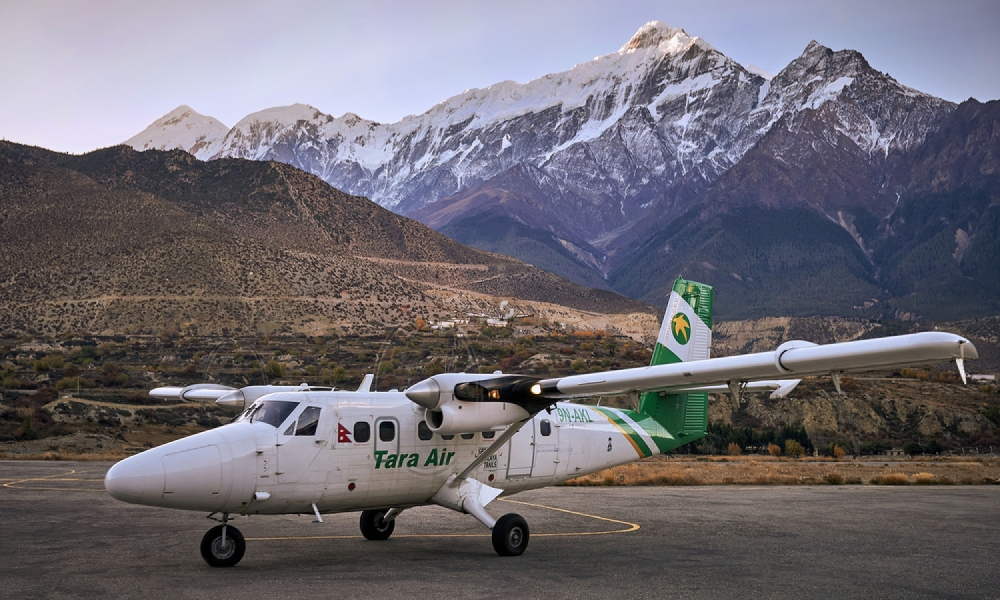
Never build an itinerary that assumes every Jomsom flight goes as scheduled. It's not that cancellations happen constantly — it's that they happen often enough that a tight schedule with no slack is a mistake I try to catch before a client makes it, not after.
I've had groups land in Jomsom exactly on time. I've had others sit in Pokhara for three mornings running, watching the wind decide for them. Both are normal. The airline isn't the variable — the valley is.
Why Are Jomsom Flights Cancelled So Often?
Jomsom sits inside one of the windiest corridors in the Himalayas. Mornings are calm enough to fly. By mid-to-late morning, the wind's up, and there's no later window to wait for — if it's cancelled, it's tomorrow.
Most first-time travellers don't know this until they're standing in the terminal watching the board.
How We Plan Around Flight Delays
Every itinerary I build with a Jomsom flight in it carries at least one buffer day before anything time-sensitive — an international connection, a fixed hotel booking, anything that can't slide. That single day is usually the difference between a manageable delay and a scramble back to Kathmandu.
If you're going entirely by road, this risk mostly disappears — which is exactly why I steer tightly-scheduled clients toward the jeep route from the start rather than let the whole trip hinge on a 15-minute weather window.
Reaching Mustang from India via Sunauli
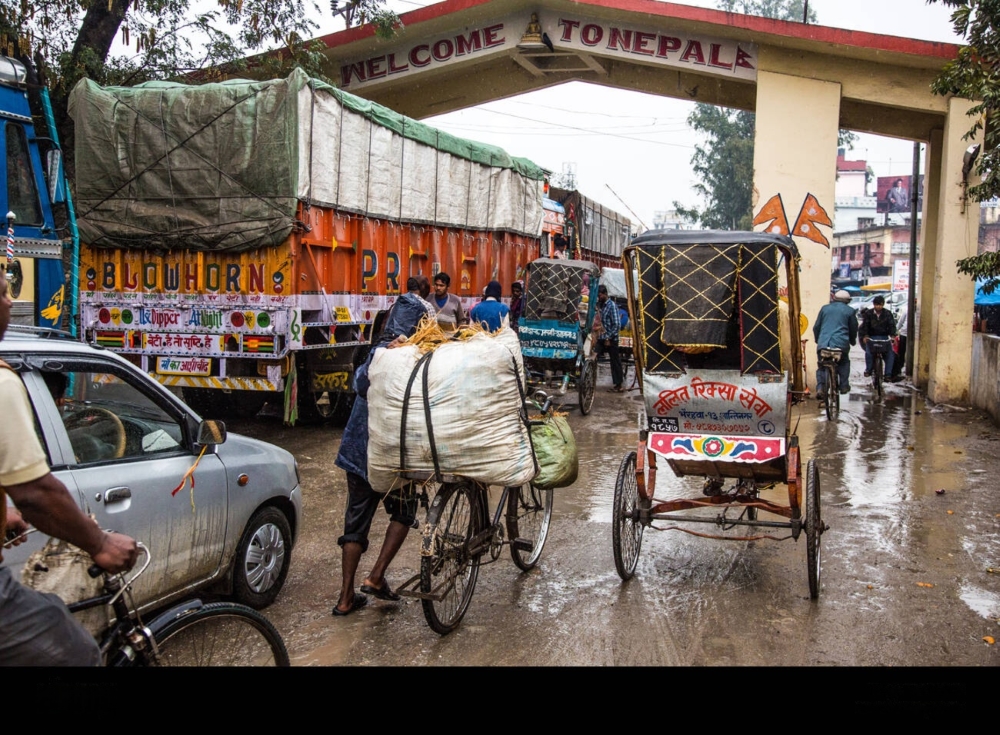
A good number of our Indian clients don't start in Kathmandu at all — they cross at Sunauli, one of the busier India-Nepal border points, and join the same road network from there.
Sunauli to Pokhara is about 200 km, 7 to 8 hours depending on traffic, and most travellers overnight in Pokhara before continuing north the next morning. From there, it's the same choice as everyone else: fly to Jomsom or continue by jeep.
For clients whose goal is Muktinath specifically, this route usually makes more sense than routing through Kathmandu first.
Border Crossing for Indian Travelers
No visa required for Indian nationals — a valid government photo ID, passport or Voter ID, depending on current rules, is enough to cross. Buses and private vehicles run toward Pokhara throughout the day from the border.
During pilgrimage season or major holidays, I'd arrange transport ahead of time rather than trust the border-side options to have room.
Permits for Mustang for Indian Travellers
What you need depends entirely on where you're going.
Lower Mustang — Muktinath, Kagbeni, Marpha, Jomsom — generally needs only the Annapurna Conservation Area Permit (ACAP). Regulations shift occasionally, so I always confirm current requirements before a client travels rather than rely on what was true last season.
North of Kagbeni into Upper Mustang, you'll also need the Upper Mustang Restricted Area Permit (RAP), arranged through a registered trekking agency — independent travel isn't permitted in the restricted zone, full stop.
I handle every permit application before a client's trip starts. That's not a convenience — it's the difference between a smooth arrival and a day lost at a government office in Kathmandu.
Frequently Asked Questions
Is there a direct flight from Kathmandu to Mustang?
No. It's Kathmandu to Pokhara, then a separate flight from Pokhara to Jomsom.
How long does it take to reach Mustang from Kathmandu?
Flying, you can reach Jomsom the same day if both legs run on schedule. By road, plan on two days with a night in Pokhara.
Is it better to fly or drive to Mustang?
Depends what you're optimising for. Time flies. Scenery, reliability, and villages like Marpha and Kagbeni at ground level — drive. Most of my clients end up doing one each way.
Do I need a permit to visit Mustang?
Lower Mustang needs the ACAP. Upper Mustang needs the ACAP plus the RAP, arranged through a registered agency. I can confirm exactly what applies to your route before you book anything.
How many days should I allow for a Mustang trip?
6 to 7 days for Lower Mustang. 10 or more for Upper Mustang, depending on route and transport. Add a buffer day anywhere a flight's involved.
Can I reach Mustang without flying?
Yes — Kathmandu to Pokhara, then Pokhara to Jomsom by jeep. Slower, but it's one of the more rewarding road routes in Nepal, and you'll see the country change under you the whole way.
Why does Jomsom Flights leave so early?
Every Jomsom flight departs between 6 and 9 a.m., and the reason is wind, not scheduling preference. The valley heats up through the morning, and once the wind picks up, there's no afternoon slot to fall back on — it's tomorrow, or nothing.
I've had clients ask if this is unusual. It isn't. It's just how this specific valley works, and it's worth knowing before you build a tight schedule around it.
Who should fly in the Mustang?
Flying makes sense if:
You're short on time in Nepal.
You want more days inside Mustang, not on the way there.
You'd rather keep travel days short.
You can hold some flexibility in your schedule if the weather doesn't cooperate.
Booking early matters more in spring and autumn — seats on the Jomsom leg go fast once trekking season picks up.
Can you mix flights and road travel in Mustang?
Usually, yes. Flying out and driving back — or the reverse — gets you the mountain flight without betting the entire itinerary on good weather twice. It's the combination I set up most often, because it hedges the one real risk in this whole route: wind.
Planning Your Mustang Journey
Getting to Mustang is the logistics. What you'll actually find once you arrive — and why solo travellers, families, and first-timers all experience Mustang differently — is a separate question worth reading before you book.
Our guide on how to travel to Mustang covers that side: what changed for solo trekkers in 2026, what to expect from a guide, and which season actually suits what you're looking for.
The road out of Kathmandu looks the same for both. What happens after Kagbeni is where they split.
If the restricted zone is the goal, our Upper Mustang Jeep Tour covers the full route, permits, and what to expect. If Muktinath, Marpha, and Kagbeni are enough, the 5-Day Mustang Tour is likely the better fit.
Send us a message. We've helped hundreds of travellers plan this route — Indian, international, solo, families, first-timers. We know where the planning gaps are and how to close them before you arrive.