A woman messaged me before booking, wanting to know if she'd really be the only client. Fifty-two, this would be her first solo trip since her husband died, and she wasn't interested in reassurance. She wanted logistics. Phone signal in the villages. Water sources along the trail. Whether her guide, Pemba, actually spoke enough English to hold a conversation, or just enough to point at things and say "monastery."
She wasn't nervous. She'd travelled enough to know exactly which questions mattered.
That conversation is the one I think about when people ask about solo female travel in Nepal, specifically whether Mustang is a reasonable place for a woman to trek alone. The honest answer is yes, and the more useful answer is what it's actually like, which isn't the version people imagine when they picture a solo female trek to Mustang.
The Mustang Permission Nobody Asks Out
Most women who write to us about a solo trek to Upper Mustang aren't asking whether it's possible. They're asking whether it's sensible: whether they'll spend two weeks managing other people's concern about their safety instead of actually being there. That's a different question, and it deserves a direct answer.
As of March 22, 2026, Nepal's Department of Immigration removed the minimum two-trekker requirement for Restricted Area Permits across all restricted districts, including Upper Mustang. Solo trekkers can now obtain the permit with a licensed guide, at $50 per person per day, with no group requirement attached. That policy change matters less for the paperwork and more for what it signals: Mustang was never designed to punish solo travel. The old group-minimum rule was administrative, not a reflection of the terrain or the culture being unsafe for a woman on her own.
What actually determines whether Upper Mustang solo trekking works for a woman isn't her fitness level or her travel experience. It's whether the guide she's paired with treats her like a client with preferences, not a liability to be managed. That's a guide selection issue, not a Mustang issue.
What the Mustang trail actually asks of you
The widow — I'll leave her unnamed, she'd prefer that — told me later that the thing she hadn't expected was how much she'd resent stopping for photos. Not other people's. Her own. Pemba wanted a nice shot of her at one of the passes, and she just said no, not today, and kept walking. She said afterwards that she felt a bit rude about it. Pemba hadn't thought anything of it at all. He'd offered, she'd declined; that was the whole exchange. It only felt significant to her because she was used to travel involving negotiation, involving managing someone else's expectations of the experience. Here there was none of that. She could just walk.
That's a small thing, but it's the thing women describe most often when I ask what a solo trek gave them that group travel didn't: the absence of having to explain herself. No group pace to match. No one waiting on her at the top of a climb, watching her catch her breath. No one to perform "fine" for.
In Charang, she ended up on a rooftop sorting apricots with the grandmother of the house she was staying in. Neither of them had a language in common. The grandmother kept handing her the bad apricots to test whether she'd notice, and laughed every time she did. She wasn't sure, telling me the story, whether that was really happening or whether she was reading meaning into nothing. I told her that's usually exactly what's happening. Mustang village life runs on exactly that kind of quiet testing and quiet approval, whether you're travelling with a group of eight or by yourself. If anything, alone, you're more likely to be pulled into it, because there's a spare set of hands and nobody else competing for the grandmother's attention.
What she didn't say
She never once mentioned being scared. I didn't ask, and she didn't offer it, and I've come to think that tells you more than a direct question would have. What she did say, describing the trip afterwards, was almost anticlimactic. She'd expected to feel brave, or lonely, or to have some realisation worth writing down, and mostly she just felt normal. Tired in a good way. Slightly sunburnt. A bit annoyed that her boots had rubbed a blister by day six. She said the most surprising part of trekking alone wasn't the landscape. It was how little she thought about being alone once she was actually there.
That's the pattern I've seen across most women who've done a solo trek in Mustang with us. The anticipated fear, the version that exists in someone's head three weeks before departure, rarely survives contact with the actual trail. What replaces it is much more mundane: boots, blisters, apricots, weather, the guide's terrible jokes about yak dung as fuel. Women trekking alone in Nepal aren't signing up for an emotional ordeal to push through. For most, it's closer to normal life with better scenery.
Guide dynamics in Mustang with Traveller
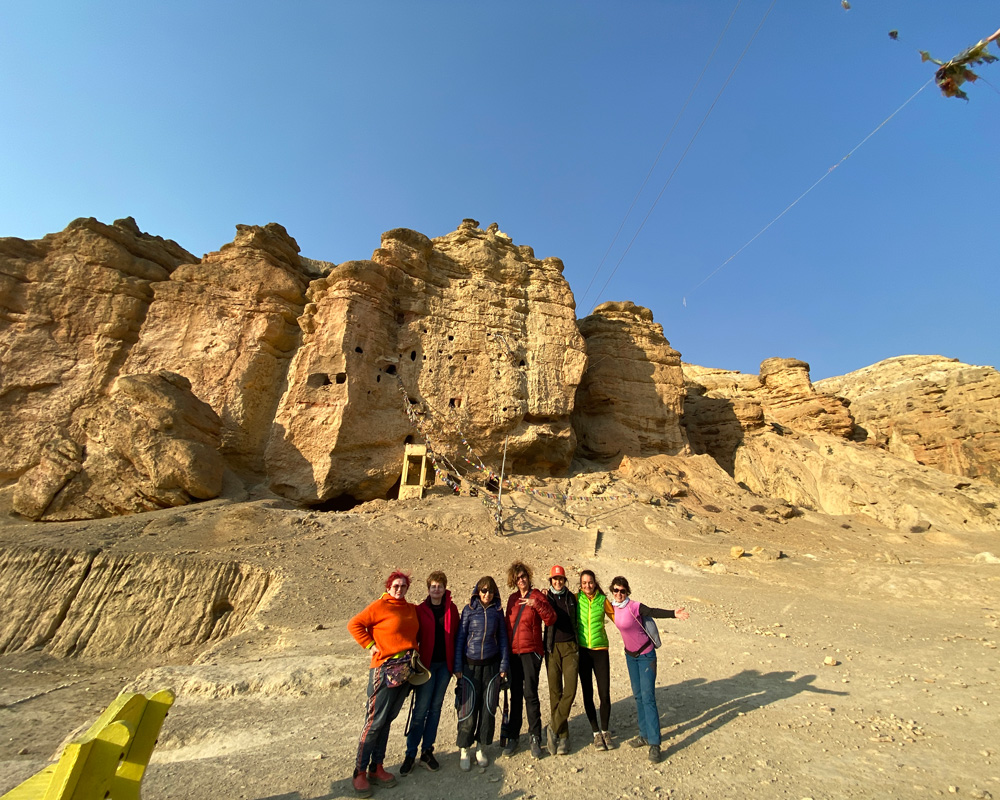
This is the part worth being direct about, because it's the real variable, not the terrain, not the isolation, not the permit rules. A woman trekking alone with a male guide for ten to twelve days is spending more one-on-one time with him than with almost anyone else on the trip. That relationship has to work, and it works best when it isn't ambiguous.
The guides we pair with solo female clients are briefed specifically on that dynamic before departure, not with a script, but with an understanding that their job is logistics, safety, and cultural translation, not companionship in a way that puts anyone in an odd position. Pemba, in the story above, offered a photo and accepted "not today" without a second thought, because that's the baseline: her pace, her preferences, no negotiation required. That's not a special accommodation for women. It's what a good guide does for any client. It just matters more when you're the only client.
Cultural respect runs both directions here too. Local families hosting a solo woman are, in our experience, often more open than they are with mixed groups. There's less performance involved, fewer people to host at once, and a woman travelling alone tends to be met with genuine curiosity rather than the slightly rehearsed hospitality that larger groups sometimes get. The rooftop with the apricots isn't an exception. It's closer to the norm than people expect.
The physical question
Upper Mustang is high-altitude desert, not high-altitude mountaineering. The trails are generally moderate, the daily elevation gain manageable, and the real physical demand is consistency over multiple days rather than technical difficulty on any single one. Women asking about a solo trek here are rarely asking the right question when they ask, "Am I fit enough?" The better question is whether you can walk five to six hours a day for a week and manage your own pace without anyone dictating it for you, which, if anything, is easier alone than in a group, because there's no faster hiker setting a pace you're not comfortable with.
A community that exists whether you look for it or not
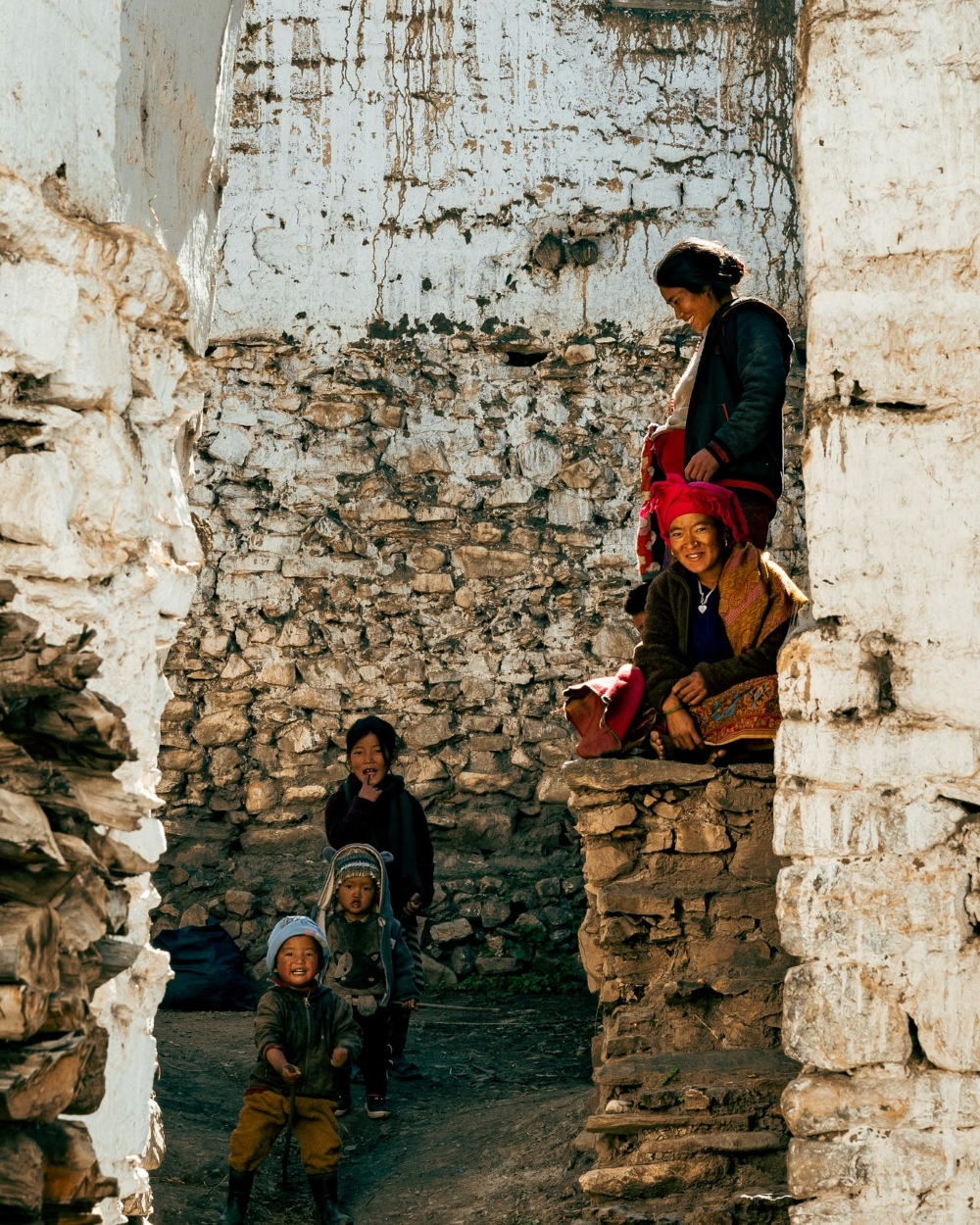
Solo doesn't mean isolated. Mustang's teahouses put you at the same table as other trekkers most evenings, and in a region that still sees relatively few solo women, there's a quiet recognition that happens between them: swapped blister remedies, shared notes on which teahouse in Charang has the better apple pie, the occasional evening spent comparing why each of them decided to do this alone. It's not curated. It's just what happens when a small number of women make the same unusual decision in the same remote place.
Practical guidance
Here's the brief version of guidance; contact us for more detail.
Permit and guide requirement: A licensed guide is mandatory for the Restricted Area Permit, solo or otherwise. This isn't a safety add-on; it's the legal structure of trekking Upper Mustang. For the full breakdown of documents and process, see our Upper Mustang Permit Guide.
Phone signal: Present in the larger villages, Lo Manthang, Charang, Kagbeni. Patchy or absent in between. Worth telling people at home this in advance so no one panics over a quiet day.
Water: Boiled or filtered water is available at teahouses along the route. Carrying a filter or purification tablets as backup is sensible practice, not solo-specific.
Best window: Upper Mustang's rain-shadow position makes it trekkable through the monsoon months when most of Nepal isn't, one of the quieter reasons it suits solo travellers wanting to avoid peak-season crowding. If you're weighing timing and routes more broadly, our complete guide to trekking Mustang covers the full picture.
FAQ
What are the safety tips for women trekking alone in remote Himalayan regions?
The fundamentals are the same as for any solo trekker — share your itinerary with someone at home, carry a means of emergency communication, and don't push through altitude symptoms to keep pace. Beyond that, choose us for the expert guidance and support you actually need on a trip like this — we brief every guide specifically on solo female clients before departure, and we'll talk you through exactly who you'll be trekking with before you book.
How should a woman prepare physically for solo trekking in Mustang?
Upper Mustang doesn't demand technical mountaineering fitness. It's high-altitude desert walking, five to six hours a day, moderate elevation gain. Build up with regular hiking or stair training in the two months before departure, and prioritise daily consistency over intensity. The trek rewards endurance, not speed.
What accommodation options exist for female trekkers in Mustang?
Room privacy isn't the issue — every teahouse on this route gives you your own room with a door that locks, no dorm-style sharing; that's standard even on the most basic nights. The real variable is bathrooms. On the stretch between Kagbeni and Lo Manthang — Chele, Syangboche, Ghami, Charang — most nights you're using a shared squat toilet down the hall, sometimes outside the main building, which matters more at 2 am at 3,600m than it sounds like it should. Lo Manthang and Kagbeni are where you'll find rooms with attached Western-style bathrooms, so if that's non-negotiable for you, we can build the itinerary to spend extra nights there rather than pushing through on the basic stretch. Charang has a couple of upgraded options too, but they book out fast in peak season, so this is a flag-it-at-booking detail, not something to sort out on arrival.
What safety devices should a solo female trekker in Mustang carry?
A Garmin inReach Mini (or similar satellite messenger) is the one piece of kit worth the cost — Mustang has no reliable network outside Kagbeni, Charang, and Lo Manthang, and even those drop out. It lets you send an SOS or a check-in text from anywhere on the route, no phone signal needed. Skip the whistle-and-first-aid-kit advice you'll find everywhere; your guide carries a full trauma kit and a local SIM that works where villages have towers, and evacuation by helicopter from Jomsom is a same-day call if it's ever needed. The device that actually changes your risk profile is the satellite one. Everything else is standard trekking gear you'd carry anywhere.
What gear should a solo female trekker pack for Upper Mustang?
Skip the generic layering advice — here's what actually matters on this specific route.
- Wind protection: A hard-shell windbreaker with a hood that cinches tightly. Afternoon gusts can reach 40–50 km/h, carrying dust and rocks through the exposed valley.
- Sun protection: A wide-brim hat and SPF 50 lip balm are essential. Protect your ears and lips as carefully as your face.
- Sleeping bag: Bring a bag rated to around -10°C. Nights can drop below freezing, even during peak trekking season.
- Trekking boots: Break them in for at least 40 km before the trek. The trail is mostly packed dirt and scree, so blisters can become a serious problem.
How do I apply for the restricted area permit for Upper Mustang as an individual?
As of March 22, 2026, solo trekkers can apply with a licensed guide; no group minimum required. The fee is $50 per person per day, and the permit is processed through your guide's agency at the Immigration Office in Kathmandu only after your arrival. You won't need to handle this yourself if you're booking with us.
What's the best travel insurance for high-altitude solo trekking?
Look specifically for a policy that covers high-altitude trekking up to at least 4,000 metres (Upper Mustang's highest points sit around there) and includes helicopter evacuation. Standard travel insurance often excludes trekking above a certain elevation by default. Check the fine print before you buy, not after.
How does Himalayan Scenery Treks match a solo woman with a guide?
We assign based on the guide's experience with solo female clients specifically, not just seniority or availability. Before you book, we'll tell you exactly who your guide would be, their language ability, and how we've briefed them on pacing and boundaries for a solo client. If it's not the right fit, we'll pair you with someone else before departure, not after.
Are there reputable operators specialising in solo female treks to Upper Mustang?
Yes, though fewer than you'd expect given the growing demand. We're one of them. We'll talk specifics before you book, including exactly which guide you'll be paired with and how we brief them for solo female clients, and we'll adjust pace and itinerary around you rather than fitting you into a fixed group schedule.
The conversation is the same one it's always been
Whatever brought you to this page — a widowed friend's trip you're thinking about repeating, a decade of solo travel that hasn't included Nepal yet, or just curiosity about whether this is actually as accessible as it sounds — the answer doesn't change. Mustang isn't waiting for you to arrive with a group. It's waiting for you to ask the right questions and pick the right guide.
That's the conversation we have with every woman before she books, not after.
Ready to talk it through? Email us. Tell us your dates and what you're looking for, and we'll walk you through exactly who your guide would be and how the trip would be shaped around you.
Or start with the details: read our complete guide to trekking Mustang for the full route breakdown, check the Upper Mustang Permit Guide if you're at the planning stage, or go straight to the Upper Mustang Trek itinerary and pricing to see how a solo departure is structured day by day.