The short answer
Nepal has two real trekking seasons — spring and autumn — which leaves a guide with roughly six active months a year, and that window is shifting later as the climate here changes. The other six months aren't idle. Most guides work another job entirely: farming, driving, cooking, security, seasonal labour, whatever their skills cover. A smaller number just keep guiding, in the regions they know best, at a slower pace and for less money, rather than switching trades for half the year.
Why this question doesn't get a real answer anywhere else
I've read a fair amount of what's out there on guide pay and guide life in Nepal, and the off-season always shows up the same way — one line buried inside a bigger post about salaries or how to become a guide, never its own question. Nobody's actually sat a guide down and asked what the other six months look like. So for this one, I did. I asked Gopal and Narayan directly, rather than describing "the industry" in general terms, and what came back was more specific than I expected.
What the trekking calendar actually looks like
.jpg)
The two real seasons are spring, March to May, and autumn, September to November. Clear skies, stable weather, and most of our bookings land inside those two windows.
Autumn used to start more predictably in September, right after the monsoon broke. That's shifted. The monsoon is ending earlier some years now, which you'd think would stretch the autumn season longer on both ends — and it does, a little, at the front. But winter is also arriving harder and earlier than it used to, especially in the mountain regions, so the season still closes out by late November regardless of when it opened. Climate change hasn't lengthened the trekking calendar. It's just moved where the edges sit, and made the edges less predictable to plan around.
Spring runs the same March-to-May window, for the same reasons in reverse: stable weather in the middle of it, monsoon closing it out from the other direction.
Outside both windows, monsoon (June to August) brings rain and leech-heavy lower trails, and winter (December to February) brings cold and snow that closes some high passes, though hardier routes like Everest still see trekkers through the cold months. This isn't an HST scheduling gap. Every agency's guides face the same thin stretch, whichever company they work for.
In their own words — what our guides actually do
Ask ten guides what they do between late November and March, and you won't get one answer. It tracks pretty closely to what else they're trained or skilled in.
A good number of our guides work as security guards during the gap. Others go back to a trade they carry outside guiding — cooking, driving, cashiering, Parking lot attendant
— because a guiding license doesn't replace those skills; it sits alongside them. Porters follow a similar pattern, though the work tends to skew even more physical: labour, driving, whatever pays through the winter.
Farming is the other constant. A large share of our guides and porters come from villages where their family still works land, and the off-season is when they're actually home for it — planting, harvest, the parts of the agricultural calendar that don't wait for tourist demand to pick back up.
A few take on part-time work in stores or restaurants, in Kathmandu or Pokhara or closer to home, rather than a second full trade. It's less committed than farming or a driving job, but it fills the months.
Gopal and Narayan don't do any of that. Their off-season is still trekking — just less of it, and at a slower pace than peak season allows.
Not a full stop: off-season trekking in other regions

I asked them directly whether the off-season is a complete stop, or whether they keep working somewhere. Both said the same thing, in different words: they keep guiding, but only in regions they already know well. As Gopal put it, they take trekkers to "the regions we have explored and have expertise providing the full experience to the travellers." Not a new region every winter to chase whatever demand exists — the same areas they've built real knowledge of, where they can still give a client the complete experience even outside peak conditions.
That distinction matters more than it sounds like. A guide who only knows Everest doesn't suddenly become a safe or useful guide in Dolpo just because there's a booking there. What Gopal and Narayan are describing is depth over coverage — staying inside the routes they've actually earned expertise in, year-round, rather than spreading thin across regions to keep working through the quiet months.
Staying ready for the next season
Trekking isn't seasonal for the body, even when the work is. I asked Gopal whether he does anything specific to stay ready between seasons — training, fitness, route scouting. His answer was short and direct: "Ofc. We have to stay fit the whole year, preparing our bodies to adapt to the harsh environment of the Himalayas."
That's not a throwaway line. A guide who lets six months pass without conditioning shows up to March at a real disadvantage, not just physically but in how quickly they can read altitude, pace, and a client's condition on the trail. The guides who've done this longest tend to treat fitness as a year-round baseline, not something you build back up each spring.
How many years, and what's changed
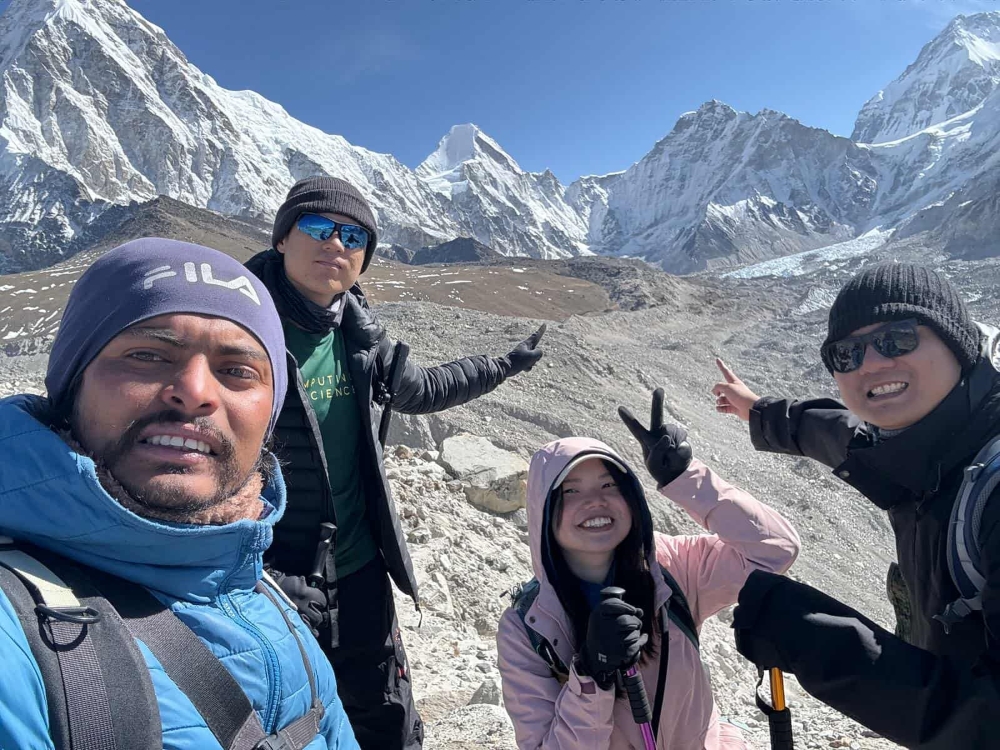
Gopal has been guiding since 2009. Narayan since 2002 — over two decades on Nepal's trails, which puts him guiding through weather patterns most of today's trekkers have never experienced.
Both pointed to the same shift when I asked what's changed: the mountains used to run colder and more stable than they do now, before climate change reshaped the pattern. The weather, in their telling, was simply more consistent in those earlier years — fewer of the sudden shifts and earlier-arriving winters that now blur the edges of the season. It's not a complaint so much as an observation from two people who've spent over twenty and seventeen years respectively watching the same peaks change season to season.
What most trekkers don't know about the off-season
I asked what would surprise a first-time trekker about travelling outside peak season. Both answers landed on the same three things: lower prices, fewer crowds, and something less tangible that's harder to sell in a brochure — the teahouses themselves feel different.
During peak season, a teahouse is running at full capacity, every room booked, every table turning over fast. Off-season, with far fewer trekkers coming through, the same teahouse has room to actually host you rather than process you. Guides described a shift in how you're treated — closer to being folded in as family for a night than served as one guest among forty. It's the kind of thing that doesn't show up in a cost comparison, but it's often what people remember longest.
How HST supports guides through the off-season
I'll be straightforward here rather than describe a program we don't run. We don't currently carry a formal off-season retainer or salary that continues once trekking demand drops. What we do is keep guides in the loop for whatever winter and monsoon bookings do come through, and we don't treat those bookings as filler — the same guides who lead our peak-season treks get first call on the ones that land in the quiet months, rather than handing off-season trips to whoever's cheapest or most available. It's not a policy with a name. It's closer to how we'd rather run it, given who we've built these relationships with.
Where I think this matters more than a written policy is continuity. The guides who've worked with us for years, through the full calendar, are the ones who know our clients, our routes, and each other. That's worth more to a trek than something we could put on a benefits page.
What guides earn — and what to tip — in peak vs. off-season
The day rate doesn't move with the season. What changes off-season is how many paid days a guide gets in a year, not what each of those days pays.
| Role | Route / Region | Day Rate |
|---|---|---|
| Guide | Standard route (Langtang, Annapurna) | $30 – $40 |
| Guide | Everest region | $40 – $50 |
| Guide | Restricted route (Manaslu) | $50 |
| Porter | Everest & Annapurna regions | $20 – $25 |
| Porter | Lower-altitude / Langtang routes | $15 – $20 |
Tipping is where the season shifts the math a little. In peak season, groups are larger and more frequent, so a guide's tip income adds up across more treks. Off-season, with fewer trekkers per guide and fewer treks overall, that same tipping guideline stretches across far fewer paid days:
| Role | Suggested Daily Tip |
|---|---|
| Lead guide | $10 |
| Porter | $5 |
Same guideline, peak or off-season — but worth keeping in mind if you're trekking in the quieter months and want your tip to reflect the gap in demand your guide is working around. For the complete tipping breakdown by trek and region, see our full guide and porter pay guide.
Why this matters when you're choosing who to book with
An agency that keeps its guides working through the thin months, in whatever form that takes, tends to have a more experienced, longer-tenured team than one that treats guiding as purely seasonal, hire-when-busy work. You won't see that difference on a price comparison. You'll see it in whether your guide has done this route forty times or four, and whether they've spent seventeen years watching these same mountains change.
That's the team we've built at HST. Gopal and Narayan aren't the exception here, they're the standard we hire toward: guides who stay in the work year after year, through the quiet months as much as the busy ones, because guiding is the trade, not a seasonal gig between other jobs. When you book with us, you're not getting whoever was available that week. You're getting someone who knows the route, the altitude, and how to read a client's pace, because they've done it enough times to stop guessing.
If that's the kind of team you want on your trek, see our treks or get a custom trip quote, and we'll walk you through exactly who'd be guiding you before you book.
FAQs
How many months a year do Nepal trekking guides actually work?
Roughly six active months, spread across spring (March–May) and autumn (September–November) — though climate change is shifting exactly where those windows start and end each year, especially in autumn.
What do trekking guides do when it's not trekking season?
It varies by guide. Common answers include farming, security work, driving, cooking, general labour, or part-time work in stores and restaurants. A smaller number, like Gopal and Narayan, keep guiding off-season trips exclusively, in regions they already know well.
Do trekking companies pay guides during the off-season?
Not typically as a standing salary. Guides are generally paid per trek, so income during the off-season depends on whatever bookings come in, which is part of why many take on other work.
Should I tip more in the off-season than peak season?
The daily guideline stays the same — around $10 for a guide, $5 for a porter — but since off-season guides get far fewer paid days overall, tipping generously on the trips they do get matters more.
What's different about trekking Nepal in the off-season?
Lower prices, smaller crowds, and teahouses that have the room and time to treat you less like a booking and more like family for the night — something both Gopal and Narayan pointed to unprompted.
The bottom line
Guides work roughly six real months a year on the trail, in a window that's shifting later as the climate here changes, and the other six look different for almost everyone — farming, driving, security, part-time work, or in Gopal and Narayan's case, guiding the same regions year-round at a slower pace, staying fit for it every month in between. Read our full guide and porter pay breakdown for how the numbers behind all of this actually work.