Trek the Himalayas with us with every cost breakdown given here.
How Much Will It Cost To Trek To The Himalayas?
Table of Contents
A trekker from the Netherlands wrote to us last month asking why HST's Everest Base Camp price looked so much higher than what he'd found elsewhere. He'd read a blog quoting $800 for the whole trek. We told him plainly: that number is outdated, and it's wrong for 2026. He'd been pricing a Nepal that no longer exists. He booked with us anyway, did the trek, and came back happy, but that $800 figure never should have been in his head to begin with.
That's the real story behind Himalaya trek costs right now. A guided trek in Nepal runs $700 to $2,300 in 2026, and the gap between that range and the numbers still floating around online usually comes down to one thing: which year's rules the writer was pricing. Everest, Manaslu, and Upper Mustang each carry different permit costs; guide requirements changed nationwide in 2023, and half the cost guides you'll find haven't caught up. Here's what a Himalaya trek actually costs today, region by region, with this year's rules built in.
Why Does Some "Himalaya trip" Look So Cheap
Before the breakdown, it's worth explaining why a number like $800 for Everest Base Camp shows up at all, because it's not always dishonesty. Sometimes it's a genuinely old blog post that never got updated after the 2023 guide law or the TIMS overhaul. Sometimes it's a quote that excludes permits, insurance for staff, or a licensed guide entirely- an unregistered freelance "guide" working outside an agency, which is illegal on every major route now and carries real risk if something goes wrong at altitude. And sometimes it's simply a different, shorter itinerary being compared against a longer one. Whatever the reason, the fix is the same: ask what's actually included before comparing two numbers.
Factors That Influence the Cost of Any Himalayan Trek
Route and Duration
Run the actual math on HST's own packages and something counterintuitive shows up: Everest Base Camp costs less per day ($1,700 ÷ 15 = $113/day) than Ghorepani Poon Hill does ($699 ÷ 5 = $140/day), even though the total price is more than double. Annapurna Circuit is cheaper still at $88/day ($1,235 ÷ 14). Longer treks aren't more expensive per day, they're less, because fixed costs (Kathmandu hotel nights, permit paperwork, the guide's flat daily rate) spread across more trail days.
What actually drives Everest's higher total is the Lukla flight, not the trek itself. A Kathmandu–Lukla–Kathmandu round trip runs $430–510 per person at $215–255 each way, which is roughly 25–30% of the entire $1,700 package before a single teahouse night is booked. Ghorepani Poon Hill has no equivalent: it's road-accessible from Pokhara, so there's no flight cost, no weather-delay risk, and no restricted-area permit stacking, just the standard ACAP and TIMS fees, roughly $50 total, the same baseline every Annapurna-region trek pays.
So the real question when comparing routes isn't "how many days," it's "does this route require a mountain flight, and how many restricted-area permits stack on top of the base fee." That's the actual $600 gap between Ghorepani and Everest, not the extra 10 days on the trail.
A Licensed Guide Is Not Optional Anymore
Since April 1, 2023, the Nepal Tourism Board has required a licensed guide, booked through a TAAN-registered agency, for any trek through a National Park, Conservation Area, or Restricted Area. The board's own reasoning was safety-driven: in the 2019–20 season alone, 390 foreign trekkers were reported lost or missing, most of them solo or independent trekkers, and the rule was built to close that gap. Enforcement has gotten considerably stricter through 2026: digital checkpoint scanning at entry points, on-the-spot fines, and permit confiscation for anyone caught without one.
This covers the Annapurna Conservation Area (checkpoints at Birethanti and Besisahar), Langtang National Park, and Manaslu, which has required a guide and a special restricted-area permit since before 2023, given its proximity to the Tibetan border. Upper Mustang and Dolpo carry the same restricted-area requirement.
Sagarmatha National Park, home to Everest Base Camp, is the one real exception. Solo trekkers don't need a licensed guide by law. What they need instead is the Khumbu Trek Card (NPR 2,000, issued by the Khumbu Pasang Lhamu Rural Municipality) and the Sagarmatha National Park entry permit (NPR 3,000), and the trek card itself carries a tracking system the municipality uses in place of a guide requirement.
We include a government-licensed guide on every HST package regardless, Everest included, because the exception is a legal technicality, not a safety recommendation. A guide on a 15-day trek to 5,364m is doing route-finding, altitude monitoring, and medical triage as much as leading the way, and that's worth paying for whether the law requires it or not.
A guide typically runs $25–60/day depending on the route and whether it's shared across a group or dedicated to you privately. Outside Sagarmatha, it's not optional at all. Inside it, it's the one line item an outdated quote can legitimately drop, though we'd argue it shouldn't.
Group vs. Private: What the Guide Cost Split Actually Looks Like
The $25–60/day guide rate hides the real number that matters: how many people are splitting it. Here's what a private guide actually costs per person as group size changes, using our own day rates.
Standard routes (Everest, Annapurna, Langtang) — 10-day trek, guide at $45–50/day:
| Group Size | Total Guide Cost | Your Per-Person Share |
|---|---|---|
| Solo / Private | $450–500 | $450–500 |
| 2 people | $450–500 | $225–250 |
| 4 people | $450–500 | $113–125 |
| 6 people (standard group) | $450–500 | $75–90 |
Manaslu (restricted area) — 12-day average, guide at $40–60/day:
| Group Size | Total Guide Cost | Your Per-Person Share |
|---|---|---|
| Solo / Private | $480–720 | $480–720 |
| 2 people | $480–720 | $240–360 |
| 4 people | $480–720 | $120–180 |
| 6 people (standard group) | $480–720 | $80–120 |
The jump from solo to a 6-person group cuts your guide cost by roughly 80–85% either way. If you're trekking alone and budget matters more than setting your own pace, the fastest way to close that gap isn't cheaper lodging or skipping insurance; it's finding three or four more people to join your departure date. We can usually help match solo bookers into an existing group departure on request.
Accommodation: Teahouses to Luxury Lodges
| Tier | Per Night | What You're Actually Getting |
|---|---|---|
| Basic teahouse | $5–15 | Shared twin room, shared bathroom, communal dining hall. This is where 90% of teahouse-package trekkers sleep. |
| Mid-range (Namche, Tengboche) | $20–40 | Attached bathroom in some rooms, warmer bedding, noticeably better food. Common upgrade at acclimatization stops. |
| Luxury (Yeti Mountain Home chain) | $200–400 | Heated private rooms, real hot showers, restaurant-quality menus, panoramic lodge locations in Lukla, Phakding, and Namche. |
The luxury tier only exists in the lower villages. Seven nights at Yeti Mountain Home-standard lodges runs roughly $800 per person on its own, more than half of HST's entire standard EBC package price for just the beds. But that luxury infrastructure stops around Pheriche. At Lobuche and Gorak Shep, the two highest, coldest nights of the trek, even fully luxury itineraries drop back to standard teahouses, because there's no other option at 4,900m+. Budget roughly $30–40/night for those two nights regardless of which tier you booked everywhere else.
Peak Season vs. Off-Season
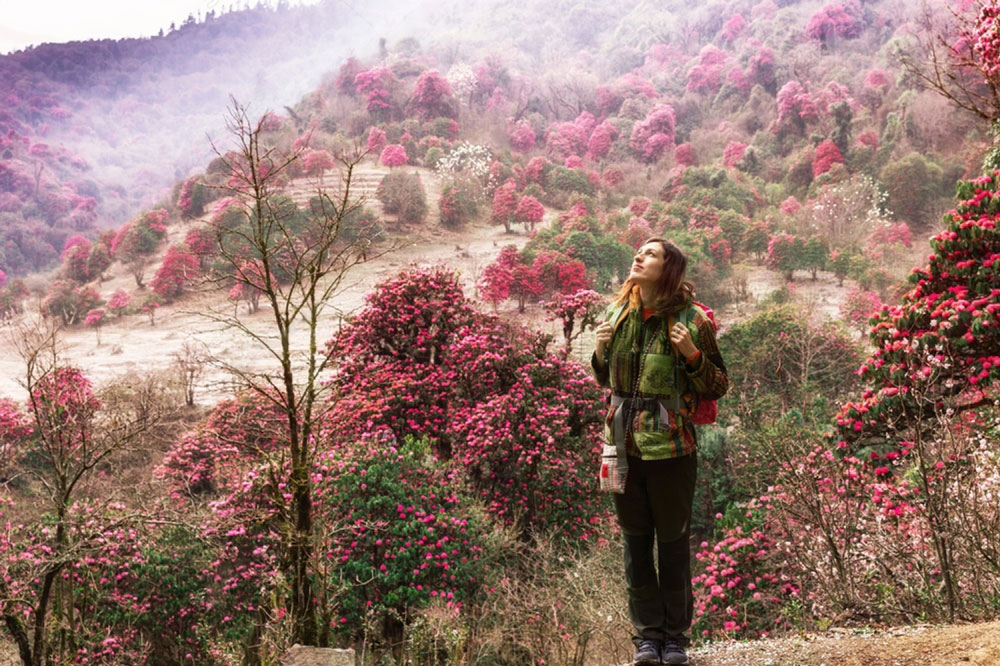
Spring (March–May) and autumn (September–November) are peak season: clear skies, the busiest trails of the year, and the tightest lodge and guide availability. Autumn overlaps with Dashain and Tihar, Nepal's two biggest festivals, when Kathmandu hotel rates climb and experienced guides get booked out weeks in advance, so late booking in peak season doesn't just cost more, it risks not finding a guide at all.
Winter and monsoon run cheaper on nearly every line item- lodges, guides, flights- but you're trading it for real weather risk: monsoon brings Lukla flight delays and limited high-altitude visibility, winter brings closed high passes and colder nights at altitude.
Off-season pricing is a genuine discount, not a hidden catch, but it only makes sense for trekkers who've done a Himalayan trek before and know what the trade-off actually looks like on the ground.
Cost Breakdown Of Major Himalaya Treks: What HST Actually Charges
Rather than give you generic market ranges, here's what our own packages run: the numbers a reader would see if they clicked through right now.
| Trek | Duration | HST Price (from) |
|---|---|---|
| Ghorepani Poon Hill | 5 days | $699 |
| Annapurna Base Camp | 12 days | $699 |
| Annapurna Circuit | 14 days | $1,235 |
| Manaslu Circuit | 14 days | from $1,250 |
| Langtang Valley | 10 days | $999 |
| Everest Base Camp | 15 days | $1,700 |
| Upper Mustang | 17 days | $2,250 |
Not sure which trek fits your budget and timeline?Send us your dates, and we'll quote you directly →
A few of these are worth a closer look, because the price hides real differences underneath.
Annapurna Base Camp — $699
12 days, running Nayapul to Ghandruk, Chhomrong, Dovan, Deurali, Machhapuchhre Base Camp, and Annapurna Base Camp itself at 4,130m, before retracing the same corridor back to Pokhara. The $699 covers $50 in permits (ACAP $30 plus TIMS $20), a guide shared across the group at roughly $55–65 per person, a porter at roughly $60–75 per person (1 per 2 trekkers), eight nights of teahouse lodging and meals on the trail, and the Nayapul transport connection to Pokhara. Full itinerary and inclusions are on our 12-day Annapurna Base Camp trek page.
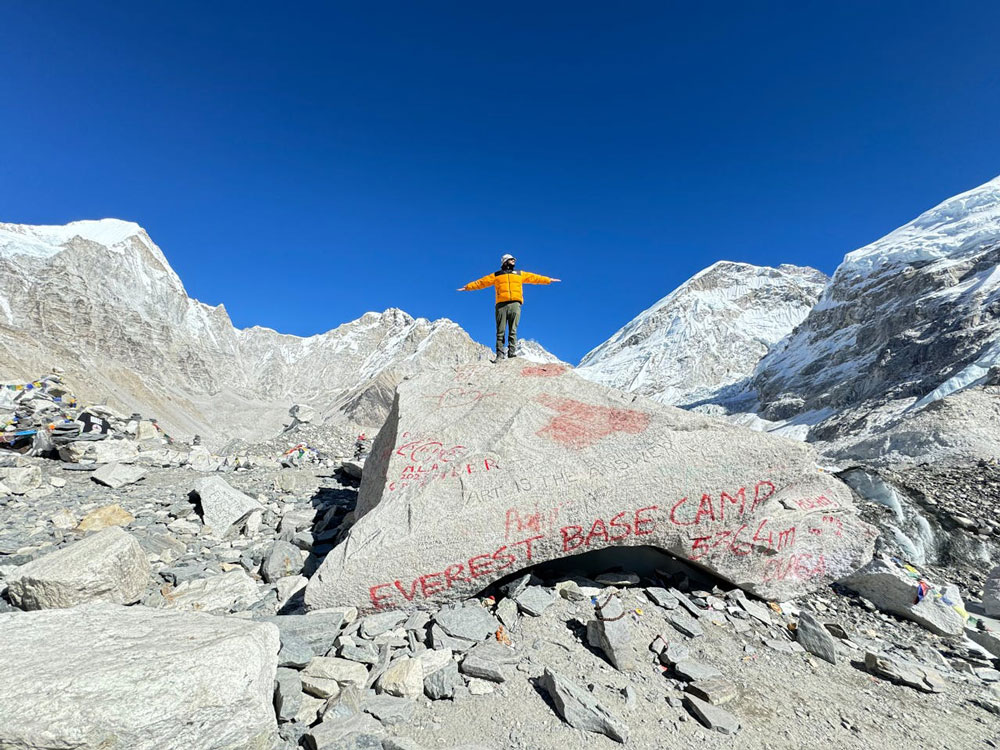
Everest Base Camp — $1,700
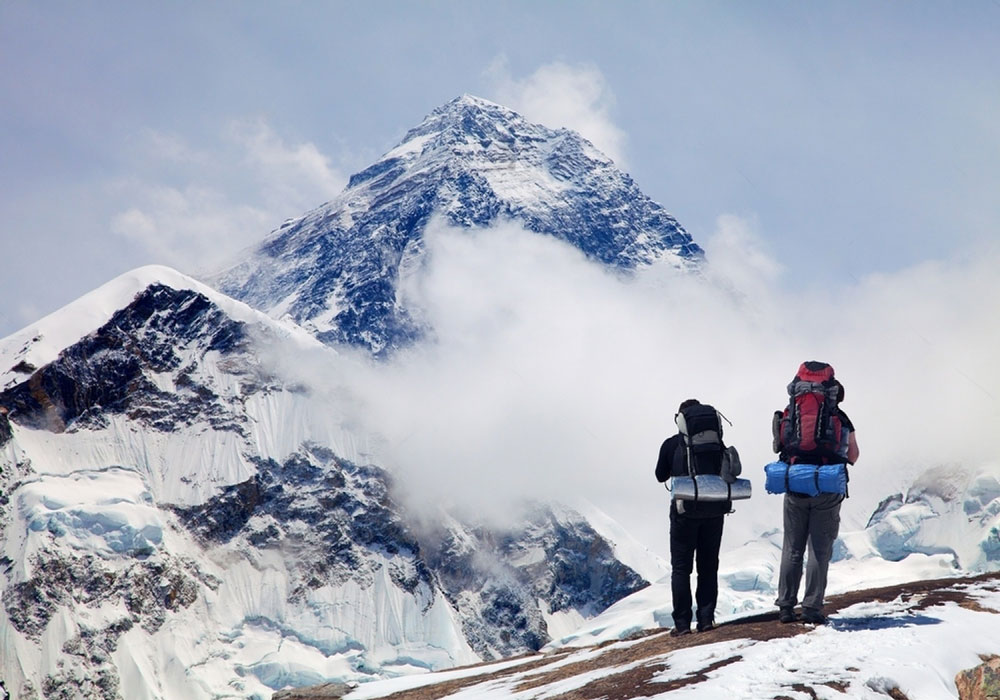
This is the trek our Dutch client asked about. The route runs Lukla to Phakding, Namche Bazaar for two acclimatisation nights, Tengboche, Dingboche for another two, Lobuche, Gorak Shep, Everest Base Camp, and Kala Patthar for sunrise, before retracing back to Lukla. The Lukla flights alone run $430–510 round trip, permits add another $45–50 (Khumbu entrance plus Sagarmatha National Park), and the $20 local government tax, guide, porter, and eleven nights of teahouse lodging and meals fill out the rest. There's no version of a legally compliant Everest Base Camp trek that runs anywhere near $800 in 2026; the flights and permits alone are $500+ before a single teahouse night is booked. Single supplement is $350 if you want your own room. View the full Everest Base Camp itinerary →
Annapurna Circuit — $1,235
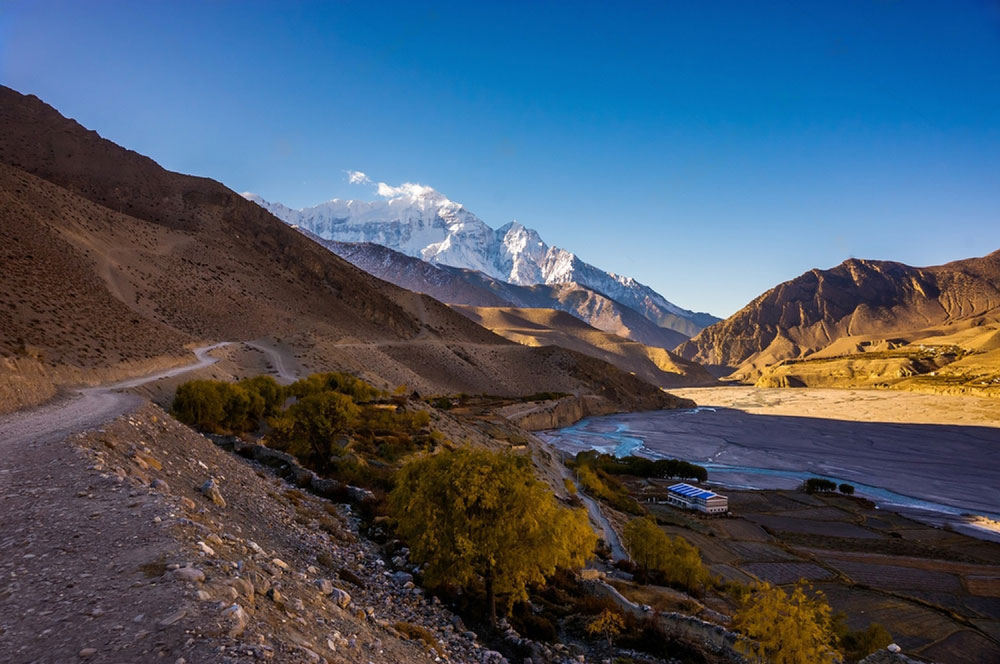
14 days, starting from Jagat rather than the older Besisahar start for better acclimatisation, through Dharapani, Chame, Pisang, Manang for two acclimatisation nights, Yak Kharka, Thorong Phedi, over the Thorong La Pass at 5,416m, down to Muktinath, then Jomsom and a flight back to Pokhara. Daily on-trail cost runs $8–10/day lodging, $8–10/day guide (shared across the group), $12–15/day meals, and $5–7/day porter share, roughly $33–42/day, with the rest covering permits (ACAP $30, TIMS $20), the Jomsom–Pokhara flight, and pre/post-trek Kathmandu and Pokhara nights. The Thorong La crossing is the one day on this route where guide experience actually earns its cost: altitude, weather, and a pre-dawn start all stack on the same day, and it's the single most common turnaround point for parties that started too fast out of Manang. Read more on the Annapurna Circuit.
Manaslu Circuit — from $1,250
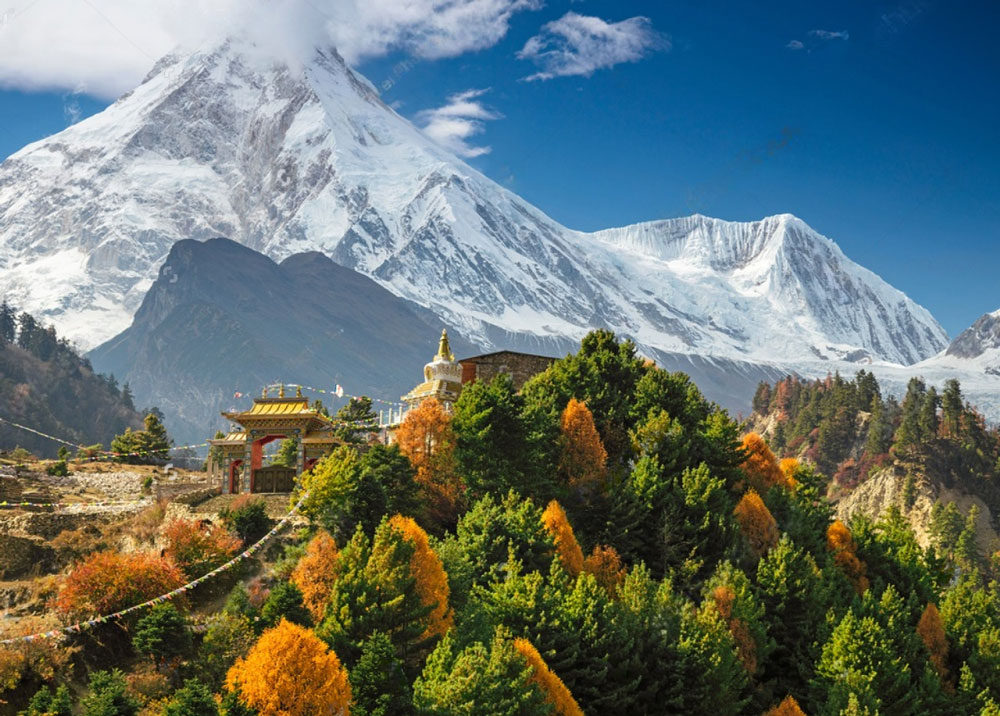
14 days, Machha Khola to Jagat, Deng, Namrung, Lho, Samagaon for two acclimatisation nights with views of Manaslu itself at 8,163m, Samdo, over the Larkya La Pass at 5,106m, down to Bimthang and Dharapani for the return jeep to Kathmandu. The permit structure is tiered, not flat: MRAP is $100 for the first 7 days plus $15/day beyond that in autumn ($75 + $10/day off-season), plus MCAP ($30) and ACAP ($30). Most itineraries run 8–9 days inside the restricted zone, so budget for the extra per-day charge, not just the headline $100. For the full day-by-day cost math, group vs. private, permit tiers by season, see our Manaslu Circuit cost guide. View current Manaslu departures →
Langtang Valley — $999
10 days round trip from Kathmandu, one of the few treks here where transport to the trailhead (Syabrubesi) is bundled into the price instead of billed separately. The route runs through Lama Hotel and Langtang village, largely rebuilt after the 2015 earthquake that devastated the valley, up to Kyanjin Gompa at 3,870m for views of Langtang Lirung, then back down. Covers three nights in a Kathmandu hotel, all teahouse meals and lodging on the trail, one guide, porters (1 per 2 trekkers), and the park permit and TIMS fee. Full package details are on our Langtang Valley trekking page.
Upper Mustang — $2,250
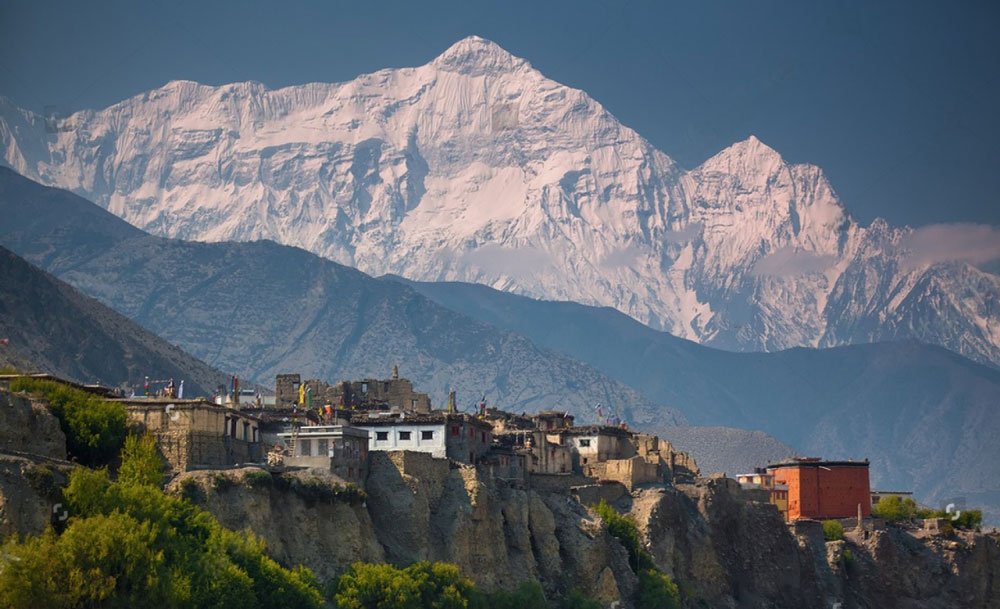
17 days, flying Pokhara to Jomsom, then trekking through Kagbeni, the checkpoint into the restricted zone, Chele, Syangboche, Ghami, Charang, and into Lo Manthang, the walled former royal capital of the Mustang kingdom, spending two nights there before retracing the route back to Jomsom. The Restricted Area Permit is $50/person/day, which is why this trek costs what it does: roughly $500 for the standard 10 days inside the zone. As of March 22, 2026, solo trekkers can obtain this permit too, provided they're with a licensed guide; the old two-person minimum is gone. Single supplement is $290. See the Upper Mustang trek details →
Getting to the Trailhead: Real Transport Costs
This is the part every cost guide skips or guesses at. Here's what these legs actually cost as of 2026:
| Leg | Cost |
|---|---|
| Kathmandu → Lukla flight | $215–255 one-way (Ramechhap diversion adds 4–5hr ground transport in peak season) |
| Kathmandu → Pokhara flight | $120 one-way |
| Pokhara → Jomsom flight | $180 one-way |
| Kathmandu → Pokhara tourist bus | $10–25 |
| Kathmandu → Machha Khola (Manaslu trailhead), private jeep | $350 for up to 7 people |
| Dharapani → Kathmandu (Manaslu return), shared jeep | $25–35/person |
| Pokhara → Lo Manthang helicopter charter | ~$3,000/way (aircraft, not per-seat; only sensible for groups) |
Flights in and out of Jomsom and Lukla both run on tight morning-only weather windows. If your itinerary doesn't carry at least one buffer day around either flight, that's a planning gap worth fixing before you book, not a risk worth discovering at the airport.
Additional Costs to Budget For
Nepal Tourist Visa
Every foreign trekker needs one, and it's routinely left off cost guides, which is part of how a quote ends up looking artificially cheap. Visa on arrival at Kathmandu airport costs $30 for 15 days, $50 for 30 days, or $125 for 90 days, paid in cash (USD preferred, fresh bills). Most trekkers on a 10–17 day itinerary get the 30-day visa. It's mandatory, and it sits outside every package price on this page.
Permits and Entry Passes
The TIMS system has changed meaningfully, and it's worth knowing before you budget around outdated advice. The old individually-purchased Green TIMS card no longer exists. TIMS, where it's still required at all, is now issued only through your registered agency. Some regions have moved off it entirely: Khumbu now runs its own local entrance fee (Pasang Lhamu RM, NPR 2,000 + VAT) instead. Manaslu, Langtang, and Annapurna still require it. See our trekking permits and entrance fees guide for the current fee by region.
Gear
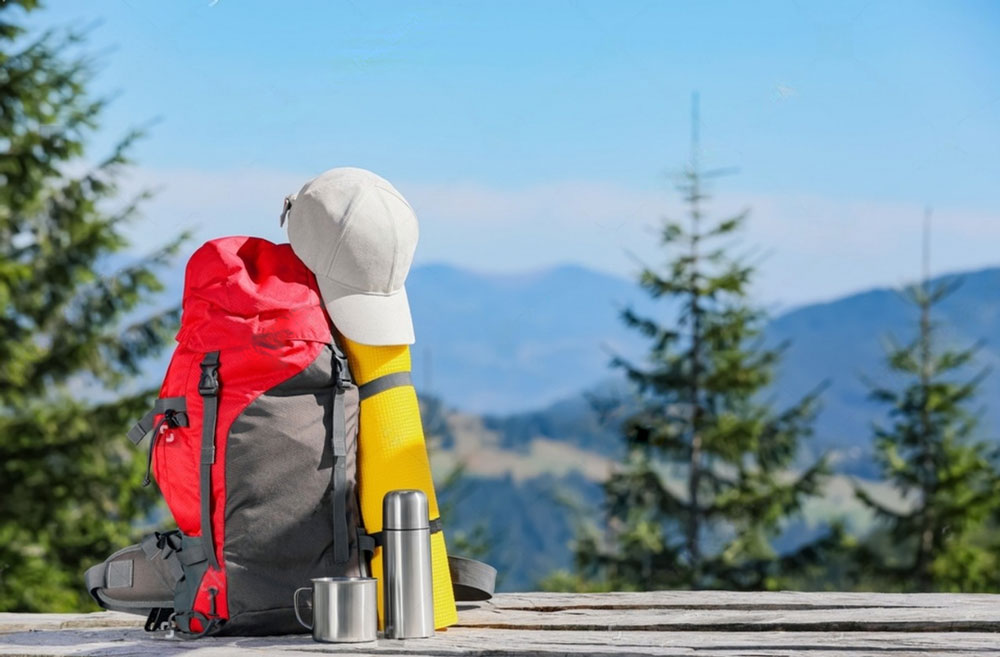
Renting sleeping bags, down jackets, and trekking poles in Kathmandu is the cheaper route for a one-time trip, around $100–150 for a two-week trek. That typically covers a cold-rated sleeping bag, a down jacket, trekking poles, and a duffel bag for your porter to carry. Buying quality gear runs $500–1,000.
Travel Insurance (Mandatory)
Must cover high-altitude trekking to at least 5,500m and helicopter evacuation. Budget $50–150 depending on trip length. A helicopter evacuation without insurance runs $3,000–5,000 out of pocket. This is not a place to save money. See our travel insurance guide for what to look for in a policy.
Tips: Not mandatory, but standard practice in Nepal. On a 10–14 day trek, guides typically see $10–15/day and porters $5–10/day from grateful trekkers, since a guide and porter earning $35–50/day and $25–35/day respectively aren't living on wages alone.
Booking and Payment: What to Expect
A deposit of 20–30% of the total package price secures your booking, with the balance due before your trek starts. Payment is accepted by card, bank transfer, or online. If plans change, refunds follow our cancellation and refund policy. Weather-related flight cancellations (Lukla, Jomsom) are handled as schedule adjustments rather than refunds, since the delay is outside any operator's control.
What Comfort Actually Buys You
A nicer lodge doesn't change your trek. It changes how you recover between days of it. The value isn't the hot shower or the Wi-Fi signal, though you'll get both on select routes. It's arriving at a comfortable room after a long day at altitude with the energy the next morning to actually be present: for the village you're walking through, the conversation with a guide who's spent twenty years on that trail, the monastery session that runs long because someone wanted to keep talking.
If I were choosing where to put extra budget, it's a guide who knows the region deeply rather than just competently, and lodging that lets you show up rested rather than depleted. Everything else is genuinely optional.
How to Choose the Right Himalaya Trek Based on Your Budget
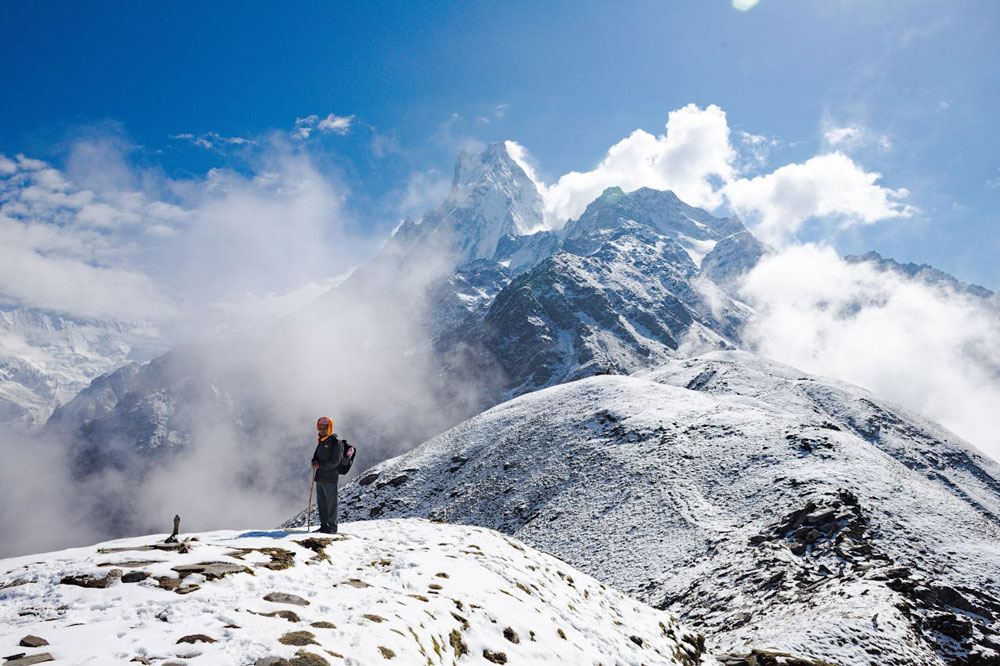
If budget is the primary constraint, Ghorepani Poon Hill or Annapurna Base Camp, both $699, get you real Himalayan scenery and a genuine sense of accomplishment in under two weeks. If you have more room to spend, I'd put the money toward guide quality and trip length before lodge amenities. A longer trek with a better guide beats a shorter one with a nicer bed, most of the time.
Still not sure what fits your budget?Talk to our team → and we'll walk you through the honest number for your dates, no upsell, no outdated quote.
FAQs
Do I need a guide to trek in Nepal?
Yes, without exception. Since April 2023, a licensed guide from a registered agency is legally required on any route through a National Park, Conservation Area, or Restricted Area, which covers nearly every major trek in the country. Checkpoints now scan digitally, and trekking without one risks fines, permit confiscation, and being turned back on the trail.
Is the TIMS card still required?
Depends on the region. Khumbu has replaced it with a local entrance fee. Manaslu, Langtang, and Annapurna still require it. Either way, the old self-purchased Green TIMS card is gone; it's now issued only through your registered agency, so you can't buy it yourself in advance.
What's the single biggest cost variable?
Which restricted-area permits your route requires. Manaslu and Upper Mustang add $130–500+ in permits alone compared to an unrestricted route like Annapurna Base Camp. This is usually the gap between an accurate quote and an outdated one.
Can I reduce cost by trekking without a guide?
No, not legally, on any major route. Enforcement is active in 2026, and the penalties- fines, permit confiscation, being turned back at checkpoints- aren't worth the savings. Any quote that assumes a guideless trek is quoting something you can't actually do.
Is off-season trekking actually cheaper?
Yes. Manaslu permits alone drop by $25 per person outside autumn, and teahouse meals run cheaper too. I'd only recommend it to trekkers who've done a Himalayan trek before and know what they're trading: reduced visibility, colder nights, and a real chance of weather delays.
What if my Jomsom or Lukla flight gets cancelled?
Build in a buffer day. Both routes fly on morning-only weather windows, and cancellations are common enough in peak season that a tight schedule with no slack is the single most common planning mistake we catch before it becomes a problem.
Is food included in the trek price?
Yes, on all HST packages: breakfast, lunch, and dinner on trekking days are included, typically dal bhat, noodles, and simple Western options at teahouses. Snacks, bottled water, and extra drinks aren't included.
Do prices differ for solo trekkers vs. a group?
Yes, mainly through the guide cost. A group trek shares one guide across several trekkers, so the per-person guide cost drops significantly. Solo trekkers and couples on a private trek pay for a dedicated guide outright, which is the main reason private treks cost more per person.
Do I need a visa before I arrive?
No. Most nationalities can get a Nepal tourist visa on arrival at Kathmandu airport: $30 for 15 days, $50 for 30 days, or $125 for 90 days, paid in cash. It's not included in any trek package price, and it's one of the most commonly forgotten line items in third-party cost estimates.
Why is HST's price higher than a number I found online?
Usually because that number is missing something: an outdated permit rate, no licensed guide, no travel insurance for staff, or a shorter itinerary than the one being compared. If you've got a quote that looks too good, send it to us, and we'll tell you honestly what it's missing.
What's not included in the package price, generally?
International flights to Nepal, the Nepal tourist visa, personal trekking gear, travel insurance, tips, and extras like hot showers, Wi-Fi, and battery charging at teahouses (typically $2–5 each at altitude).
Conclusion
The honest number for a Himalaya trek in 2026 is $700 to $2,300, and where you land in that range depends almost entirely on permits, guide arrangement, and trip length, not on how good a deal you can find. The trekkers who end up frustrated on the trail are usually the ones who booked against a number from a blog that hasn't been updated since the guide law changed, not the ones who paid a fair price upfront. Our Dutch client's $800 quote was never going to happen legally in 2026; what he got instead was a trek that actually ran the way it was supposed to, permits sorted, guide licensed, nothing cut to hit an outdated number.
If you're planning a trek and the numbers you're finding don't add up, that's worth a conversation before you book, not after. Get a personalized quote from our team →, and we'll tell you plainly what a route actually costs this year.