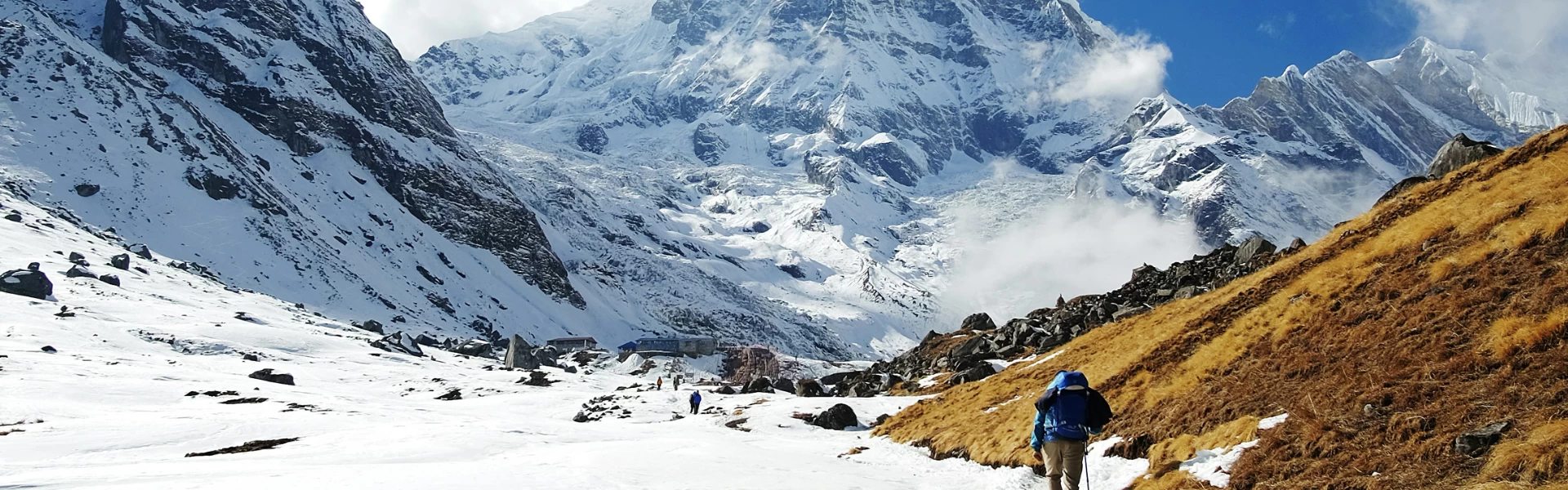
Most people ask me, "When's the best time for Annapurna?" They already hold travel dates; they can't move. Wrong order. Dates should follow the route, not the other way round — Thorong La at 5,416m and the Sanctuary at 4,130m don't run on the same calendar, and a date that's perfect for one can close the other.
Short answer: October–November for the clearest, most stable conditions across every route, including the Circuit's high pass. March–May is a close second — warmer, greener, quieter. Past that, it splits by trek. Here's how I actually route clients.
Annapurna Circuit: When to Go
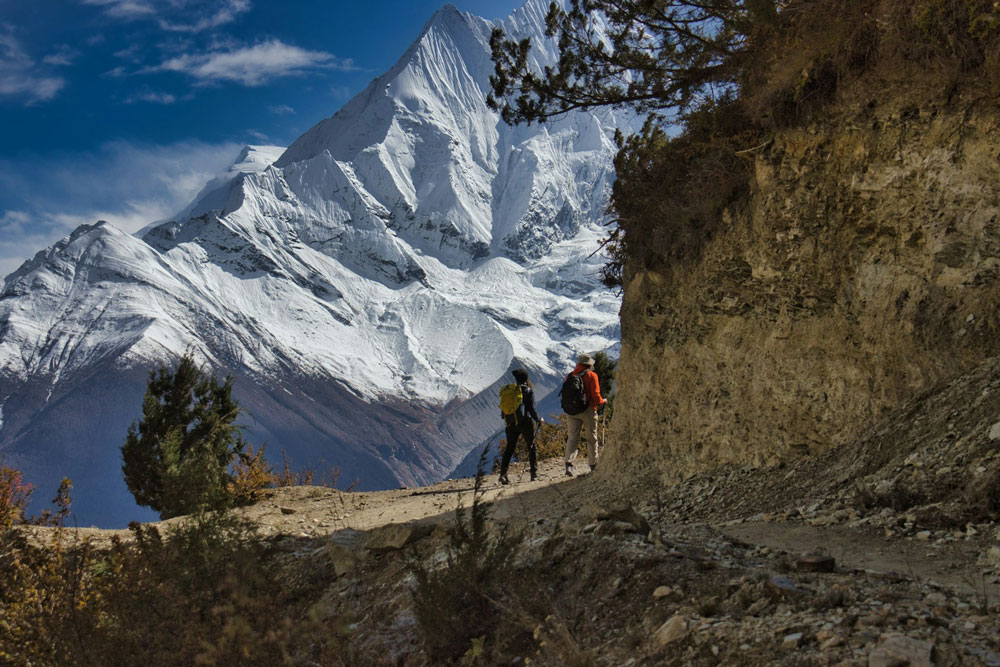
The Annapurna Circuit Trek lives and dies by Thorong La. Everything below the pass is forgiving. The pass itself is not.
Autumn (October–November)
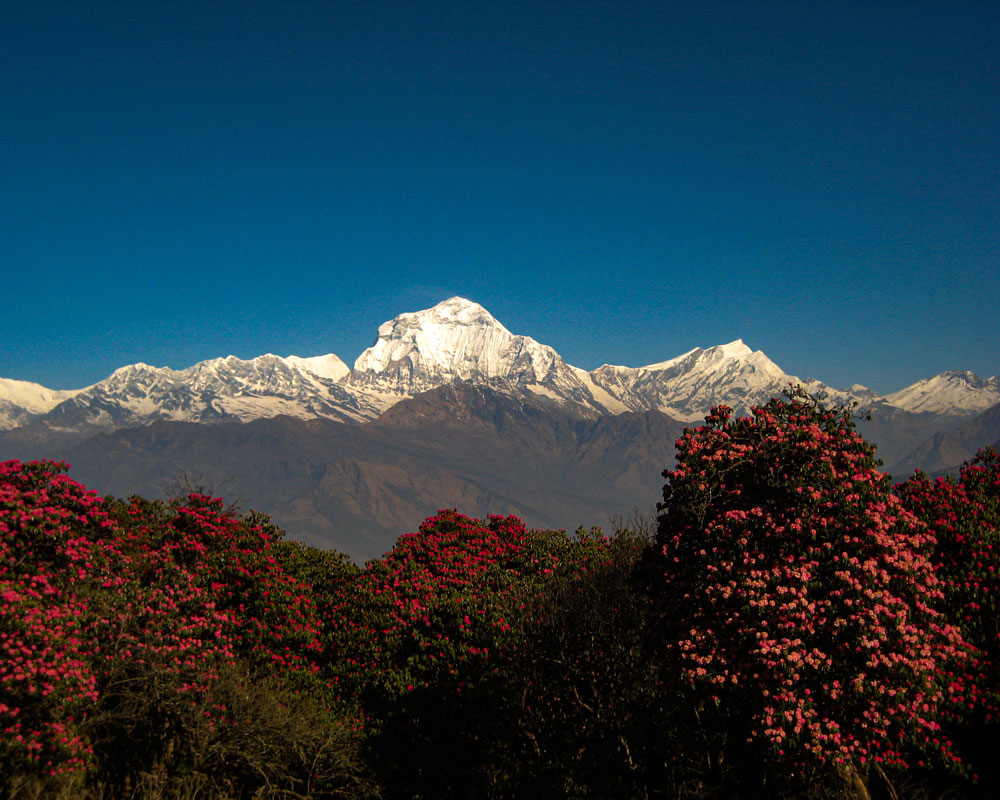
The pass is most reliably open, and you get the full view from the top — Dhaulagiri on one side, Annapurna on the other. It's also the busiest window in Manang, where trekkers stack up for the acclimatisation day before the crossing. This is the trade you're making: certainty for the company.
Spring (March–May)
Rhododendron forests through the lower valleys, warmer nights at altitude, thinner crowds at Thorong Phedi. Visibility runs a notch behind autumn — haze drifts up from the plains — but if a client tells me the summit photo matters less than having the trail mostly to themselves, I steer them here.
When to Avoid Thorong La
December through February, unless you're experienced at altitude and travelling with a guide, checking daily snow conditions. The pass closes intermittently after heavy snowfall with little warning. Monsoon (June–September) is a hard no on this route — the pass is dangerous and the lower trail floods.
Annapurna Base Camp: When to Go
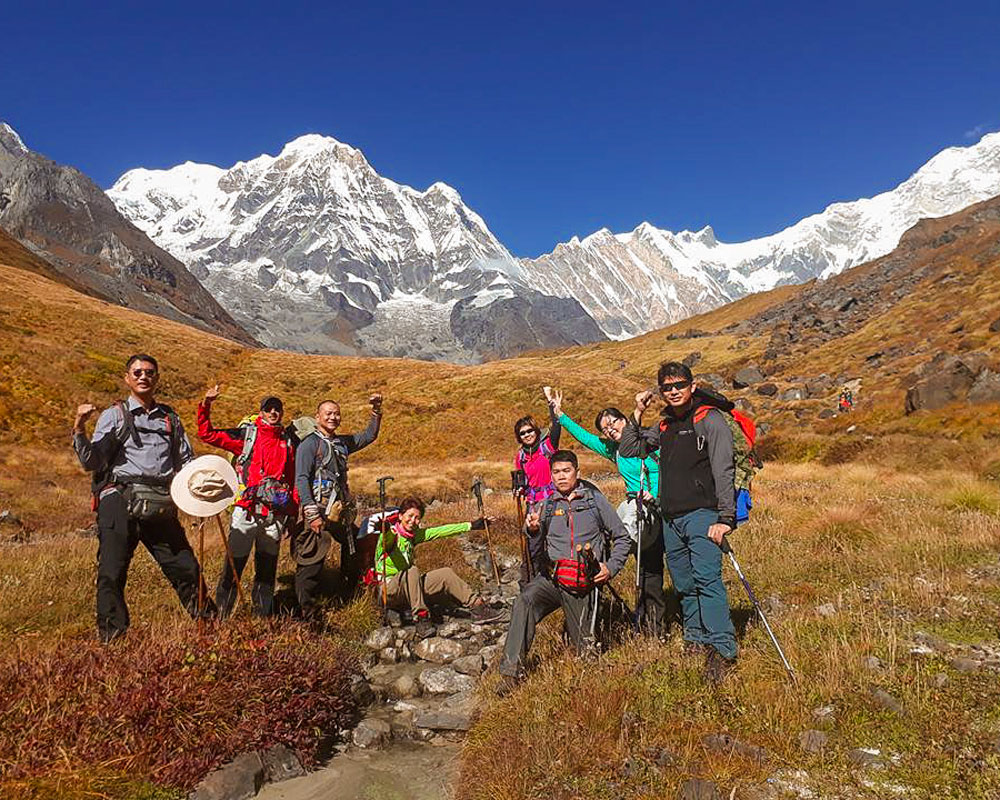
ABC sits lower than the Circuit's high point, so the margins are more forgiving, and the lodge you're sleeping in each night actually shifts by season.
Peak Season (October–November, March–May)
Same logic as the Circuit: autumn for clarity and stability, spring for the rhododendrons between Ghorepani and Chhomrong. At Chhomrong, we use a family-run lodge where the owner's daughter does the cooking — her dal bhat isn't trying to be anything, it's just consistent, which matters more in a crowded peak-season kitchen than a fancy menu would.
The Shoulder-Month Advantage
Early October, late November, and early March are some of the best windows in the region. Crowds thin, lodges have space, and the weather is still reliable. If a client can flex their dates by even two weeks off peak, I'll almost always push them here — it's the easiest way to improve a trip without changing the route.
Winter at ABC — Still Open, Here's What Changes
ABC stays open through winter since the Sanctuary sits below 4,200m. Higher up, cold nights are the real factor — at Deurali, we use a lodge chosen specifically for insulation and a working stove in the common room, because that's what makes the difference between a good night's sleep and a miserable one at 3,200m in December.
If you want this landscape without the altitude commitment, the Annapurna Luxury Lodge Trek covers the same lower valleys at a max altitude of 1,940m — 3-4 hour walking days, heritage family-run lodges, as I have vetted myself. For the full Sanctuary trek to 4,130m, the 12-day Annapurna Base Camp Trek is the route above.
Upper Mustang: The Exception to Nepal's Trekking Calendar
Why Monsoon Works Here
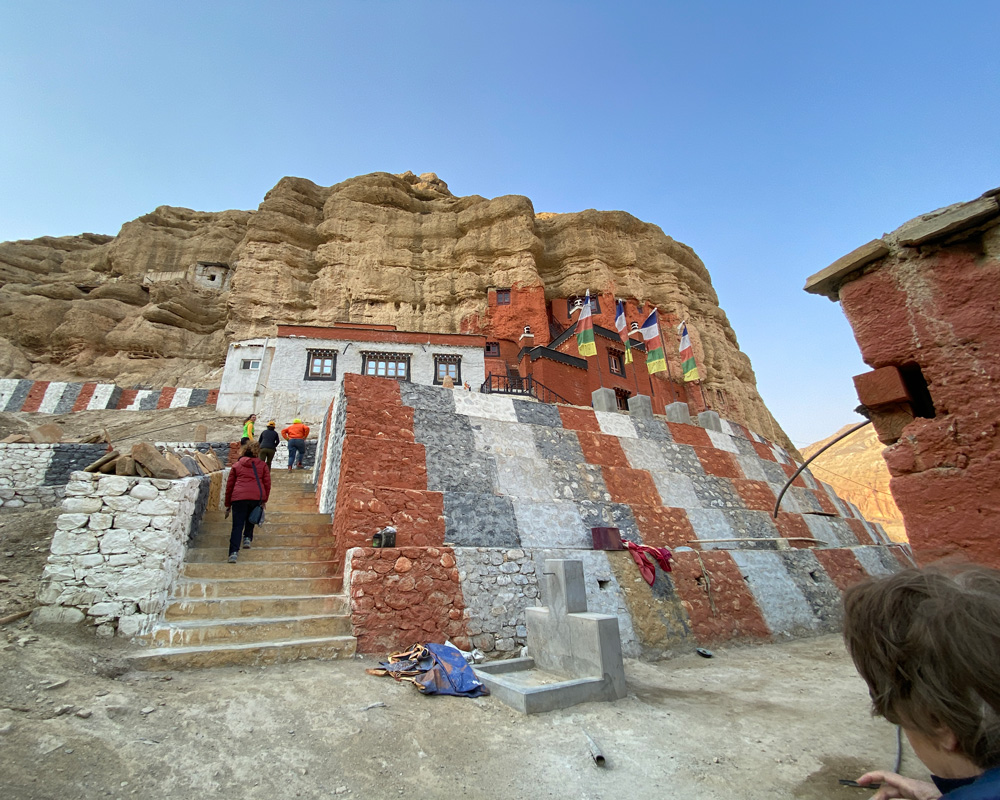
Mustang sits in the rain shadow of the Annapurna and Dhaulagiri ranges, which flips the usual calendar. Monsoon — the season everyone else in Nepal avoids — is one of the better times to be here, because the mountains block the rain before it reaches the Kali Gandaki valley. Dry trails, clear high-desert skies, while the rest of the country sits under clouds.
Why I Still Recommend May–September
The trek into Upper Mustang starts with a flight into Jomsom, and those flights land early — 6 to 9 am — because the same wind that keeps the valley dry also makes afternoon landings unsafe. That's the pattern for the whole route: the wind, not the rain, is what you plan around here. May through September gives the most stable flying window, plus the Tiji Festival in mid-May and the Marpha apple harvest running late September into October.
The standard peak dates (April–May, September–October) also mean the fullest lodges and the highest prices. Our usual move is to run trips on non-standard timing — early September, late November — which keeps groups small without giving up the season.
One more thing worth knowing if you're planning this trip: the Restricted Area Permit is now $50 per person per day, not the flat $500 fee older guides and blog posts still quote — and solo travellers are permitted into Upper Mustang as of this year, provided you're travelling with a licensed guide. We handle all of that paperwork before you arrive. Full route and permit details are on the Upper Mustang Trek page.
Ghorepani Poon Hill: The Forgiving Trek
Low altitude, short duration, sunrise-focused — the Poon Hill sunrise trek works almost any month from September through May. Winter mornings at the viewpoint are genuinely cold,ld even though the trek itself is easy, so pack for the summit, not the trailhead. Spring brings the rhododendrons; autumn brings the clearest sunrise line-up of Dhaulagiri, Annapurna South, and Machhapuchhre in one frame.
Dhaulagiri and Nar Phu: Narrow Windows for Harder Routes
The Dhaulagiri Base Camp Trek crosses French Col and Dhampus Pass above 5,000m — autumn or late spring only, on a camping setup, not teahouses. Nar Phu Valley is a restricted area with its own permit, and the gorge trail can turn genuinely dangerous under fresh snow. I keep clients off it in winter regardless of what the forecast says.
FAQ
What is the single best month to trek in the Annapurna region?
October and early November, if you have to pick, clear skies, stable weather, every route open. The trade-off is crowds on the popular trails like the Circuit and ABC.
Is spring or autumn better for the Annapurna trek?
Autumn gives clearer mountain views and more predictable weather. Spring gives rhododendron blooms and thinner crowds, at the cost of some haze. Neither is objectively better — it depends on whether you're trekking for the views or the atmosphere.
Can you trek to Annapurna Base Camp in winter?
Yes. ABC stays open through winter since it sits below 4,200m. Expect cold nights, occasional snow near the Sanctuary, and far fewer other trekkers.
Is Upper Mustang trekkable during the monsoon?
Yes — Mustang's rain shadow makes it one of the few regions in Nepal where monsoon months still deliver dry trails and clear skies. The bigger factor to plan around is wind, not rain.
Do I need to avoid Thorong La in any specific months?
Avoid crossing December through February unless you're experienced at altitude and travelling with a guide checking daily conditions. Heavy snowfall can close the pass with little warning.
Getting the Season Right for Your Trek
Season is the first thing I sort out with every client, before route length or budget — the wrong month can mean a closed pass, a washed-out trail, or a Sanctuary buried in cloud. Tell me roughly when you're free to travel, and I can tell you within a few minutes which Annapurna route actually fits that window — and which ones don't.
Get in touch, and we'll figure out your season and route together.