People ask me all the time: "Which Annapurna trek should I do?"
Most blog posts answer that question by listing every trek alphabetically and calling them all "stunning." That is not helpful.
I have been running treks in the Annapurna region for years. I know which trails are genuinely transformative and which ones have been quietly eaten by road construction. I know where the crowds are and where they are not. I know which trek suits someone with seven days and which one rewards someone who has done Everest Base Camp and wants something different.
This guide gives you honest answers. Not marketing. Not a ranked list that treats Poon Hill and Nar Phu Valley as equals. Actual guidance.
What Makes the Annapurna Region Unique?
Let's start with the basics, because most people don't realise how big this region is.
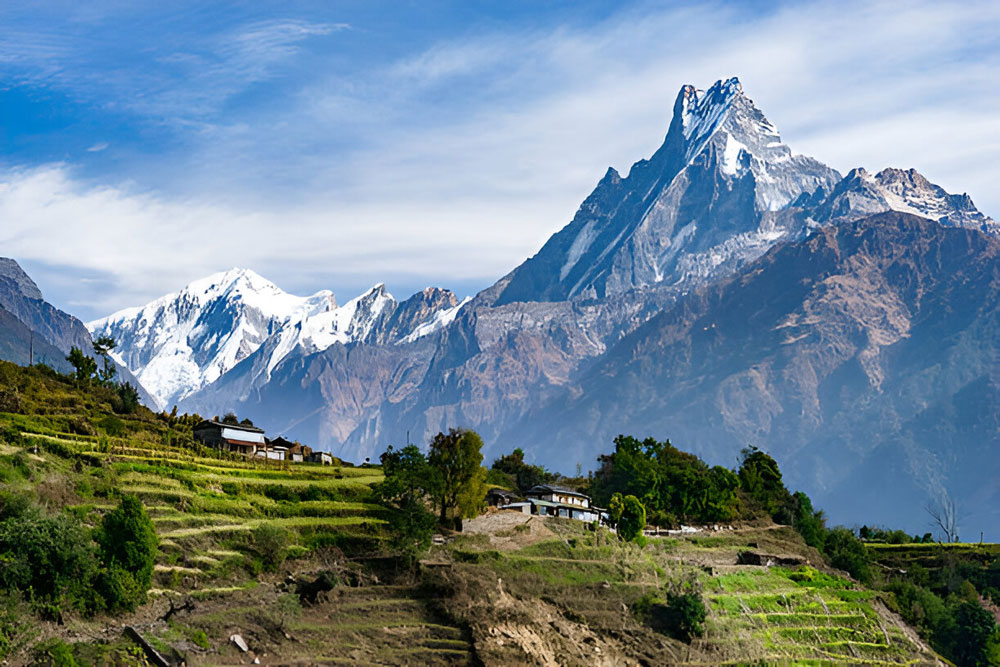
The Annapurna Conservation Area covers 7,629 square kilometres — that is bigger than some countries. It holds the world's tenth-highest mountain (Annapurna I, 8,091 m), thirteen peaks above 7,000 metres, and more trail variety than anywhere else in Nepal.
The landscape shifts completely as you move through it. In the south, you walk through subtropical forest and rice terraces. Higher up, you hit alpine meadows and rocky passes. To the north, everything changes — the air gets drier, the hills turn ochre and brown, and you enter terrain that looks more like Tibet than Nepal. That northern area is Upper Mustang, and it operates under different rules entirely (more on that below).
The cultures shift just as dramatically. Gurung and Magar communities in the southern hills. The Thakali people run the teahouses along the Kali Gandaki. Tibetan-influenced communities in the high north. Each group has a different language, different food, different relationship with the mountains around them.
This is why the Annapurna region is so difficult to summarise in a single paragraph. It is not one place. It is six or seven distinct places that happen to be connected by trails.
The Trekking in the Annapurna Region Rankings
Here is what I actually think — ordered from most underrated to most misunderstood.
1. Nar Phu Valley — The Best Trek Nobody Talks About
Duration: 14–19 days | Max altitude: 5,320 m (Kang La Pass) | Difficulty: Strenuous | Permit required: Yes (restricted area) | From:US $1,749
If you have trekked before and you want something that feels completely unscripted, Nar Phu is the answer.
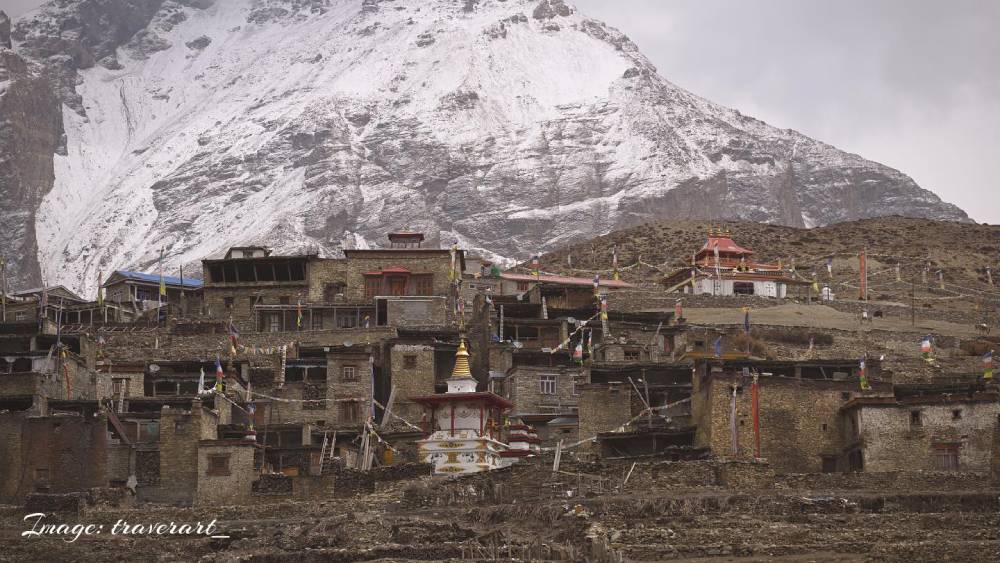
This valley sits between the Annapurna Circuit and the Tibetan border. It was only opened to trekkers in 2002. The villages — Nar and Phu — are genuinely remote. There are no roads, no tourist infrastructure built around you, no other trekkers moving in a column ahead of you. The trail crosses Kang La at 5,320 metres, higher than Thorong La on the Circuit.
What I find remarkable about Nar Phu is how intact it feels. You walk into Phu, and the village is simply going about its business. People are not arranging themselves for travellers. A monk is walking somewhere with purpose. A woman is laying barley out to dry on a flat roof. That quality is getting harder and harder to find in Nepal's trekking regions.
The permit system actually protects this. Because it is a restricted area, you need a special permit arranged in advance through a licensed agency like us — you cannot get it at a checkpoint. That requirement keeps the numbers low, which keeps the experience genuine.
This is the trek I recommend to trekkers who have done EBC or the Circuit and want something rawer.
2. Khopra Danda Ridge — The Trek That Earns Its Views
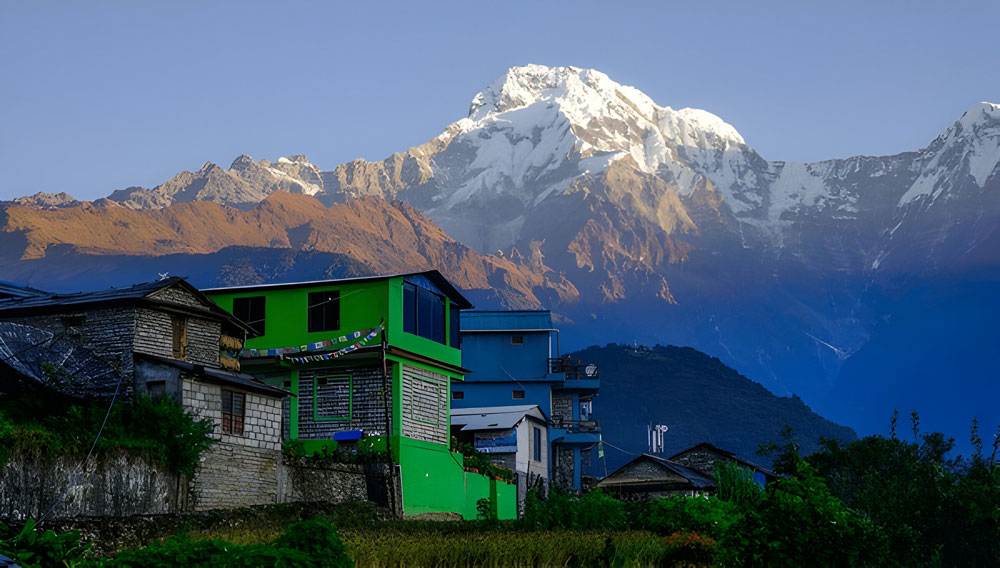
Duration: 11 days | Max altitude: 3,660 m | Difficulty: Moderate | Permit required: ACAP ($30) | From:US $749
Khopra Ridge is the Annapurna region's best-kept secret that is slowly getting out.
The trail branches off the Poon Hill route, climbs to a ridge camp at 3,660 metres, and continues to Khayar Lake at 4,560 metres. From Khopra, you see Dhaulagiri, Annapurna South, and Nilgiri together. You stand there with maybe six other people. Three weeks earlier, those same peaks are visible from Poon Hill with three hundred.
The lodges on Khopra are community-run. The trail passes through Swanta, a village that the circuit crowd never reaches. The valley below the ridge is deep and quiet in a way that feels like you have genuinely gone somewhere.
This is the trek I recommend to someone who has heard about Poon Hill but wants to avoid the crowd. Same mountain views. Completely different experience.
View Khopra Danda Ridge Trek →
3. Annapurna Circuit — Brilliant, But Be Honest About What You're Getting
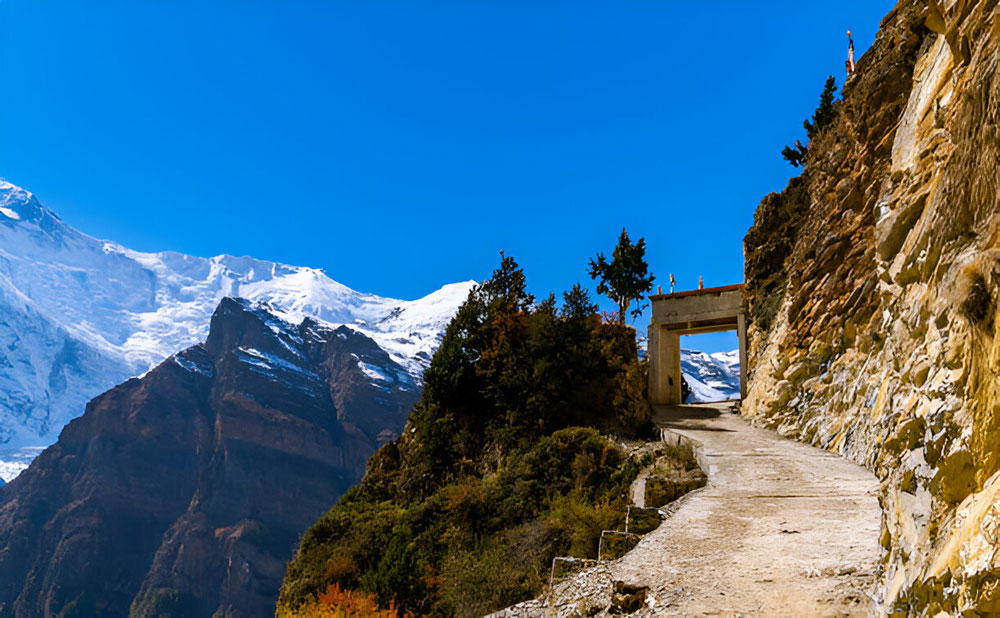
Duration: 14 days | Max altitude: 5,416 m (Thorong La Pass) | Difficulty: Moderate–Strenuous | Permits required: ACAP ($30) + TIMS | From:US $1,235
The Circuit was once called the best trek in the world. That reputation was earned. Whether it still applies depends on which section you're talking about.
Here is what has changed: road construction now runs alongside sections of the western trail — from Besisahar up through Chame and beyond. There are stretches where you are walking on or beside a dirt road, not on a mountain path. For some people, this does not matter. For others, it matters a lot.
Here is what has not changed: the eastern sections are as good as they ever were. The Thorong La crossing at 5,416 metres is still one of the great physical experiences in Himalayan trekking — the pre-dawn start, the long climb, the moment you arrive at the cairns on top and see both sides of the Himalayas at once. The Manang valley section, the acclimatisation day up to the Ice Lake, the Kali Gandaki gorge between Jomosom and Tatopani — these remain exceptional.
We have adapted our Circuit itinerary now. We pick up the walk where the road sections thin out and spend our days on the actual trail. Clients who come to us having read that the Circuit has been "ruined" by roads leave having had an extraordinary trek, because we know where the experience still lives.
The cultural arc of the Circuit also remains unmatched — moving from Gurung villages at lower altitudes through the Manang valley's high-altitude semi-nomadic communities to the Thakali people of Jomosom. No other Annapurna trek gives you that full range.
4. Annapurna Base Camp — The Sanctuary, At Its Best in the Right Season
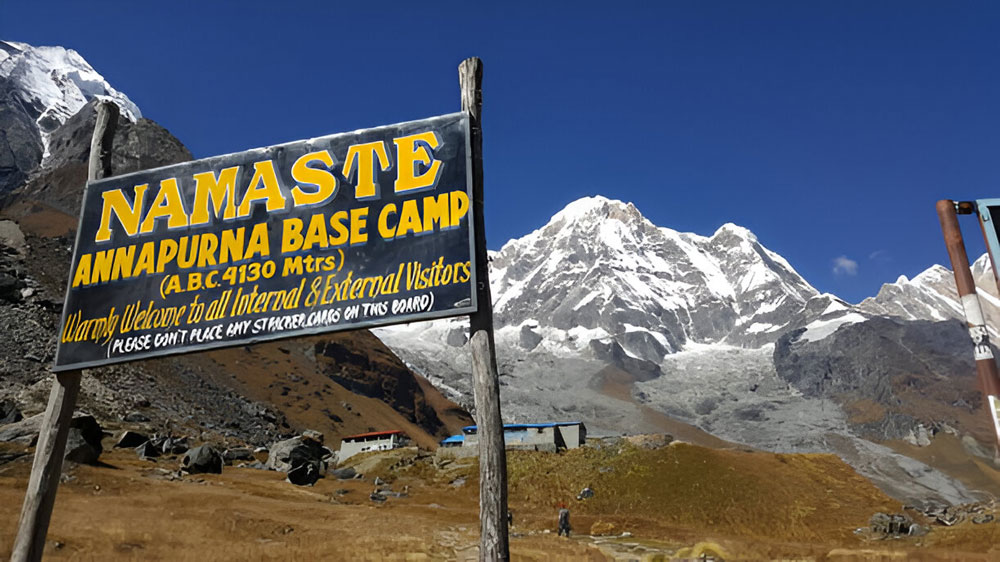
Duration: 12 days (or 5 days compressed) | Max altitude: 4,130 m | Difficulty: Moderate | Permit required: ACAP ($30) | From:US $699
Annapurna Base Camp sits inside what is called the Annapurna Sanctuary — a natural bowl ringed by thirteen Himalayan giants. When you walk into that amphitheatre, the mountains close in around you on all sides. It is one of the most physically dramatic moments in Himalayan trekking.
The trail to get there runs through Gurung villages — Ghandruk is one of the most photogenic in Nepal — and through a rhododendron forest that in March and April turns the hillsides completely red.
The honest note: ABC gets busy, particularly in autumn. The Modi Khola valley is a single corridor in and out, so you move with the crowd. Go in spring for the rhododendrons, or consider the combined ABC via the Poon Hill route, which spreads the walk and adds the sunrise at Poon Hill at the end.
The short 5-day version is available, but it compresses the acclimatisation in a way I am not entirely comfortable recommending to first-timers. It works for people who are very fit and have trekked at altitude before.
View ABC Trek 12 Days → | View ABC via Poon Hill →
5. Upper Mustang — For the Traveller Who Wants to Feel Like They've Left Nepal Entirely
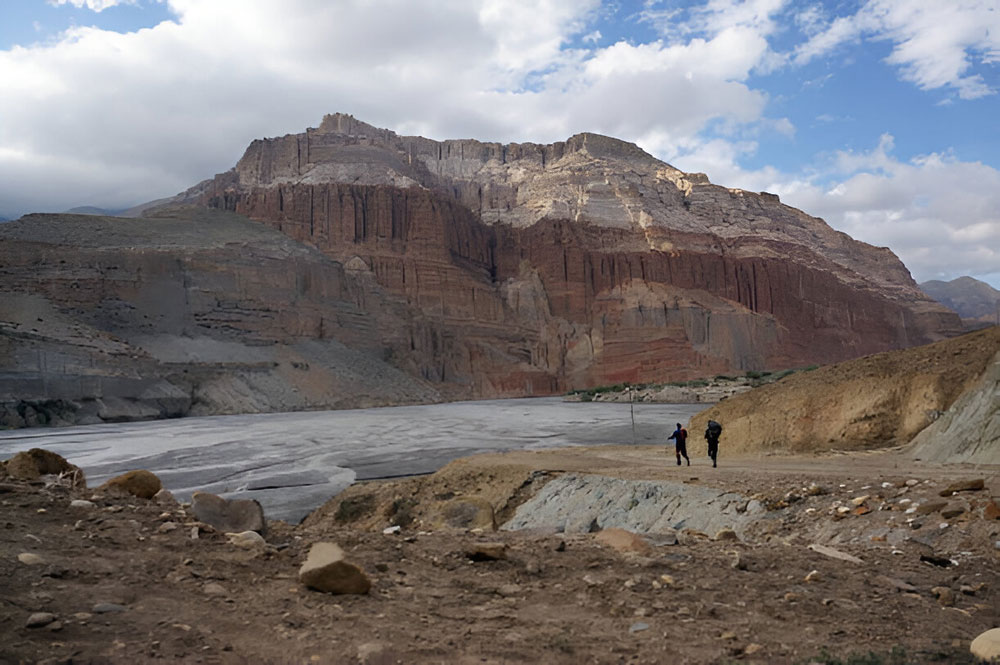
Duration: 17 days | Max altitude: 3,840 m | Difficulty: Moderate (altitude-wise) | Permit required: Restricted Area Permit ($50/day, $500 for 10 days) + ACAP | From:US $2,250
Upper Mustang does not look like Nepal. That is the first thing people say when they arrive.
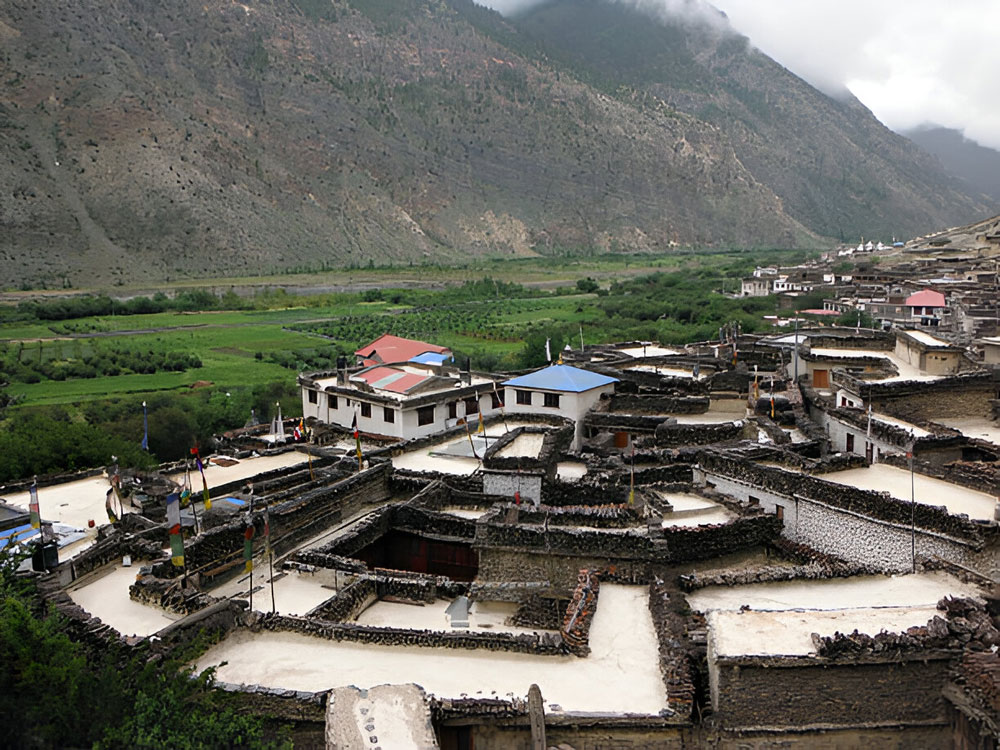
The landscape is bone-dry and wind-carved. The cliffs are striped in ochre, red, and brown. Villages sit on ridges that look designed to be defended. Lo Manthang, the walled capital, has barely changed in centuries — the king's palace, the monasteries, the narrow lanes between whitewashed walls. Tibetan Buddhism here is not a tourist attraction; it is simply how people live.
To enter Upper Mustang, you need a Restricted Area Permit (RAP). As of late 2025, this is priced at $50 per person per day — replacing the old flat-fee structure. For a standard 10-day itinerary that works out to $500, but the daily rate gives you genuine flexibility if your trip is shorter or longer. You also need the ACAP at $30 for foreign nationals (NPR 1,000 for SAARC citizens).
Both permits must be arranged through a registered agency in Kathmandu or Pokhara before you travel — processing takes one to two working days and requires a copy of your passport. You cannot buy them at the checkpoint in Kagbeni. If you arrive without permits, you will be turned back. No exceptions, and no workarounds.
Solo travellers: as of 2026, solo entry to Upper Mustang is permitted — but only with a licensed guide. If older sources told you solo travel wasn't allowed, that information is outdated. The Upper Mustang Trek is fully available to solo travellers, provided a guide is travelling with them.
When you book with HST, we handle all permit paperwork before you leave Pokhara. You reach Kagbeni with everything in order.
View Upper Mustang Trek → | View Luxury Upper Mustang Tour → | Learn more on how to travel Mustang →
6. Mardi Himal — The Ridgeline Nobody Expected to Love
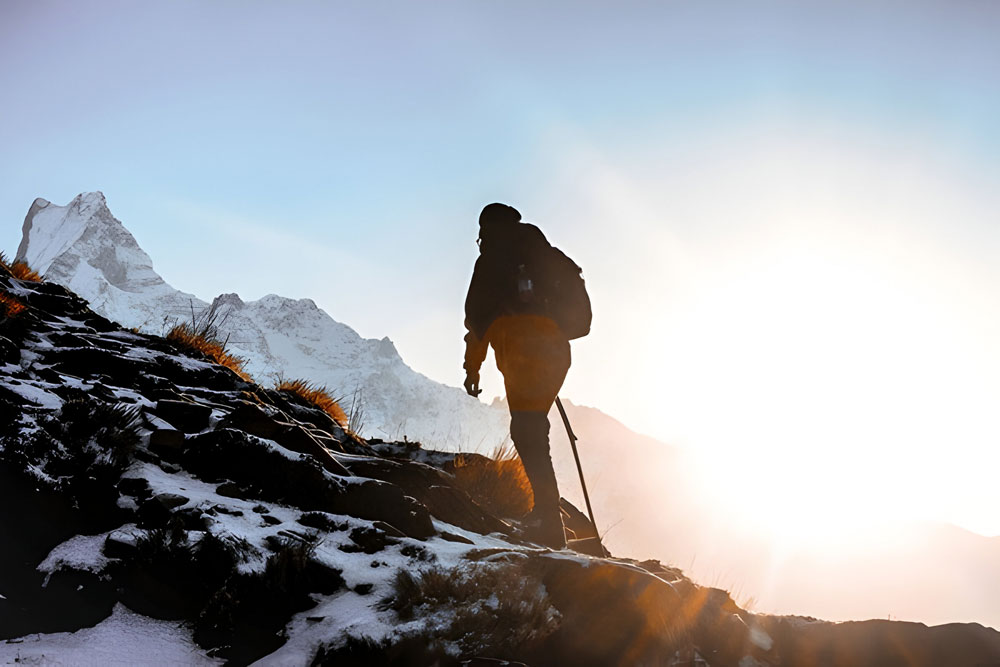
Duration: 7 days | Max altitude: 4,500 m | Difficulty: Moderate | Permit required: ACAP ($30) | From:US $549
Mardi Himal was opened as an official trekking route in 2012. It is still relatively unknown, which is why I am recommending it before it stops being that.
The trail climbs a long ridge system south of the Annapurna Sanctuary. As you gain height, Machhapuchhre (the Fishtail peak) rises directly ahead of you, close enough to feel wrong. The high camp at 3,550 metres and the base camp at 4,500 metres both look straight at the Annapurna massif across the Modi Khola valley. The view from the upper ridgeline is, honestly, better than from ABC for Machhapuchhre specifically — you see the full Fishtail profile from the south, and barely anyone else is there.
It is a steep trail. The ridge sections narrow, and the terrain is exposed. But for a 7-day trek, the reward-to-effort ratio is exceptional.
7. Poon Hill — The Right Trek If You Know What It Is
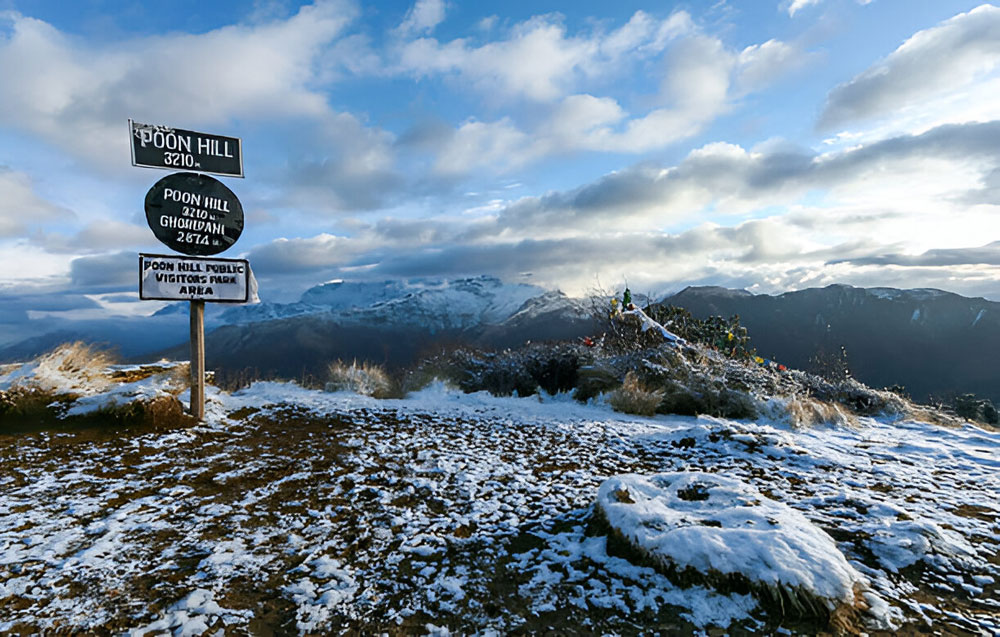
Duration: 4–10 days | Max altitude: 3,210 m | Difficulty: Easy–Moderate | Permit required: ACAP ($30) | From:US $399
I am not going to pretend Poon Hill is overrated, because the sunrise from the viewpoint at 3,210 metres is genuinely one of the great views on earth. Dhaulagiri, Annapurna South, and Machhapuchhre catching first light while the valley below is still dark — that view delivers every time.
What I will say honestly: the trail to get there, especially through Ghorepani, is busy. Very busy in peak season. The teahouses are full, the viewpoint at pre-dawn is crowded, and parts of the walk feel like a conveyor belt. This does not ruin the experience, but you should know what you are getting into.
If the sunrise is the goal and you have four days, our short Poon Hill trek is an honest value and does exactly what it says. If you want that sunrise with significantly fewer people around you, go to Khopra or Mardi Himal and approach the range from a different angle.
The 10-day Ghorepani Poon Hill Trek adds Ghandruk village and a longer walk through the forest sections, which meaningfully improves the overall experience.
View Short Poon Hill Trek → | View Full Poon Hill Trek →
If You Want Comfort Without Missing the Mountains
Not everyone wants to finish a long day on the trail with a basic room and a simple meal. Some trekkers enjoy walking all day but appreciate a place where they can properly recover each evening.
The Annapurna region makes it possible better than almost anywhere else in Nepal. Carefully selected lodges offer comfortable rooms, hot showers, excellent meals, and welcoming hospitality without taking away from the experience of being in the Himalayas. You still walk the same trails, pass through the same villages, and wake up to the same mountain views. The difference is how rested you feel before setting out again the next morning.
Our Annapurna Luxury Lodge Trek is the ideal one for you.
Permits: What You Actually Need
This confuses a lot of people, so here is the clean version.
For most Annapurna trails (ABC, Poon Hill, Mardi Himal, Khopra, Circuit):
- ACAP — Annapurna Conservation Area Permit — US $30 per person. Funds conservation and community projects directly in the villages you walk through.
- TIMS card — Trekkers' Information Management System — NPR 2,000 (~US $15). Tracks your location for emergency purposes.
Both permits are included in all HST packages and are arranged by us before your trek begins. You carry the physical ACAP card with you on the trail.
For Upper Mustang and Nar Phu Valley:
Restricted Area Permit (RAP) — $50 per person per day (updated late 2025). For a 10-day Upper Mustang itinerary, that is $500 total. Nar Phu operates under its own RAP structure — contact us for current Nar Phu permit pricing, as it varies by itinerary length.
ACAP — $30 for foreign nationals. NPR 1,000 for SAARC citizens.
Both permits must be arranged through a licensed agency before travel. Processing takes one to two days and requires your passport copy. You cannot obtain them at the Kagbeni checkpoint or anywhere on the trail. Arriving without permits means being turned back — the rule is enforced without exception.
Solo travellers may enter Upper Mustang as of 2026, provided they travel with a licensed guide. The guide requirement applies regardless of group size.
Best Time to Trek in the Annapurna Region
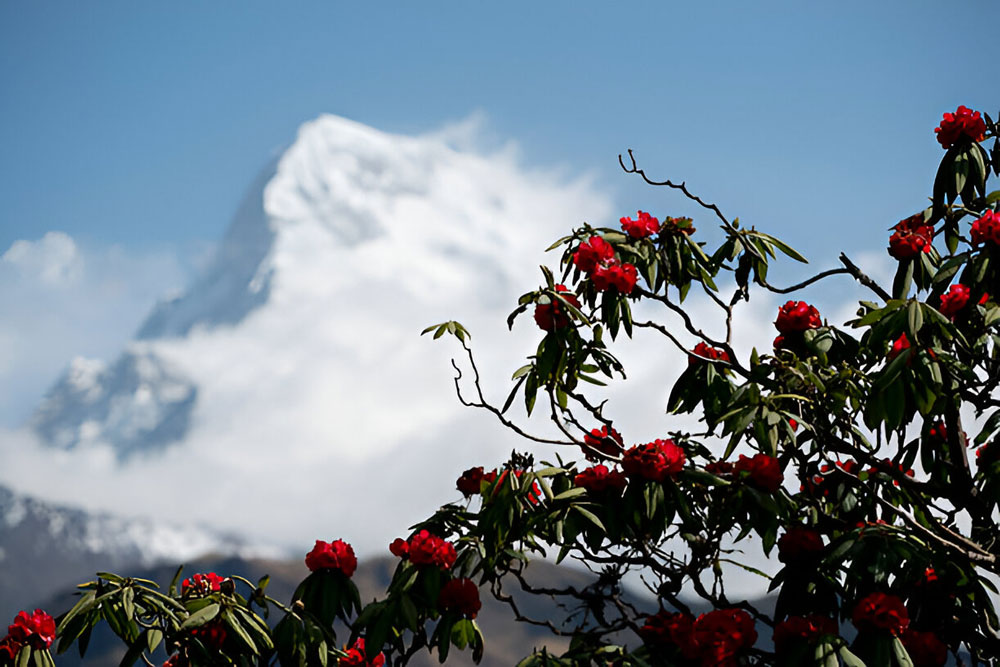
Spring (March–May): Rhododendrons bloom from late February. Clear mornings, warming afternoons. Best time for ABC and the lower trails. The forests below Poon Hill turn completely red in late March — it is one of the most striking things I have seen in Nepal.
Autumn (October–November): Crystal clear skies after the monsoon. Best mountain visibility of the year. This is peak season — trails are busy, lodges book up, but the weather is very reliable. The Thorong La crossing on the Circuit is at its safest.
Winter (December–February): Lower trails like Poon Hill and the ABC approach are doable for fit trekkers. High passes like Thorong La are risky. Cold nights, but clear days and far fewer people.
Monsoon (June–September): Most trails are wet and leechy. Upper Mustang is the exception — it sits behind the Himalayan rain shadow and stays dry. The Tiji Festival (usually in May) falls at the tail end of spring and is worth planning around if you are heading to Mustang.
Annapurna vs Everest: Which Trek Is Right for You?
| If you're looking for... | Annapurna Region | Everest Region |
|---|---|---|
| A famous mountain destination | Multiple iconic peaks, including Annapurna, Machhapuchhre, and Dhaulagiri | Mount Everest and the chance to stand at Everest Base Camp |
| Landscape | Forests, rivers, terraced fields, alpine meadows, high passes, and mountain villages | High alpine valleys, glaciers, moraines, and dramatic Himalayan scenery |
| Culture | Gurung, Magar, and Thakali communities | Sherpa culture, monasteries, and Buddhist traditions |
| Trek duration | Flexible routes from 4 to 18+ days | Most classic treks take 10 to 16 days |
| Variety of routes | Many choices, including Poon Hill, Mardi Himal, Annapurna Base Camp, and Annapurna Circuit | Fewer main trekking routes, centred around Everest Base Camp and nearby valleys |
| Best suited for | First-time trekkers, families, and travellers wanting flexibility | Travellers whose dream is to experience Everest in person |
| Overall experience | A well-rounded Himalayan journey with diverse scenery and cultures | A bucket-list trek focused on the world's highest mountain |
There is no right or wrong choice. If standing beneath Mount Everest has always been your goal, the Everest region delivers an unforgettable experience. If you want varied landscapes, diverse cultures, flexible itineraries, and more route options, the Annapurna region is often the better fit. The best trek is the one that matches what you want from your time in the Himalayas. More detailed comparison on Annapurna vs Everest.
Compare the Best Annapurna Region Treks at a Glance
If you are comparing several Annapurna treks, this table gives you the key differences before we dive into each route in detail.
| Trek | Duration | Max Altitude | Difficulty | Best For |
|---|---|---|---|---|
| Nar Phu Valley | 14–19 days | 5,320 m | Strenuous | Experienced trekkers want remote villages and very few people |
| Khopra Danda Ridge | 11 days | 4,560 m (Khayar Lake) | Moderate | Big mountain views without busy trails |
| Annapurna Circuit | 14 days | 5,416 m | Moderate–Strenuous | Travellers wanting the most varied landscapes and cultures |
| Annapurna Base Camp | 12 days | 4,130 m | Moderate | First Himalayan trek and the classic Annapurna Sanctuary experience |
| Upper Mustang | 17 days | 3,840 m | Moderate | Tibetan culture, desert landscapes, and ancient monasteries |
| Mardi Himal | 7 days | 4,500 m | Moderate | Short trips with outstanding views of Machhapuchhre |
| Poon Hill | 4–10 days | 3,210 m | Easy–Moderate | Beginners and travellers with limited time |
| Luxury Lodge Trek | 8–10 days | Around 3,200 m | Easy–Moderate | Travellers who value authenticity alongside the trekking experience |
A table like this can narrow the options, but it cannot tell you which trek is right for you. The answer usually has less to do with altitude or distance than people expect.
How to Choose the Right Annapurna Trek
The mistake I see most often is people choosing a trek because someone else called it the "best." The better question is which trek fits the kind of experience you actually want.
If this is your first trek in Nepal
Choose Annapurna Base Campif you want the classic Himalayan experience. The trail passes through traditional Gurung villages, climbs gradually into the Annapurna Sanctuary, and finishes beneath some of Nepal's highest peaks. It is challenging enough to feel like an achievement without requiring previous trekking experience.
If you only have a few days, Poon Hill or Mardi Himal are better choices. Both deliver outstanding mountain scenery in less than a week.
If you have already trekked to Everest Base Camp
This is usually when I recommend looking beyond the obvious.
Nar Phu Valley offers a completely different side of Nepal. The villages are more isolated, the number of trekkers is much lower, and the experience feels less developed for tourism. If you want another famous trail, choose the Annapurna Circuit. If you want something that still feels undiscovered, choose Nar Phu.
If you only have one week
Do not try to squeeze a longer trek into fewer days.
Mardi Himal was almost designed for travellers with limited time. In seven days, you reach a ridgeline that faces Machhapuchhre almost head-on. Poon Hill works well if your priority is an easier walk with one of Nepal's most famous sunrise viewpoints.
If you want fewer crowds
No trail in Nepal is completely empty anymore, but some remain surprisingly quiet.
Khopra Danda Ridge is my first recommendation. The mountain panorama rivals Poon Hill, yet you often share it with only a handful of trekkers. Nar Phu Valley is even quieter, thanks to its restricted area permit system.
If culture matters as much as the mountains
Choose the Annapurna Circuit or Upper Mustang.
The Circuit takes you through Gurung, Manangi, and Thakali communities as the landscape changes around you. Upper Mustang feels different again. The architecture, language, monasteries, and daily life all reflect centuries of Tibetan influence.
If comfort is part of your holiday
There is nothing wrong with wanting a comfortable room after six hours on the trail.
The Annapurna region has the best collection of high-quality mountain lodges in Nepal. You still spend your days walking through forests, villages, and mountain landscapes. The difference is that each evening ends with a hot shower, a comfortable bed, and excellent food instead of simply the nearest available teahouse. Choose the Annapurna luxury lodge trek with us.
Not sure which column you fit into? Talk to us. That is genuinely what we are here for — not to sell you any specific trek, but to understand what you are looking for and match you to the right trail.
FAQ
Do I need a guide to trek in the Annapurna region?
Yes. Since April 2023, Nepal has required all foreign trekkers to trek with a registered guide. This applies to every trail in the region, including Poon Hill. All HST packages include a licensed guide.
Can I do the Annapurna Circuit without the road sections?
Yes. We adapt our Circuit itinerary to spend days on trail sections where the actual mountain path is intact. The eastern sections, the Thorong La crossing, the Manang valley, and the Kali Gandaki gorge are all unaffected by road development.
How fit do I need to be for the Annapurna Circuit?
You should be able to walk 5–7 hours a day comfortably, including some uphill sections. You do not need to be an athlete. We run the Circuit with trekkers of a wide range of fitness levels — the pace is controlled by the guide, not by a group schedule.
What is the difference between Annapurna Base Camp and Annapurna Circuit?
The Circuit circumnavigates the entire Annapurna massif over 14 days, crossing the Thorong La Pass at 5,416 metres. ABC goes directly into the Annapurna Sanctuary to 4,130 metres, returning the same way. The Circuit is longer, higher, and more culturally varied. ABC is more focused and accessible.
Is the Annapurna region good for first-time trekkers?
Yes, but the trail matters. Poon Hill and Mardi Himal are both suitable for first-timers with reasonable fitness. The full Circuit and Nar Phu are better suited to people with some trekking experience. We recommend contacting us before booking if this is your first time — it takes five minutes to work out the right fit.
What is the Upper Mustang permit, and how do I get it?
Upper Mustang is a restricted trekking region, so you need a Restricted Area Permit (RAP) before entering beyond Kagbeni. The permit costs US$50 per person, per day. You also need an Annapurna Conservation Area Permit (ACAP), which costs NPR 3,000 for foreign nationals.
The Restricted Area Permit can only be issued through a government-registered trekking agency. You cannot obtain it yourself at Kagbeni or anywhere along the trail. A licensed trekking guide is also mandatory. We arrange all required permits and complete the application process before your trek, so everything is ready before you enter Upper Mustang.
Can I combine two treks in one trip?
Yes. Common combinations include Poon Hill + Mardi Himal, or Annapurna Circuit + Nar Phu Valley (as an extension through Kang La). Speak to us about your available days and we can design the right combination.
What does the ACAP permit fund?
The Annapurna Conservation Area Permit ($30) directly funds conservation and community development projects inside the conservation area — trail maintenance, porter welfare programs, and healthcare access in remote villages. You receive a physical permit card to carry on the trail.
Final Thoughts
There is no single best Annapurna region trek. There is only the trek that matches the experience you want.
Some travellers dream about standing inside the Annapurna Sanctuary. Others want to cross Thorong La, explore the hidden villages of Nar Phu Valley, or walk through the high desert of Upper Mustang. Some only have four days and want the sunrise from Poon Hill. Others want quieter trails like Mardi Himal or Khopra Ridge, where the mountains feel far less crowded.
That is why choosing an Annapurna trek should never start with a list of popular names. It should start with your available time, your fitness, your previous trekking experience, and the kind of journey you want to remember years from now.
At Himalayan Scenery Treks, we have spent years guiding travellers across every major trail in the Annapurna region. We do not recommend the same itinerary to everyone because no two trekkers are looking for exactly the same experience. If you are still unsure which route fits you best, get in touch with our team. We will help you choose the trail that suits your goals, your schedule, and your style of travel.
Looking for a specific Annapurna package? Browse all Annapurna region treks or contact us to build something around your dates.