Discover essential tips for planning the Annapurna Circuit Trek cost. Learn about costs, budgeting strategies, and must-know expenses. Read more!
How Much Does the Annapurna Circuit Trek Cost? (And Why You Should Care About the Price Difference)
Table of Contents
Look, there are $600 operators and $2,500 luxury companies. We're neither.
At $1,235 per person for 14 days, the Annapurna Circuit isn't the cheapest trek in Nepal. It's also not a resort experience where someone carries your luggage on a helicopter.
Here's what I know after running this trek dozens of times: most people ask the wrong question. They ask "how much does it cost?" when they should ask "what am I actually paying for?"
The $600 operator will get you up to Thorong La. One guide for 15 trekkers. Porters carrying 30kg. Day-of lodge bookings. You'll submit. You'll come home. You'll have photos.
The $2,500 company will give you a better room, smaller groups, and more flexibility. You'll be comfortable. That's fine if that's what you want.
We do something different. We run Annapurna the way I'd want my family to trek it. That costs $1,235. Not because we're expensive. Because we don't cut corners on the things that matter: guide quality, porter treatment, acclimatisation planning, rescue protocols.
When altitude sickness hits at 4,500 meters — and it will — you don't want a $600 guide. You want someone trained in MEDEX, someone who's done this route 40 times, someone who knows the difference between "keep pushing" and "we need to descend now."
That guide costs more. The porters carrying fair loads cost more. Pre-booking lodges instead of taking whatever's left costs more.
But here's the thing: you'll remember this trek forever. Not because the mountain is beautiful — it is. Not because the views are stunning — they are. But because you arrived at the top prepared, safe, and present. You weren't worrying about whether your guide knew what he was doing. You weren't pushing yourself into dangerous territory because the operator skimped on acclimatisation.
That clarity, that safety, that presence — that's worth $1,235.
Keep reading to see exactly where your money goes. Not to impress you with numbers. To show you that we're not hiding anything, and we're not wasting anything either.
What you actually get at $1,235
Accommodation: Not Just a Bed
You get 10 nights in mountain lodges. Basic lodges. No heated bathrooms, no fancy linens. Blankets, a bed, a roof that doesn't leak (most of the time).
The difference is this: we book with lodge owners we actually know. Not a spreadsheet of "available rooms." Real people. Ramkrishna and I have eaten tea with these lodge owners. We know their kids' names. We know which lodges maintain their rooms and which ones are cutting costs.
That means when you arrive, the room is ready. It's not a surprise. The water is heating. The owner knows you're coming, and they've prepared.
It sounds small. When you're cold and tired at 4,000 meters, it's everything.
Included: Twin-sharing lodge accommodation during trek + 1 night in a 3-star hotel in Pokhara (mid-trek rest)
Food: Three Meals That Won't Make You Regret the Trek
Three meals a day. Dal bhat (rice and lentils), seasonal vegetables, eggs, whatever the lodge has that day. It's not fancy. It's fuel.
At altitude, your appetite disappears. You don't want gourmet food. You want something warm, digestible, and with enough calories to keep your body moving at 5,000 meters.
We don't provide this cheaply. The lodge owners can make dal bhat for $2. We pay them more because we want proper portions, fresh vegetables when available, and actual protein. Your body is working harder than it ever has. It needs real food.
Breakfast: 6:00 AM, hot tea, bread, eggs, porridge
Lunch: 11:30 AM, at a teahouse on the trail, hot soup, rice, and vegetables
Dinner: 6:00 PM, back at the lodge, dal bhat, vegetables, tea
Included: Three meals daily + tea/coffee throughout the day
Guide: The Difference Between Walking and Understanding
One guide. Government-licensed. English-fluent. Someone who's walked this route 40+ times.
A cheap guide gets you from A to B. Ours explains why you're walking through this valley. Who lives in that village? Why do the local people have prayer flags in specific directions? What the mountains mean to them — not to Instagram.
More importantly, at higher altitudes, a good guide is a safety system. They recognise altitude sickness before you do. They know when to slow down. They know which lodges have first aid supplies. They know the evacuation protocols.
I've seen guides push trekkers over Thorong La when they should've descended. I've seen guides abandon sick trekkers because the schedule demanded it. We don't do that.
Our guides are trained. They're monitored. They're paid fairly, so they don't cut corners to earn extra tips.
Included: One experienced, government-licensed guide for the entire trek
Porters: Physical Labour You Shouldn't Carry
One porter per two trekkers. They carry 20kg of your gear. Not 30kg (which is unethical but happens). Twenty.
This matters because porter injuries are real. Overloaded porters on steep terrain — that's how people get hurt. We limit load weight. We provide proper equipment. We pay them fairly, so they don't need to work three treks a week to survive.
They eat. They sleep. They're insured. If something happens to them on the trek, we handle it.
Included: 1 porter per 2 trekkers + meals + accommodation + salary + equipment + accident insurance
Permits: Your Contribution to the Region
ACAP (Annapurna Conservation Area Permit): NPR 3,000 (~$30)
Where does this go? Trail maintenance, local community projects, and conservation. Your permit fee funds the infrastructure you're using.
TIMS Card (Trekkers' Information Management System): NPR 2,000 (~$20)
This registers you with the government. If something happens, they know where you are.
Current requirement (2025): You need a licensed guide to get a TIMS card. That's the law. We provide the guide, so you get the permit.
Both are included in your $1,235. We process them. You bring two headshots on Day 1. Done.
Included: ACAP + TIMS permits + processing + government fees
Medical Safety: Because High Altitude is Real
First aid kit. Oximeter (measures oxygen saturation in your blood). Both on the guide at all times.
At 5,000 meters, if your oxygen drops below 85%, your body is struggling. The oximeter tells us that you felt bad before. That's the difference between "keep going" and "we need to stop."
It's a small tool. In an emergency, it's invaluable.
Included: Full medical kit + oximeter + rescue coordination
What's NOT Included (And Why)
Personal travel insurance — Mandatory, but you get it. I recommend World Nomads or SafetyWing. $60-120 for 14 days. Non-negotiable. If a helicopter evacuation is needed (~$5,000), insurance covers it. Without it, you're liable. Don't skip this.
International flights — You book your own. Obviously.
Nepal visa — $30-50, depending on duration. You get it on arrival at Kathmandu airport. Fifteen minutes.
Personal equipment — Boots, jacket, sleeping bag, trekking poles. You buy or rent these. Rental in Kathmandu: $100-150 for the trek.
Tips for guides and porters — Not mandatory, but customary. If your guide kept you safe and your porter didn't complain, tip them. Standard: 5-10% of package cost ($60-120 total). It's how they earn their actual living wage.
Alcohol and soft drinks on trial — We provide tea, coffee, and water. Everything else is your cash. Budget $2-4 per drink.
Single room supplement — Want your own room instead of sharing? Add $200. Most people share and save it.
The Cost Breakdown — A Daily Reality
Let me break down the daily costs. This is real math, not estimates.
Per-day breakdown (per person):
| Item | Cost (USD) |
|---|---|
| Lodge accommodation | $8-10 |
| Guide salary (shared across group) | $8-10 |
| Three meals | $12-15 |
| Porter wages (1 per 2 people, shared) | $5-7 |
| Daily subtotal | $33-42 |
Over 10 trekking days: $330-420
The remaining ~$815 covers:
Transportation (Kathmandu to Jagat, Muktinath to Pokhara): ~$150
Permits (ACAP + TIMS): ~$50
Pre-trek Kathmandu lodging (1 night, 3-star): ~$80
Post-trek Pokhara lodging (1 night, 3-star): ~$80
Company logistics, booking system, guide training: ~$150
Contingency/rescue fund reserves: ~$100
Office overhead (phones, permits, staff): ~$115
That's where $1,235 goes. No hidden margins. No cuts on the critical stuff.
See our full Annapurna Circuit package details here
HST'S Price Compared To Others
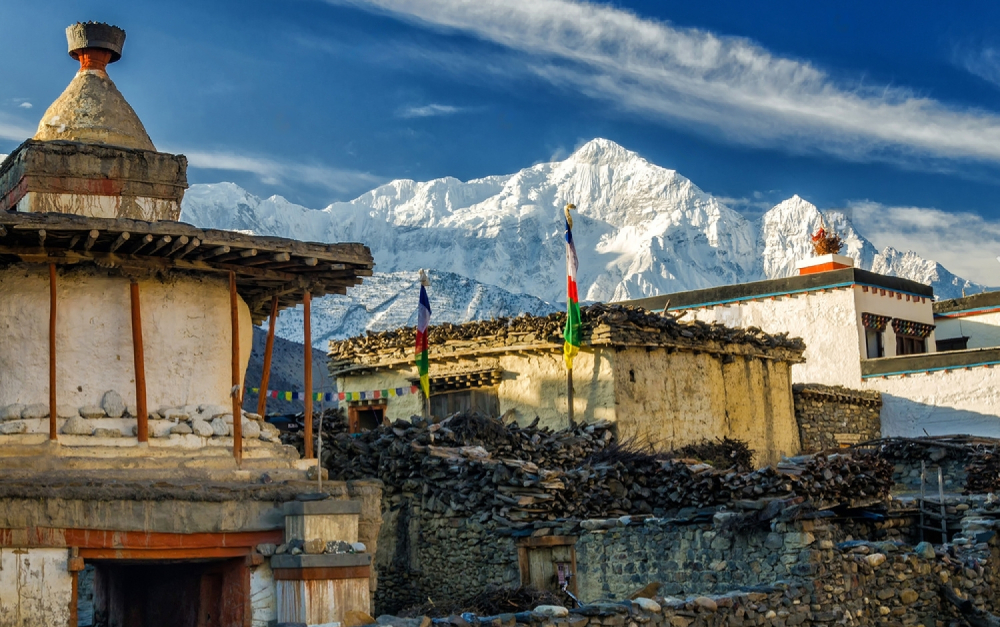
The $600 Budget Operator
I know these operators. Good people, mostly. But they cut in ways that matter:
One guide for 15+ trekkers — Impossible to monitor everyone. Someone gets sick at Thorong Phedi? The guide can't leave the group to help them.
Porters carrying 30kg — Illegal, but they do it. Saves them money on hiring second porters.
Lodges booked day-of — You arrive and take whatever room is left. Sometimes it's good. Sometimes it's a storage closet with a bed.
No acclimatisation plan — "Day 8 at Manang? Let's skip it and save a lodge fee." Your trekkers get altitude sickness. Now they're miserable and potentially dangerous.
Food is cheap — Instant noodles, rice, and minimal vegetables. Feeds you but doesn't fuel you.
What you save: $635
What you sacrifice: Safety margins, guide attention, sleep quality, food quality
I'm saying don't go with a budget operator. Understand what you're trading.
HST at $1,235 (Our Sweet Spot)
One guide per 6-10 trekkers — Actually manageable. The guide can check on you, adjust pace, and monitor altitude sickness signs.
1 porter per 2 people, 20kg max — Fair load. Porter can do their job properly without injury.
Lodges pre-booked with known owners — You know what you're getting. No surprises at 4,000 meters.
Day 8 acclimatisation at Manang is non-negotiable — We build it in because altitude sickness prevention is cheaper than rescue.
Real food — Your body is working. We feed it properly.
You pay slightly more. You get a trek that doesn't gamble with your safety.
The $2,500 Luxury Operator
- Premium lodges — En-suite bathrooms, heated rooms, decent beds
- 4-5 trekkers per guide — Very attentive
- Flexibility — Change routes, skip days, customise on the fly
What you pay for: Comfort amenities and extreme customisation
My honest take: If comfort matters more than the trek itself, go luxury. But the kind of luxury I mentioned isolates you from the experience. You'll be warm and safe, but you won't be in the mountains. You'll be in a nice lodge that happens to be in the mountains.
We give you enough comfort to trek well. Not enough to separate you from what you came for.
Annapurna vs Other Treks
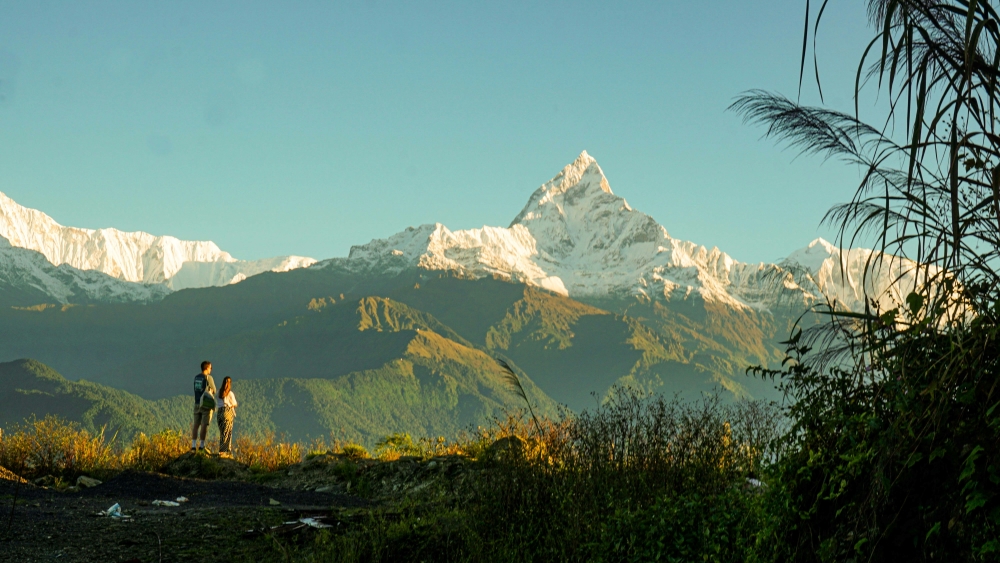
Annapurna Circuit ($1,235, 14 days) vs. Everest Base Camp ($1,400-1,700, 14-15 days)
Factor | Annapurna | Everest |
|---|---|---|
Altitude | 5,416m | 5,364m |
Days | 14 | 14-15 |
Flights required | 0 (if felt like, choose Jomsom-Pokhara flight) | 1 ($257 Lukla flight) |
Cultural immersion | High (Manang valley, local villages) | Moderate (Sherpa villages, but touristy) |
Crowds | Moderate | Extreme (1,000+ trekkers at EBC daily) |
Scenery | Mountain loop with diverse valleys | Approach to a mountain |
Total cost | $1,235/person | $1,700/person |
Real talk: Both are good treks. Everest is iconic — everyone wants to see Everest. But the Annapurna Circuit is a loop. You walk around the entire massif. You see Annapurna from every angle. You cross Thorong La at the same altitude as Everest Base Camp, but with way fewer people and way more culture.
If you have 14 days and $1,235, Annapurna is the better trek. Less crowd, more culture, lower cost.
Compare Annapurna vs. Everest in detail
Annapurna vs. Langtang Valley ($800-900, 10 days)
Langtang is closer to Kathmandu and shorter. If you have 10 days, Langtang is solid.
But Annapurna is 14 days for $1,235. That's $88/day. Langtang is 10 days for $850. That's $85/day. You're paying the same daily rate for a harder, longer, more rewarding trek.
Choose Langtang if: You genuinely only have 10 days
Choose Annapurna if: You can take 14 days. It's worth the extra time.
Annapurna vs. Manaslu Circuit ($1,400-1,600, 14 days)
Manaslu is more remote. Fewer trekkers. Raw mountain experience. But:
- Permit is $130+ per day (vs. Annapurna's $50 total)
- Altitude is similar (5,163m)
- Logistics are harder
- Less cultural immersion
Manaslu is for experienced trekkers who want isolation. Annapurna is for people who want mountains + culture + accessibility.
Choose Manaslu if: You want a raw, uncrowded experience and you're an experienced high-altitude trekker
Choose Annapurna if: You want a balance of challenge, culture, and relative ease
Is Manaslu right for you? Read the full guide
Season Timing (When You Trek Changes Everything)
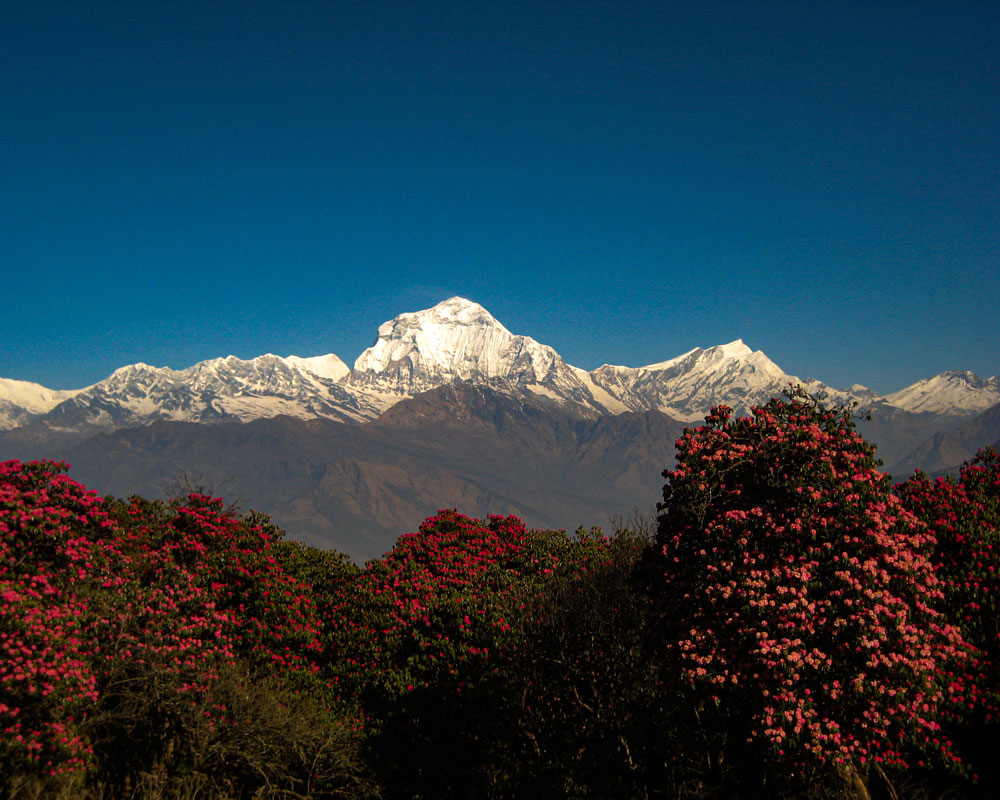
Autumn (October-November): Peak Season
Weather: Clear skies. Cool nights. Stable conditions.
Crowds: Highest. Everyone wants autumn.
Temperature: 10-20°C days, 0-5°C nights
Price: $1,235 (full rate)
Thorong La Pass: Open, safe, clear views
Why book autumn: Guaranteed good weather. Highest success rate for summiting. Clear 360-degree views from the pass.
Reality: You'll share the trail with other trekkers. Popular lodges get booked. But the weather gods won't screw you.
Spring (March-May): Peak Season
Weather: Stable. Clear, but dusty haze from India affects visibility.
Crowds: Very high. Rhododendrons bloom, everyone comes.
Temperature: 15-25°C days, 5-10°C nights (warmest time)
Price: $1,235 (full rate)
Thorong La Pass: Open, safe
Why book spring: Warmest season. Rhododendron forests in bloom. Longest daylight hours.
Reality: Same as autumn — good weather, but crowded.
Winter (December-February): Not Recommended
Weather: Heavy snow. Extreme cold. Unpredictable.
Crowds: None (because it's dangerous)
Temperature: -10 to 5°C days, -20 to -5°C nights
Price: Not offered
Thorong La Pass: Closed. Avalanche risk. Lodges shut down.
Our position: Don't trek in winter. Period. We won't run it. The risk isn't worth saving money.
Monsoon (June-August): Not Recommended
Weather: Daily rain. Cloud cover. Poor visibility.
Crowds: Minimal
Temperature: 20-30°C days, 10-15°C nights
Price:Contact us
Thorong La Pass: Open, but dangerous. Landslides. Respiratory infections.
Our position: Don't trek in the monsoon. We rarely run it.
Bottom line: Book spring or autumn. These are the only windows where the trek is safe and enjoyable.
→ Detailed season guide: When to trek Annapurna
The Acclimatisation Strategy (Why It Matters to Your Budget)
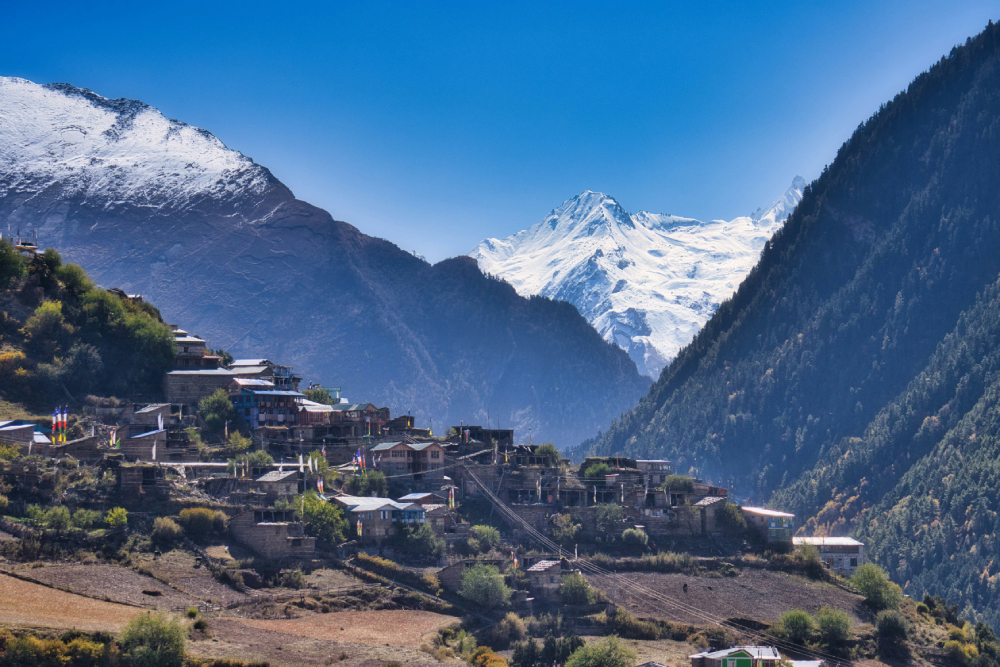
Here's something most budget operators don't understand: acclimatisation isn't optional. It's the difference between "completed the trek" and "completed the trek safely."
Day 8: Rest and Acclimatisation at Manang (3,519m)
You arrive at Manang on Day 7 after climbing from 2,612m. You're now at 3,519m. Your body needs to adjust.
Most budget operators say, "Rest day means rest. Stay in your room."
We say, "Rest day means strategic preparation."
What happens on Day 8:
Morning: Sleep in. Hydrate. Eat.
Midday: Optional acclimatisation hike to the viewpoint above Manang (2-3 hours). This exposes your body to a slightly higher altitude in a controlled way, then you return to sleep at 3,519m. It's the gold standard for altitude acclimatisation.
Afternoon: Explore Manang village. Visit the monastery. Drink tea with locals. Your guide explains the culture, the economy, and why people live here.
Evening: Light dinner. Early sleep. Hydrate more.
Why this matters: When you summit Thorong La on Day 11 at 5,416m, your body will be ready. Not just physically, but metabolically. Acclimatisation reduces altitude sickness risk by 60-70%.
Budget operators skip this day. They say: "We can climb Day 8, save a lodge fee." Then their trekkers develop altitude sickness at 4,500m. Headaches. Vomiting. Dangerous oxygen levels.
We've never had a serious altitude sickness case on Annapurna because we don't gamble with acclimatisation.
One rest day costs us $80 in lodge fees. Evacuating a sick trekker costs $4,000. We chose the rest day.
Guide Quality— The Hidden Cost
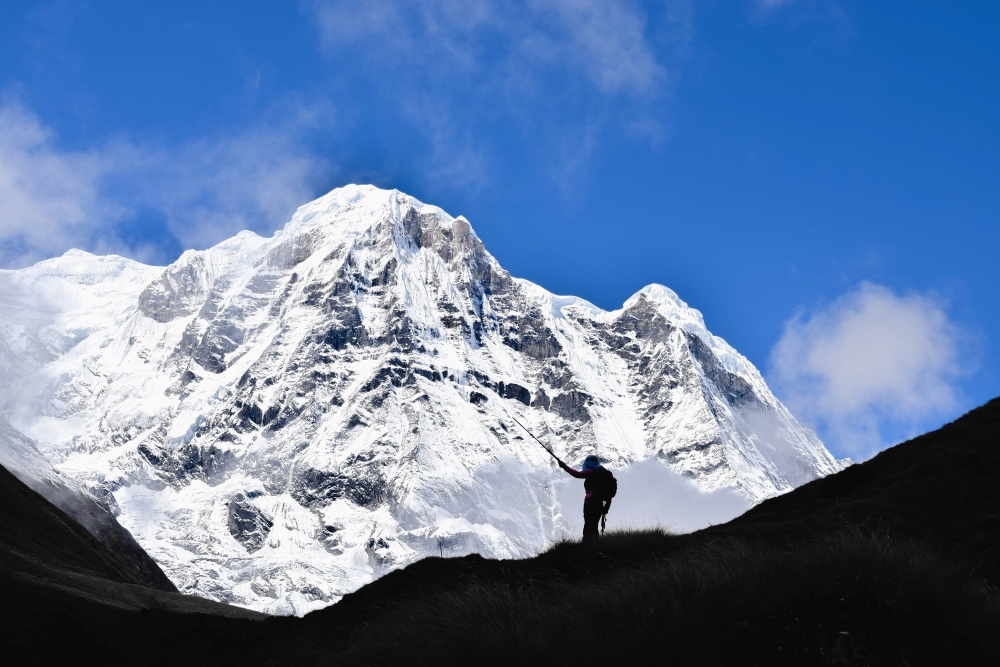
I've seen good guides and bad guides. The difference is the difference between a memory and a trauma.
What Our Guides Do
Government-licensed: Not self-taught. Registered with the Nepal Trekking Guides Association. Legal paperwork. Insurance.
MEDEX trained: Altitude sickness recognition, evacuation protocols, basic rescue. They know what HACE is (High Altitude Cerebral Oedema). They know what HAPE is (High Altitude Pulmonary Oedema). They know when to descend immediately.
40+ treks on this route: They know the trail in their sleep. They know every lodge owner. They know which places have water issues, which places have good food, and which guides at other lodges are sketchy.
Fluent English: Not "hello, how are you" English. Real conversation. They explain the culture, the geography, and the local history. Not reading from a script.
Fair wage: $35-50/day. They're not desperate for extra tips. They're not incentivised to push trekkers beyond safe limits.
Real Stories
Gopal's Ice Lake Decision (May 2024)
A group wanted to hike to Manang's ice lake on Day 8. The weather had been snowy. Most guides weren't taking their clients up — avalanche risk was real.
Gopal assessed the conditions. Checked the weather. Calculated the risk. Then made the call: "We go, but this route." Not the most dangerous route. Not the safest route. The smart route.
They submitted. Incredible views. No one got hurt. That decision-making — knowing when to push and when to hold back — is what separates good guides from cheap ones.
Narayan's Altitude Sickness Response (October 2023)
A member of a group developed altitude sickness approaching Thorong La. Severe. Vomiting. Oxygen dropping.
Narayan could've:
Pushed them over Thorong La (other guides do this)
Left them behind with a porter (happens)
Abandoned them at a lodge (terrible, but it happens)
Instead, Narayan:
Carried extra gear to lighten their load
Adjusted the itinerary to give more acclimatisation time
Took the sick trekker on a separate, lower-altitude hike to help them adjust
Accompanied them over Thorong La on Day 11 (slower pace, more support)
That trekker made it. They came back and recommended us to everyone they know.
You don't get that with a $600 guide and 15 trekkers.
Permits Explained (What You're Actually Paying For)
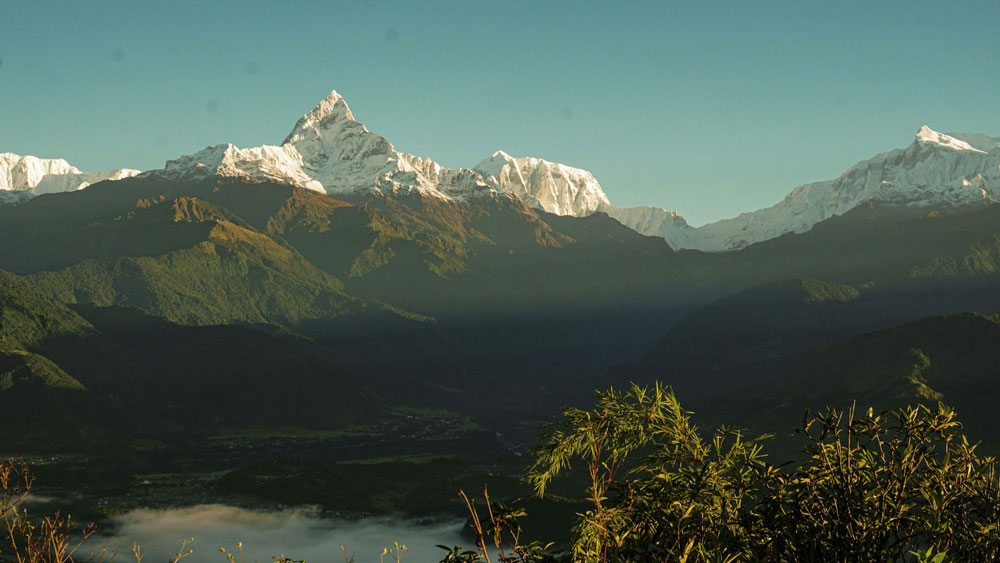
Two permits. Two different purposes. Both required. Both included.
ACAP (Annapurna Conservation Area Permit) — NPR 3,000 (~$30)
Where does this money go?
Trail maintenance (fixing bridges, reinforcing steps, erosion control)
Local community development (schools, water systems, clinics in Manang, Kagbeni, etc.)
Conservation (protecting rhododendron forests, snow leopards, and other wildlife)
Waste management (trails are cleaner because ACAP funds cleanup crews)
Why it matters: Without ACAP, the trails would deteriorate. The lodges wouldn't have functioning water systems. The villages wouldn't have schools. You're not just getting permission to trek. You're funding the infrastructure that makes the trek possible.
TIMS Card (Trekkers' Information Management System) — NPR 2,000 (~$20)
What is it? A government registration card that tracks all trekkers in Nepal.
Why require it? If you go missing:
The government knows you're on this specific route
Search and rescue teams have your exact information
Your family gets contacted
Solo trekking requirement: As of 2025, you need a licensed guide to get a TIMS card. That's the law. We provide the guide. You get the permit. It's not a workaround — it's the system.
Our honest take: The guide requirement makes sense at 5,000 meters. Solo trekking at that altitude, with no communication, is objectively riskier. The requirement protects you.
Processing: Bring 2 passport photos on Day 1. We handle the paperwork. Takes 15 minutes.
Both permits are included in $1,235. No surprises, no extra fees.
Logistics (The Details That Make or Break a Trek)
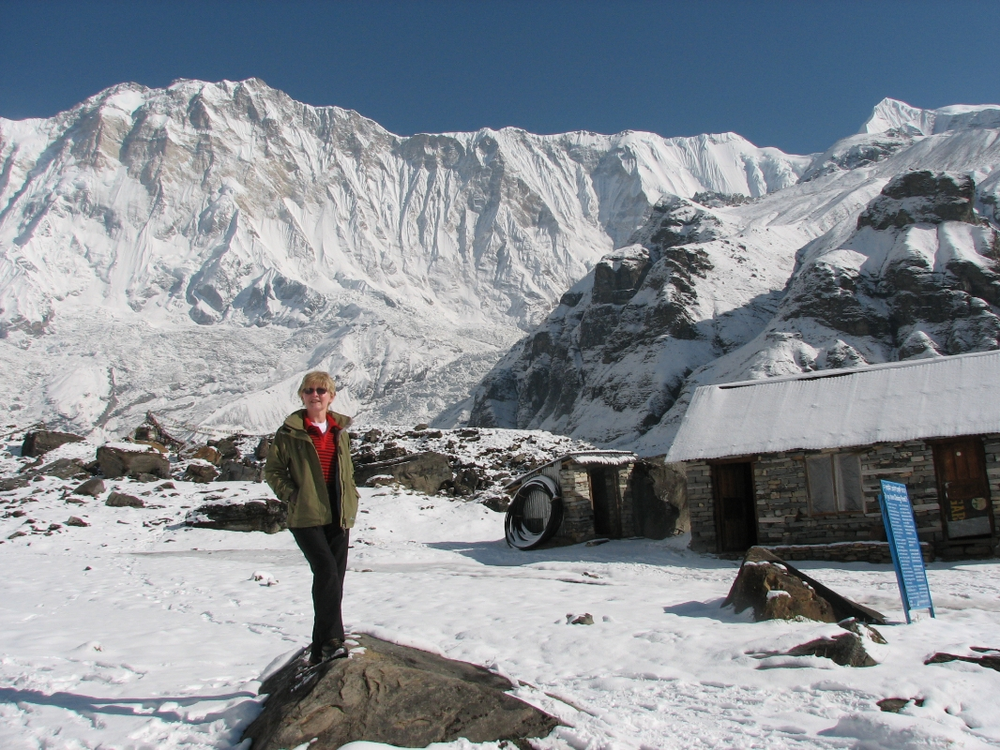
Getting to Jagat (Day 3 — Where the Trek Actually Starts)
Your trek starts from Jagat (1,290m), not Besisahar. Why?
Roads have been constructed toward Manang in recent years. Starting from Jagat means:
You walk through lower-altitude villages longer = better natural acclimatisation
You skip some of the most touristy sections = more authentic experience
You arrive at Manang fresher on Day 7 = more energy for acclimatisation activities
Your Day 3 drive: Kathmandu → Besisahar → Jagat (7-8 hours)
We provide a private jeep. You'll be uncomfortable on the road (bouncy), but that's Nepal. Bring a neck pillow and accept it.
Return Journey: Your Choice
After Thorong La (Day 11), you descend to Muktinath. Then on Day 12, options:
Option 1: Drive to Pokhara (Included, 7-8 hours)
Cost: $0 (included in $1,235)
Route: Scenic drive along the Kali Gandaki Valley
Time to recover: Yes (you'll arrive tired and want rest)
Weather-dependent: No (drives operate year-round)
Best for: Most trekkers
The drive is beautiful and long. You'll be sore and want your own space. Get a window seat, sleep, and let your body rest.
Option 2: Fly to Pokhara (Additional $127, 25 minutes)
Cost: ~$127 per way extra
Speed: Arrive the same afternoon instead of the evening
Reliability: Weather-dependent (flights cancelled 30% of the time)
Best for: Those on tight schedules
Flights from Jomsom are scenic but unreliable. The mountain weather is unpredictable. Don't count on flying out unless you have extra days.
Our recommendation: Drive. It's cheaper, reliable, and gives your body time to process what you just did.
Final Leg: Pokhara to Kathmandu (Day 13)
Options:
Tourist bus ($15-20, 6-8 hours, included in package) — Bumpy, cheap, fine
Domestic flight ($127 one-way, 25 minutes, not included) — Fast, reliable
Stay an extra night in Pokhara (additional hotel cost) — REST (recommended)
Most trekkers choose the bus. It's included, it gives time to decompress, and you sleep through most of it.
What's NOT Included (Budget for These)
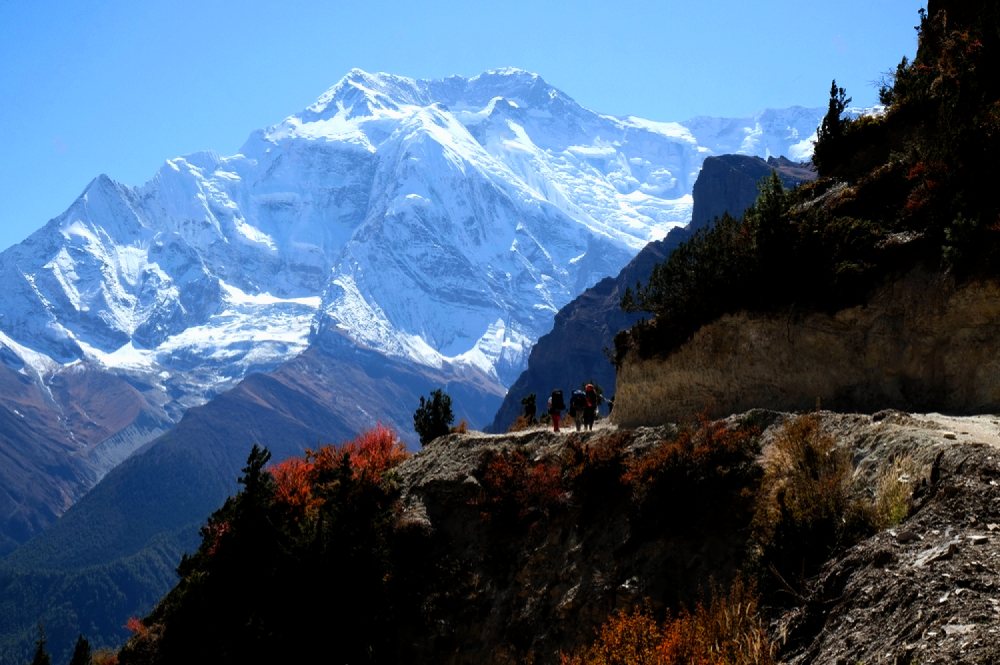
Personal Trekking Equipment (~$500-1,500 to buy; $100-150 to rent)
You need:
Trekking boots (break them in beforehand — blisters at 4,000m = misery)
Layered clothing (temperatures drop 10°C per 1,000m; you'll need warm layers)
Down or synthetic jacket (essential above 3,500m)
Sleeping bag (lodges provide blankets, but a 15°C bag adds comfort)
Backpack (40-50L for daily walks)
Trekking poles (optional but recommended for knee protection)
To buy: $500-1,000
To rent in Kathmandu: $100-150 for 14 days
Real talk: Rent if you're not sure you'll trek again. Buy if you will. Cheap rental equipment is uncomfortable. Mid-range rentals ($100-150) are decent.
Travel Insurance (Mandatory) — $50-150
You MUST have insurance that covers:
High-altitude trekking (up to at least 5,500m)
Helicopter evacuation (costs $3,000-5,000 if needed)
Trip cancellation (if you need to back out)
Why: If you need evacuation and don't have insurance, you're liable for the full cost. Nepal hospitals expect upfront payment.
Providers we recommend: World Nomads, SafetyWing, AXA, Allianz (all cover Annapurna)
Tips for Guides and Porters (~$210-350)
Not mandatory, but customary. Your guide earns $35-50/day. Your porter earns $25-35/day. These are modest wages.
If they did good work, tip them.
Suggested allocation:
Guide: $10-15 per day = ~$140-210 total
Porter: $5-10 per day = ~$70-140 total
Total tips budget: $210-350 (roughly 17-28% of package cost)
This is normal in Nepal. It's how guides and porters actually make a living wage.
Spending Money on Trail (~$150-250 for 14 days)
Cash for:
Bottled water ($0.50-2 per litre at lower altitudes, $5-10 near Thorong La)
Snacks not in package (cookies, chocolate, nuts, dried fruit)
Alcohol or extra hot chocolate (not in the meals)
Wi-Fi/SIM credit (basic mobile works, slow connection)
Emergency supplies (rehydration salts, pain relief)
Budget: $150-250 for 14 days (~$11-18 per day)
FAQs
Q: Isn't $1,235 expensive for Nepal trekking?
A: Compared to what?
Compare $1,235 to:
A 2-week vacation anywhere in Europe: $2,000-5,000+
A ski resort week: $1,500-2,500
A guided trek with a reputable company: standard price
A hospital evacuation from 5,000m: $3,000-5,000
In context, $1,235 is reasonable for 14 days of experienced guide, proper food, fair porter treatment, and safety protocols.
The $600 operator will save you money. But understand what you're trading: guide experience, porter welfare, acclimatisation planning, and frankly, safety margins.
Q: Can I trek Annapurna solo?
A: Officially, no. As of 2025, Nepal requires all foreign trekkers to have a licensed guide in national parks and conservation areas. Annapurna is a conservation area. You need a guide.
Is it enforced everywhere? No. Would you want to trek Thorong La solo without someone trained in altitude sickness? Also no.
Our position: The guide requirement is smart at 5,000 meters. We provide the guide. You benefit from it.
Q: What if I get altitude sickness?
A: Most people develop some symptoms above 3,000m: headache, nausea, and shortness of breath. Normal. Most people adjust within 24-48 hours.
Our protocol:
Day 8 rest and acclimatisation at Manang (prevents sickness from worsening)
Guide monitors everyone daily for symptoms
An oximeter was provided to check oxygen saturation
Severe symptoms (HACE, HAPE): we descend immediately and coordinate evacuation
Prevention tips:
Drink 3-4 litres of water daily
Avoid alcohol for the first 2 days
Eat carb-heavy, light meals
Move slowly ("pole pole" — slowly, slowly in Nepali)
Use the acclimatisation day
Q: How fit do I need to be?
A: Moderate fitness. The trek is labelled "Strenuous" because of altitude, not steep climbing.
You should be able to:
Walk 8-10 km per day without stopping
Climb stairs without getting winded
Do 30 minutes of cardio 3x per week
You don't need to:
Run marathons
Be under 30 years old (we've had trekkers in their 60s complete it)
Lift heavy weights
Best prep: Walk on hills 3-4 times per week for 2 months before the trek.
Q: When should I book?
A: 6-8 weeks in advance, minimum.
Spring (March-May): Book by January
Autumn (September-October): Book by July
Last-minute bookings (2-4 weeks) are possible but come with:
Limited guide availability
No date flexibility
Sometimes higher prices
Best practice: Decide your dates 2-3 months ahead. Email us. We'll confirm availability and send an invoice.
Q: What if I need to cancel?
A: Cancellation policies:
60+ days before: Full refund minus permit costs ($50)
30-60 days: 50% refund
Less than 30 days: No refund
Travel insurance covers cancellation if you have a valid reason (medical, family emergency, etc.). Get insurance.
Q: Do I need special visas or permits?
A: You need:
Nepal visa — Granted on arrival ($30-50 depending on duration). Get it at Kathmandu airport. 15 minutes.
ACAP permit — Included in $1,235 package
TIMS card — Included in $1,235 package
We handle ACAP + TIMS. You handle the Nepal visa (it's easy).
Q: Is the food vegetarian/vegan-friendly?
A: Mostly yes. The standard trek diet (dal bhat, rice, vegetables, eggs) is naturally vegetarian.
Vegan options: Tell us in advance. We can arrange meals without eggs/dairy, but variety is limited in remote lodges.
Gluten-free options: Limited. Tell us in advance. Some lodges can accommodate.
Allergies: Inform us before booking. We'll coordinate with lodges.
Q: What's the weather like?
A: Depends on the season.
Autumn (Oct-Nov): 10-20°C days, 0-5°C nights. Clear skies.
Spring (Mar-May): 15-25°C days, 5-10°C nights. Occasional rain.
Winter: -10 to 5°C days, -20 to -5°C nights. Heavy snow. Trek not recommended.
Monsoon: 20-30°C days, 15-20°C nights. Daily rain. Trek not recommended.
Pack for: Cold nights, mild days, layering is key.
Q: How much water should I drink?
A: 3-4 litres per day minimum. At altitude:
Lower oxygen = your body works harder
Dry mountain air = water evaporates from lungs
Less appetite = you forget to drink
Dehydration causes altitude sickness, headaches, fatigue, and mental confusion.
Strategy: Drink 500ml every hour while trekking. Fill your bottle at every lodge.
Q: Can I drink the water at lodges?
A: Not directly from the tap. Use:
Boiled water — Ask the lodge (safe, free or $0.50-1)
Water purification tablets — Bring them ($10 for 50, lasts the whole trek)
Portable water filter — Lightweight ($20-50)
Bottled water — Expensive at altitude ($1-5 per litre)
Recommendation: Bring purification tablets. Cheapest, most reliable.
Q: What's the internet/communication like?
A: Spotty.
Kathmandu/Pokhara: Full 4G coverage
Lower villages (Jagat-Chame): 3G/4G, slow
Manang: Basic 3G, very slow
High altitude (Thorong Phedi, Muktinath): No coverage
Wi-Fi: Available at most lodges for $3-5/day. Connection is slow (1-2 Mbps).
Recommendation: Get a Nepalese SIM card (NCell) for ~$10. Add credit as needed. Cheaper than lodge Wi-Fi.
Reality: Limited communication is a feature, not a bug. This is why you came.
Q: How many people are in a typical group?
A: 6-12 trekkers per guide. Smaller groups (4-6) are possible but cost more per person.
Our approach: Balance group size for:
Safety (guide can monitor everyone)
Socialisation (meet other trekkers, shared experience)
Cost efficiency (shared guide salary = lower per-person cost)
Private treks: Available for 2-4 people at a higher cost (~$1,800-2,200 per person).
Q: What if I don't like my group?
A: You'll spend 14 days with 6-12 people. Personalities sometimes clash.
Our guide's role: Keep things positive, manage conflicts, and ensure everyone feels included.
Honest take: Most trekkers love their group and exchange contact info at the end. Some don't click. Either way, the trek is about you and the mountain, not the group.
Q: What's the bathroom situation?
A: Basic squat toilets or Western toilets (varies by lodge). Toilet paper is provided. Some lodges appreciate if you bring extras.
High-altitude bathrooms: At Thorong Phedi (4,538m), toilets are outside. Bring a headlamp for night visits.
Reality: It's not a luxury. It's functional. You'll adjust. Everyone does.
Q: Can I extend my trek?
A: Yes. Options:
Extra days at Manang (acclimatisation activities, ice lake hike, side valleys)
Extend to Upper Mustang (4-5 additional days, separate permits, separate cost)
End at Pokhara (extra rest days, explore the city)
Cost: Additional days = ~$50-70/day in lodges + guide + porter costs.
Q: When should I book for spring/autumn?
A: 2-3 months ahead. Earlier is better.
- Spring treks (March-May): Book by January
- Autumn treks (Sept-Oct): Book by July
Popular dates fill fast. If you want spring, book now.
What You'll Actually Experience
This section is emotional and honest. No marketing fluff.
The Physical Achievement
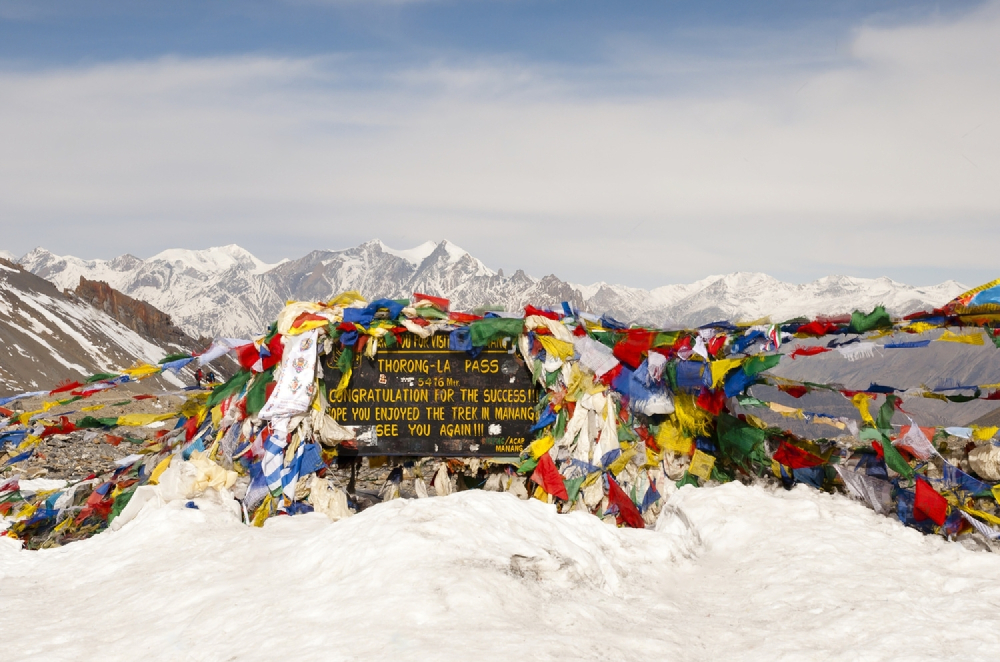
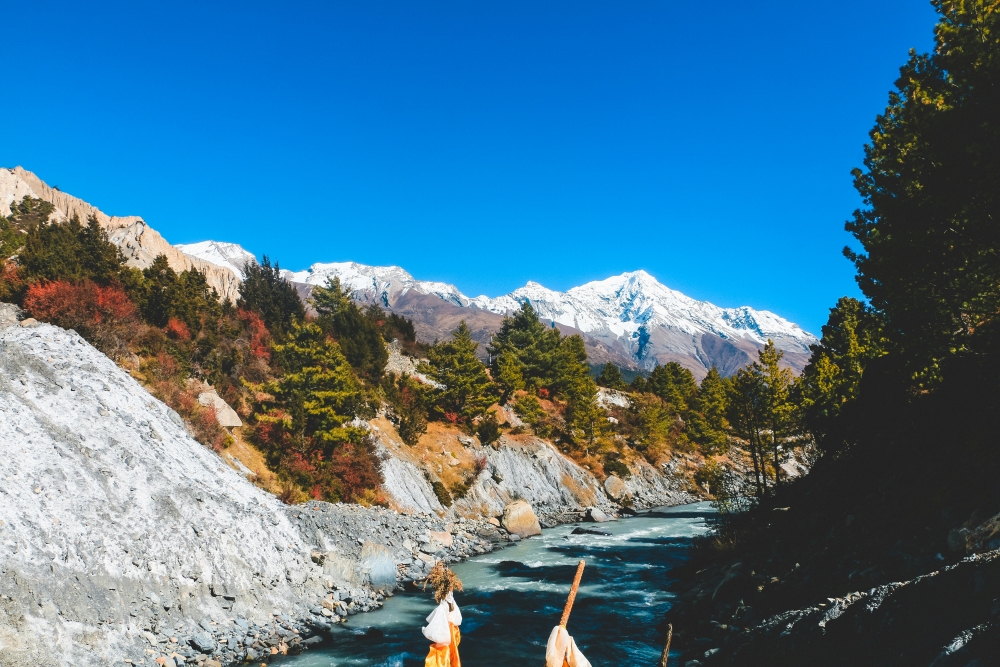
You'll cross Thorong La Pass at 5,416 meters. That's higher than the commercial aircraft cruise altitude. The 360-degree view — Tibet to the north, the Kali Gandaki gorge to the south, peaks in every direction — is unforgettable.
The climb to get there is real. You'll start before dawn (4:00 AM) from Thorong Phedi. You'll feel the altitude in your lungs. Your legs will burn. You'll question why you're doing this.
Then you'll submit. And you'll stand there and understand that your body can do things you didn't think it could do.
That moment changes something in you.
The Cultural Immersion
You'll walk through Manang valley, where people have lived off yak herding and high-altitude farming for centuries. You'll see their monasteries, their prayer flags. This isn't a staged performance. It's living village life.
You'll stay in small guesthouses run by families. You'll eat with them. They'll share stories if you ask (your guide translates). You'll understand that Annapurna isn't just a mountain — it's a place where people choose to live, build families, and pass down traditions.
Your guide will explain why certain peaks are sacred, why prayer flags flutter in specific directions, and what this landscape means to the people who've lived here for centuries.
You'll stop judging the "hardship" and start understanding it as a choice.
The Silence
By day 7, your mind will have quieted. You'll stop thinking about work emails. You'll stop worrying about problems back home. You'll notice things: the way light hits ice, the sound of water over rocks, how your breathing syncs with your walking.
This is what you came for. Not the mountain. The silence.
The Personal Transformation
Two weeks of walking, climbing, acclimatising, breathing thin air, sleeping in cold rooms — this changes your brain. Studies show altitude trekking increases dopamine and serotonin. Your body is stressed, so it produces its own remedies.
When you reach Thorong La, you don't just feel the altitude. You feel what you're capable of. You realise that your mind gave up before your body did. You trust yourself more after.
The Memory
A decade from now, you won't remember the lodge rooms. You won't remember every meal. But you'll remember:
The moment you realised your body could do this
Your guide's name and a story he told
How the light hit the peaks at sunrise
How quiet your mind felt at Manang
The person who shared the hard moments with you
The feeling of descending into Muktinath, knowing you made it
That memory is worth $1,235. Most people who come back say it's the cheapest adventure they've ever done.
Why People Choose HST
Ewan M (May 2024) — Annapurna Circuit Trek
"I had an awesome time trekking the Annapurna circuit with Himalayan Scenery Treks. Our guide Gopal was brilliant, he was super good fun and brilliant at organising and making sure our trek ran smoothly. A highlight of the trip was trekking to the ice lake at manang. The weather had been snowy and lots of other guides weren't taking their trekkers up because of this, but Gopal assessed the risk and took us up for one of the hardest but most memorable days of the trek... Amazing trip, will remember for a life time!"
Voyager226309 (March 2025) — Mt Everest Base Camp Trek
"I'm 66 years old and I hiked with guide Bhakta Magar and porter Tsiring Magar. Bhakta took care of me well and made sure I was well throughout the trek. Everything went as planned. The agency was very accommodating to itinerary changes due to various pandemic related issues. I highly recommend the agency."
Related Blog Posts (Below the article)
Best Time to Trek Annapurna: Seasons Explained
Annapurna Base Camp Trek Cost: 2026 Guide
Annapurna vs. Everest Base Camp: Which Trek is Right?
Conclusion
Look, $1,235 for 14 days of guided trekking in the Himalayas is a fair price. It's not the cheapest. It's not the most expensive.
It's the price of doing it right.
You'll spend it, and you'll forget about it. A year later, someone will ask you about your trek, and you won't remember how much it cost. You'll remember how it felt.
That's the deal.
If you're ready to book, contact us. If you want more information, download the guides. If you want to talk to someone who's actually done this trek 40+ times, call us.
We'll take care of you on the mountain. That's the promise.
Let's go.