There are a lot of things to do during a Manaslu Circuit Trekking in Nepal. Explore the best 9 selected by our trekking experts.
9 Interesting Things To Do During A Manaslu Trekking In Nepal
Table of Contents
Most people who ask me about the Manaslu Circuit have already done Everest Base Camp or the Annapurna Circuit. They're not looking for another great trek. They're looking for the one that still feels like it belongs to the mountain — not to the tourism infrastructure built around it. That's what the Manaslu Circuit still is, for now.
I've walked this route multiple times, in different seasons, with different groups. And every time, the things that stay with clients long after the trek — the conversations they keep returning to, the moments they mention in their follow-up emails — are never the ones that were on the itinerary. They're the watermill in Jagat where a woman ground millet without looking up. The pre-dawn cold at Shyala when the sky turned the colour of copper behind Manaslu's north face. The glass of sea buckthorn juice in Tilche tasted like something you couldn't have invented.
This guide covers what you can actually do during a Manaslu Circuit Trek — not as a checklist, but as a framework for paying attention to the right things while you're there.
Before You Go: What the Manaslu Circuit Actually Requires
The Manaslu region is a government-designated restricted area in Nepal. That restriction is one of the reasons it remains what it is. You cannot enter this region alone or without a licensed guide, and as of March 22, 2026, solo trekkers are permitted, provided they are accompanied by a licensed guide — the previous two-person group minimum no longer applies. The permits you need are:
Manaslu Restricted Area Permit (MRAP) — the core access permit for the restricted zone
Manaslu Conservation Area Permit (MCAP) — covers the conservation area
Annapurna Conservation Area Permit (ACAP) — required for the section of the route that crosses into the Annapurna zone near Dharapani
Don't treat the permit process as a hurdle. It's a filter. It's part of why the trail isn't Everest.
For timing, the best seasons for the Manaslu Circuit are spring (March to May) and autumn (September to November). Autumn is my personal preference — the light is sharper, the passes are more predictable, and the villages feel more alive after the monsoon has finished. Spring is spectacular for rhododendrons in the lower valley, but you're crossing the Larkya La as the snowpack is still softening, which adds variability to the pass day.
Explore the Traditional Watermills in Jagat in the Manaslu Region
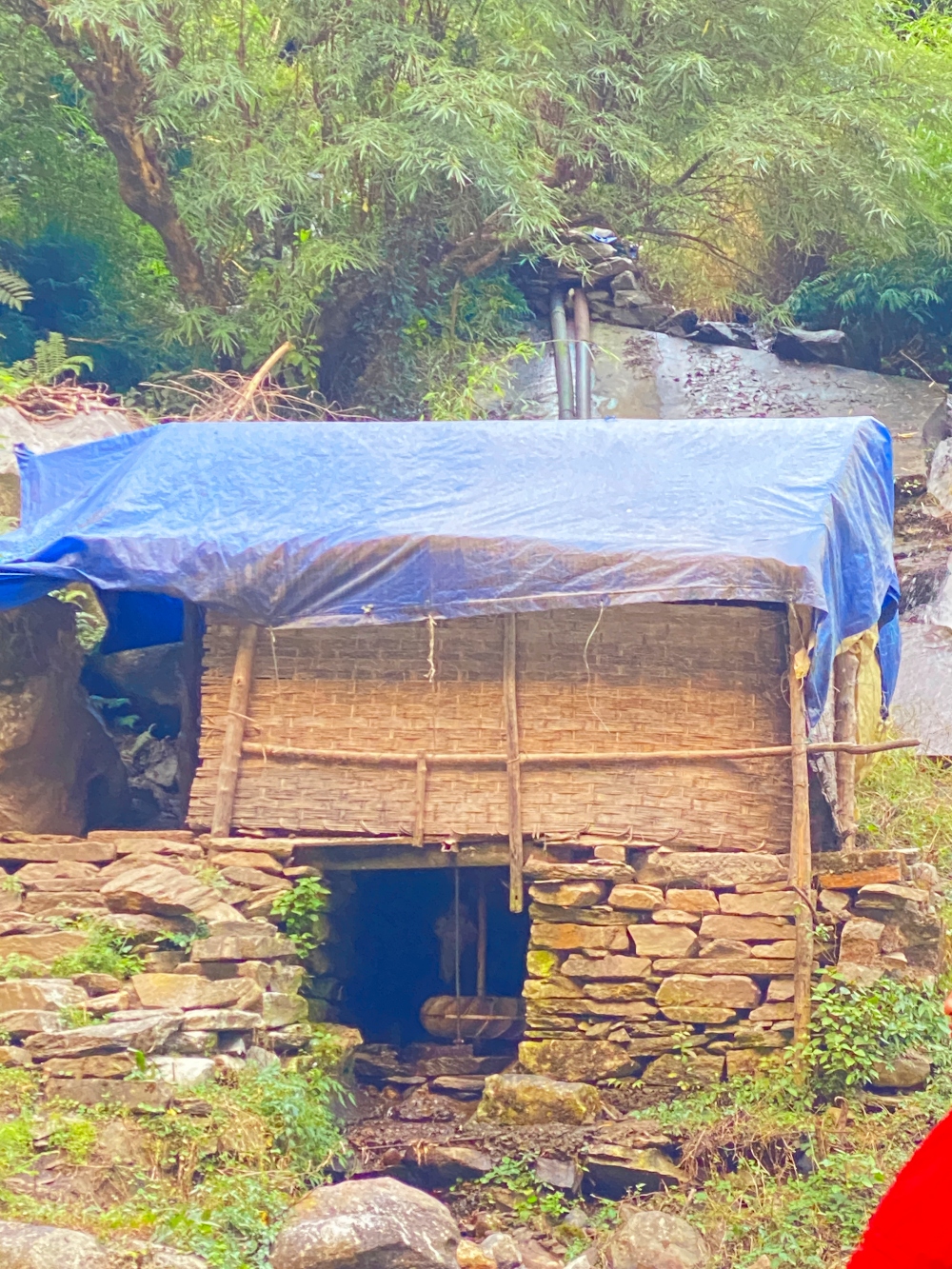
Most trekking groups pass through Jagat without stopping. It's an early day, everyone's finding their legs, and the watermill sits just off the trail without a sign pointing to it. That's exactly why it's worth pausing.
The traditional watermills here — called ghatta in Nepali — use the channel water from the Buri Gandaki to grind grain. The mechanism is entirely wooden, entirely unchanged, and operated by the same families for generations. What I find genuinely interesting is the sound before you see it: a low, rhythmic knocking that you initially mistake for something else on the trail.
Ask your guide to take you to it. Stand there for five minutes and watch. If there's a woman working the grain, she will almost certainly ignore you — not impolitely, but because this is her morning, not a demonstration. That's the right experience. You are observing a working life, not attending a cultural performance.
This is the first signal the Manaslu Circuit sends you: the trail runs through people's actual world. Receive it accordingly.
Watch the Farming Villages — Lihi, Bihi, Namrung — Without Trying to Photograph Everything
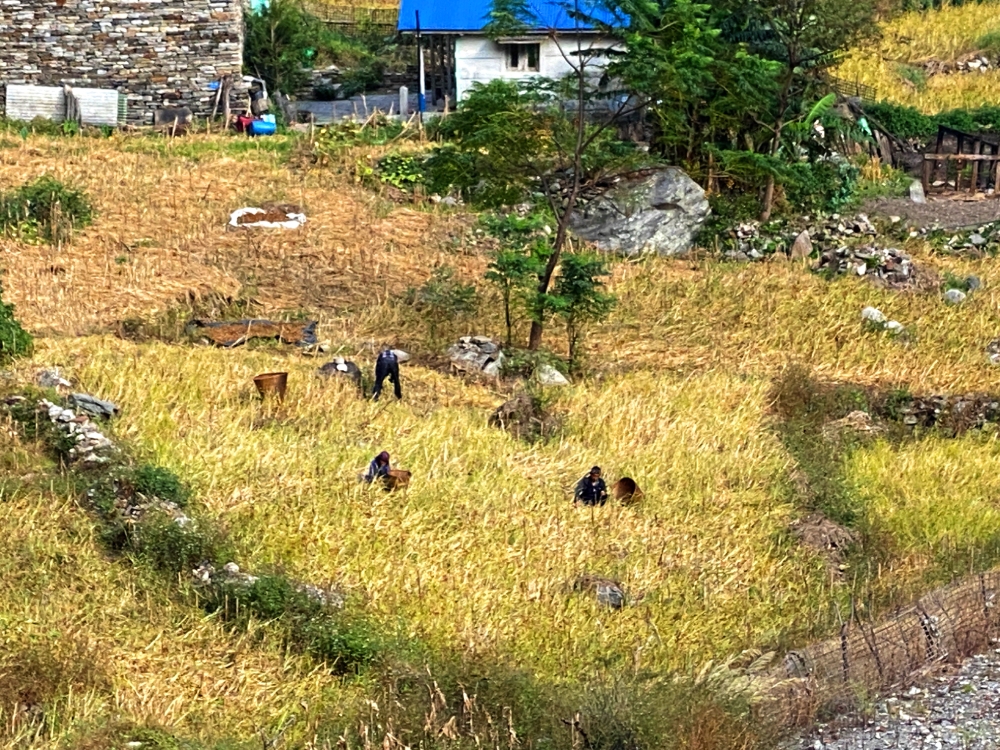
The middle section of the circuit, between Jagat and Lho, passes through villages where the agricultural calendar is as visible as the mountains. Depending on when you trek, you'll see buckwheat in flower (autumn, a deep pink that covers entire hillsides), or the slow work of millet harvest, or yaks being rotated between grazing zones as the altitude shifts.
In Bihi and Lihi, particularly, the terracing goes right up to the edge of the trail. Dzos — the yak-cattle hybrids that do most of the heavy ploughing at these elevations — move past you on a path that also serves as a field boundary. It's worth slowing down here. The villages are not set pieces. The farming is happening because the farming needs to happen.
The client who takes the best photographs in this section is never the one trying hardest. It's the one who stopped walking.
Visit Pungyen Gompa — Properly, Not Just From Below
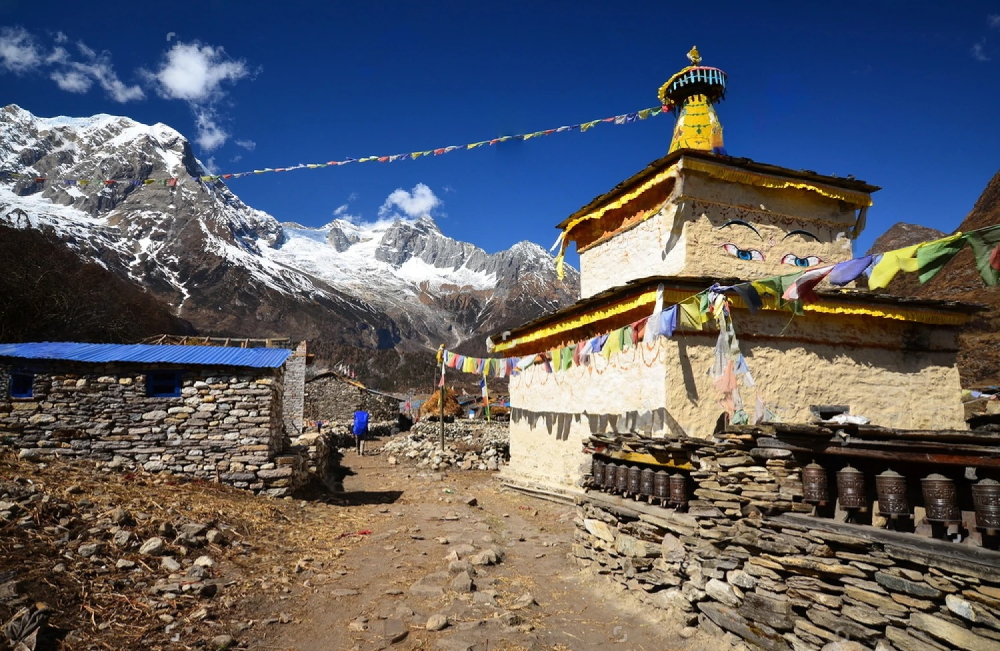
Pungyen Gompa sits above Shyala on a ridge with a direct line of sight to Manaslu's north face. Most trekking guides mention it briefly. Few take groups up there because the climb from the village is steep, takes around 45 minutes each way, and most groups are already tired from the day's walk.
Go anyway.
The monastery has a history that isn't easy to absorb from a distance. A Japanese research team was camped near Pungyen Glacier in 1972 when an avalanche destroyed the structure and killed the team and several nuns sheltering within it. The gompa was rebuilt, but the event is remembered as a consequence of disturbing the deity of Manaslu — the local belief is specific and unambiguous about this. The monks who maintain it now are caretakers of a site with weight.
When you arrive at the top, the prayer flags are strung across a view that includes Manaslu, Himalchuli (7,893m), and Ngadi Chuli (7,871m), all in a single sweep. I've sat here in late October when the light was falling at a low angle, and the flags were moving in a wind that was barely perceptible below. It's one of the most complete landscapes I've encountered in twenty-plus years of walking in the Himalaya.
The climb is not technical. You just need to want it more than you want to rest.
Watch a Stunning Sunrise in Shyala Village
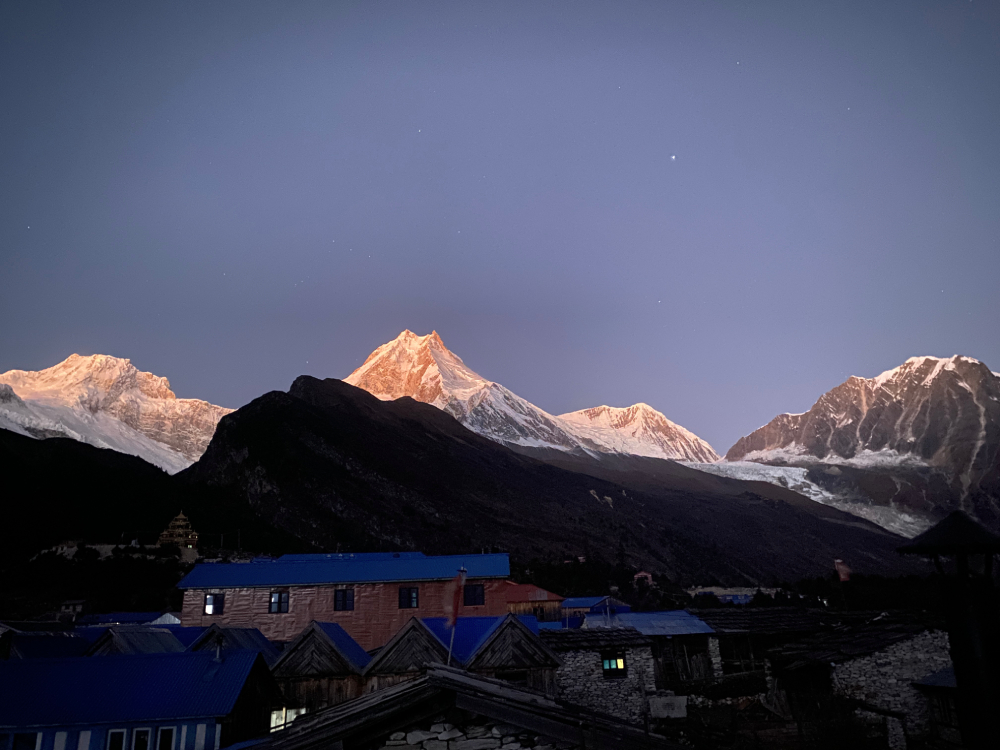
If you're staying in Shyala on your way to Samagaon — and I'd recommend you do, rather than pushing through in a single day — set an alarm for 5:30 am and walk to the edge of the settlement where the land drops away to the south.
What you'll see as the light comes is Manaslu's summit pyramid catching the first alpenglow before anything in the valley is lit. The colour runs from grey to deep orange to gold in about twelve minutes. Himalchuli sits to the right. The glacier field below the north face goes blue-white as the direct light arrives. The village behind you is still completely quiet.
I don't describe Himalayan sunrises lightly — there are plenty of unremarkable ones. This one is worth the alarm.
Take a Side Trip to Birendra Lake
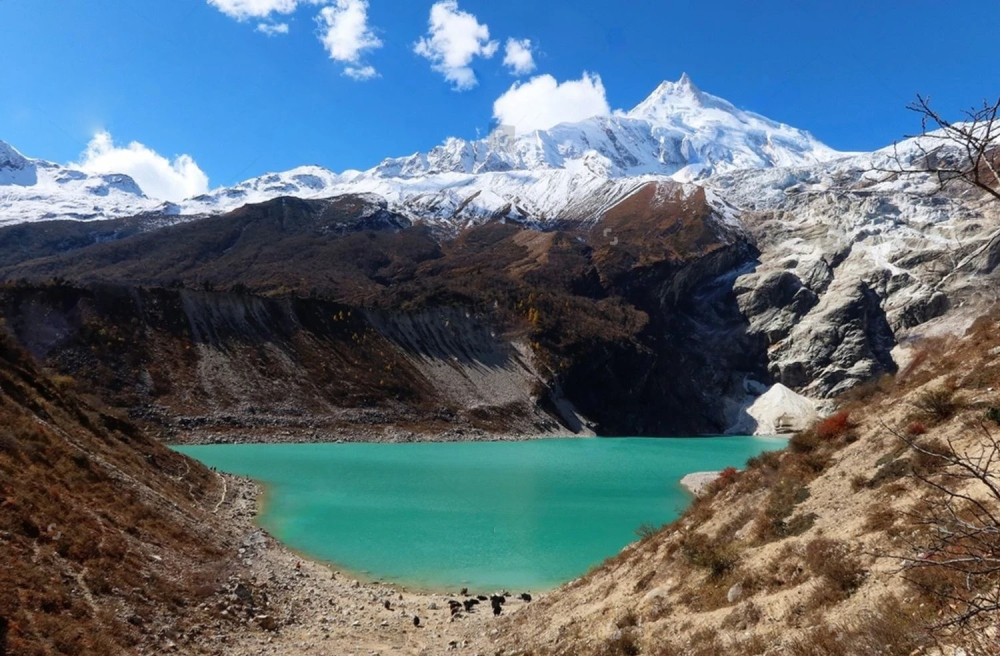
Birendra Lake sits at 3,500m above Samagaon, roughly 1.5km off the main trail. It's a glacial lake — turquoise, cold, surrounded by moraine that amplifies the silence in a way that feels almost architectural. Manaslu's north face reflects in it on clear mornings before the wind picks up.
The walk from Samagaon takes about 45 minutes at an altitude pace. The path is straightforward, but the elevation means most people feel it. Go early — by 10 am, the wind begins coming down off the glacier, and the reflection breaks up. Between 7 am and 9 am, the lake is still, and the mountain sits in it perfectly.
It's worth noting that Birendra Lake is an excellent acclimatisation walk if you're building up to the Larkya La. The elevation gain is gentle, and the return to Samagaon follows the same gradient you want for rest days. Our Manaslu Circuit Trek itinerary includes this detour as a built-in acclimatisation day rather than an afterthought.
Hike to Manaslu Base Camp
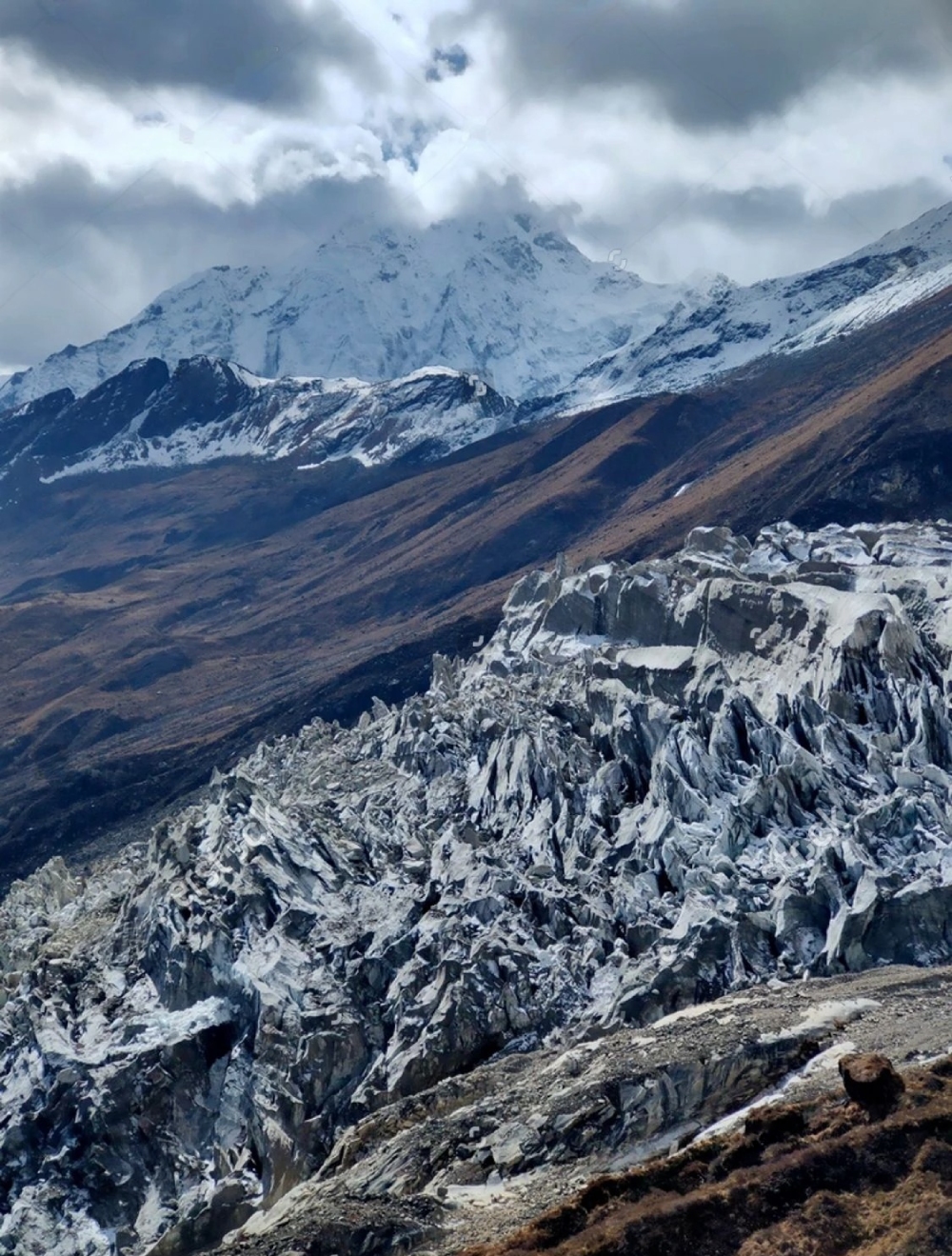
The hike to Manaslu Base Camp begins from Samagaon and gains approximately 1,600m to reach 5,100m. It is a full day — seven to eight hours round trip — and it is genuinely demanding. The trail passes through moraine debris and glacier ice, and the terrain becomes increasingly technical in the upper section. This is not a casual extension.
But the view from Base Camp is unlike anything else on the circuit. You are directly beneath the south face of Manaslu. The scale of it — the size of the glacier, the angle of the face, the distance to the summit above you — is something that photographs don't communicate. You understand why this mountain was not climbed until 1956. You understand why the Japanese team that perished here in 1972 called it the Mountain of the Spirit.
Bring enough food for a full day. Acclimatise properly at Samagaon first — ideally spending two nights before attempting this — and communicate clearly with your guide about your pace. This hike is included as an optional add-on in our 14-day Manaslu Circuit Trek for clients who want to extend their time at altitude before the Larkya La crossing.
Contribute to the Local School in Samagaon
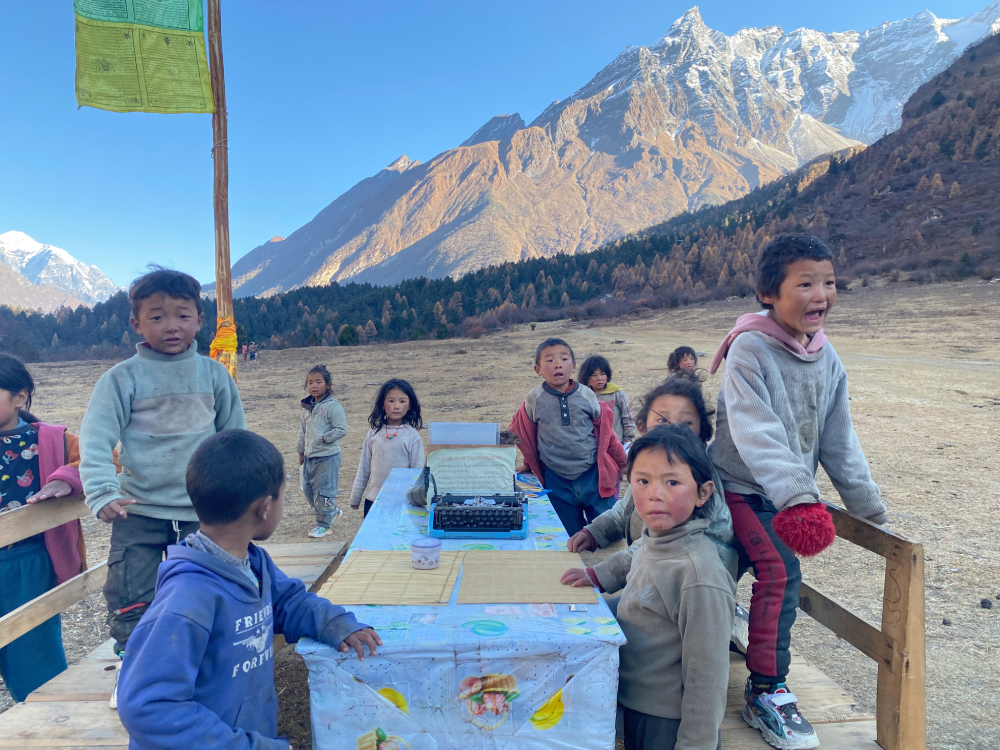
The school in Samagaon operates on donated supplies. Trekking groups have been contributing notebooks, pencils, and books for years — the system works because the teahouses in the village collect and distribute donations directly. This is not a charity programme managed from Kathmandu. It's local and direct.
If you want to contribute, bring school supplies from Kathmandu rather than buying them en route where prices are higher. Notebooks and pencils are more useful than finished books, which are harder to calibrate for age groups. If you have an hour in the afternoon, ask the teahouse owner whether school is in session. In our experience, teachers here are open to brief visits from trekkers who are respectful and don't arrive in a group of fifteen.
The interaction, if it happens, is not a highlight in the way a summit view is a highlight. It's quieter than that. It tends to stay.
Try Yak Sukuti in Samdo Village
Yak sukuti — dried, spiced yak meat — is the defining flavour of the upper Manaslu valley. It's served in Samdo and a few of the teahouses above Samagaon, usually as a snack alongside tea or as a side at dinner. The texture is dense and chewy, the spicing uses Timur (Sichuan pepper native to Nepal) and dry red chilli, and the taste is something you either immediately want more of or find aggressively unfamiliar.
Order it with a cup of butter tea if you want the full elevation experience. The combination is not particularly comfortable for people who haven't had butter tea before, but it is completely authentic to where you are and who made it.
Don't miss this. It's one of those small moments on a trek that sounds minor and becomes a reference point.
Savor Sea Buckthorn Juice on the Way to Tilche
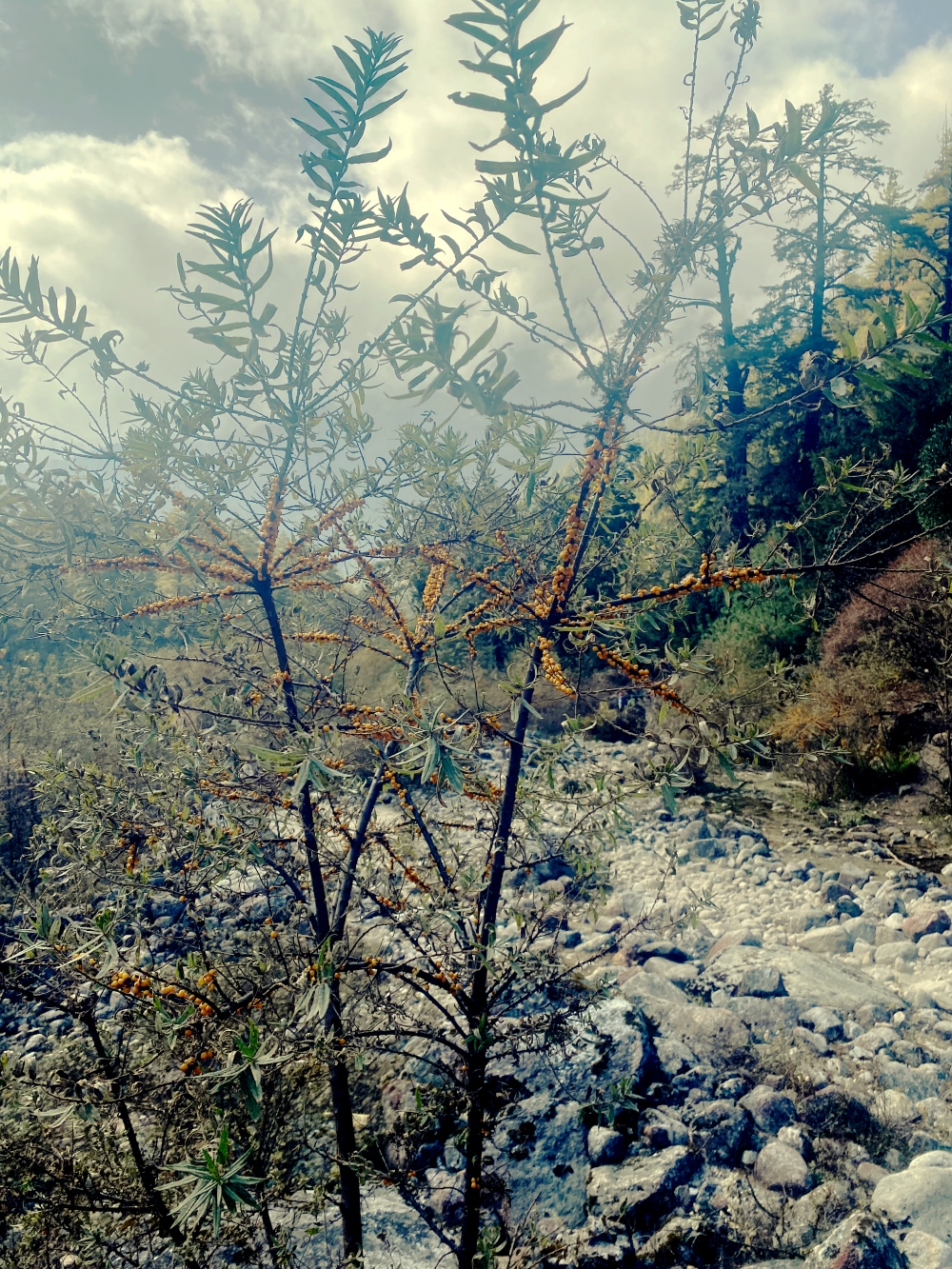
Sea buckthorn grows wild in the mid-altitude sections of the Manaslu valley, particularly around Tilche on the descent from the Larkya La. It's a small orange berry, intensely tart, and the juice pressed from it tastes unlike anything you'd find at lower elevations. The teahouses in Tilche serve it fresh when in season — late September through November is the best window.
It's packed with vitamin C and antioxidants, which matters when your body has just spent two weeks at altitude. But that's not why you drink it. You drink it because after the Larkya La, which is a physically hard day at 5,106m with several hours of steep descent on the far side, arriving at a teahouse and being handed something that tastes this alive is exactly what the moment calls for.
I always make sure this stop is written into the itinerary. It sounds minor. It isn't.
Tips for Enjoying the Manaslu Circuit Trek to the Fullest
Trekkers who have previously walked to the Everest Base Camp Trek or the Annapurna Circuit will find the Manaslu Circuit a unique and valuable alternative. Beyond Everest Trek, Manaslu is capable of showcasing its appeal for those seeking less crowded trails and breathtaking natural beauty. Here are some more tips to explore the trek:
Engage with locals to learn about their culture: Interact with villagers to understand their daily lives and traditions. Respectfully observe their customs during your visit. Listen to their stories to learn about their way of life. Your guide can explain cultural practices in detail. They can also help you communicate effectively with locals, bridging language barriers.
Plan side trips and rest days: Include side trips like Manaslu Base Camp or Birendra Lake in your itinerary. Plan rest days to explore villages such as Samagaon and Shyala. Use these breaks to recharge and enjoy the scenic beauty. Rest days also provide opportunities to connect with the local community and experience their lifestyle.
Respect the environment and cultural sites: Follow Leave No Trace principles to preserve the region’s natural beauty. Avoid littering and always stick to marked trails. Be respectful when visiting cultural sites like monasteries. Adhere to local customs and regulations to honour their significance.
Rely on your guide for cultural insights: Your guide can share details about local traditions. They can explain the region’s history in simple terms. Guides also help you understand cultural practices and their importance. They make it easier to communicate with locals during your trek. Their support adds value to your experience. Their knowledge makes the journey more meaningful and memorable.
Insider's Tip: Do your Manaslu Circuit Trek with Himalayan Scenery Treks and have the best experience of the Manaslu region.
What to Know Before You Go
Who is the Manaslu Circuit for?
It's for trekkers who have done at least one high-altitude route and want something with more cultural texture and less foot traffic. It's not the right trek for someone's first experience in Nepal — not because it's technically extreme, but because its rewards require the patience to receive them.
Do you need a guide?
Yes, legally and practically. The restricted area permit requires a licensed guide. Beyond the legal requirement, the cultural and geographical complexity of this route — the monasteries, the villages, the historical context of places like Pungyen Gompa — is significantly richer with a guide who knows the area well. We've been running the Manaslu Circuit for years, and our guides are briefed specifically on what each client wants before the trek begins.
How long does it take?
The standard Manaslu Circuit Trek is 14 days. There is a 10-day short version for trekkers with tighter schedules, though some of the cultural stops described above require the longer itinerary to do properly. For those who want to extend into the sacred Tsum Valley, the Manaslu and Tsum Valley combination trek runs to 22 days and is, in my view, one of the most complete trekking experiences in the Himalaya.
What's the Larkya La actually like?
The pass sits at 5,106m and the crossing day begins at around 3–4 am from Dharamsala. The ascent is gradual but long, the descent on the far side is steep and can be icy in autumn, and the whole day runs 8 to 10 hours. It is hard. It is also the kind of hard that feels earned rather than imposed. The views from the top — Himlung Himal, Cheo Himal, Annapurna II — arrive like a conclusion the whole trek has been building toward.
Conclusion
The Manaslu Circuit is not a secret anymore, but it still behaves like one. The infrastructure hasn't caught up with the landscape, which means the landscape still wins. If you want to understand what that means in practice, get in touch with us and we'll build an itinerary around the moments that will still matter to you five years from now.