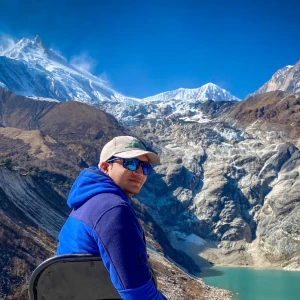
Most people don't plan to go to Upper Mustang. They plan to go to Mustang. They book a jeep. They read about Muktinath, Jomsom, and Marpha. And then somewhere on the road — usually at a small, wind-battered village called Kagbeni — something shifts.
They look north. The road continues. The landscape changes colour. And they ask the question they didn't know they were going to ask: Can we keep going?
I've watched that moment happen more times than I can count. Standing at the Kagbeni checkpoint myself, more than once, I've felt exactly what they're feeling — the pull of a place that clearly doesn't end where the guidebook says it does. This guide exists to help you decide before you get there.
Why Mustang Confuses Everyone Online
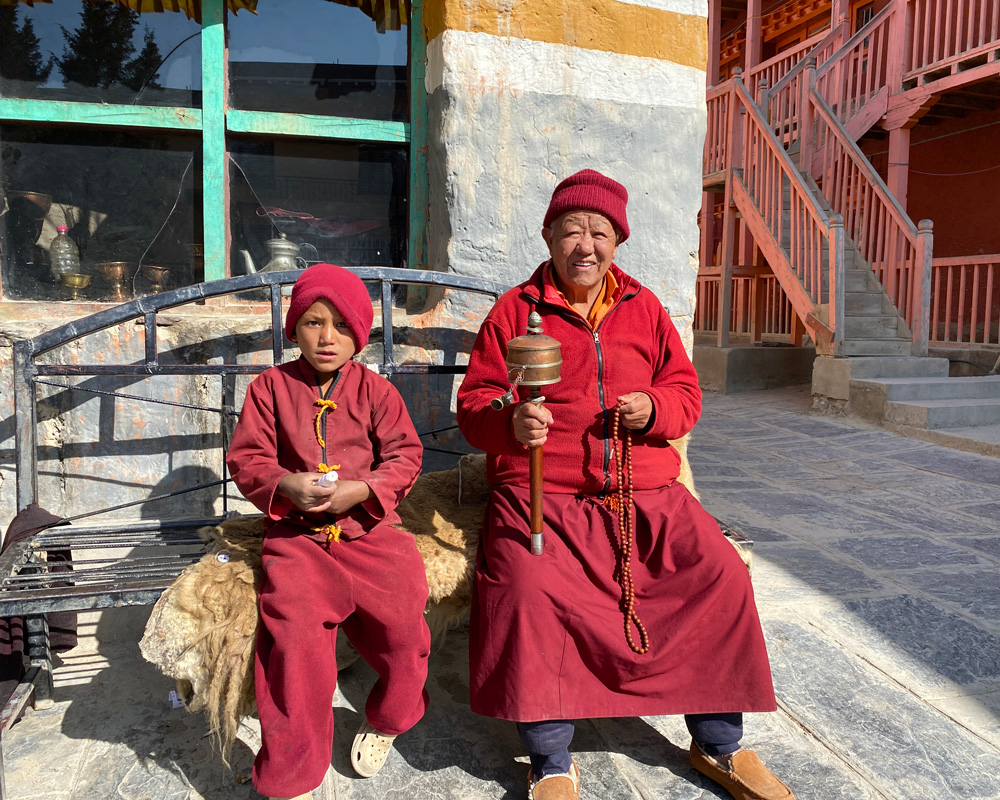
Search "Mustang Nepal", and you'll get results that never quite agree with each other. Apple orchards and jeep roads in one tab. Ancient walled cities and cliff caves in another. Prices that don't relate to each other at all. Landscapes that look like different countries.
That's because they are.
Mustang splits into two zones at a checkpoint in Kagbeni, on the banks of the Kali Gandaki River:
Lower Mustang — south of Kagbeni, open to everyone, no restricted area permit required
Upper Mustang — north of Kagbeni, a restricted region requiring a special permit, a licensed guide, and a budget that reflects what it actually costs to keep this place intact
Lower Mustang: More Than a Starting Point
Lower Mustang runs from Pokhara up through the world's deepest gorge, past Jomsom and Marpha, to the pilgrimage site of Muktinath — and ends at Kagbeni.
Permits needed for Lower Mustang:
ACAP (Annapurna Conservation Area Permit): $30 for foreign nationals, NPR 1,000 for Indian and SAARC citizens
TIMS card
No restricted area permit, no mandatory guide
That's the entire list.
What You'll Find in Lower Mustang
Marpha: Known as the apple village of Mustang. Stone alleys and whitewashed houses define its look. Orchards produce apples and local brandy. The village feels quieter in reality than its popular travel photos suggest.
Jomsom: Administrative hub of Mustang. Connected to Pokhara by a small mountain airport. Strong daytime winds are common, so early travel and meals are practical. It serves as a key transit and supply point.
Kagbeni: Medieval settlement at the confluence of rivers. Ancient settlement layout with narrow lanes and a historic red monastery. It marks the transition point where Lower Mustang begins to feel more remote and culturally deep.
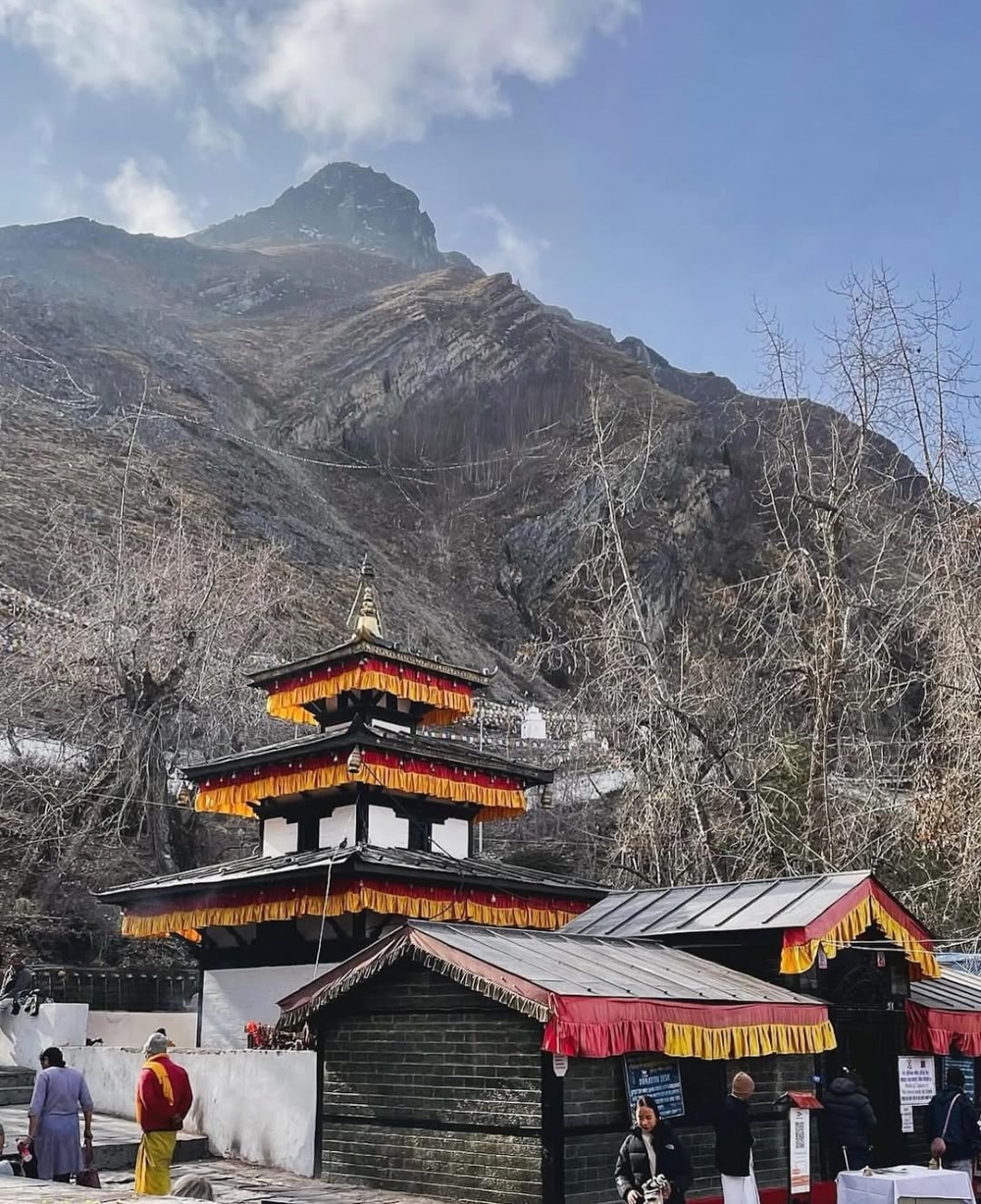
Muktinath: Sacred pilgrimage site for both Hindus and Buddhists. The temple complex carries strong spiritual importance beyond tourism. Pilgrims visit year-round for religious reasons and blessings.
Jharkot: Traditional village above the main valley route. Known for its monastery and preserved architecture. It offers a quieter cultural atmosphere compared to Jomsom and Kagbeni.
Jhong: Small hillside settlement near Muktinath. Stone houses and a historic monastery define the village. It remains largely untouched by mainstream tourist flow.
Lubra: Hidden Bon village in a side valley. One of the few remaining Bon communities in the region. The monastery and village life feel distinctly separate from the main Mustang trail.
A 5-Day Lower Mustang Jeep Tour starts from $379 per person.
Upper Mustang: North of the Checkpoint
I was in Kagbeni once, trying to photograph a woman filling her water bucket. She noticed, got annoyed, and told me straight: " You want my picture? Give me money. I reached for my wallet. The second I pulled out the cash, she laughed, refused it outright, and walked away. I didn't understand what had just happened.
Fifteen minutes later, I was in her courtyard. She'd invited me in. We were drinking raksi she'd just made, and I was watching her husband braid her hair. That's not a transaction you can plan for. That's ancient culture still living and breathing in front of you, completely indifferent to whether you're there to witness it. That's why I operate in Mustang.
It happens again in different forms. I once walked into an 8th-century monastery in Dhakmar — remote, falling apart, barely holding its shape — while my group and guides waited outside. I lost track of everything: the group, my phone, the fact that anyone was waiting at all. When I asked my clients afterwards if they'd felt it too, they all said yes — but admitted they'd felt rushed, moving on before it landed. Some places don't want you moving fast. Dhakmar is one of them.
That's Upper Mustang when it's working: not a sequence of viewpoints, but a place that keeps interrupting your itinerary with something more real than what you'd planned.
Upper Mustang Permits — And Where the Confusion Comes From
Restricted Area Permit (RAP):$50 per person, per day — mandatory for every traveller, regardless of nationality. There is no discounted rate for any country. Must be arranged through a licensed trekking agency in Kathmandu or Pokhara before you arrive — it cannot be issued at the checkpoint, no exceptions.
ACAP: $30 for foreign nationals, NPR 1,000 for Indian and SAARC citizens — required on top of the RAP. This is the only permit with a nationality-based discount.
Licensed guide: Mandatory, no exceptions.
Solo travel:Now fully permitted with a licensed guide. The previous two-trekker minimum has been removed.
The mistake most articles make is applying the ACAP's nationality discount to the RAP. They're separate permits. The RAP is flat — $50/day, for everyone, no matter where you're from.
What You'll Find in Upper Mustang
Lo Manthang: Walled capital of the former Kingdom of Lo. Narrow alleys and flat-roofed homes. Monasteries active for over 500 years. The town feels timeless, existing beyond tourism.
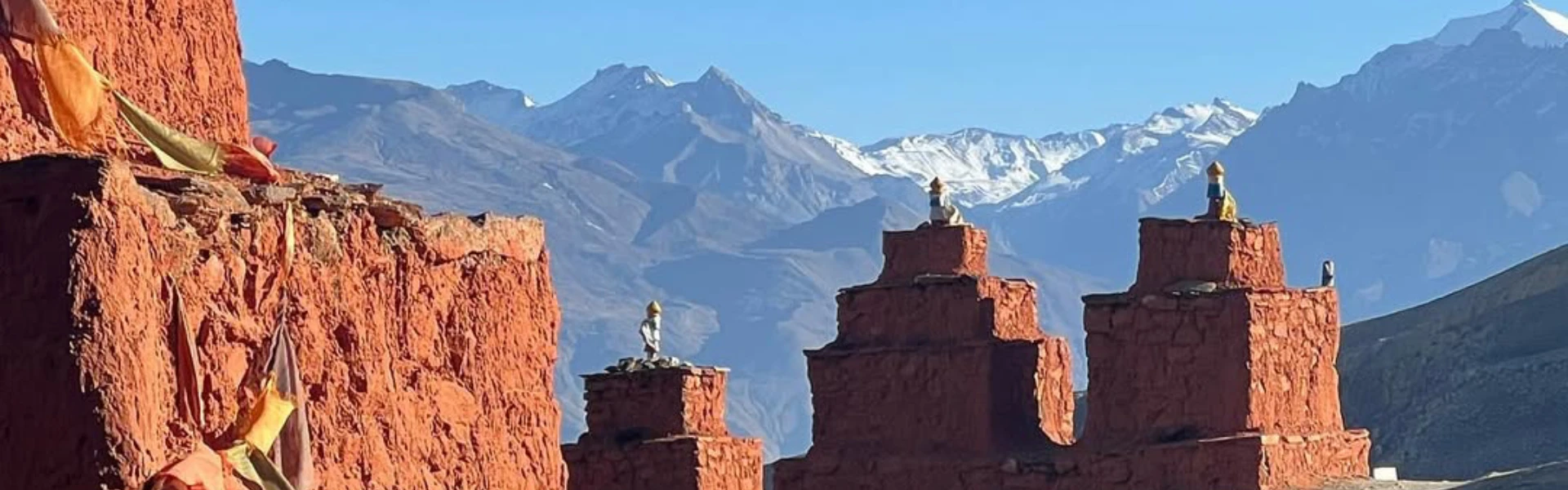
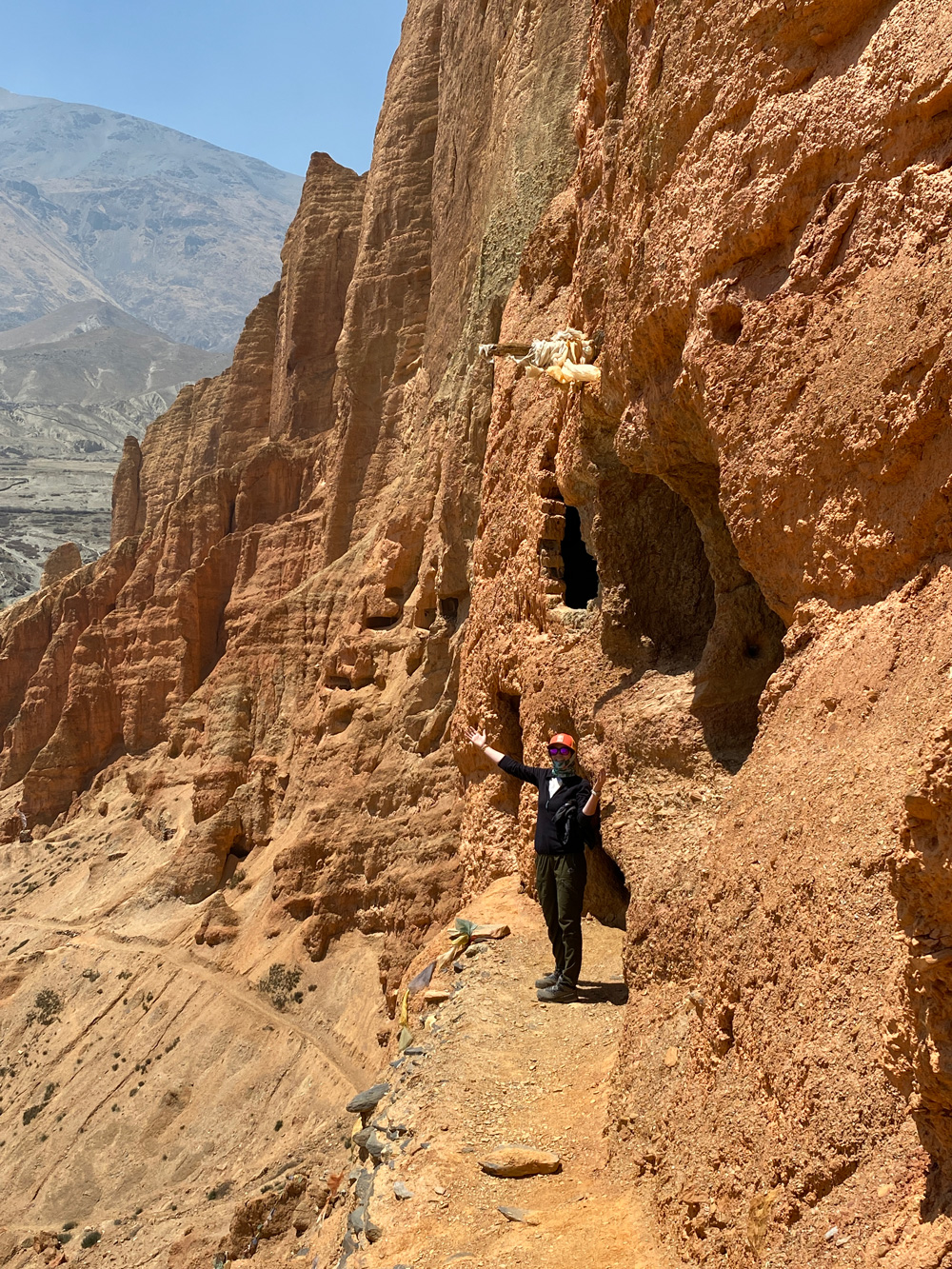
Dhakmar: Known for its striking red cliffs rising directly from the valley floor. A landscape that naturally silences conversation. Raw, exposed, and dramatic in scale.
Chhoser: Home to the sky caves carved into vertical cliff faces. Thousands of man-made chambers. Used for meditation and burial. Some are still under archaeological study today.
Ghami & Charang: Ancient settlements with long mani walls and historic monasteries. Communities that existed long before tourism. Daily life continues without performance or adaptation for visitors.
Yara (off-route Upper Mustang): Remote village with multi-storey cliff caves carved by early settlers. Nearby sits Luri Gompa, a 13th-century cave monastery with some of Mustang’s oldest murals.
Ghara (very remote settlement): Small cluster of homes around a deteriorating gompa. Water scarcity shapes daily life. Local conversations often reflect concern about the village’s long-term survival.
Off-standard route insight: Yara and Ghara sit outside the common 7-day jeep circuit and even most trekking routes. Access requires a custom itinerary. Most travellers never reach them, even in Upper Mustang.
Upper Mustang Cost & Duration
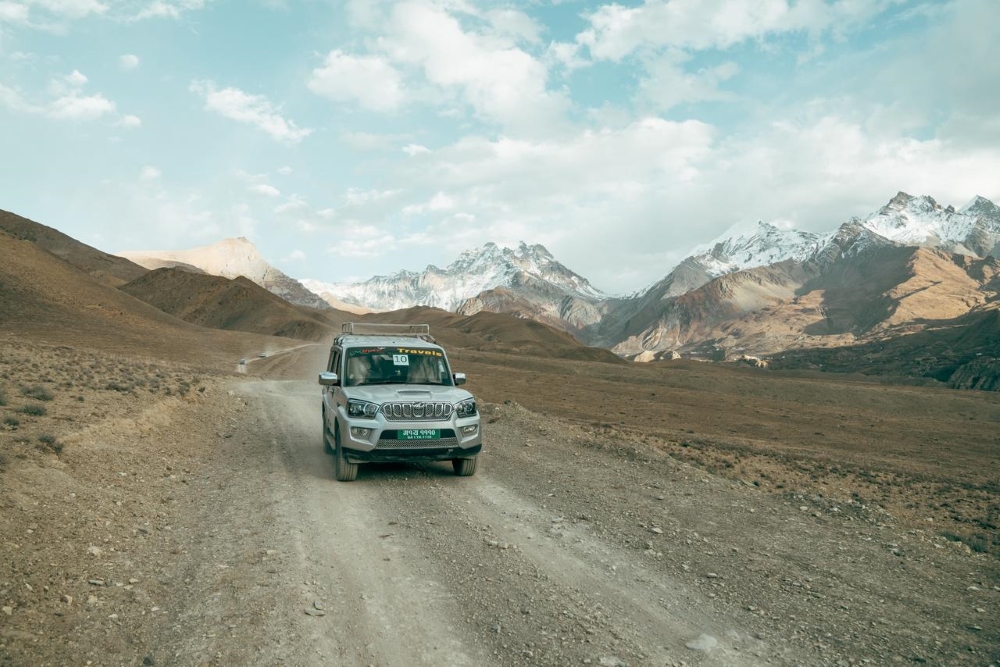
Short Upper Mustang Jeep Tour: 7 days minimum from Pokhara, starting from $1,499 per person
Upper Mustang Trek (Lo Manthang on foot): 17 days, starting from $2,250 per person
Lo Manthang itself sits at roughly 3,800 metres. The altitude is manageable for most people on the jeep route, but manageable doesn't mean ignorable — move slowly on arrival, and don't be surprised if the first evening at altitude humbles you a little, even if you felt fine all day.
Lower Mustang vs Upper Mustang: Side by Side
| Lower Mustang | Upper Mustang | |
|---|---|---|
| Permit | ACAP + TIMS | RAP ($50/day, all nationalities) + ACAP + licensed guide |
| Cost (from) | $379 | $1,499 (jeep) / $2,250 (17-day trek) |
| Time needed | 4–5 days | 7 days minimum (jeep) / 17 days (trek) |
| Crowd level | Moderate to high at Muktinath | Low |
| Landscape | Gorge, orchards, open plateau | High desert, red cliffs, Tibetan plateau |
| Solo travel | Always allowed | Allowed with a licensed guide |
| Monsoon friendly | Yes | Yes |
Who Should Go to Lower Mustang
Indian families and pilgrims are travelling to Muktinath. Anyone with only 4 to 5 days. Elderly travellers, or families with children. Anyone visiting Mustang for the first time who wants to understand the region before committing to the north. Lower Mustang isn't a warm-up act — Marpha is genuinely beautiful, Kagbeni genuinely old, and Muktinath carries weight that has nothing to do with how many people pass through it.
Who Should Go to Upper Mustang
Anyone who felt something at Kagbeni and couldn't quite name it. People drawn to Tibetan Buddhist culture, to archaeology, to landscapes with no real equivalent elsewhere in Nepal. Anyone willing to pay for restricted access — not as a status marker, but because the restriction itself is what's kept the place from becoming something else.
And anyone open to the itinerary, surprising them. The woman in Kagbeni wasn't on anyone's schedule. Neither was that monastery in Dhakmar. Upper Mustang has a way of expanding what people think they came for, if you let it.
Can You Do Both?
Yes — ten days makes it possible, and it's the version I'd suggest if you have the time. Lower Mustang first, to let the landscape calibrate your eye. Stand at Kagbeni and look north. Then cross the checkpoint already knowing what you're leaving behind. By the time you reach Lo Manthang, the contrast means more, and you understand exactly what the restriction is protecting.
For the practical side of the trip — road conditions, season-by-season detail, acclimatisation — see our complete guide to travelling in Mustang.
Frequently Asked Questions
Do I need a guide for the Lower Mustang trek?
No. A licensed guide isn't mandatory south of Kagbeni — ACAP and TIMS are sufficient. That said, villages like Lubra, Jhong, and Jharkot are easy to pass through without understanding what you're looking at. A good guide changes that.
Does the Upper Mustang Restricted Area Permit cost different amounts for different nationalities?
No. The $50/day RAP applies equally to every foreign traveller entering Upper Mustang, with no nationality-based discount. The only permit with a nationality-based rate is the ACAP, which is separate from the RAP.
Can solo travellers enter Upper Mustang?
Yes. The previous two-trekker minimum has been removed. Solo travel is now fully permitted, provided you're accompanied by a licensed guide.
Is Mustang accessible during the monsoon?
Yes — one of the least-known facts about the region. Sitting in the rain shadow of the Annapurna and Dhaulagiri ranges, Mustang stays largely dry while the rest of Nepal is wet between June and September. It's one of the only Himalayan destinations in Nepal that genuinely works as a summer trip.
What's the minimum time needed for Upper Mustang?
Seven days from Pokhara by jeep if you want to actually reach Lo Manthang and spend real time there. Less than that and you're moving too fast to feel anything. With only 4 to 5 days, Lower Mustang is the better choice.
Can the Restricted Area Permit be arranged at Kagbeni?
No — this is the most common mistake people make. The RAP must be arranged through a licensed trekking agency in Kathmandu or Pokhara before departure. There's no on-the-road option. Arriving at the checkpoint without it means turning back.
Conclusion
Most people don't decide between Upper and Lower Mustang at home. They decide at Kagbeni, with the wind coming off the river and the road going north into something that looks nothing like what they've already seen.
Lower Mustang is honest, ancient, and worth the journey on its own terms. Upper Mustang is rarer — intact precisely because access to it isn't easy or cheap. Neither is better. They're right for different people at different moments. The only wrong move is choosing one without understanding what the other actually is.
Now you do.
Ready to plan your trip?
- 5-Day Lower Mustang Jeep Tour — from $379
- 7-Day Short Upper Mustang Jeep Tour — from $1,499
- 17-Day Upper Mustang Trek — from $2,250