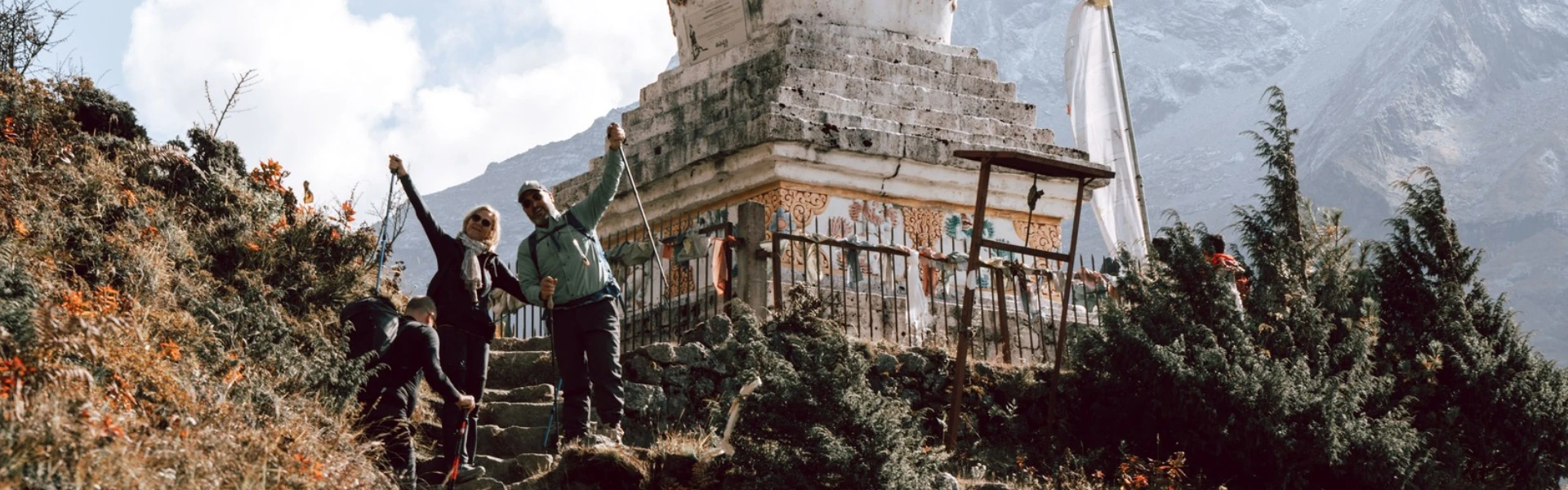
We don't measure luxury by thread count or restaurant reviews. Here's what we actually care about:
Principle 1: Comfort That Enables, Not Replaces
Why Heated Beds Matter, But Not For The Reason You Think
Heated beds are in our packages for one reason: so you sleep well and wake ready to walk. Not so you can pretend you're not in the mountains.
The lodges we choose sit in specific locations—places where you wake to views or sounds that matter. The bedding is good so you rest, not so you forget where you are. The hot showers are available so your body recovers, not so you can ignore the altitude.
This is a small but important difference. Every amenity we choose exists to enable depth, not to create distance.
The lodges we recommend most often aren't the most famous. They're the ones with kerosene stoves, warm staff, and windows that face something worth looking at. We've stayed in Six Senses and Amankora in Bhutan. They're stunning. But we use them only when the location and philosophy align with yours.
Take the lodge in Namche Bazar, which we've partnered with for our Everest treks. It's not the biggest or the newest. But it's been run by the same family for 15 years. They remember clients. They source food from village markets. Your breakfast arrives with bread baked this morning. That continuity matters more than thread count.
Principle 2: Guides Who Understand You, Not Just The Trail
What "Briefing" Actually Means
Here's what most trekking companies do: they assign a guide two days before your trek.
Here's what we do: we consult with you for weeks.
Before you arrive, we want to know:
Why now? (Not "why Nepal"—we know why Nepal.)
What are you actually seeking? (Silence? Conversation? Challenge? Ease?)
How do you like to move through a day? (Early starts or flexible mornings? Lots of village interaction or meditative hiking?)
What have you already done? (We don't want to re-create experiences you've had.)
What's your guide style? (Talkative and knowledgeable? Quiet and observant? Social and funny?)
Then, we don't just assign a guide who fits. We brief him.
We send him a detailed document with your preferences, your pace, and your conversational rhythm. He reads about what you care about. He learns not just the itinerary, but you.
By the time he meets you at the airport, he's thought about your trek as much as you have.
One of our clients mentioned in her pre-trek consultation that she was leaving a career she'd spent 15 years building. Her guide, Pemba, didn't ask about it. But on day four, when the trail got quiet, he sat beside her at lunch and shared his own story of leaving his family's expected path. He didn't perform sympathy. He offered context. That conversation shaped her entire trek—not because we assigned a therapist, but because we assigned someone who understood what she was actually searching for.
Principle 3: Non-Performative Culture
What Real Village Experience Looks Like
"Cultural immersion" is a marketing term that usually means: you visit a village and see how people live, usually in a space designed for visitors.
We do something different.
You walk through actual villages on actual days. You see people working, not performing. If someone invites you in, you go in. If not, you walk on. If there's a cooking opportunity with a family (not a restaurant), we arrange it. If there's a monastery conversation with an actual monk (not a tour), we make that space.
The difference sounds small, but it's enormous.
You're not in a costume drama of "local life." You're in someone's actual Tuesday.
In Namche Bazar, instead of a "Sherpa cooking class" in a restaurant, you cook with the family who runs our partner lodge. The mother teaches you how to make momos the way her mother taught her. You buy ingredients at the market together. You use her stove. The meal you eat is the meal their family eats. This is not a performance. It's a shared morning.
Principle 4: Itineraries Built for Memory, Not Mileage
Why We Plan Backwards From What You'll Remember
Here's our approach: we don't design treks by accumulating famous viewpoints. We design them backwards, from the moments we want you to carry home.
Five years from now, you won't remember the exact elevation of Kala Patthar. You'll remember:
The way Gokul arranged the dessert fruit at lunch (peach, apple, orange—each the right size, placed like an afterthought)
The conversation in the monastery when the monk asked about your family
The sunrise when the clouds broke exactly as you reached the top
Your guide noticing you were cold and appearing with a down jacket before you asked
These moments aren't luck. They're designed.
Our acclimatisation days aren't rest days. They're intentional days. The cooking class isn't filler. The monastery visit isn't tourism. The village walk isn't a scheduled check-box. Each is designed to be the kind of moment you carry forward.
We build two full acclimatization days into our Everest trek, not because you need them (though you do), but because they're where the depth happens. You're in one place long enough to actually see it. Your guide has time to introduce you to people. You're not running from viewpoint to viewpoint. You're staying in one village and letting it reveal itself.
Principle 5: Relationship Over Transaction
We're Not Selling You A Trek—We're Inviting You Into A Conversation
A transaction is: you book, we deliver, you leave.
A relationship is: we talk before, we support during, we follow up after.
We call you before you arrive. We check in during your trek. We want to know afterwards what mattered. Not for a testimonial—for understanding.
We want to know: what did you expect, and what actually happened? Where did you feel most alive? What would you do differently? What will you remember?
This isn't customer service. It's because we actually care about whether your trek matched what you were seeking.